You hand out a Wikipedia assignment. You expect polished prose and perfect citations. What you get is often a mess of broken links, neutral point-of-view violations, and edits that get reverted within minutes. It’s frustrating for you and confusing for them. But here’s the twist: that mess isn’t failure. It’s data. When students interact with Wikipedia, they aren't just typing words; they are engaging in real-time peer review, conflict resolution, and public accountability. If you assess this process like a traditional essay, you miss the point entirely.
Why Traditional Grading Fails on Wikipedia
Think about how you grade a term paper. You look at the final product. You check the bibliography. You give it an A or a B. Now, apply that to Wikipedia. A student might write a brilliant paragraph, but if another editor reverts it because it sounds promotional, the final article looks unchanged. Did the student fail? No. They learned something valuable about community standards. If your rubric only measures the final state of the article, you’re grading luck, not skill.
The core issue is visibility. In a classroom, the teacher is the sole evaluator. On Wikipedia, thousands of strangers are the evaluators. This shifts the power dynamic. Students often feel vulnerable when their work is critiqued publicly. Your job isn’t just to grade the content; it’s to grade the resilience and adaptability shown during the editing process. We need to move away from "did they finish the page?" to "how did they navigate the conversation?"
Defining Clear Learning Goals Before You Start
You can’t assess what you haven’t defined. Before you even open a syllabus, ask yourself: What do I actually want these students to learn? Is it factual accuracy? Or is it understanding how knowledge is constructed socially? These are different beasts.
For most introductory courses, the primary goal should be Digital Literacy. Specifically, the ability to evaluate sources critically. Wikipedia requires verifiable sources. Students often struggle with this because they treat every website as equally valid. By setting a learning goal around source hierarchy-prioritizing academic journals over blogs-you create a measurable outcome.
Another critical goal is Collaborative Writing. Unlike solo essays, Wikipedia articles are living documents. The learning goal here isn't just writing well; it's writing so others can edit you without taking it personally. Can the student explain why they rejected a suggestion? Can they integrate feedback without losing their voice? These soft skills are hard to measure but essential for modern professional life.
Building a Rubric That Measures Process, Not Just Product
A good rubric for Wikipedia assignments needs three distinct dimensions: Content Quality, Community Engagement, and Technical Proficiency. Let’s break down how to score each one fairly.
| Criterion | Novice (1-2 points) | Competent (3-4 points) | Exemplary (5 points) |
|---|---|---|---|
| Source Verification | Relies on non-academic sources; citations are missing or broken. | Uses reliable secondary sources; citations follow basic formatting. | Synthesizes multiple high-quality sources; demonstrates deep research beyond Wikipedia itself. |
| Neutral Point of View (NPOV) | Uses subjective language ("amazing," "terrible"); biased tone. | Mostly neutral; occasional subjective adjectives remain. | Fully encyclopedic tone; presents competing viewpoints fairly without editorializing. |
| Community Interaction | No interaction; edits were reverted without discussion. | Responds to some comments; explains changes in edit summaries. | Proactively engages in Talk pages; negotiates conflicts respectfully; mentors other editors. |
| Technical Formatting | Broken links; poor use of headers; no categorization. | Correct internal linking; proper header structure; basic categories applied. | Advanced templates used correctly; images properly licensed and captioned; clean HTML/Wikitext. |
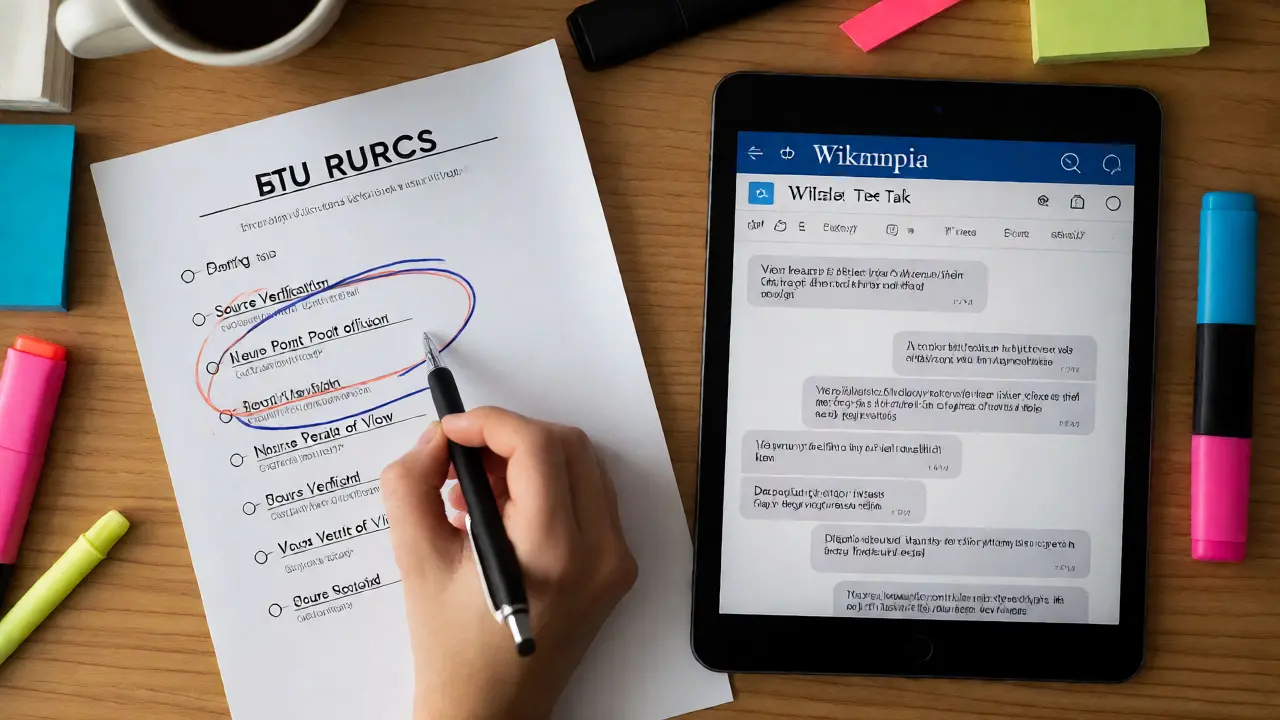
Notice how the "Community Interaction" row is weighted heavily. This is where many students stumble. They make an edit, see a red warning tag, and quit. An exemplary student reads the policy, goes to the Talk page, and writes: "I believe this source meets WP:RS because..." That sentence alone shows mastery of the platform’s social contract.
The Importance of Edit Summaries and Talk Pages
If you ignore the Talk Page, you are ignoring half the assignment. The main article space is the stage, but the Talk page is the rehearsal room. It’s where the thinking happens.
Require students to post a summary of their contributions on the Talk page before submitting their grade. Ask them to answer three questions: What did I change? Why did I change it? How did the community respond? This forces metacognition. Instead of just clicking "Save," they have to justify their actions. This practice mirrors professional code reviews or editorial meetings. It turns a passive act of typing into an active act of reasoning.
Edit summaries are the second layer of defense. A lazy student writes "fixed typo." A smart student writes "Clarified timeline per user:X's comment on Talk page." When you grade, look for specificity. Vague summaries suggest vague thinking. Specific summaries show awareness of context. Make this a pass/fail criterion. If the edit summary doesn’t explain the *why*, the edit doesn’t count toward the participation grade.
Handling Reverted Edits and Conflict Resolution
Here is the part that scares instructors: What if the student’s work gets deleted? Do they fail? Absolutely not. Deletion is a teaching moment. If an experienced editor reverts a student’s contribution, it’s usually for one of two reasons: lack of sourcing or violation of NPOV.
Teach students to view reverts not as punishment, but as feedback. Create a specific section in your rubric for "Response to Feedback." Award points for students who engage with the person who reverted them. Did they argue politely? Did they find better sources? Did they accept the correction gracefully? A student who gets reverted five times but learns from each error has demonstrated more learning than a student who made one safe, minor edit that stuck.
You might encounter the "Edit War" scenario. Two students keep undoing each other’s changes. This is gold for assessment. Pause the activity. Bring them together. Ask them to draft a compromise version offline. Grade them on their ability to negotiate, not just on the final text. This simulates real-world workplace dynamics where consensus is harder than correctness.
Practical Tools for Tracking Progress
You don’t need to manually check every edit history. Use the tools built into the platform. The Article History tab allows you to see exactly who changed what and when. You can filter by date to isolate the semester’s work.
Consider using the Dashboard Program developed by the Wiki Education Foundation. It tracks student edits automatically and provides analytics on word count added, references cited, and peer interactions. It saves hours of manual checking. Even if you don’t use the full dashboard, encourage students to bookmark their own user talk pages and watchlists. Self-monitoring is a key component of digital citizenship.
For smaller classes, a simple spreadsheet works wonders. Columns for Student Name, Article Edited, Number of Net Additions, Sources Added, and Talk Page Comments. Fill it out weekly. This keeps students accountable throughout the term, rather than letting them cram all their edits into the last week of the semester.
Common Pitfalls to Avoid
One major mistake is treating Wikipedia as a static encyclopedia rather than a collaborative project. Students often try to rewrite entire sections, overwhelming the existing community. Guide them to start small. Fix a citation. Clarify a sentence. Build trust before making bold claims.
Another pitfall is ignoring copyright. Students love copying text from news sites. Remind them that Wikipedia requires free licenses. Copy-pasting from a copyrighted newspaper article is a quick way to get flagged. Teach them to paraphrase and cite, not just copy and paste. This reinforces the difference between plagiarism and synthesis.
Finally, don’t forget the human element. Some students will be terrified of public judgment. Offer a "sandbox" option where they can practice editing in a private user space before moving to the live article. This lowers the stakes and encourages experimentation. Once they feel confident, they can migrate their work to the main namespace.
Frequently Asked Questions
How much weight should I give to the final article quality versus the process?
A balanced approach is best. Aim for a 60/40 split favoring process over product. Since Wikipedia is a collaborative environment, factors outside a student's control (like aggressive reverters) can affect the final article state. Assessing their communication on Talk pages, their response to feedback, and their adherence to sourcing policies provides a fairer picture of their learning than the raw text alone.
What if my student's edits are reverted by other users?
Reversions are common and educational. Do not penalize students solely for being reverted. Instead, assess how they handle the rejection. Did they read the policy linked in the revert message? Did they discuss the issue on the Talk page? Did they improve their sourcing? A student who learns from a revert has demonstrated higher competency than one who avoids risk by making trivial edits.
Do I need to create accounts for my students beforehand?
Yes, creating accounts is highly recommended. Anonymous IP edits are often viewed with suspicion by established editors. Accounts allow students to build a user page, track their contributions, and receive notifications. It also helps you identify which edits belong to which student. Ensure they choose usernames that comply with Wikipedia’s naming policy (no promotional names).
How do I teach Neutral Point of View (NPOV) effectively?
Use examples of loaded language. Have students take a biased sentence (e.g., "The controversial politician lied") and rewrite it neutrally (e.g., "Critics accused the politician of lying"). Practice identifying adjectives that imply judgment. Emphasize that NPOV means representing significant views proportionally, not giving equal weight to fringe theories.
Can students collaborate on a single Wikipedia article?
Yes, but it requires clear division of labor. Without coordination, students may overwrite each other’s work. Assign specific sections or topics to each student. Require them to communicate via the Talk page before making major structural changes. Group assessments should include peer evaluation components to ensure equitable contribution.