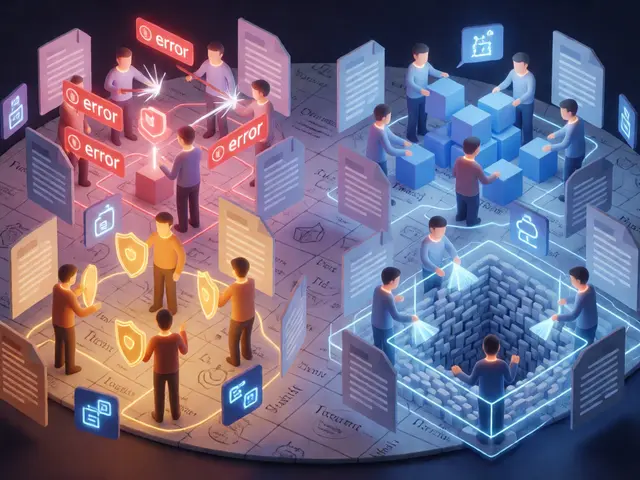
Ever felt your heart rate spike while staring at a Wikipedia diff? You’re not alone. Editing Wikipedia is a collaborative online encyclopedia where anyone can contribute, but specific rules govern how changes are accepted and retained. When you touch on polarizing subjects like politics, religion, or social movements, the stakes feel higher. One wrong word choice can trigger an edit war, a cycle of rapid back-and-forth edits that often ends in a page lock. The goal isn’t just to get your text in; it’s to make sure it stays there and actually improves the article for everyone.
The core challenge with sensitive topics is that facts don’t always tell the whole story. How you frame a fact matters just as much as the fact itself. This is where understanding the platform's culture becomes your best defense against reversion. If you approach these edits like a journalist rather than an advocate, you’ll find your contributions survive scrutiny far better. Let’s break down exactly how to navigate this minefield without stepping on a landmine.
Mastering the Neutral Point of View
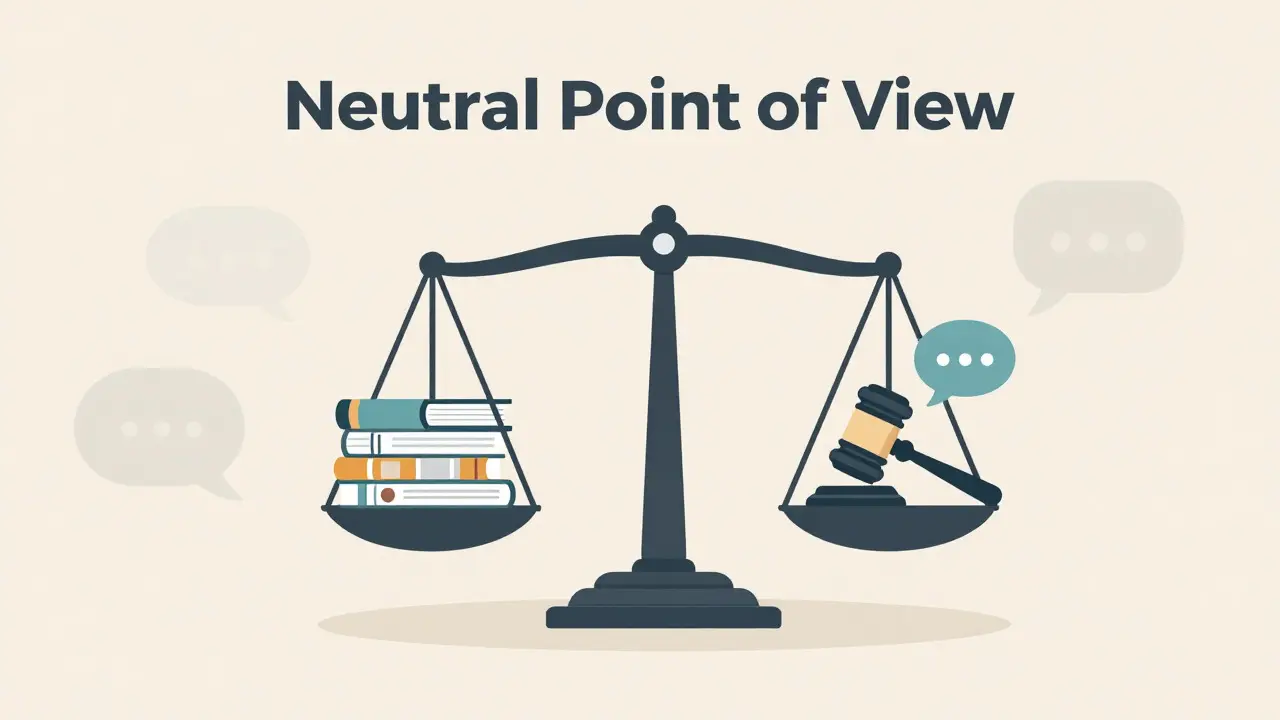
Neutral point of view (NPOV) is the foundational policy requiring articles to represent all significant points of view fairly, proportionately, and with due weight. It doesn’t mean being boring or avoiding strong words if they are attributed correctly. It means letting the sources speak. If a source calls a protest "unruly," you quote the source. If another calls it "passionate," you include that too, provided both sources are reliable. The mistake most new editors make is injecting their own voice into the narrative. They write, "The leader was clearly biased," instead of, "Critics argue the leader was biased." That small shift from assertion to attribution is the difference between a kept edit and a reverted one.
To practice NPOV, read your draft aloud. Does it sound like a news anchor or a blog post? If it sounds opinionated, rewrite it. Use passive voice sparingly, but use it when the actor is unknown or less important than the action. More importantly, ensure every claim has a citation. In sensitive areas, uncited claims are prime targets for removal because they look like personal attacks or hidden agendas.
The Power of the Talk Page
Before you hit save on a major change, go to the talk page. This is the community forum attached to each article where editors discuss improvements. For sensitive topics, the talk page is your safety net. Post a brief summary of what you plan to change and why. Ask if others have seen similar issues before. Often, a veteran editor will jump in and say, "Yes, we need that citation," or "Watch out, User X tends to revert anything about this topic." This pre-emptive communication builds goodwill. It shows you aren’t trying to sneak something past the community; you’re inviting them to help you refine it.
When posting on the talk page, keep it concise. Don’t paste your entire new paragraph. Just explain the gap you’re filling. For example: "Adding two recent peer-reviewed studies to the 'Controversy' section to balance the current single-source perspective." This transparency makes it harder for others to accuse you of bias later. If someone disagrees, resolve it there first. Bringing an unresolved conflict directly to the article page usually leads to immediate friction.
Sourcing Strategy for Polarized Subjects
Citations are the armor of a good editor. But not all citations are created equal. On sensitive topics, you need reliable sources that are independent of the subject. A press release from the organization itself is rarely enough. Look for academic journals, major newspapers with established editorial standards, and books published by reputable houses. If you’re covering a local controversy, national outlets often provide a more detached perspective than local blogs.
- Academic Journals: Best for scientific, historical, or sociological claims. They undergo peer review, which adds a layer of credibility.
- Major News Outlets: Good for current events. Ensure the outlet has a clear correction policy and diverse editorial board.
- Official Documents: Useful for dates, names, and legal outcomes, but rarely for interpretation or motive.
Navigating Edit Wars and Blocks
Despite your best efforts, conflicts happen. An edit war occurs when two or more editors repeatedly undo each other’s changes without reaching consensus. If you notice your edit has been reverted twice, stop. Do not revert it back immediately. Instead, leave a note on the talk page explaining your reasoning again. Sometimes, a third party will step in to mediate. If the conflict persists, request mediation through the WikiProject associated with the topic. WikiProjects are groups of volunteers who focus on specific areas, like history, science, or politics. They understand the nuances of their field and can offer objective advice.
If you get blocked, don’t take it personally. Blocks are temporary tools to prevent disruption, not punishments for bad character. Read the block message carefully. It usually explains the reason and duration. During this time, work on other articles or improve images. Coming back after a cool-down period with a calmer demeanor often resolves lingering tensions. Remember, the goal is the article, not winning an argument.
Practical Checklist Before Saving
Use this quick checklist to vet your edits before hitting save. It takes thirty seconds but can save hours of frustration.
- Check Tone: Is every adjective necessary? Can you remove "clearly," "obviously," or "shocking"?
- Verify Sources: Does every sentence have a citation? Are the sources independent?
- Read the Diff: Look at the red and green lines. Does the change flow naturally with the surrounding text?
- Scan for Bias: Would someone with the opposite view accept this phrasing as fair?
- Talk Page Note: Did you mention your changes on the talk page if they were substantial?

Common Pitfalls to Avoid
Even experienced editors stumble. One common trap is citation creep, where you add so many sources that the article becomes unreadable. Balance is key. Another pitfall is ignoring the manual of style. This guide dictates formatting, grammar, and structure. While minor style errors might be overlooked in obscure topics, they draw attention in high-profile articles. Keep your sentences short and active. Avoid jargon. If a term is technical, define it briefly or link to its own article.
Also, watch out for notability issues. Not every event or person deserves a standalone article. If you’re adding a section to an existing article, ensure the sub-topic meets the threshold for inclusion. If it’s marginal, consider merging it into a broader section rather than creating a new heading. This prevents fragmentation and keeps the article cohesive.
| Approach | Risk Level | Best For | Key Action |
|---|---|---|---|
| Direct Edit | High | Minor typos, clear factual errors | Cite immediately, keep tone neutral |
| Talk Page First | Low | New sections, controversial claims | Explain rationale, invite feedback |
| Mediation Request | Moderate | Persistent edit wars | Document history, seek neutral third party |
Frequently Asked Questions
What happens if my edit is reverted?
A reversion means another editor disagreed with your change. Check the edit summary for clues. If no reason is given, ask politely on the talk page. Do not revert immediately unless you have strong evidence your version is correct. Usually, a conversation resolves the issue.
How do I find reliable sources for obscure topics?
Start with library databases or university archives. Look for books published by academic presses. If the topic is very new, check major wire services like Reuters or AP. Avoid self-published works unless the author is a recognized expert in the field.
Is it okay to use quotes from controversial figures?
Yes, but only if the quote is significant to the article's narrative. Always attribute the quote clearly. Avoid using quotes to make a point yourself; let the reader interpret the meaning. Overusing quotes can make the article feel like a collection of soundbites rather than a coherent analysis.
What is the difference between NPOV and neutrality?
NPOV is a specific Wikipedia policy. Neutrality is a broader concept. NPOV requires presenting all significant viewpoints fairly, even if they contradict each other. It does not require finding a middle ground if the facts don't support one. It’s about representation, not compromise.
Should I create a new account if I get blocked?
No. Creating a new account to bypass a block is called sockpuppetry and is a serious violation of community rules. It can lead to longer blocks or permanent bans. Wait out the block period and return with a fresh perspective.