The Golden Rules of Wikipedia Sourcing
Before you even hit the 'Edit' button, you need to understand that Wikipedia doesn't care what you know; it cares what you can prove. This is the core of Wikipedia source verification is the process of ensuring that every factual claim in an article is supported by a reliable, third-party source. The goal isn't just to find a link that says the same thing as your sentence, but to find a source that is recognized as an authority in that specific field.
The community relies on the concept of Verifiability. This means that if a statement is made, there must be a way for any reader to check it. But there is a massive difference between being "verifiable" and being "true." A claim can be verifiable if it's cited from a popular tabloid, but that doesn't mean it's reliable. For a high-quality article, you have to aim for reliability over mere verifiability.
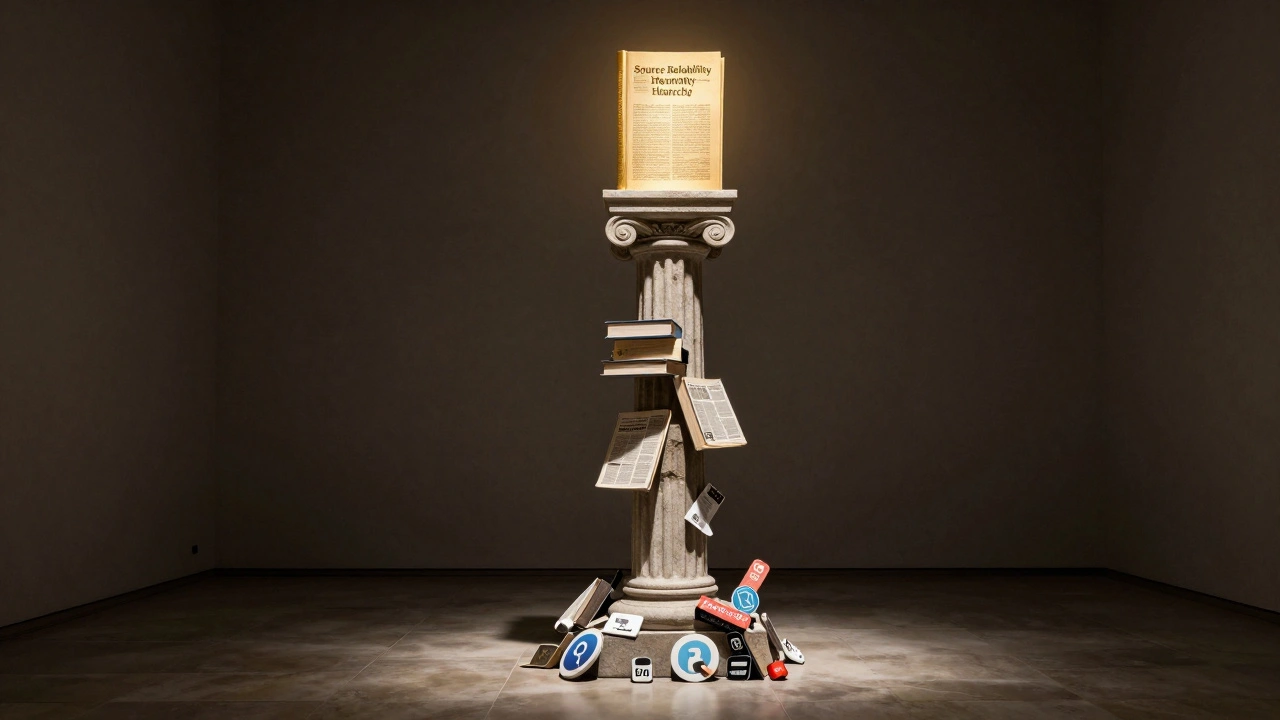
Most editors look for a specific hierarchy of sources. At the top are peer-reviewed academic journals. Below those are established news organizations with a history of correction and editorial oversight. Then you have books published by university presses. The bottom of the barrel consists of social media posts, personal blogs, and press releases, which are almost always rejected because they are primary sources or promotional material.
Spotting Reliable Sources vs. Noise
Not all websites are created equal. When you're hunting for a source, you have to act like a detective. One of the best ways to do this is by using the SIFT Method, a digital literacy framework that stands for Stop, Investigate the source, Find better coverage, and Trace claims back to the original context. If you find a claim on a website you've never heard of, don't just trust the "About Us" page. Search for the website's name along with the word "bias" or "reliability" to see what other experts say about it.
Consider the difference between a primary and secondary source. A primary source is a direct record, like a diary, a raw data set, or a legal transcript. While these are great for specific quotes, they are often frowned upon for general factual claims because they lack the synthesis and context provided by secondary sources. A secondary source, like a biography written by a historian who spent ten years studying the subject, is far more valuable for establishing an article's quality.
| Source Type | Reliability Level | Best Use Case | Red Flags |
|---|---|---|---|
| Peer-Reviewed Journals | Highest | Scientific data, medical claims | Outdated data, niche bias |
| Major News Outlets | High | Current events, political history | Opinion pieces, clickbait |
| Academic Books | High | Historical context, deep dives | Self-published ebooks |
| Industry Reports | Medium | Market stats, tech trends | Paid sponsorships |
| Social Media/Blogs | Low | Direct quotes only | Lack of editorial review |
The Art of Fact-Checking Claims
Fact-checking isn't just about finding a link; it's about ensuring the link actually supports the specific claim you're making. A common mistake beginners make is "citation padding," where they link to a general article about a topic to support a very specific, detailed claim that isn't actually mentioned in that source. This is a fast track to getting your edits reverted.
To avoid this, use the "Side-by-Side" technique. Put your draft sentence on one side of the screen and the source text on the other. If the source says "The company grew significantly in 2023," you cannot write "The company's revenue increased by 40% in 2023" unless the source explicitly provides that number. Precision is the hallmark of quality.
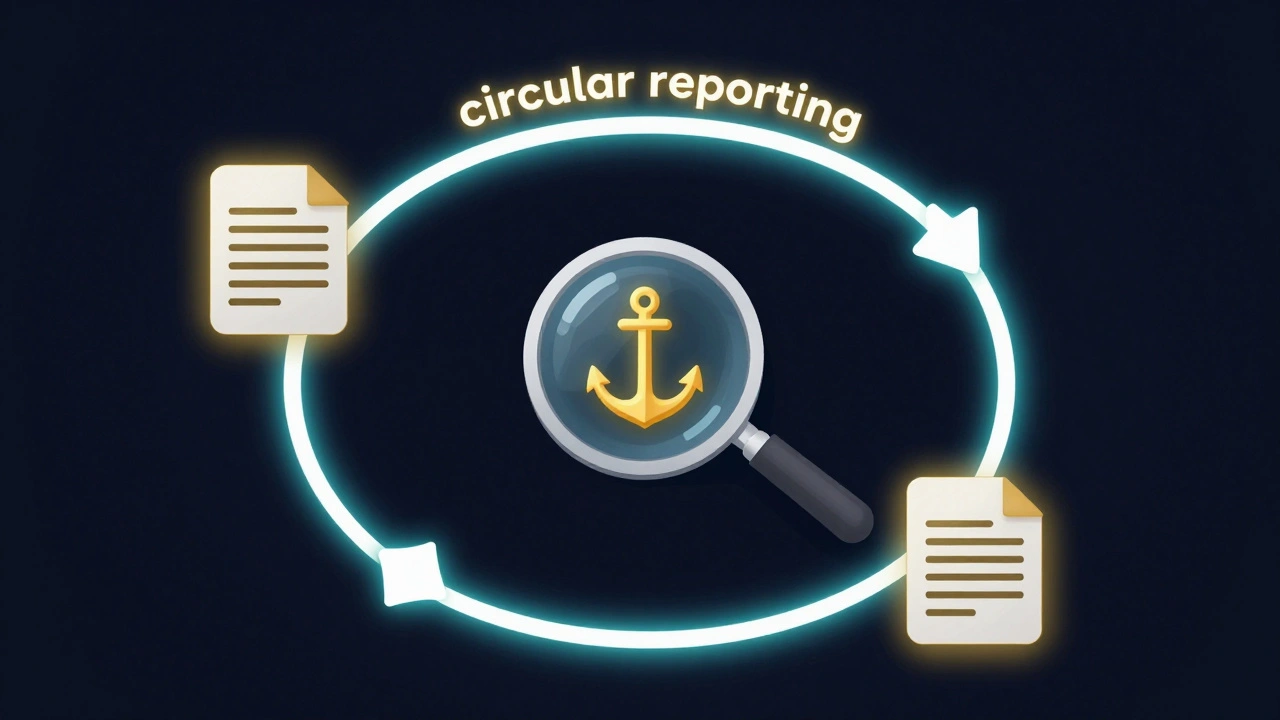
You should also be wary of "circular reporting." This happens when Source A cites Source B, and Source B cites Source A. It looks like there are two independent sources confirming a fact, but in reality, it's just one piece of information echoing through a loop. Always try to trace the information back to the original source-the primary document or the person who first conducted the research.
Advanced Verification Techniques
If you're dealing with complex topics, you might need to use Cross-Referencing, the process of comparing multiple independent sources to verify the consistency of a factual claim. If three different reputable news agencies from different countries all report the same event with the same key details, the fact is likely solid. If they disagree on the numbers, you should either present both perspectives or find a more authoritative source, like an official government audit.
Another pro tip is to check the "Talk" page of the article you're editing. Often, other editors have already debated the reliability of a specific source. If you see a heated argument about a particular journalist's bias, you've just saved yourself an hour of work. You can either join the discussion with new evidence or find a different source that isn't contested.
Don't forget the power of Digital Archives like the Wayback Machine. Webpages change or vanish. Using a permanent link (permalink) or an archived version of a page ensures that the citation remains valid years after the original site has been updated or deleted. This is a huge part of maintaining long-term article quality.
Common Pitfalls to Avoid
The biggest trap is the "Confirmation Bias" loop. We all have a tendency to search for sources that prove us right rather than sources that tell us the truth. If you're writing about a controversial figure and only finding sources that praise them, you're not fact-checking; you're cherry-picking. A quality Wikipedia article must maintain a Neutral Point of View (NPOV). This means you need to seek out reliable sources that offer opposing viewpoints.
Avoid using "About" pages or company mission statements as sources for factual claims. For example, if a company says they are "the leader in sustainable energy," that is a marketing claim, not a fact. However, if a third-party energy auditor publishes a report stating the company has the highest efficiency rating in the industry, that is a verifiable fact.
Lastly, be careful with translated sources. If you're using a source in a language other than English, don't just rely on a rough machine translation. Nuance matters. A word that translates to "claimed" in English might be "confirmed" in the original language, or vice versa. If you aren't fluent, try to find a bilingual editor to double-check your translation before you post it.
Putting it All Together: A Quality Checklist
To make sure your contributions stick, run through this mental checklist before saving your changes:
- Does the source have a known editorial process?
- Is the source independent of the subject being written about?
- Does the source actually say what I claim it says, or am I interpreting it?
- Have I checked if this is a circular reference?
- Is there a more authoritative source available (e.g., a journal instead of a news site)?
- Is the link archived to prevent future 404 errors?
Can I use a social media post as a source?
Generally, no. Social media posts are considered primary sources. They are only acceptable if you are citing a direct quote from a person (e.g., "The CEO tweeted that the company was closing"). You cannot use a tweet to prove a factual claim about a company's financial health or a historical event.
What is the difference between a primary and secondary source?
A primary source is a first-hand account or raw data (like a diary, a speech, or a court document). A secondary source analyzes, interprets, or summarizes primary sources (like a textbook, a biography, or a review article). Wikipedia prefers secondary sources because they provide the necessary context and verification.
What should I do if I can't find a reliable source for a fact I know is true?
If you can't find a reliable, third-party source, you cannot add the information to Wikipedia. Even if you have first-hand knowledge of the fact, Wikipedia's policy against original research means that the information must be verifiable by others through published sources.
How do I handle sources that are biased?
The key is to use them for what they are. A biased source can be used to document a specific perspective or a claim made by a group, but not as a factual proof of the claim itself. Always balance a biased source with a neutral, authoritative one to maintain a neutral point of view.
Why is the Wayback Machine important for citations?
Web content is volatile. Pages are deleted or changed frequently (link rot). By archiving a source via the Wayback Machine, you create a permanent snapshot of the page as it existed when you cited it, ensuring the evidence remains available for future editors and readers.
Next Steps for New Editors
If you're just starting out, don't try to rewrite a "Featured Article" right away. Start with "Stub" articles-short entries that desperately need sources. This allows you to practice your verification skills without the pressure of a thousand veteran editors watching your every move. Focus on replacing one "citation needed" tag at a time.
If you run into a dispute with another editor, avoid the "edit war." Instead, move the conversation to the Talk page. Provide your sources clearly and explain why you believe they meet the reliability standards. Most Wikipedia editors are happy to help if you show that you've done the legwork and are prioritizing the quality of the encyclopedia over your own opinion.