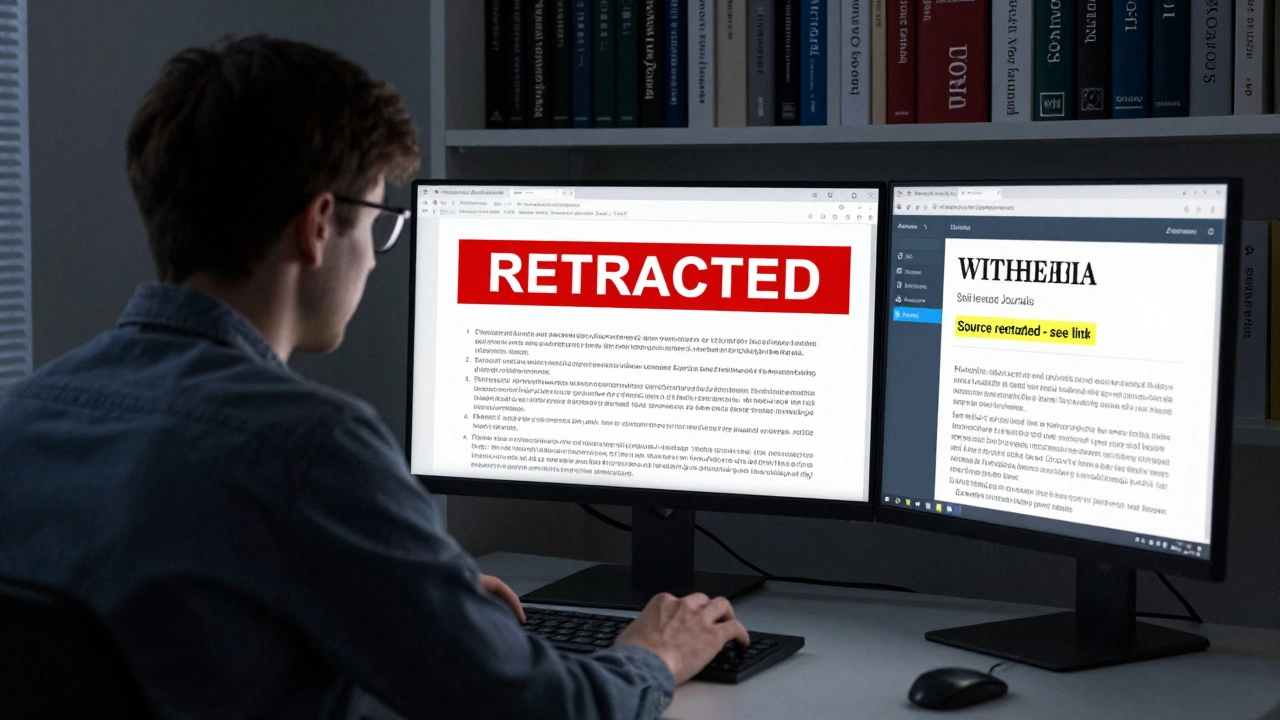
Wikipedia is built on trust. Millions of people rely on it every day for facts, dates, names, and context. But what happens when a source used in an article turns out to be wrong? Or retracted? Or debunked? This isn’t just a technical glitch-it’s a credibility crisis waiting to happen. Handling retractions and corrections in Wikipedia references isn’t optional. It’s essential.
Why retractions matter more than you think
Back in 2021, a widely cited study in the Journal of the American Medical Association was retracted after researchers found serious statistical errors. That study had been used in over 120 Wikipedia articles across languages. Some of those articles still listed it as a valid source years later. Readers assumed the information was accurate because it was cited. It wasn’t. And that’s the problem.
Wikipedia doesn’t fact-check every claim. It relies on reliable sources. But if those sources change-whether through retraction, correction, or later evidence-the article must change too. Otherwise, Wikipedia becomes a museum of outdated truths.
How to spot a problematic source
Not every outdated reference is dangerous. But some are. Here’s how to tell the difference:
- Retracted papers: Look for notices on the publisher’s site. Journals like Nature, The Lancet, and Science clearly mark retractions with banners and footnotes.
- Updated corrections: Some articles get published with minor errors and are later corrected. Check the version history on the original source. Did they issue a corrigendum?
- Controversial or debunked claims: If a source made headlines for being wrong-like the 2010 paper claiming a virus caused autism-it’s not just outdated. It’s harmful.
- Broken links or vanished websites: If the source is gone and can’t be archived, it can’t be verified. That’s a red flag.
Tools like Google Scholar and PubMed show retraction notices directly on article pages. If you’re editing Wikipedia and see a citation with a retraction banner, don’t ignore it.
What to do when you find a retracted source
Step one: Don’t delete it right away. Step two: Document it. Step three: Replace it.
Wikipedia’s policy says: “Do not remove citations just because they are outdated. Instead, add context.” This is critical. If you remove a retracted source without explanation, you erase the history of how misinformation spread.
Here’s how to handle it properly:
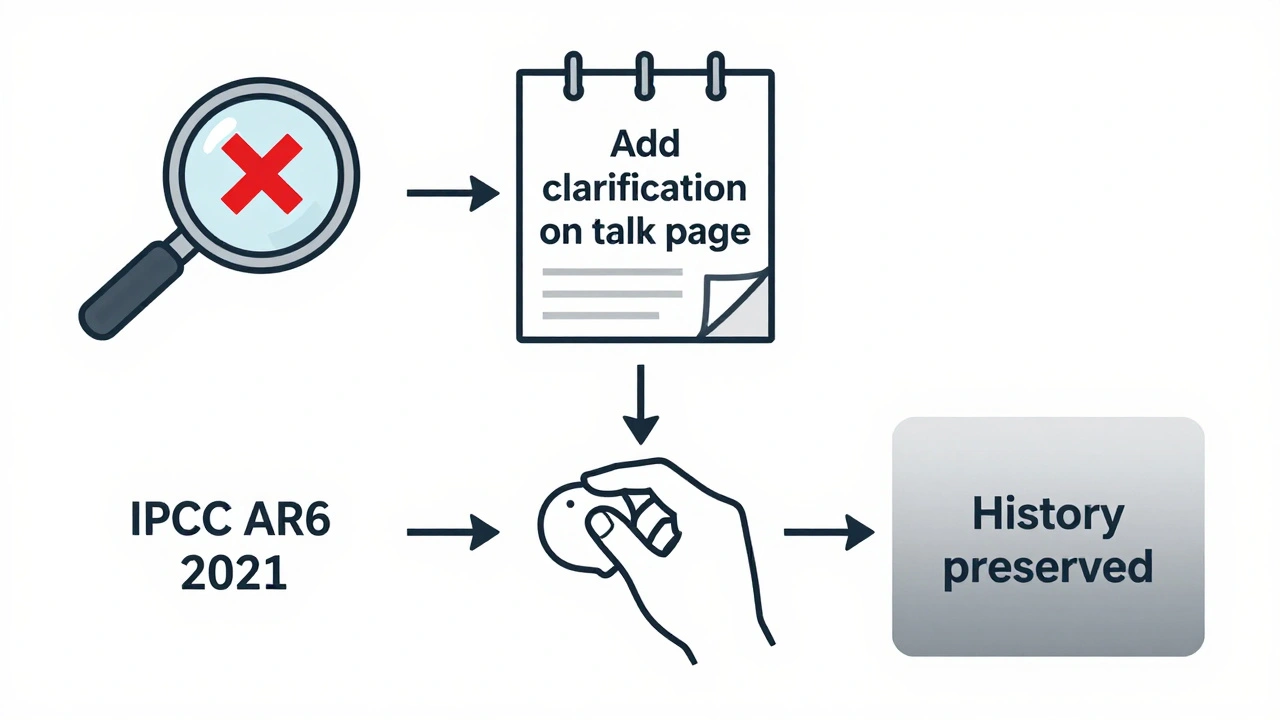
- Go to the article’s talk page and post a note: “Source X was retracted on [date]. Please find a replacement.”
- On the article itself, add a
<ref>tag with a clarification: “This source was retracted by the journal on [date]. See [link to retraction notice].” - Find a better source. Use peer-reviewed journals, official reports, or authoritative books. Avoid blogs, news sites without citations, or self-published material.
- Once you have a solid replacement, update the citation. Then, remove the retracted source only if it adds no value.
Example: An article on climate change cited a 2008 paper claiming global warming had paused. In 2020, that paper was retracted after its data was found to be cherry-picked. The Wikipedia editor didn’t delete it. Instead, they added: “This source was retracted in 2020 due to flawed data selection. See: [retraction link]. Current consensus is supported by IPCC AR6 (2021).”
How to find better sources
Not all sources are created equal. Wikipedia has clear guidelines: “Use published, authoritative, reliable sources.” That means:
- Peer-reviewed journals: These go through expert review. Look for journals indexed in PubMed, Scopus, or Web of Science.
- Books from academic presses: University presses like Oxford, Cambridge, or MIT Press are trusted.
- Official reports: From governments, the UN, WHO, CDC, or major scientific bodies.
- Reputable news organizations: The New York Times, BBC, Reuters, and AP are acceptable for general facts-not analysis.
Avoid:
- Personal blogs
- Forums or Reddit threads
- Press releases without independent verification
- Wikipedia itself as a source
If you’re unsure, check the source’s reputation. Did it get cited in other peer-reviewed papers? Was it covered by multiple reliable outlets? If yes, it’s likely safe.
How Wikipedia editors track corrections
There’s no central database of retracted sources on Wikipedia. But editors have built tools to help.
One of the most useful is the Retraction Watch database. It tracks retracted scientific papers and links them to Wikipedia citations. You can search it directly: retractionwatch.com. If you find a match, you can use the link in your edit summary.
Also, the Wikipedia community uses citation templates. For example:
<ref>{{Cite journal | title = ... | journal = ... | year = 2018 | doi = ... | url = ... }}</ref>If you add a note like |retracted = yes to the template, it automatically flags the citation in the article’s reference list. This helps other editors spot issues without digging through the full text.
Some editors also use WikiProject Medicine or WikiProject Climate Change to flag problematic citations in their field. These groups have dedicated pages for tracking retractions and updating articles.
What happens if you ignore a retraction
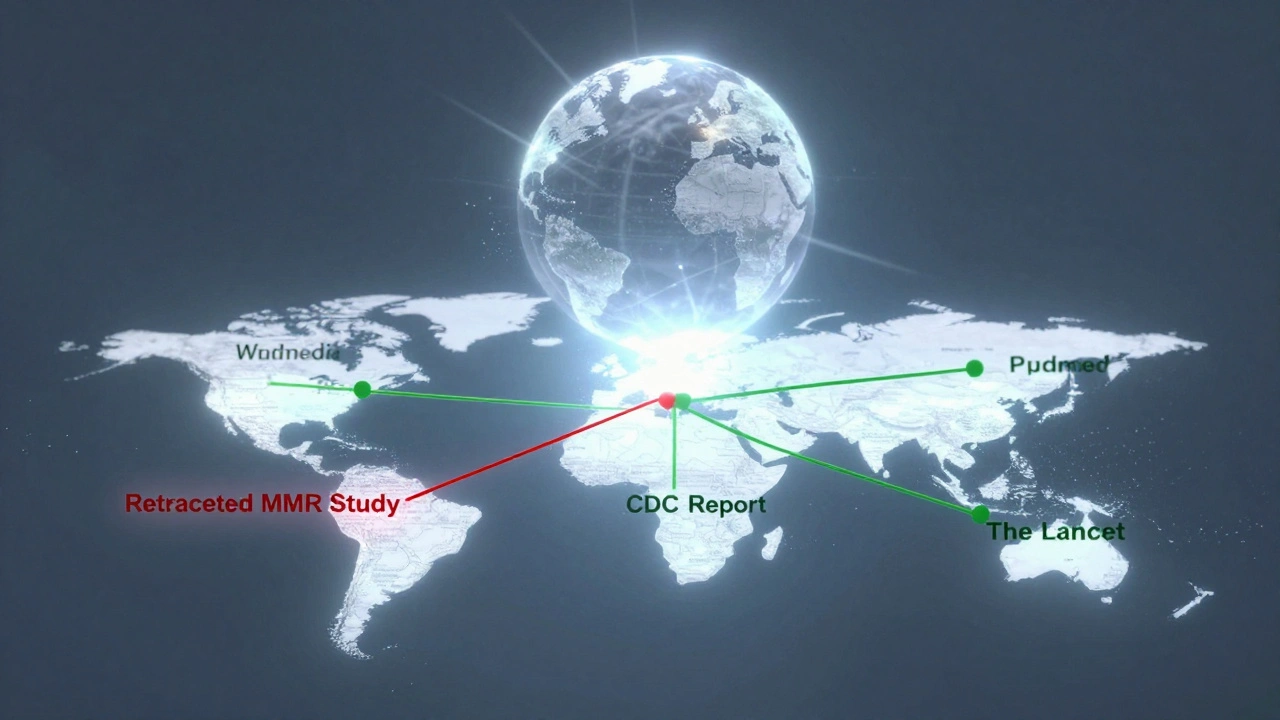
Ignoring a retracted source isn’t just sloppy-it’s dangerous. Wikipedia has been criticized for perpetuating misinformation because of outdated citations. The most famous example? The “MMR vaccine causes autism” myth. It was based on a 1998 paper that was retracted in 2010. But Wikipedia articles kept citing it for years. Even after corrections, the myth persisted because people saw it in a “trusted” source.
When you leave a retracted source in place, you’re not just preserving history. You’re endorsing falsehoods. That erodes public trust-not just in Wikipedia, but in science itself.
Wikipedia’s reputation depends on its integrity. Every citation is a promise: This is true. When that promise breaks, the whole system wobbles.
How to help improve Wikipedia’s citation health
You don’t need to be an expert to help. Here’s what anyone can do:
- Check citations in articles you read. If a source looks suspicious, look it up.
- Use the “View history” button on any Wikipedia page. See who edited the references. Did they fix a retraction? If not, leave a note.
- Join WikiProject Reliable Sources. It’s a group of volunteers who monitor citation quality. They welcome new members.
- Report retracted sources to Retraction Watch. They work with Wikipedia to update articles.
Small actions add up. One editor found a retracted study in a Wikipedia article about mental health. They replaced it with three better sources. Within a week, three other editors improved the same article. That’s how Wikipedia gets better.
Final thought: Accuracy is a habit
Wikipedia isn’t perfect. But it’s the closest thing we have to a global, open, and free encyclopedia. Its power comes from its honesty. When a source is wrong, fixing it isn’t a chore. It’s an act of responsibility.
Every time you update a citation, you’re not just editing a page. You’re helping millions of people avoid being misled. That’s more than editing. That’s stewardship.
What should I do if I find a retracted source on Wikipedia?
Don’t delete it immediately. Add a note on the article’s talk page and insert a clarification directly in the citation using a retraction notice link. Then, find a reliable replacement source. Once replaced, remove the old citation only if it no longer serves any educational or historical purpose.
Can I use a source that has been corrected but not retracted?
Yes, but only if the correction is clearly documented. If the journal issued a corrigendum, include the updated version and note the change in the citation. For example: “Original version published in 2019; corrected in 2021. See: [link].” Always prioritize the most current version.
Are news articles acceptable as sources for Wikipedia?
Yes, but only from reputable outlets like The New York Times, BBC, Reuters, or AP. Avoid tabloids, blogs, or unverified online news. News sources are best for factual reporting (e.g., event dates, official statements), not for interpreting scientific data. For that, use peer-reviewed journals.
How do I know if a journal is reliable?
Check if the journal is indexed in PubMed, Scopus, or Web of Science. Look for peer review policies, editorial boards with verified academic affiliations, and whether it’s published by a university press or major publisher. Avoid journals with names like “International Journal of...” that lack transparency or charge authors to publish.
What if I can’t find a replacement source?
If a retracted source is the only one supporting a claim, the claim should be removed until a better source is found. Wikipedia doesn’t need every detail to be included. It needs to be accurate. Leaving an unsupported claim because you can’t find a replacement is worse than leaving it out.