If you’ve spent hours writing a Wikipedia article only to see it flagged for deletion, you’re not alone. Thousands of well-intentioned edits get removed every week-not because they’re wrong, but because they don’t meet Wikipedia’s hidden rules. The good news? Most deletions are preventable. You don’t need to be an expert. You just need to understand what Wikipedia actually wants.
Why Wikipedia Articles Get Deleted
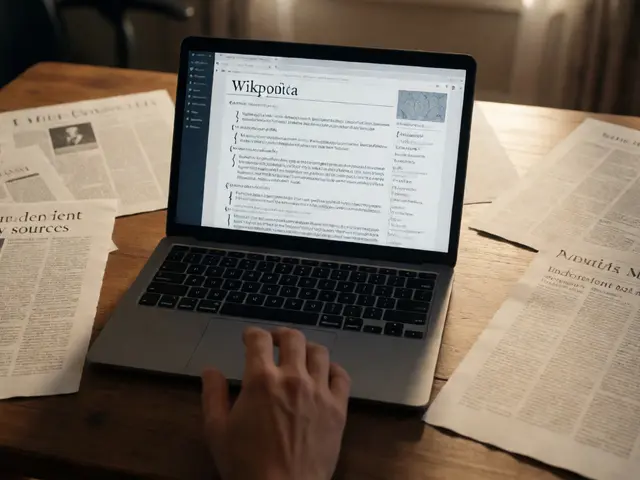
Wikipedia doesn’t delete articles because they’re boring or poorly written. It deletes them because they fail to prove they belong. The core reason? Lack of notability. Wikipedia isn’t a personal blog, a resume, or a promotional page. It’s an encyclopedia that only includes topics with significant coverage in independent, reliable sources.
Let’s say you wrote an article about your local bakery. You included photos, recipes, and quotes from customers. Sounds great, right? But if the only sources are the bakery’s own website, its Facebook page, and a single blog post by a foodie, Wikipedia will likely delete it. Why? Because those aren’t independent sources. Wikipedia needs third-party proof that the topic matters beyond just the people involved.
According to Wikipedia’s own guidelines, a topic must have received significant coverage in reliable sources that are independent of the subject. That means newspapers, academic journals, books, or major magazines-not tweets, forums, press releases, or company websites.
Step 1: Check Notability Before You Write
Don’t start writing until you’ve confirmed there’s enough coverage. Here’s how:
- Search Google News for the topic. Look for at least two or three independent articles from reputable outlets (like local newspapers, national media, or industry publications).
- Search Google Scholar for academic papers or theses mentioning the subject.
- Check WorldCat.org to see if any books mention the topic.
- Look for mentions in major databases like JSTOR, ProQuest, or LexisNexis.
If you find zero credible, independent sources, the article will likely be deleted. No amount of editing will fix that. You can’t invent notability. You can only document it.
For example, a small nonprofit in Madison, Wisconsin, might have a Wikipedia page because it was covered in the Wisconsin State Journal, featured in a PBS documentary, and cited in a university research paper. That’s three independent, reliable sources. That’s enough.
Step 2: Use Reliable Sources Only
Wikipedia trusts sources based on their reputation, not their popularity. Here’s what counts:
- ✅ Reputable newspapers (The New York Times, The Guardian, local papers with editorial oversight)
- ✅ Academic journals and university publications
- ✅ Books published by established publishers (Oxford, Penguin, university presses)
- ✅ Major magazines (Time, The Economist, Wired)
- ✅ Government or educational institution websites (.gov, .edu)
Here’s what doesn’t count:
- ❌ Personal blogs, Medium posts, or Substack newsletters
- ❌ Company websites, press releases, or product pages
- ❌ Social media (Twitter, Instagram, TikTok)
- ❌ Wikipedia itself, forums like Reddit, or fan sites
- ❌ YouTube videos or podcasts unless they’re from verified media organizations
Every claim in your article needs a source. If you say “The company grew 300% in five years,” you must cite a news article or annual report that says the same thing. No source? Remove the claim. It’s that simple.
Step 3: Write in Neutral, Encyclopedic Tone
Wikipedia isn’t a place for opinions, excitement, or marketing language. It’s a reference tool. That means no:
- “Groundbreaking,” “amazing,” “revolutionary”
- “Everyone knows that…”
- “The best in the region”
- Emotional language or hype
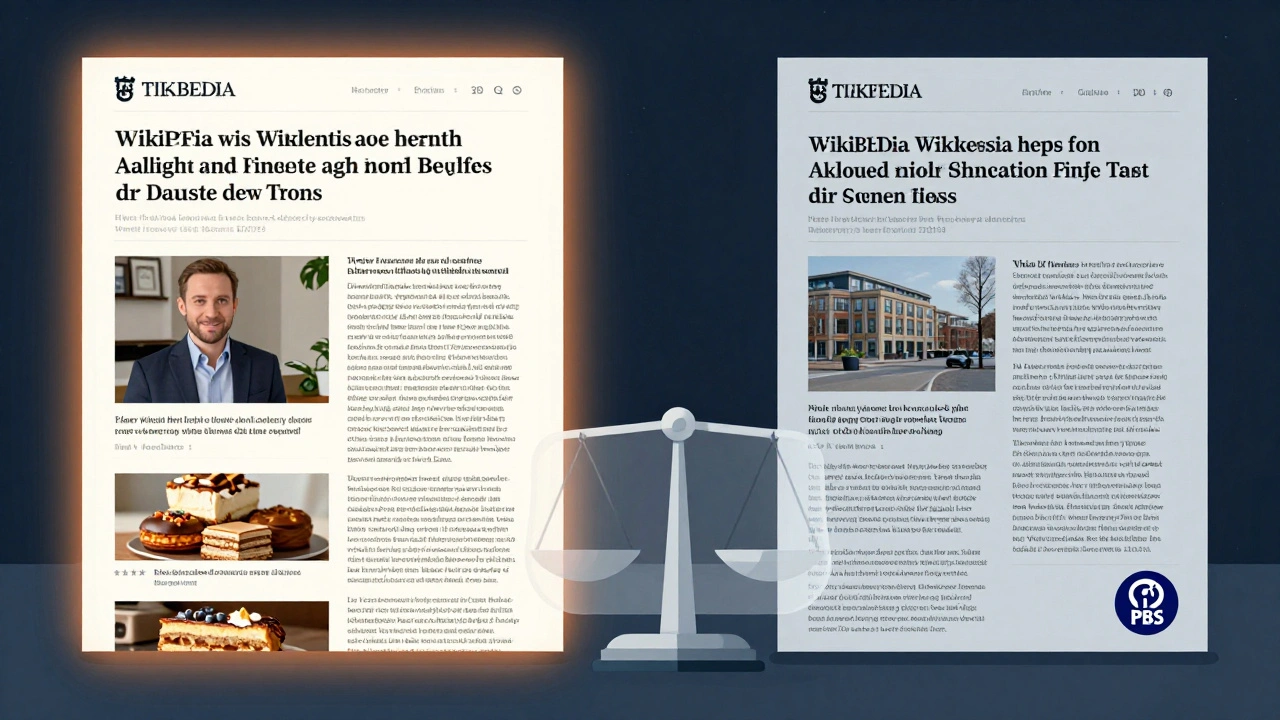
Instead, write like a historian. Stick to facts. Use passive voice when needed. For example:
Bad: “This tiny startup changed the way people think about recycling.”
Good: “The company, founded in 2018, developed a composting system adopted by three municipal governments and covered by the Chicago Tribune in 2021.”
Neutral tone doesn’t mean boring. It means credible. And credibility is what keeps articles alive.
Step 4: Structure Like a Real Encyclopedia Entry
Wikipedia articles follow a standard format. Deviating from it raises red flags. Here’s what works:
- Lead section: One or two paragraphs summarizing the topic, including its significance, location, and key facts.
- History: Chronological development, major events, or milestones.
- Work or operations: What the subject does, how it functions, its structure.
- Recognition or impact: Awards, influence, adoption by institutions, media coverage.
- References: Every claim cited with reliable sources.
- External links: Only direct links to official sites or major media coverage (no blogs or social media).
Don’t invent sections. Don’t add “Trivia” or “Gallery” unless the topic is widely recognized (like a famous person or landmark). Most new articles get deleted because they look like fan pages, not encyclopedic entries.
Step 5: Avoid Conflict of Interest
If you’re writing about your own business, your school, your nonprofit, or your favorite band, Wikipedia assumes you’re biased. That’s not a crime-it’s a warning sign.
Wikipedia’s policy on conflict of interest is clear: if you have a personal connection to the subject, you should not edit the article directly. Instead:
- Use the article’s Talk page to suggest changes with source links.
- Ask a neutral editor to make the edits for you.
- Provide the sources and let someone else write the text.
Many editors will ignore edits from people who mention their own company or organization. That’s not personal-it’s policy. The goal is to prevent self-promotion disguised as information.

Step 6: Respond to Deletion Nominations Correctly
If your article gets tagged for deletion, don’t panic. Don’t argue. Don’t revert changes. Don’t post angry messages.
Here’s what to do:
- Go to the article’s Talk page.
- Find the deletion nomination (usually labeled “AfD” for Articles for Deletion).
- Review the reasons given by the nominator.
- If they’re right-add sources, fix tone, improve structure.
- If they’re wrong-provide new, reliable sources that prove notability.
- Leave a calm, factual comment explaining your changes.
Wikipedia’s deletion process is designed to be fair. Most articles are kept if editors can see that the subject meets the guidelines. But you have to show your work.
One editor in Madison kept a local community theater’s article alive by adding three newspaper reviews from 2020-2023, a citation from a university arts study, and a link to its listing in the Wisconsin Arts Board’s public database. The article stayed.
What Not to Do
Here are the top five mistakes that get articles deleted:
- Writing about yourself, your company, or your pet project without third-party coverage.
- Using only the subject’s own website as a source.
- Writing in promotional language (“#1 in the Midwest!”).
- Adding unverified claims (“It’s rumored that…”).
- Ignoring deletion discussions or arguing with reviewers.
Wikipedia doesn’t punish editors for mistakes. It punishes ignorance of its rules. Learn the rules. Follow them. Your article will survive.
Final Tip: Use the Notability Checklist
Before you submit or edit, run through this quick checklist:
- Are there at least two independent, reliable sources covering the topic?
- Are those sources from outside the subject’s organization?
- Do the sources discuss the topic in depth, not just mention it in passing?
- Is the tone neutral and factual?
- Are all claims cited?
- Is the structure similar to existing Wikipedia articles on similar topics?
If you answered yes to all six, your article has a strong chance of staying. If not, fix it before you publish.
Can I write a Wikipedia article about my small business?
Yes-but only if your business has been covered in independent, reliable sources like newspapers, magazines, or academic journals. A website, Yelp page, or Facebook post doesn’t count. If no credible third-party media has written about your business, Wikipedia won’t allow the article, no matter how good it is.
How long does it take for a Wikipedia article to be deleted?
It can take anywhere from a few hours to two weeks. Articles flagged for deletion go through a formal process called Articles for Deletion (AfD), where editors discuss whether the topic meets Wikipedia’s guidelines. If no one defends the article with solid sources, it’s usually deleted within 7-10 days.
What if I can’t find any sources for my topic?
If there are no independent, reliable sources covering your topic, Wikipedia won’t accept the article. No amount of editing, formatting, or pleading will change that. Instead, focus on topics that have been covered in media, academic work, or official reports. Notability can’t be created-it can only be documented.
Can I use Wikipedia to promote my nonprofit or event?
No. Wikipedia is not a platform for promotion. Even if your nonprofit does great work, if it hasn’t received coverage in independent media, it won’t qualify. If you want to raise awareness, use your own website, social media, or local press. Wikipedia exists to document-not to advertise.
Why does Wikipedia delete articles that seem useful?
Wikipedia isn’t designed to be a comprehensive database of everything. It’s meant to be a reliable reference for topics that have had a measurable impact or received significant attention from independent sources. If something is only known to a small group of people, it doesn’t belong in an encyclopedia. This keeps Wikipedia trustworthy and prevents it from becoming a collection of personal pages.
If you’ve ever had an article deleted, it’s not because you failed-it’s because you didn’t know the rules. Now you do. Follow them. Your next article won’t just survive. It’ll last.