When you edit a Wikipedia article in English and find a great source cited in German, French, or Japanese, you might think: "I can use this." But translating citations isn’t as simple as copying and pasting. Each language version of Wikipedia has its own rules for how citations should look - and if you don’t follow them, your edit might get reverted. This isn’t about style. It’s about reliability. Readers need to be able to find and verify the sources behind every claim.
Why Citation Formats Vary by Language
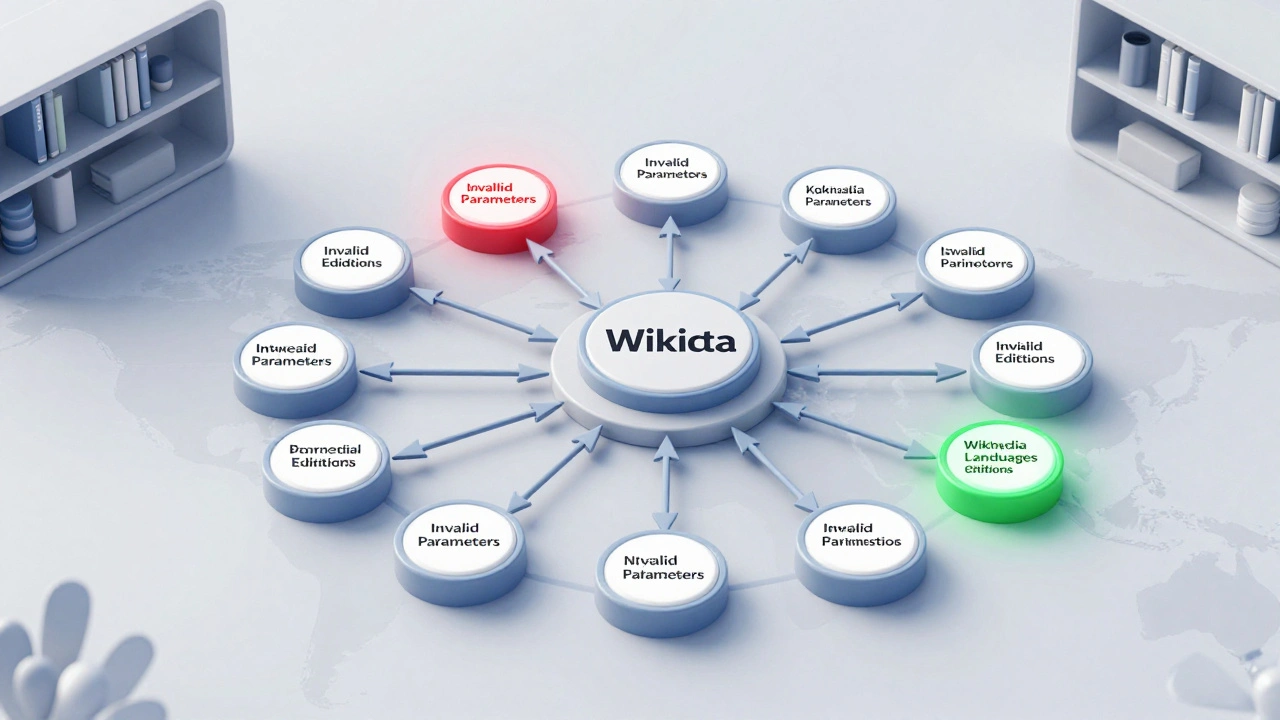
Wikipedia isn’t one big website. It’s a network of over 300 independent language editions. Each one operates with its own community, guidelines, and traditions. The English Wikipedia uses Cite templates like{{cite web}} and {{cite book}}. The German Wikipedia prefers {{Zitat}} and {{Literatur}}. The Japanese version uses {{cite journal}} but with full-width punctuation and different order of elements.
Why? Because each community built its tools around what its users were already familiar with. German editors grew up using footnotes in academic papers. Japanese editors follow publishing norms from local journals. These aren’t arbitrary - they’re rooted in real-world citation practices.
When you translate a citation from one language to another without adjusting the format, you’re not just changing words. You’re breaking the system. Editors in the target language will see a citation that looks foreign, inconsistent, or even broken. That’s why automated translation tools often fail here - they don’t understand context, structure, or community norms.
What You Need to Change
Translating a citation means more than swapping words. You need to restructure it. Here’s what changes:- Template names:
{{cite web}}(English) becomes{{webcite}}(Spanish) or{{Cite news}}(French). - Parameter order: English uses
author,title,date. Russian usesавтор,заглавие,дата- and sometimes requiresиздание(edition) as a mandatory field. - Punctuation: Japanese citations use full-width commas and periods. French uses thin spaces before colons and semicolons. English doesn’t.
- URL handling: Some languages strip tracking parameters. Others require the full original URL. The Arabic Wikipedia often removes
utm_parameters. The Portuguese version keeps them. - Language tagging: If the source is in a different language than the article, you must specify it. In English:
language=es. In Korean:언어=es.
Here’s a real example. A German citation:
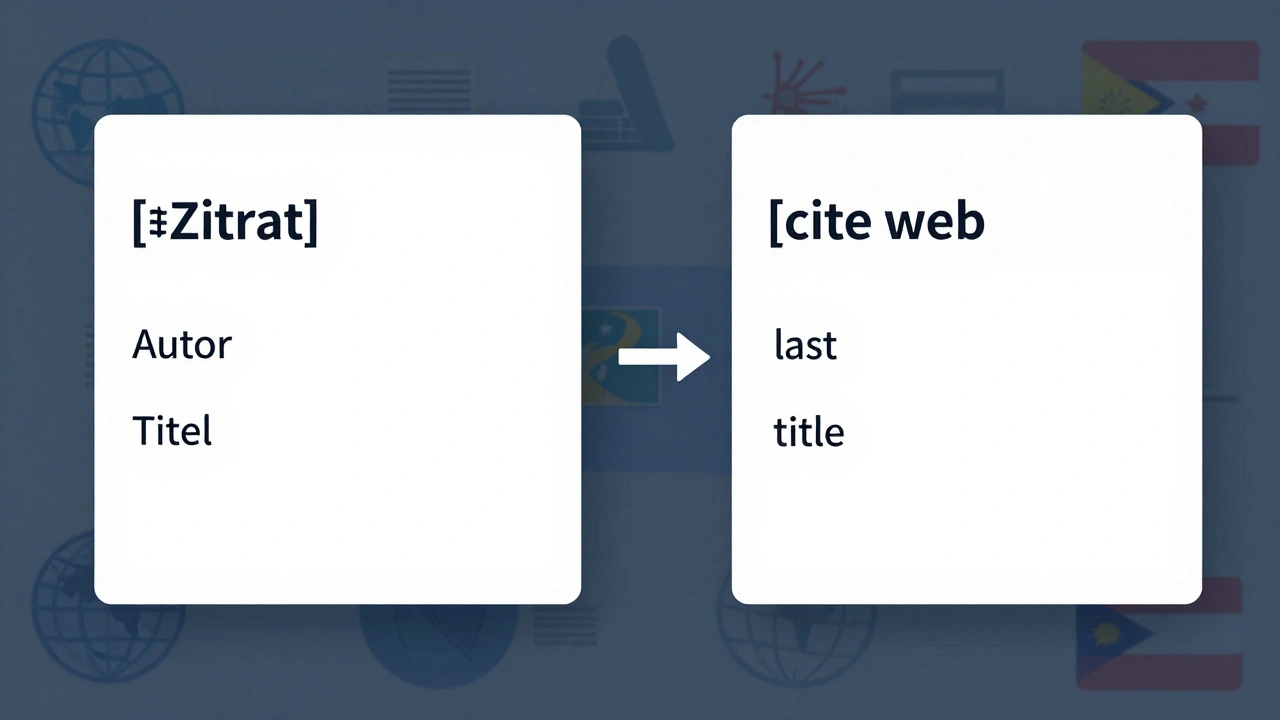
{{Zitat |Autor=Schmidt, Anna |Titel=Klimawandel in der Landwirtschaft |Datum=2023-05-12 |Webseite=Deutsche Welle |URL=https://dw.com/12345 |Sprache=de}}Translated to English, it becomes:
{{cite web |last=Schmidt |first=Anna |title=Climate Change in Agriculture |date=2023-05-12 |website=Deutsche Welle |url=https://dw.com/12345 |language=de}}Notice how the parameter names changed. The German Sprache became language. The German Titel became title. The structure stayed the same, but the labels didn’t.
How to Find the Right Template
You can’t guess. You have to look. Here’s how:- Go to the target Wikipedia language - say, French Wikipedia.
- Search for
Modèle:CitationorModèle:Cite web(the exact name varies). - Open the template documentation page. It will list all required and optional parameters.
- Compare the source citation’s elements to the target template’s fields.
- Use the
Transclusiontool on the template page to see how it renders.
Pro tip: Many language editions have a “citation helper” tool. In Spanish, it’s called Asistente de citas. In Russian, it’s Помощник по цитированию. These tools auto-fill parameters based on pasted URLs or DOI numbers. They’re not perfect, but they cut down errors.
Common Mistakes to Avoid
Even experienced editors mess this up. Here are the top three mistakes:- Copying the raw URL: Don’t paste the full link from the German version if it includes
utm_sourceorfbclid. Many languages strip these. Use the clean version. - Forgetting the language tag: If the source is in Italian and you’re editing the English Wikipedia, you must add
language=it. Without it, readers assume the source is in English. - Mixing formats: Never combine English parameters with a Spanish template. That breaks the template. Always use the target language’s template structure.
One editor added a Japanese citation to the English Wikipedia using Japanese parameter names - 著者 instead of last. The edit was reverted within minutes. The system doesn’t recognize non-English parameter names. It’s not about translation - it’s about compatibility.
When to Leave It Alone
Sometimes, the best move is to do nothing. If the source is obscure, poorly translated, or only available in a language you can’t read, don’t force it. Wikipedia values verifiability over completeness. A citation in German is still valid in English Wikipedia - if it’s properly formatted. But if you can’t verify the content or format it correctly, leave it out.Instead, add a note: {{Citation needed|language=de}}. This tells other editors: "There’s a source here, but I need help translating or verifying it." Many communities have volunteers who specialize in cross-language sourcing.
Tools That Help
You don’t have to do this manually every time. These tools save hours:- Citation Hunt (available on all Wikipedias): Finds articles with missing citations. You can use it to spot gaps where translated sources could help.
- Wikidata: Many citations are now stored in Wikidata. If the source exists there, you can pull it into any language version with one click. The citation auto-formats based on the article’s language.
- Google Translate + Template Converter: Use Google Translate to understand the source text, then manually reformat using the target Wikipedia’s template. Never auto-convert the citation code - it breaks.
Wikidata is the game-changer. If a source has a Wikidata item (like a journal article or book), its metadata - author, title, date, DOI - is stored once. Then, every Wikipedia language pulls from that single source. The template auto-generates the correct format. No manual translation needed.
Why This Matters
Wikipedia’s credibility depends on verifiable sources. A citation that’s poorly formatted is as useless as no citation at all. Readers, researchers, and even journalists use Wikipedia as a starting point. If they click a link and find a broken reference, they lose trust.Translating citations correctly isn’t about being a language expert. It’s about respecting the systems that keep Wikipedia reliable. It’s about making sure that a fact cited in Mandarin, Arabic, or Polish can be checked by anyone - no matter what language they speak.
Next time you see a citation from another language, don’t just copy it. Translate the structure. Respect the template. Verify the source. That’s how you make Wikipedia better - not just for you, but for everyone who depends on it.
Can I use a citation from another language Wikipedia without translating it?
Yes, you can. If the source is properly cited in its original language and the citation follows that Wikipedia’s guidelines, it’s valid. But if you’re adding it to a different language version, you must format it using that version’s citation template. A German citation in an English article still needs to use English template parameters like last and title, not German ones like Autor or Titel.
Do I need to translate the title of the source?
You should. The title of the source should appear in the language of the article you’re editing - not the original language. So if you’re editing the French Wikipedia and citing a Spanish article, write the title in French. Add the original title in parentheses if it’s well-known. Example: "Réchauffement climatique (Calentamiento global)". This helps readers understand what they’re looking at.
What if I can’t read the source at all?
Don’t cite it. Wikipedia requires that editors verify the content of sources, not just the citation. If you can’t confirm what the source says - even with translation tools - you shouldn’t use it. Add a {{Citation needed}} tag instead. Other editors who speak the language may help later.
Is Wikidata the best way to handle multilingual citations?
Yes, for structured sources like books, journal articles, and reports. If the source has a Wikidata item (identified by a Q-number), you can link to it from any Wikipedia language. The system auto-generates the correct citation format for each language. This reduces errors and keeps citations consistent across all editions. For websites or news articles without Wikidata entries, manual formatting is still necessary.
Why do some Wikipedia languages require more fields than others?
Each community decides its own citation standards based on local academic and publishing norms. For example, the Polish Wikipedia requires the publisher’s location (e.g., "Warsaw") for books, while the English version doesn’t. The Japanese version requires the ISBN in a specific format. These rules reflect what’s expected in their own scholarly culture. There’s no universal standard - only community consensus.