
Главное: Key Takeaways for Success
- Avoid the "Solo Editor" trap; a project driven by one person rarely graduates.
- Focus on quality over quantity to pass the STEC review.
- Establish clear governance and community norms early on.
- Prioritize the creation of a functional project namespace.
- Engage with existing Wikimedia mentors to navigate the promotion process.
The Solo Editor Trap: Why One Person Isn't Enough
One of the biggest mistakes newcomers make is thinking that 1,000 high-quality articles written by a single person are enough to trigger a launch. In the eyes of the Wikimedia Foundation, a project needs to be a community, not a library. When the STEC (Sponsorship and Review) process looks at your application, they aren't just checking the article count; they're looking for evidence of a living, breathing community.
If you are the only person editing, you've created a bottleneck. What happens if you get bored, lose interest, or face a personal crisis? The project dies. To avoid this, you should be spending as much time recruiting editors on social media, local community centers, or academic forums as you do writing articles. You need at least a handful of active contributors who can disagree on a talk page and reach a consensus. This "social proof" is what convinces the foundation that the language is viable in the long run.
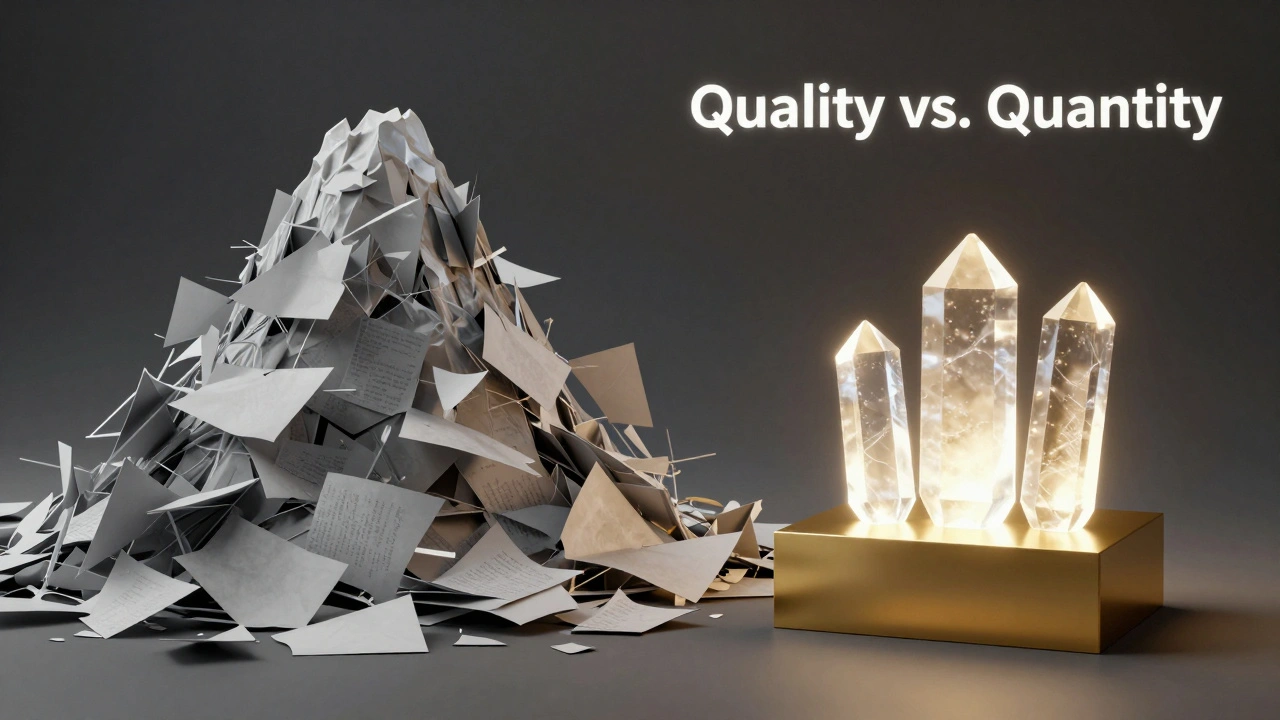
The Quality vs. Quantity Dilemma
It's tempting to use bots to import thousands of stubs from other language editions. While this makes your project look "big," it often creates a maintenance nightmare. Low-quality content is a red flag during the review process. A project filled with one-sentence articles and broken links suggests a lack of care and a lack of native-speaker oversight.
Instead of chasing a high number, focus on building a core of "featured" or high-quality articles. This demonstrates that the community knows how to use Wikipedia's standards, such as citing reliable sources and maintaining a neutral point of view. A project with 200 well-sourced, comprehensive articles is far more likely to be approved than one with 5,000 machine-translated stubs. Use the MediaWiki software's native tools to track article quality and encourage your peers to expand existing stubs rather than creating new ones.
| Approach | Pros | Cons | Likelihood of Launch |
|---|---|---|---|
| Bot-Driven Import | Fast initial growth | High maintenance, low quality | Low |
| Community-Curated | Sustainable, high quality | Slower start | High |
| Solo-Author Sprint | Consistent style | No community resilience | Medium-Low |
Ignoring the Project Namespace
Most people focus entirely on the articles (the main namespace) and completely ignore the project pages. This is a critical error. The project namespace is where the "laws" of your Wikipedia are written. If you don't have a clear set of guidelines on how to cite sources, how to handle disputes, or how to categorize content, the reviewers will see a project that lacks structure.
You need to establish a basic infrastructure. This includes a main page that welcomes new users, a list of active editors, and a set of community portals. Think of it as building the city hall before you build the suburbs. If a new user arrives and doesn't know where to start or how the community operates, they will leave. Documentation in the project namespace proves that you are thinking about the long-term governance of the site, not just the immediate content.
The Danger of Machine Translation
With the rise of AI and sophisticated translation tools, it's easier than ever to mirror an English Wikipedia page into a minority language. However, Machine Translation often strips away the cultural nuance and linguistic accuracy required for an encyclopedia. Worse, it can introduce subtle hallucinations or errors that native speakers find offensive or absurd.
If the review committee finds that your content is simply a mirrored version of another language, they may question the actual need for a separate language edition. The goal of the incubator is to foster a unique linguistic community. Encourage your editors to write from their own perspective and use local sources. A unique, slightly smaller project is always more valuable than a giant, robotic mirror of the English Wikipedia.
Navigating the Promotion Process
The path from the incubator to a full launch isn't a straight line; it's a conversation. Many founders make the mistake of applying for launch and then disappearing until they hear back. The promotion process is an iterative dialogue with the Wikimedia Community. When you receive feedback or a request for more information, treat it as a roadmap, not a critique.
Be prepared to prove that your language is distinct. If your language is a dialect of a larger language that already has a Wikipedia, you'll need to provide strong linguistic evidence (like a grammar guide or a statement from linguists) to justify a separate project. Failure to provide this evidence is a common reason for project stagnation. Work with the User:Wikimedia-Language-Committee (or equivalent bodies) to ensure your linguistic case is airtight before you officially apply.

Building a Sustainable Pipeline
Once you've avoided the initial pitfalls, your focus should shift to the pipeline. How do you keep people writing? The most successful incubator projects create "edit-a-thons" or partner with local universities. For example, if you're starting a project for a regional language in Southeast Asia, partnering with a local history department can bring in a wave of experts who provide high-quality, sourced content.
Avoid burnout by diversifying the types of content. Don't just focus on history and geography; encourage articles on current events, pop culture, and science. This keeps the project feeling fresh and attracts a wider variety of contributors. Remember, the goal isn't just to reach the launch threshold-it's to ensure that on day one of your official launch, you have a community that is excited to keep growing.
How many articles do I actually need for a launch?
There is no magic number. While some projects launch with a few hundred articles, the focus is on community activity and content quality. A project with 300 high-quality articles and 10 active editors is more likely to be approved than one with 2,000 low-quality stubs and only one editor.
Can I use a bot to import articles from other Wikipedias?
You can, but do so with extreme caution. Over-reliance on bots can lead to a "ghost town" feel and may be viewed negatively by reviewers if the content isn't subsequently polished by human editors. Use bots for framework and basic data, but prioritize human writing for the actual prose.
What is the STEC and why does it matter?
The STEC (Sponsorship and Review) is essentially the quality control board for new language projects. They ensure that new Wikipedias are viable, linguistically distinct, and have a sustainable community before they are granted their own domain.
What happens if my application for launch is rejected?
Rejection is usually a "not yet" rather than a "no." Reviewers will typically provide specific reasons-such as a lack of active editors or poor content quality. Your next step is to address those specific points and re-apply once you have evidence of improvement.
How do I find other editors for my language?
Look for linguistic communities on platforms like Reddit, Facebook, or specialized language forums. Reach out to universities that teach the language or cultural organizations. Be clear about the mission: creating a free knowledge base for the language's speakers.
Next Steps for Project Founders
If you're just starting, your first move should be to create a "Welcome" page in your project namespace. Clearly outline who you are, why this language needs a Wikipedia, and how others can help. Avoid the temptation to write 50 articles in a weekend; instead, spend that time finding three other people who share your passion. If you already have content, audit it for machine-translation errors and start building your community guidelines. The road to a full launch is a marathon of community building, not a sprint of content creation.