When you’re writing a news story and you pull a fact from Wikipedia, you’re not just copying text-you’re making a judgment about truth. Readers trust journalists to verify what they report. If you treat Wikipedia like a final source, you’re not just cutting corners-you’re risking your credibility.
Why Wikipedia Isn’t a Source-It’s a Starting Point
Wikipedia isn’t a primary source. It doesn’t produce original research. It doesn’t interview witnesses. It doesn’t file public records requests. It’s a summary, written by volunteers, often based on books, news articles, academic papers, and government reports. That means if you cite Wikipedia directly in a news story, you’re not citing the real source-you’re citing someone else’s summary of a source.
Think of it like this: if you read a newspaper article about a new study, then quoted that newspaper in your own story without checking the study, you’d be called out. Wikipedia works the same way. It’s one step removed from the original material. The only time it’s acceptable to cite Wikipedia directly is when the article itself is the subject of your story-like when a Wikipedia page is vandalized, or when a controversial edit goes viral.
How to Trace Back to the Real Source
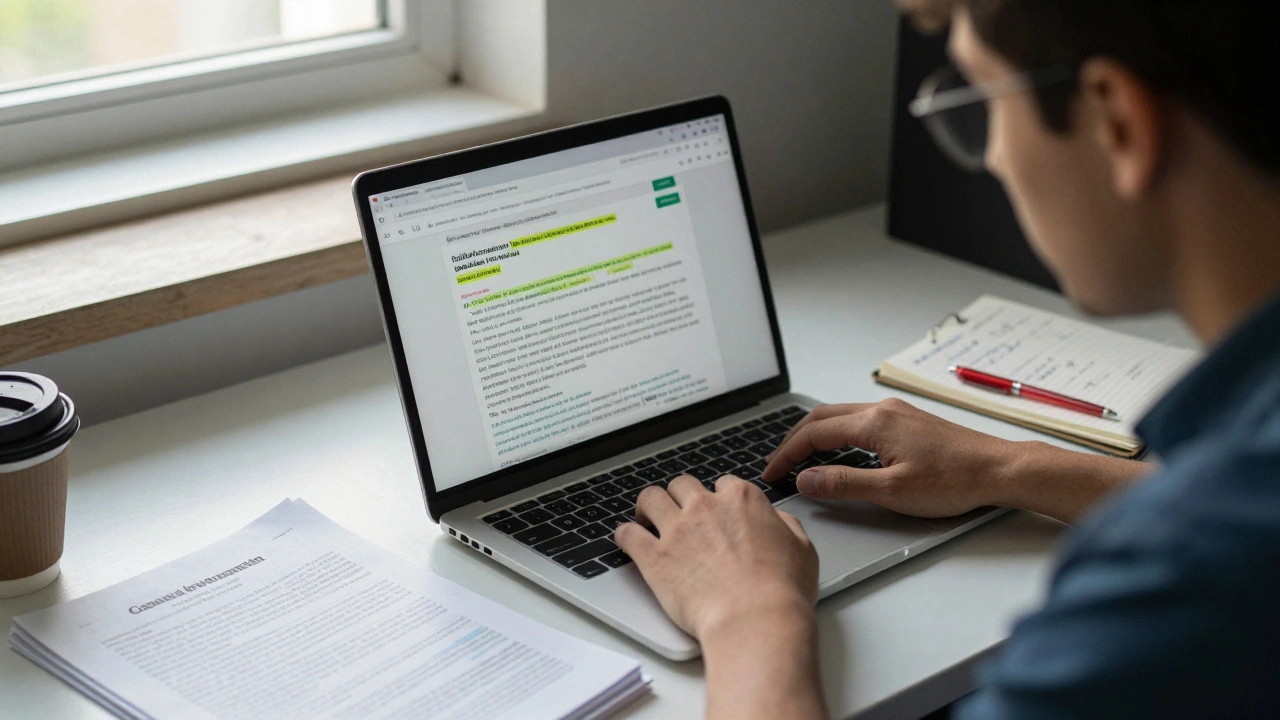
Every well-written Wikipedia entry has footnotes. Scroll to the bottom of the page. Look for the reference numbers next to the sentence you want to use. Click them. You’ll be taken to the original source: a journal article, a government report, a book, or a news outlet.
For example, if Wikipedia says, “The unemployment rate fell to 3.9% in October 2024,” and the footnote links to the U.S. Bureau of Labor Statistics’ monthly report, then that’s your source-not Wikipedia. You don’t need to mention Wikipedia at all. Just say: “According to the U.S. Bureau of Labor Statistics, the unemployment rate fell to 3.9% in October 2024.”
Some Wikipedia entries cite other news organizations. If the footnote leads to a CNN article or a Reuters report, then you can use that as your source. But don’t just copy the wording. Rewrite it in your own voice. Newsrooms expect original writing, even when the facts come from elsewhere.
What to Do When the Original Source Is Hard to Find
Sometimes, the Wikipedia footnote links to a paywalled article, a dead link, or a PDF buried in a government archive. That’s when you dig deeper. Use Google Scholar, library databases, or even email the author of the original piece. If you can’t get the full source, don’t use the fact.
There’s no excuse in journalism for using unverifiable data. If you can’t find the original report, the fact doesn’t belong in your story-not even if it’s on Wikipedia. A 2023 study from the Reuters Institute found that 18% of false claims in online news originated from misattributed Wikipedia content. That’s not a risk you can afford.
Instead of forcing a fact into your story, ask: Is this important enough to verify? If yes, spend the time. If no, leave it out. Better to have a shorter, accurate story than a long, shaky one.
When It’s Okay to Mention Wikipedia
There are rare cases where citing Wikipedia makes sense. For example:
- You’re reporting on a Wikipedia edit war between two political groups.
- A public figure is accused of editing their own Wikipedia page.
- A viral TikTok video misquotes Wikipedia as a source, and you’re debunking it.
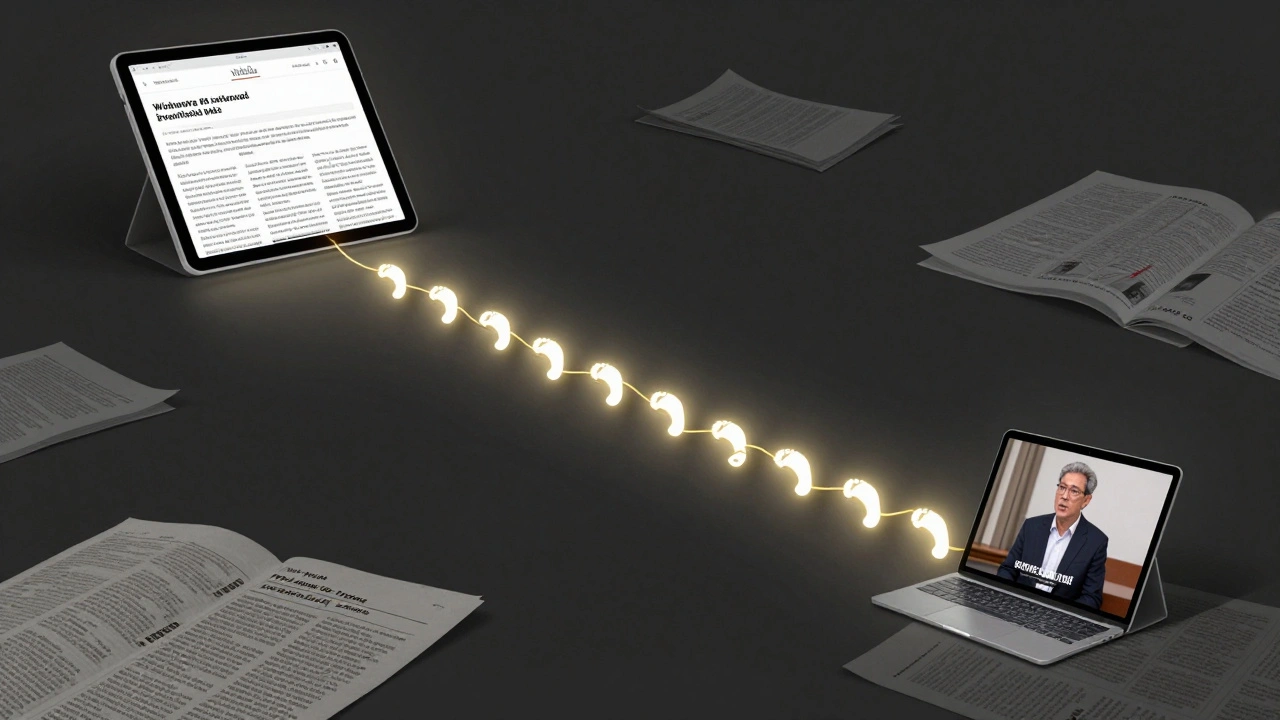
In those cases, you’re not using Wikipedia for the fact-you’re using it as evidence of how information spreads. You might write: “A widely shared social media post claimed that ‘78% of Americans support the policy,’ citing Wikipedia. But the Wikipedia page itself cited a 2021 Pew Research survey, which found only 42% support.”
Here, Wikipedia is part of the story-not the source of the truth.
How to Attribute Correctly in Writing
Never write: “According to Wikipedia…” unless you’re specifically discussing Wikipedia’s content.
Instead, follow this formula:
- Find the fact on Wikipedia.
- Click the footnote to find the original source.
- Verify the source is credible and current.
- Quote or paraphrase the source directly.
- Attribute it clearly: “According to [source],” or “[Source] reported.”
Don’t say “Wikipedia says” and then quote a sentence. Don’t say “As seen on Wikipedia.” That’s lazy. It tells readers you didn’t do the work.
Journalism isn’t about speed. It’s about accuracy. The fastest way to lose trust is to pass off secondhand information as original reporting.
Common Mistakes Journalists Make
Here are the top three errors when citing Wikipedia:
- Using the summary as the source. Example: “Wikipedia says the population is 1.4 million.” But the real source is a 2023 city census report. Fix: Cite the census.
- Using outdated references. Wikipedia updates fast, but the footnotes might link to old articles. Always check the publication date of the source, not the Wikipedia edit date.
- Assuming all Wikipedia pages are equal. A page on “Quantum Physics” might have 50 citations from peer-reviewed journals. A page on “Celebrity Relationships” might have one tweet as its only source. Judge each page by its references-not its popularity.
Wikipedia’s reliability varies wildly. A 2020 Nature study found that Wikipedia’s science entries were nearly as accurate as Encyclopaedia Britannica-but only when properly cited. That means the quality isn’t in Wikipedia. It’s in the footnotes.
What Editors and Newsrooms Should Do
Newsrooms need clear guidelines. Don’t just tell reporters “don’t use Wikipedia.” Teach them how to use it responsibly. Create a quick checklist:
- Is this fact critical to the story?
- Does Wikipedia cite a credible source?
- Can I access and verify that source?
- Can I rephrase the fact in my own words?
- Do I know who wrote the Wikipedia entry?
If the answer to any of those is “no,” don’t use it.
Some newsrooms now require reporters to submit screenshots of the original source alongside their drafts. That’s not overkill-it’s standard practice.
Final Rule: Be the Gatekeeper
Journalists don’t just report facts. They decide which facts are worth reporting. And they decide how those facts get verified. When you cite Wikipedia without tracing it back, you’re letting an anonymous volunteer make your editorial decision for you.
That’s not journalism. That’s forwarding a text message.
The truth doesn’t live on Wikipedia. It lives in court records, in interviews, in datasets, in published studies. Your job is to find it-not to copy the summary.
So next time you’re tempted to write “According to Wikipedia…” pause. Open the footnote. Follow the trail. Find the source. Then write your story-not someone else’s footnote.
Can I use Wikipedia as a source in a news article?
No, not directly. Wikipedia is a secondary summary. Always trace the fact back to its original source-like a government report, academic paper, or news outlet-and cite that instead. Only cite Wikipedia if you’re reporting on Wikipedia itself, such as an edit controversy or misinformation spread from its pages.
Why is citing Wikipedia considered unprofessional in journalism?
Because it shows you didn’t verify the information. Journalism is built on accountability. If you can’t name the original source of a fact, you can’t defend it. Readers and editors expect you to do the legwork. Using Wikipedia as a source suggests you skipped that step.
What should I do if the Wikipedia footnote leads to a broken link?
Don’t use the fact. If you can’t find the original source through archives, Google Scholar, or direct contact with the publisher, the information isn’t reliable enough for a news story. It’s better to leave it out than risk spreading misinformation.
Are all Wikipedia pages equally reliable?
No. Pages on scientific topics, history, or public policy often have dozens of citations from peer-reviewed journals and official reports. Pages on pop culture, celebrities, or trending topics may rely on blogs, tweets, or unverified claims. Always check the footnotes-not the page’s popularity or design.
How can newsrooms prevent journalists from misusing Wikipedia?
Train reporters to use Wikipedia as a research tool, not a source. Provide templates for sourcing: “Find the fact → locate the original source → verify it → cite it.” Require screenshots of original documents in submissions. Make verification part of the editing checklist.