Wikipedia isn’t supposed to be a advertising platform. But for years, companies, PR firms, and even politicians quietly paid people to edit Wikipedia articles - to soften criticism, boost praise, or erase mistakes. These weren’t just minor tweaks. Some edits wiped out entire sections of a company’s history, buried negative reviews, or inserted glowing quotes that never existed. When these practices were exposed, the backlash wasn’t just from readers. It came from Wikipedia’s own volunteer editors - the people who built the site in the first place.
How Paid Editing Started
It began subtly. A PR agency hired a freelancer to update a client’s Wikipedia page. The edit? Changed "faced multiple lawsuits" to "faced legal challenges." Another edit replaced "controversial CEO" with "visionary leader." At first, these changes flew under the radar. Wikipedia doesn’t require editors to disclose who they work for. So when someone made a polished, well-sourced edit, it looked legitimate. But over time, patterns emerged. The same usernames kept editing the same companies. The same language appeared across unrelated articles. The same sources - often from the company’s own website - got reused.
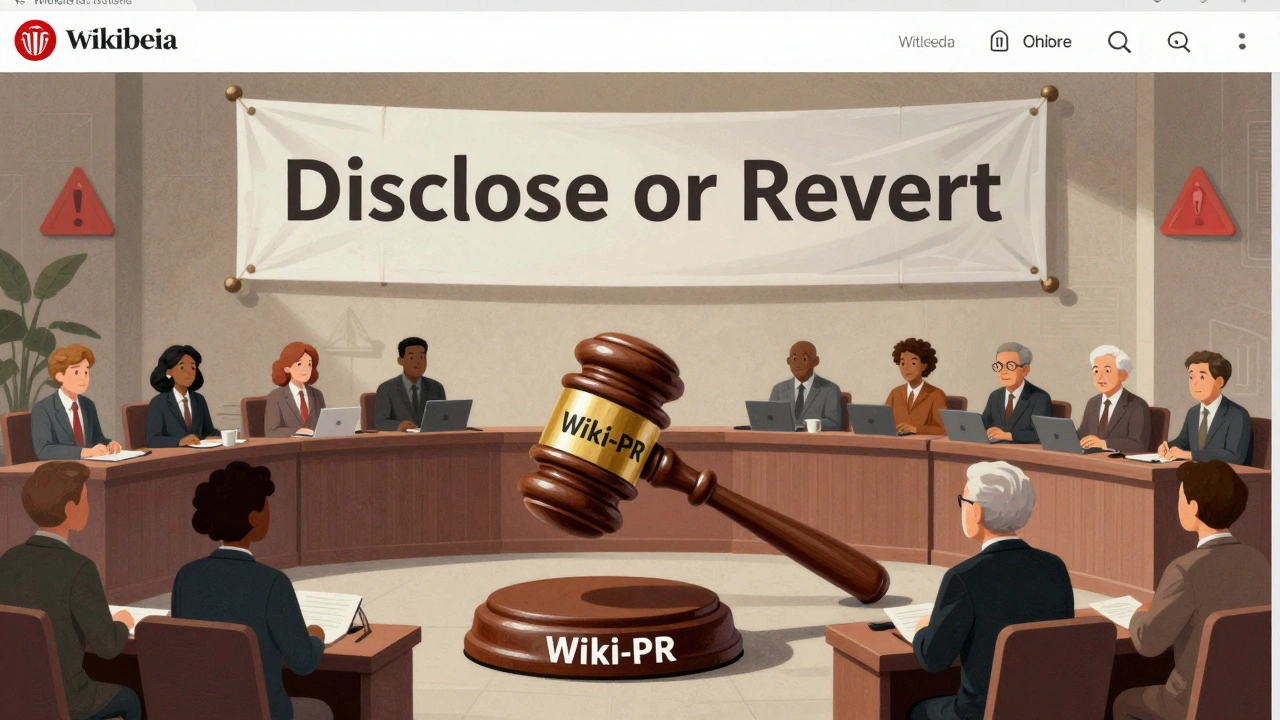
By 2013, investigations by journalists and volunteer editors uncovered coordinated campaigns. One firm, Wiki-PR, openly advertised paid editing services on its website. They promised to "increase visibility" and "improve reputation" on Wikipedia. They even offered tiered packages: basic, premium, and enterprise. The service cost up to $5,000 per article. That’s not a donation. That’s a bribe to the world’s most trusted reference source.
The Fallout
When the New York Times broke the story in 2013, the Wikimedia Foundation - the nonprofit that runs Wikipedia - didn’t just react. They went into damage control mode. They immediately banned Wiki-PR and several other firms from editing. But banning a company doesn’t stop the practice. The real problem was systemic: Wikipedia’s open-editing model had no way to detect who was behind an edit.
Volunteer editors started tagging suspicious edits with templates like "conflict of interest" and "paid advocacy." They created tools to track edit patterns. They built databases of known paid editors. Some even used reverse image searches to find if a photo used in an article had been taken from a corporate press kit. These weren’t automated bots. These were ordinary people - teachers, engineers, retirees - who noticed something was off and refused to let it slide.
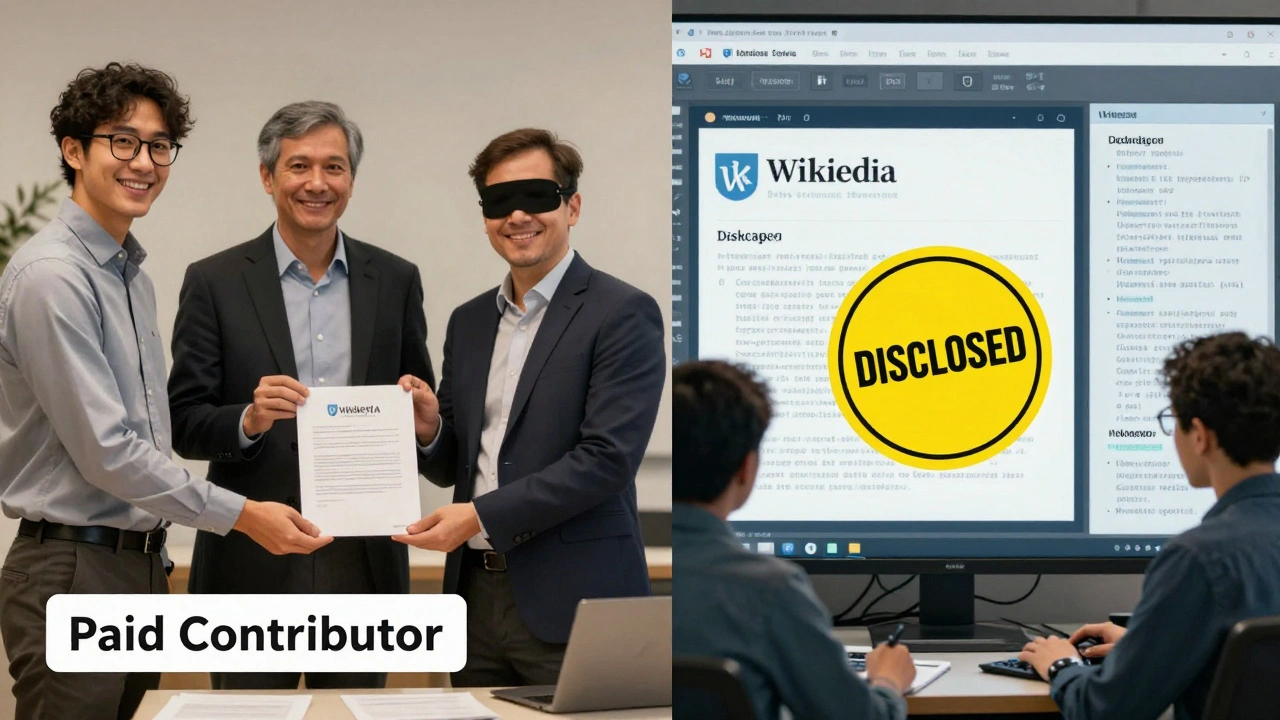
The Wikimedia Foundation responded with new rules. In 2014, they launched the Conflict of Interest guideline. It didn’t ban paid editing outright - that would be impossible to enforce - but it forced transparency. If you’re paid to edit, you must say so. You must disclose your employer, your client, and your relationship to the topic. You can’t edit articles about your own company unless you’re on a public, monitored account. And you can’t delete negative information just because it’s inconvenient.
How the Rules Work in Practice
Today, every paid editor who registers on Wikipedia must use a special account labeled "paid contributor." These accounts are visible to everyone. If you try to edit an article about your employer without disclosing it, your edit gets flagged within minutes. Volunteers review flagged edits. They compare them to historical versions. They check for language that matches corporate press releases. If they find a pattern, they revert the changes and report the user.
Some companies now have internal policies that forbid paid editing. Microsoft, for example, trains its communications team to submit edits through official channels - and only if they’re neutral and sourced. Google has a similar policy. Both companies have public Wikipedia editing guidelines on their websites. They don’t want to risk their reputation by appearing to manipulate the encyclopedia.
But enforcement is still messy. A 2022 study by researchers at the University of California found that 17% of edits to Fortune 500 company pages came from accounts with undisclosed paid relationships. Many of those edits were minor - fixing typos or updating a CEO’s title. But 3% involved removing negative information. One article about a pharmaceutical company had a section on drug side effects deleted. It was later restored after a volunteer noticed the edit history matched a known paid editor’s pattern.
The Bigger Problem: Trust
Wikipedia’s biggest strength isn’t its technology. It’s its credibility. People trust it because they believe it’s unbiased. When a student writes a paper, they cite Wikipedia because they assume it’s been checked by strangers who don’t have a stake in the outcome. When a journalist needs a quick fact, they turn to Wikipedia because it’s supposed to be neutral ground.
Paid editing undermines that trust. Even one hidden edit can make readers wonder: "What else was changed?" That’s why the Wikimedia Foundation doesn’t just punish violators - they publicly name them. In 2021, they released a transparency report listing 287 accounts suspended for undisclosed paid editing. The report included the number of edits made, the types of articles affected, and whether the edits were reverted. It was the first time they’d done this. They wanted the public to see that they’re not ignoring the problem.
What’s Still Broken
There’s still a loophole. Wikipedia doesn’t ban paid editing - it just requires disclosure. That means companies can still hire editors, as long as they say who they are. But here’s the catch: most people don’t read disclosure notices. They scroll past the "paid contributor" tag like an ad blocker notice. And even when they see it, they don’t know how to verify if the edit is still biased.
There’s also no penalty for bad-faith disclosure. A company could say, "I work for Company X," then proceed to rewrite the article in their favor. Volunteers have to dig through edit histories to prove manipulation. It’s time-consuming. And there aren’t enough volunteers to catch everything.
Some editors argue that Wikipedia should ban all paid editing. But others point out that not all paid editors are bad. Historians, scientists, and librarians sometimes get paid to edit articles about their field. A university professor might be hired to improve the accuracy of a medical article. A museum curator might update a page on a historical figure. If those edits are transparent, they can improve Wikipedia. The real enemy isn’t paid editing. It’s hidden editing.
The Future of Wikipedia’s Integrity
Wikipedia’s response to paid editing scandals hasn’t been perfect. But it’s been honest. They didn’t try to hide the problem. They didn’t pretend it didn’t exist. They admitted their system was vulnerable and started fixing it - slowly, painfully, with the help of thousands of volunteers.
Today, Wikipedia has more tools than ever to detect manipulation. Machine learning models now scan edits for language patterns linked to PR firms. Automated bots flag edits that match known paid-editor behavior. And volunteers still do the heavy lifting - checking sources, comparing versions, and reverting changes that look suspicious.
Wikipedia’s future doesn’t depend on perfect rules. It depends on people who care enough to notice when something’s wrong. And for now, that’s still its greatest defense.
Is paid editing completely banned on Wikipedia?
No, paid editing isn’t banned. But editors who are paid to edit must disclose their relationship to the topic. They must use a clearly labeled "paid contributor" account and state who they work for. If they don’t, their edits are reverted, and their account may be blocked.
How does Wikipedia detect paid editors?
Wikipedia uses a mix of human volunteers and automated tools. Volunteers look for patterns - like repeated edits to the same companies, identical language across articles, or edits that remove negative information. Automated bots flag edits that match known paid-editor behavior, such as edits made from corporate IP addresses or edits that use sources from a company’s own website. The Wikimedia Foundation also maintains a public list of suspended accounts linked to paid editing.
Can companies legally edit their own Wikipedia pages?
Yes, but only under strict conditions. Companies can’t edit their own pages directly. They must use a third-party editor who discloses the paid relationship. Even then, edits must be neutral, well-sourced, and free of promotional language. Many companies now hire independent editors or use official channels to submit changes for review.
Why doesn’t Wikipedia just ban all paid editing?
Because not all paid editing is unethical. Experts - like historians, scientists, or librarians - sometimes get paid to improve Wikipedia articles in their field. If they disclose their affiliation, their edits can improve accuracy. The goal isn’t to eliminate payment, but to eliminate secrecy. Transparency is the key.
What happened to Wiki-PR?
Wiki-PR was one of the first companies caught running a paid editing operation. After being exposed by the New York Times in 2013, the Wikimedia Foundation banned all of its accounts. The company shut down shortly after. Its founder later admitted the business model was unsustainable and unethical. The case became a turning point in Wikipedia’s policy on paid editing.