Wikipedia is the world’s largest encyclopedia, used by billions every year. But if you read biographies of scientists, artists, or political leaders, you’ll notice something strange: the same names keep showing up. People from Western Europe and North America dominate the pages. Women, Indigenous leaders, African thinkers, and Asian innovators are often missing-or buried in footnotes. This isn’t an accident. It’s cultural bias-a systemic blind spot built into how Wikipedia gets written.
Why Wikipedia’s Biographies Are Skewed
Wikipedia doesn’t have editors sitting in a room deciding who gets a page. Anyone can create one. But not everyone has the same access, skills, or motivation to do it. Most active editors are men, aged 18-35, living in wealthy countries. They write about what they know-and what they see in their own media.
Take Marie Curie. She has a 15,000-word article in English, with 400+ citations. Now try searching for Chimamanda Ngozi Adichie or Yuri Kochiyama. You’ll find pages, but they’re shorter, less cited, and often lack depth. Why? Because the people who edit Wikipedia more often come from cultures that already celebrate those Western figures. They don’t know about others-or they assume they’re not important enough.
This isn’t just about missing names. It’s about how stories are told. A biography of a colonial-era African leader might focus only on their interactions with Europeans. Their own culture, language, or achievements get ignored. History becomes a list of Western encounters, not a full human story.
How Bias Shows Up in Practice
Cultural bias shows up in small, repeated ways:
- Names are anglicized without context (e.g., “Muhammad Ali” becomes “Cassius Clay” in early articles)
- Non-Western languages are rarely cited, even when primary sources exist
- People from marginalized groups are described using passive language (“was known for”) while Western figures are called “pioneers” or “revolutionaries”
- Articles about women often focus on family life, while men’s articles highlight professional impact
- Indigenous leaders are labeled “tribal chiefs” instead of “political leaders” or “diplomats”
These aren’t just word choices. They shape how readers understand power, achievement, and legitimacy.
A 2023 study by the Wikimedia Foundation found that only 19% of English Wikipedia biographies are about women. For non-Western figures, the numbers drop even lower. In African history articles, 70% of cited sources are from European or American authors. That means the voices of the people being written about are rarely heard directly.
What’s Being Done to Fix It
Wikipedia isn’t ignoring this. There are active projects trying to change it.
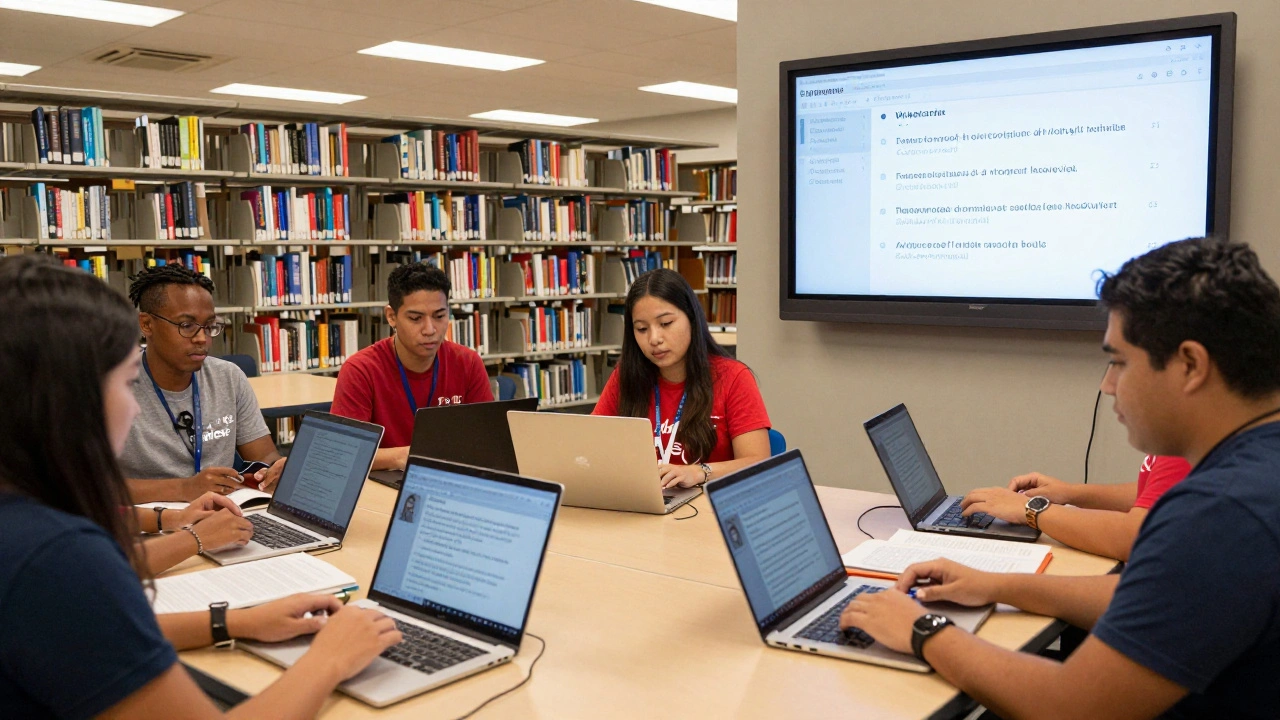
WikiProject Women in Red has created over 200,000 new biographies of women since 2015. They hold edit-a-thons-online events where people come together to write articles about underrepresented figures. One edit-a-thon in 2024 added 3,000 new pages about Indigenous scientists from Canada and Australia.
WikiProject AfroCROWD focuses on African and African diaspora figures. They’ve partnered with universities in Nigeria, Ghana, and South Africa to train students to edit Wikipedia in their own languages. Now, articles about Yoruba philosophers or Zulu engineers appear in both English and Yoruba, with local sources.
Some editors use tools like Wikidata to link people across languages. If you read about a Brazilian activist in English, you can click a link and see their full biography in Portuguese-with original interviews, speeches, and photos.
These efforts aren’t perfect. They rely on volunteers. But they prove change is possible when people work together.
How You Can Help
You don’t need to be a historian or a tech expert to fix this. You just need to care.
- Start with someone you know. Is there a local artist, teacher, or community leader who deserves a Wikipedia page? Write it. Use local newspapers, oral histories, or school archives as sources.
- Check existing articles. Open a biography of a non-Western person. Does it cite only English sources? Can you find a book or article in their native language? Add it. Even a link to a translated excerpt helps.
- Fix the language. If an article calls someone a “tribal leader,” change it to “chief” or “community organizer” if that’s more accurate. Remove phrases like “exotic” or “primitive.”
- Join an edit-a-thon. Search for “WikiProject Women in Red” or “AfroCROWD” online. These events give you templates, sources, and mentors.
- Don’t assume neutrality. Wikipedia’s “neutral point of view” rule is often misused to silence non-Western perspectives. If a source is biased, say so. Cite multiple viewpoints. That’s not taking sides-it’s being honest.
Why This Matters Beyond Wikipedia
Wikipedia isn’t just a website. It’s the first place students, journalists, and policymakers look for facts. If Wikipedia only shows half the story, the world learns half-truths.
Imagine a student in Kenya researching African inventors. They search Wikipedia. All they find are Europeans. They start to believe innovation didn’t happen in their own history. That’s not just inaccurate-it’s damaging.
When we fix Wikipedia, we’re not just adding names. We’re saying: your history matters too. A Filipino nurse who saved lives during a typhoon deserves the same recognition as a Nobel-winning doctor. A Māori poet who revived a dying language deserves to be cited alongside Shakespeare.
This isn’t about political correctness. It’s about accuracy.
What’s Still Missing
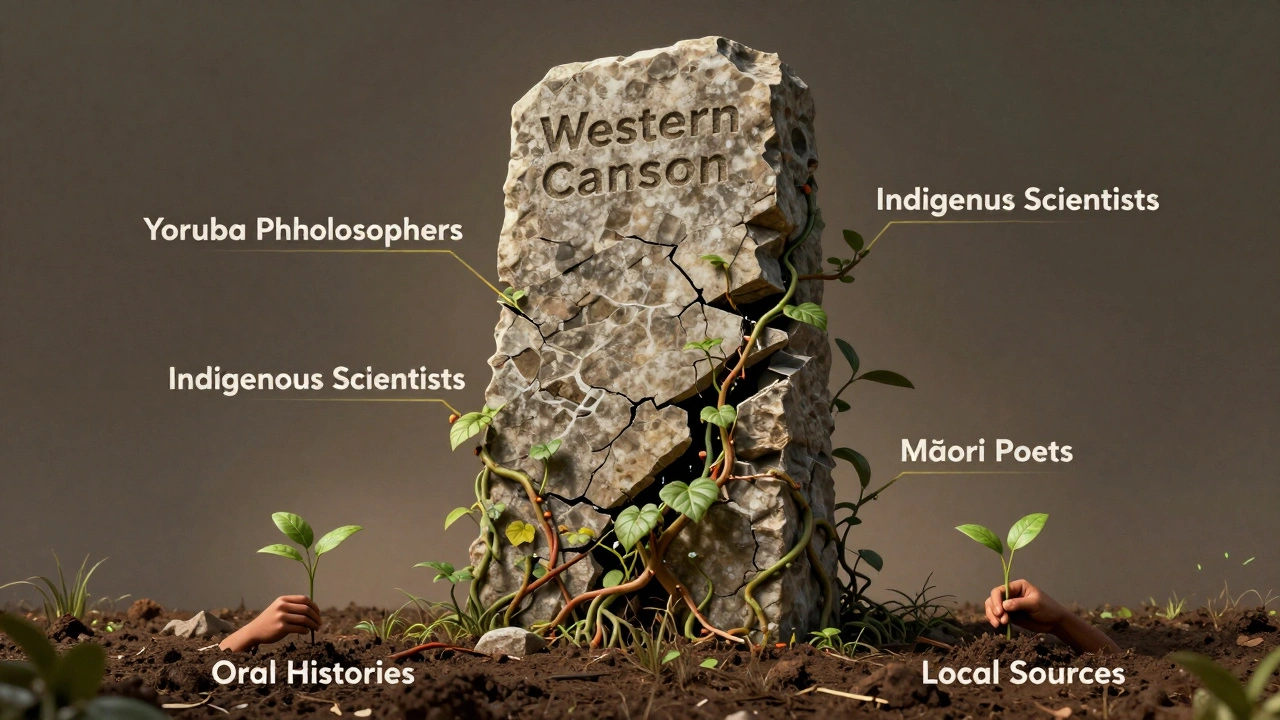
Progress is slow. Many communities still don’t have the tools or internet access to edit Wikipedia. Some languages have fewer than 100 active editors. Indigenous knowledge systems-oral histories, songs, rituals-are rarely accepted as valid sources, even when they’re the only records that exist.
Wikipedia’s policies still favor written, published sources. That means a lot of non-Western knowledge gets excluded by default. A 100-year-old oral story passed down in a village isn’t “verifiable” by Wikipedia’s rules. But it’s true.
Some editors are pushing to change that. Proposals are being discussed to accept community-verified oral histories, especially for Indigenous and rural communities. But it’s a fight. Old systems resist change.
The Future of Fairer History
Wikipedia’s future depends on who writes it. Right now, it reflects the biases of a narrow group. But that’s changing-slowly, painfully, but surely.
More universities are teaching students to edit Wikipedia as part of their history or anthropology courses. Libraries in Brazil, India, and Nigeria are hosting editing workshops. Crowdsourced projects are translating articles into Swahili, Quechua, and Tagalog.
One day, a child in Jakarta might search for “female engineers in Southeast Asia” and find 50 detailed profiles-not just one or two. That’s the goal.
It won’t happen overnight. But every article you write, every source you add, every biased word you fix-it adds up.
Wikipedia doesn’t need to be perfect. It just needs to be honest. And that starts with you.
Why are so few women represented in Wikipedia biographies?
The main reason is that most active Wikipedia editors are men from Western countries, and they tend to write about people they’re familiar with-often other men from similar backgrounds. Women, especially from non-Western cultures, are less likely to be covered in mainstream media, which means fewer sources exist for editors to use. Projects like WikiProject Women in Red are working to close this gap by creating new articles and training editors to find underrepresented figures.
Can oral histories be used as sources on Wikipedia?
Currently, Wikipedia requires published, verifiable sources like books or news articles. Oral histories aren’t accepted unless they’re recorded and published by a reputable institution. But there’s growing pressure to change this, especially for Indigenous communities whose knowledge is traditionally passed down orally. Some editors are now advocating for community-verified oral sources in specific cases, and pilot programs are testing this in places like Canada and New Zealand.
How do I find reliable sources for non-Western figures?
Start with university libraries, national archives, or digital collections like JSTOR and Google Scholar. Use keywords in the person’s native language. Many African, Asian, and Latin American universities have digitized local publications. Also check local newspapers, community websites, and cultural organizations. Don’t rely only on English sources-look for translations or bilingual materials.
Is Wikipedia biased because it’s run by volunteers?
Yes, and that’s both the problem and the solution. Because anyone can edit, the platform reflects the demographics of its editors-mostly young, male, and Western. But because it’s open, anyone can also fix it. You don’t need to be an expert. You just need to care enough to add a source, correct a term, or write a new article. Change happens one edit at a time.
What’s the difference between cultural bias and simple ignorance on Wikipedia?
Ignorance means not knowing something exists. Cultural bias means knowing something exists but choosing to ignore it because it doesn’t fit a familiar narrative. For example, an editor might know about a famous Indian mathematician but leave them out because they’re not “famous enough” by Western standards. That’s bias-not ignorance. Fixing bias means questioning why certain people are considered “important” in the first place.