Ever tried to edit a Wikipedia page and been told your source isn’t good enough? It’s not about being picky-it’s about keeping the whole thing trustworthy. Wikipedia doesn’t care how smart you are or how sure you are about something. If you can’t prove it with a source that others can check, it doesn’t stay. That’s the verifiability policy in action. And it’s the reason Wikipedia still works after 20 years, even though anyone can edit it.
Why Verifiability Matters More Than Accuracy
Wikipedia doesn’t aim to be the final word on truth. It aims to be the final word on what’s been published. You might know something for sure from personal experience, but Wikipedia won’t accept that. Why? Because one person’s truth isn’t enough. The encyclopedia needs to show readers where the information came from so they can double-check it themselves.
This isn’t about being skeptical-it’s about transparency. If you read that the population of Tokyo is 37 million, you should be able to find a government report, a UN database, or a major news outlet that says the same thing. If you can’t, the number gets removed. It’s not that the number might be wrong. It’s that nobody else can verify it.
What Counts as a Reliable Source?
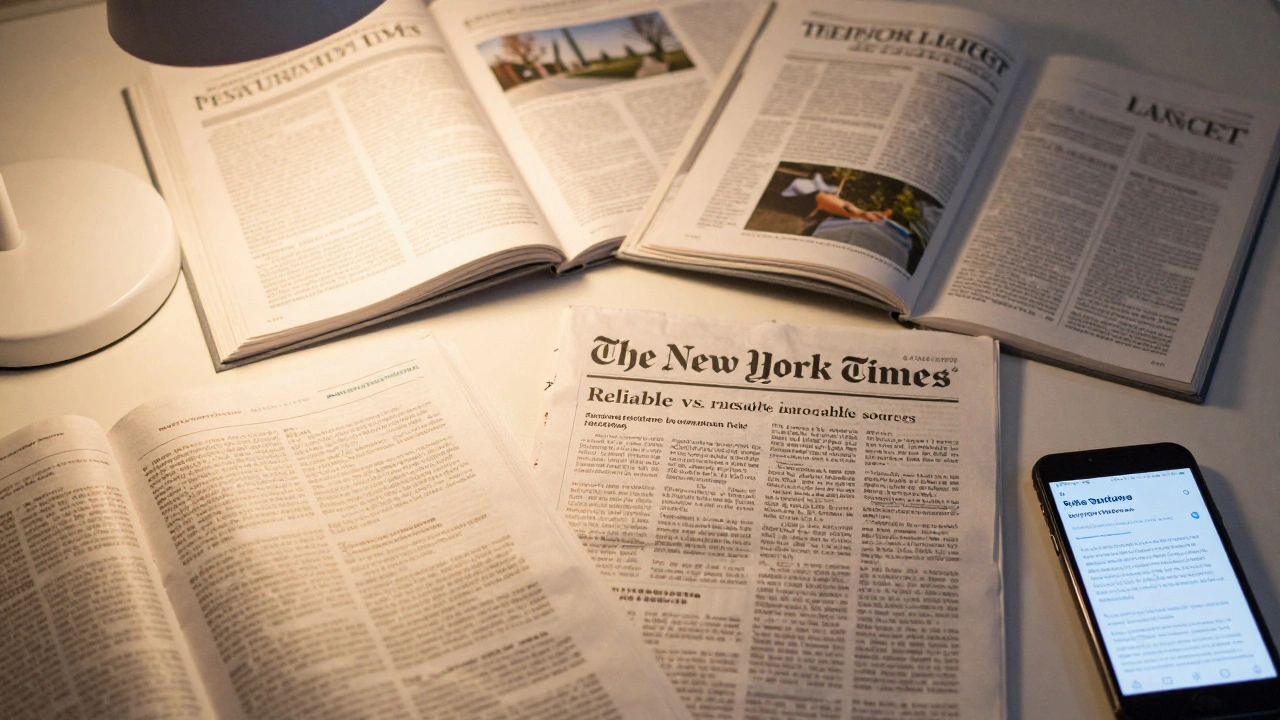
Not every website, blog, or tweet is allowed. Wikipedia has clear rules about what counts as a reliable source. Here’s what works:
- Peer-reviewed journals - These are the gold standard. If a study was reviewed by other experts in the field before publication, it’s trusted. Think medical journals like The Lancet or science journals like Nature.
- Major newspapers - Outlets like The New York Times, The Guardian, Le Monde, and Asahi Shimbun have editorial teams, fact-checkers, and legal teams. They’re held accountable.
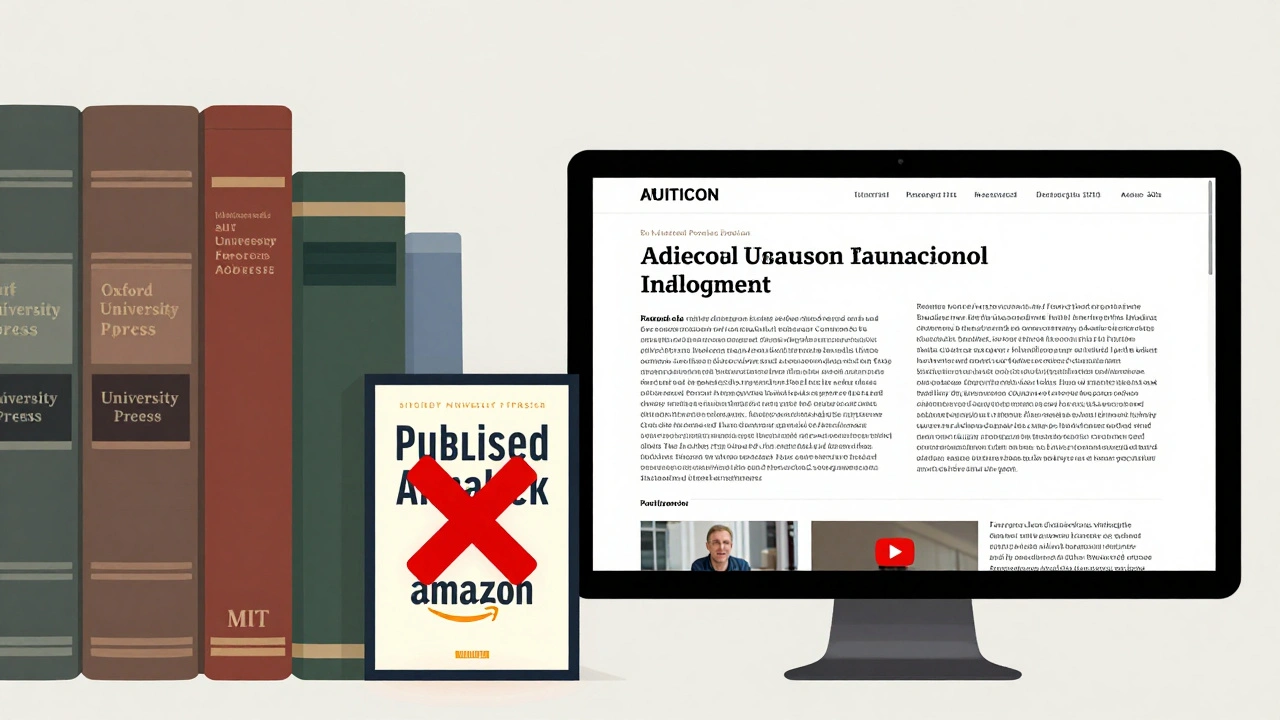
- Academic books - Published by university presses like Oxford University Press or MIT Press. These go through rigorous review before printing.
- Official publications - Government reports, census data, court documents, and statements from central banks or international bodies like the WHO or IMF.
- Reputable magazines - Scientific American, Time, Der Spiegel-these have editorial standards and fact-checking processes.
These sources aren’t perfect. But they have systems in place to catch mistakes before they go public. That’s the key.
What Doesn’t Count
Here’s what gets rejected every single day:
- Personal blogs - Even if the author is an expert, a blog post without editorial oversight doesn’t meet the bar.
- Forums and social media - Reddit threads, Twitter/X posts, Facebook groups-even if 10,000 people agree, it’s not evidence.
- Self-published material - Books you printed on Amazon, YouTube videos you made, your own website. No matter how well-researched, it’s not independently verified.
- Press releases - These are marketing tools. Companies say what they want you to believe. Wikipedia needs third-party confirmation.
- Non-notable websites - Small local blogs, niche fan sites, or websites with no clear editorial process. If you’ve never heard of it, chances are it’s not reliable.
There are exceptions. For example, a scientist’s personal blog might be used if they’re cited by a major news outlet or academic paper. But even then, the blog itself isn’t the source-it’s the secondary report that’s cited.
Why Does This Rule Exist?
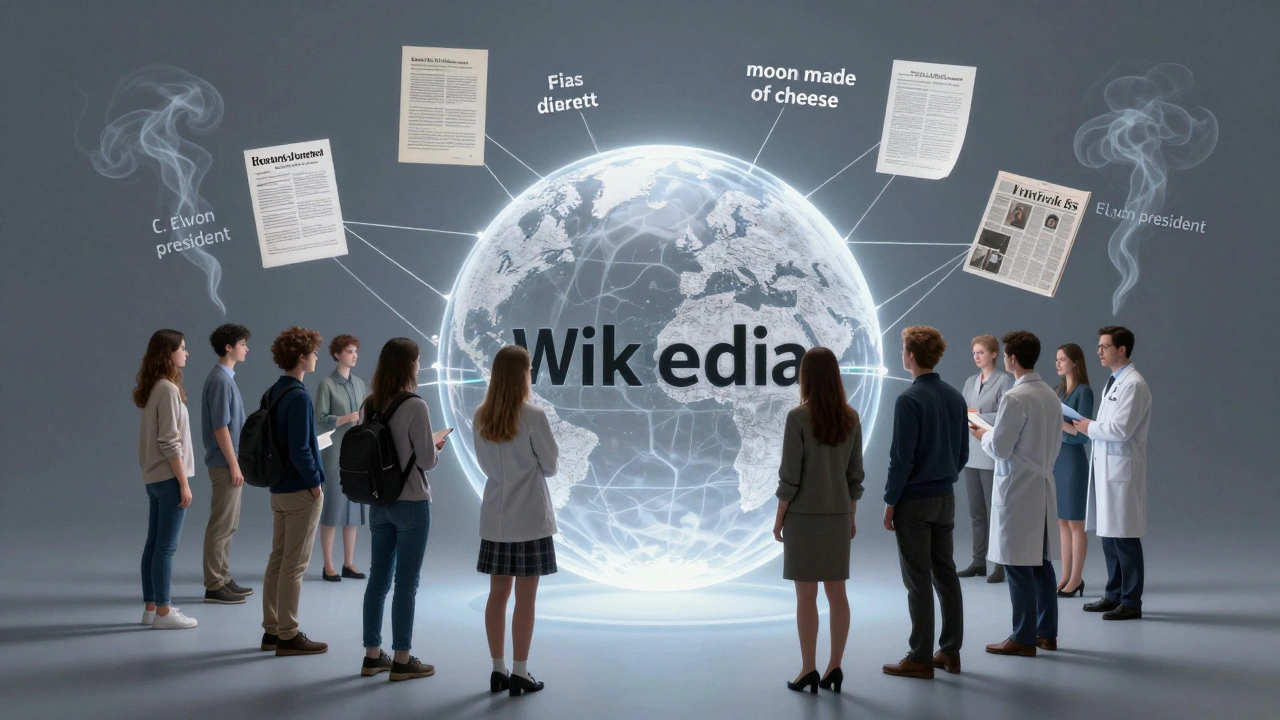
Imagine Wikipedia without this rule. Anyone could add: "The moon is made of cheese" because they saw it in a cartoon. Or "Elon Musk is the president of the United States" because a meme said so. Without verifiability, Wikipedia becomes a playground for rumors, hoaxes, and personal opinions.
The policy isn’t about silencing people. It’s about creating a shared standard. If you want to add something, you have to point to something that already exists in the public record. That way, readers aren’t just trusting Wikipedia-they’re trusting the original source.
This is why Wikipedia works better than any other crowdsourced encyclopedia. It doesn’t rely on authority. It relies on paper trails.
How to Find Reliable Sources
If you’re trying to edit a Wikipedia page, here’s how to find good sources:
- Start with Google Scholar for academic work. Type in the topic + "site:.edu" or "site:.gov".
- Use library databases. Many public libraries offer free access to JSTOR, ProQuest, or EBSCOhost.
- Check newspaper archives. The New York Times and Washington Post have free archives for recent articles.
- Look for citations in existing Wikipedia articles. If a claim is already cited, follow the link to the original source.
- Avoid Google searches that lead to blogs or forums. Look for .gov, .edu, .org (from reputable orgs), or major news domains.
When in doubt, ask on the article’s talk page. Experienced editors will help you find credible sources. Don’t just paste a link-explain why it’s reliable.
What Happens When Sources Conflict?
Not all reliable sources agree. That’s normal. Science evolves. News reports change. Historical records get updated.
Wikipedia handles this by presenting multiple viewpoints, weighted by reliability. For example:
- If three peer-reviewed studies say climate change is human-caused, and one industry-funded report says it isn’t, the article reflects the overwhelming consensus.
- If two major newspapers report different death tolls after an earthquake, Wikipedia will cite both and note the discrepancy.
The goal isn’t to pick a winner. It’s to show what’s been published and how widely it’s accepted.
The Bigger Picture: Why This Policy Protects Everyone
This isn’t just about Wikipedia. It’s about how we decide what’s true in a world full of noise. The verifiability policy teaches a simple lesson: don’t believe something just because it sounds right. Find out where it came from.
That’s why students, journalists, researchers, and even AI systems rely on Wikipedia. Not because it’s perfect, but because it’s transparent. You can trace every claim back to a source. That’s rare.
And if you ever wonder why your edit got reverted, remember: it’s not personal. It’s about building something that lasts. Something that doesn’t collapse under the weight of rumors. Something anyone, anywhere, can trust.
Can I use a Wikipedia article as a source for another Wikipedia article?
No. Wikipedia articles are not considered reliable sources for other Wikipedia articles. They’re summaries of other sources, not primary evidence. If you want to support a claim, go back to the original book, journal, or news report that the Wikipedia article itself cites.
Are .org websites always reliable?
No. While many .org sites like the American Red Cross or WHO are trustworthy, others are advocacy groups or partisan organizations with clear biases. Always check who runs the site, whether they have editorial standards, and if other reliable sources confirm their claims.
What if the only source is in another language?
A source in another language is perfectly acceptable if it’s reliable. For example, a study published in Revue Scientifique (France) or a report from Japan’s Statistics Bureau counts. You don’t need to translate it-just cite it accurately and note the language. Other editors can verify it if needed.
Can I use a book I found on Google Books?
Yes-if it’s a published academic or mainstream book from a reputable publisher. Google Books is just a way to access it. What matters is the publisher and whether the book has been peer-reviewed or widely cited by other reliable sources. Self-published books on Google Books don’t count.
Why does Wikipedia reject YouTube videos as sources?
YouTube videos lack editorial oversight. Anyone can upload anything, and there’s no guarantee of accuracy. Even experts on YouTube aren’t held to journalistic or academic standards. If a claim made in a video is later covered by a major news outlet or published in a journal, then cite that outlet instead-not the video.