Getting a Wikipedia article nominated as a Good Article isn’t just about writing well. It’s about meeting a strict, transparent set of standards that separate decent writing from truly reliable, encyclopedia-grade content. Thousands of articles are nominated each year. Only about 30% make it through. Most fail-not because they’re poorly written, but because they miss key criteria or fall into common traps that reviewers see instantly.
What Makes a Good Article?
A Good Article on Wikipedia isn’t just informative. It’s complete, well-sourced, neutral, and stable. It must meet the official Good Article criteria, which break down into seven core areas: accuracy, coverage, structure, neutrality, prose, supporting materials, and stability.
Accuracy means every factual claim has a reliable source. Not just any source-peer-reviewed journals, books from academic presses, major newspapers, or official publications. Blogs, forums, and personal websites don’t count. Coverage means the article tackles all major aspects of the topic without leaving out key details. A biography of a scientist must cover their major discoveries, education, career milestones, and legacy-not just one breakthrough.
Structure matters. Good Articles use clear sections with logical flow. Headings aren’t decorative; they organize information so readers can find what they need quickly. Neutrality isn’t optional. Even if the subject is controversial, the tone must remain calm and balanced. No pushing agendas, no loaded language. The prose should be clear, concise, and free of jargon. If a reader with no prior knowledge can understand it, you’re on the right track.
The Five Most Common Pitfalls
Most failed nominations follow the same patterns. Here are the top five mistakes writers make:
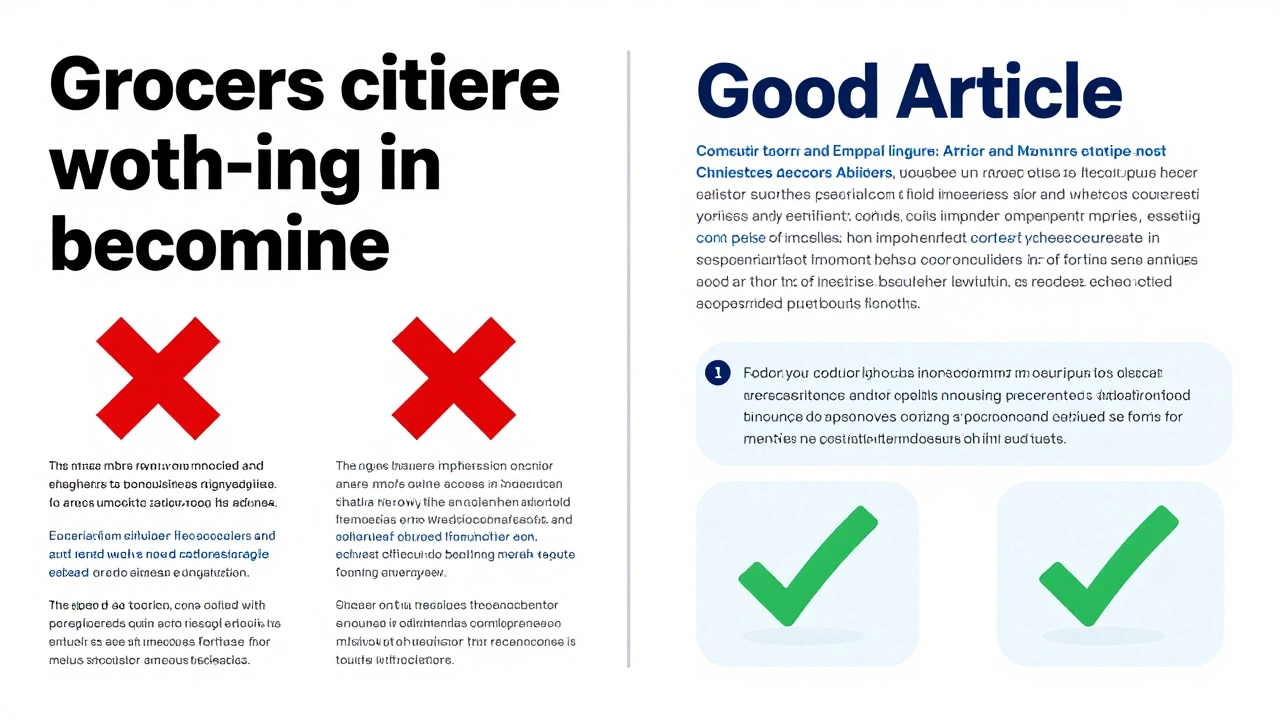
- Insufficient sourcing-Relying on one or two sources to back up multiple claims. Each major assertion needs its own citation. If you say a company had $500 million in revenue in 2023, you need a direct quote from their annual report or a reputable financial news outlet.
- Original research-Putting together your own analysis, interpretations, or conclusions. Wikipedia isn’t a place for your opinions or synthesis. If you’re connecting dots that aren’t explicitly stated in reliable sources, you’re crossing the line.
- Unbalanced coverage-Spending 80% of the article on one minor detail while skimming over the most important parts. A biography of a musician might spend five paragraphs on their favorite coffee shop but only two sentences on their influence on the genre.
- Unstable content-Nominating an article that’s still being heavily edited or debated on the talk page. Good Articles need to be stable. If editors are still arguing over wording or adding new sections, wait until things calm down.
- Overly promotional language-Using phrases like "renowned," "groundbreaking," or "the most important." These aren’t neutral. Instead, let the facts speak. If the subject is influential, show that through citations of peer recognition, awards, or scholarly citations.
How to Prepare Your Article for Nomination
Before you hit the "Nominate" button, do a final checklist. Start by reviewing the article against the official criteria line by line. Then, ask yourself these questions:
- Does every paragraph have at least one reliable citation?
- Are there any claims that feel vague or unsupported?
- Is the tone consistently neutral, even when describing controversial topics?
- Have I removed all first-person language, exclamation points, or editorializing?
- Has the article been edited by at least two other people in the last 30 days?
It’s also smart to run a draft by experienced editors. The Wikipedia community has a network of Good Article reviewers who offer free feedback. Don’t wait until nomination day to ask for help. Early feedback saves time.
What Reviewers Look For
Good Article reviewers aren’t looking for perfection. They’re looking for consistency. They check:
- Whether sources are properly formatted and accessible
- If the article has been vandalized or reverted recently
- Whether the lead section summarizes the entire article accurately
- If images are properly licensed and relevant
- Whether the article follows Wikipedia’s Manual of Style
One reviewer told me they’ve seen articles fail because the author used "et al." in citations instead of listing all authors, or because a source was archived in a broken link. Tiny errors matter. Reviewers have seen it all-and they notice details.
What Happens After Nomination?
Once nominated, your article enters a two-week review period. During that time, other editors will comment, suggest changes, or raise objections. You’re expected to respond to feedback. Ignoring comments is the fastest way to get your nomination rejected.
If the article passes, it gets the Good Article icon and is added to the list of over 60,000 recognized articles. That’s a big deal-it means your work has met Wikipedia’s highest standard for reliability outside of Featured Article status.
If it fails, you’ll get detailed feedback. Don’t take it personally. Most successful Good Articles were nominated more than once. Use the feedback to fix the issues and resubmit. Many editors say their second nomination was successful because they finally listened to the reviewers.

Why This Matters
Wikipedia is one of the most visited websites in the world. People trust it-even when they shouldn’t. That’s why the Good Article process exists. It’s not about ego or recognition. It’s about ensuring that the information millions rely on is accurate, fair, and well-documented.
When you write a Good Article, you’re not just editing a page. You’re helping build a public resource that students, researchers, journalists, and curious people use every day. That’s why the standards are high. And that’s why following them matters.
Next Steps
If you’re thinking about nominating an article:
- Start with an article you’ve already edited extensively.
- Review it against the official Good Article criteria.
- Fix sourcing gaps and neutrality issues.
- Ask for feedback on the article’s talk page.
- Wait until edits have slowed down.
- Submit your nomination with a clear summary of how you met each criterion.
Don’t rush it. Good Articles take time. But when you get one right, it lasts. And that’s the point.
Can I nominate an article I wrote myself?
Yes, you can nominate your own article. But you must disclose that you’re the main author. Reviewers expect full transparency. You’re also expected to respond to feedback and make edits based on reviewer suggestions. Self-nomination is common, but it’s not a shortcut-your article still has to meet every criterion.
How long does a Good Article nomination take?
The official review period lasts 14 days. But most nominations are resolved within a week if the article is well-prepared. If reviewers have major concerns, the process can extend slightly as editors discuss revisions. Delays usually happen when the nominator doesn’t respond to feedback.
Do Good Articles get more traffic than regular ones?
Yes, they often do. Wikipedia’s algorithm favors stable, well-sourced articles in search rankings. Plus, the Good Article badge signals reliability to readers, which can increase trust and engagement. Articles with this status are also more likely to be cited in academic work and media.
Can a Good Article become a Featured Article?
Yes. Many Featured Articles start as Good Articles. The process is similar but stricter. Featured Articles require even deeper coverage, exceptional prose, and outstanding supporting materials like high-quality images and detailed references. You can nominate a Good Article for Featured status after it’s been recognized for at least 30 days.
What if my article is about a local topic?
Local topics can qualify, but they need strong, verifiable sources. A small-town museum’s history can be a Good Article if you cite local archives, newspaper articles from reputable outlets, or oral histories recorded by universities. The challenge is proving the topic meets Wikipedia’s notability guidelines. If the topic only appears in one local blog, it likely won’t qualify.