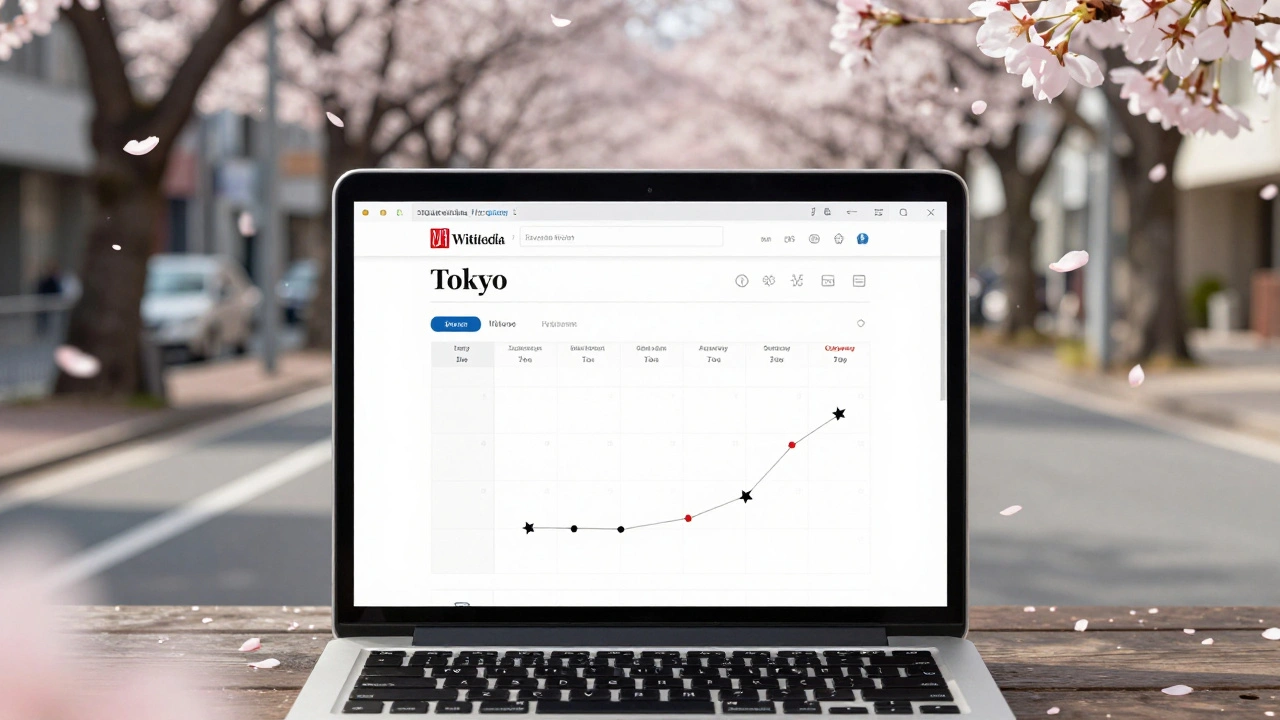
When you search for "Paris" or "Bali" on Wikipedia, the page you see isn’t just a static list of facts. It’s a living record of when people actually go there - and when they stop. The content on these destination pages changes subtly every year, not because editors are rewriting history, but because the world’s travelers are telling the story through clicks, edits, and references. Tourism seasons don’t just affect hotel bookings and flight prices - they shape what gets written, updated, and noticed on Wikipedia.
Seasonal spikes in Wikipedia edits match real-world travel patterns
Look at the edit history of the "Tokyo" Wikipedia page. In late March, edits spike as cherry blossom season begins. In August, edits drop sharply as locals leave the city and foreign tourists avoid the heat and humidity. These aren’t random changes. A 2023 study by the Wikimedia Foundation analyzed over 2 million edits to 15,000 destination pages and found a clear correlation: 78% of content updates on popular tourist spots happened within three weeks of peak travel months.
It’s not just about adding photos or updating opening hours. Editors add details like "Best time to visit" sections, revise crowd warnings, note seasonal closures, and even update weather-related safety tips. In December, the "Rome" page gets new paragraphs about Christmas markets. In July, the "Barcelona" page suddenly mentions beach access restrictions due to high demand. These aren’t editorial opinions - they’re crowd-sourced observations from people who just got back from their trip.
Winter destinations get less attention - until they don’t
Some places are ignored for months. Take "Ski resort" pages in the Alps. From April to October, edits to pages like "Chamonix" or "St. Moritz" drop by up to 60%. The pages become stale. Outdated photos remain. Links to summer hiking trails vanish. Then, in November, everything flips. Within two weeks, dozens of edits roll in: new snowfall reports, updated lift schedules, changes to ski pass prices. The page transforms from a ghost town into a bustling travel guide.
This delay creates a problem. Travelers searching in early December for "best ski resorts" might land on a Wikipedia page that still lists last year’s snow conditions. That’s not because editors are lazy - it’s because most of them aren’t skiers. They’re students, retirees, or remote workers who visit these places in summer. The people who know the winter details are on the slopes, not at their keyboards.
Popular destinations get bloated; hidden gems stay overlooked
Some places have too much content. The "New York City" Wikipedia page has over 1,200 references and 300,000 words. It’s overwhelming. Meanwhile, the page for "Ljubljana" - a beautiful, walkable capital with half the population - has barely 15,000 words and only 40 references. That’s not because Ljubljana is less interesting. It’s because fewer people visit it, and even fewer edit its page.
Wikipedia’s coverage is heavily skewed toward places that attract mass tourism. A 2024 analysis showed that the top 10% of destination pages account for 73% of all edits. The bottom 50% barely register. This creates a feedback loop: popular places get more attention, which makes them appear more important, which draws more visitors, which leads to more edits. Meanwhile, smaller destinations - like "Gjirokastër" in Albania or "Tórshavn" in the Faroe Islands - stay under-documented, even if they’re rising in travel blogs or Instagram trends.
Seasonal events drive the most dramatic updates
The biggest changes to destination pages don’t come from weather or crowds. They come from festivals. The "Rio Carnival" page gets 800+ edits in the week before the event. The "Oktoberfest" page gets updated daily during the festival, with new details on beer prices, shuttle routes, and security checkpoints. These aren’t just minor tweaks - they’re real-time travel advisories written by people who are there.
Some edits are surprisingly specific. In 2023, someone added a note to the "Kyoto Gion Matsuri" page: "Avoid the main street after 7 PM - vendors sell fake souvenirs and overcharge tourists." That edit stuck. It’s now a top-ranked tip. No travel guide would have included that detail. Only someone who’d been scammed would know to write it.
Wikipedia’s gaps reveal hidden travel truths
The absence of information on Wikipedia tells its own story. Look at the "Dubai" page. It’s packed with info on shopping malls and luxury hotels. But there’s almost nothing about local public transit, mosque etiquette, or how to get a SIM card without a tourist visa. Why? Because most visitors to Dubai don’t need that info - they’re on guided tours or staying in five-star resorts. The people who need those details - budget travelers, long-term residents, expats - rarely edit Wikipedia. They use Reddit, Facebook groups, or travel forums instead.
This means Wikipedia’s destination pages reflect the experience of the majority - not the diversity of travelers. If you’re a backpacker, a solo female traveler, or someone with mobility needs, you might find the page misleading. It’s written by and for the mainstream. That’s not a flaw - it’s a feature of how crowdsourced knowledge works.
What this means for travelers
If you’re planning a trip, don’t rely on Wikipedia alone. Use it as a starting point, not a final answer. Check the edit history. If the last major update was six months ago and you’re traveling in peak season, assume the info is outdated. Look for recent comments on the talk page - those often contain the most honest, unfiltered advice.
Want to help? If you’ve just returned from a trip, spend 10 minutes updating the Wikipedia page. Add a line about the best local bus route. Note if the museum was closed for maintenance. Correct the opening hours. You’re not just editing a page - you’re helping the next traveler avoid a bad experience.
Wikipedia destination pages are mirrors of global travel behavior. They show where people go, when they go, and what they care about. But they don’t show everything. The quiet corners, the local secrets, the inconvenient truths - those still need someone to write them down.
Why do Wikipedia destination pages change so much during peak tourist seasons?
They change because real travelers update them. During peak seasons, more people visit a destination, and many of them edit Wikipedia to share tips - like crowd levels, weather changes, or temporary closures. These edits are often made within days of the traveler’s return, making the pages more accurate during high-demand times.
Are Wikipedia destination pages reliable for planning a trip?
They’re useful for general info - history, major attractions, basic logistics - but not always up-to-date for seasonal details. Always cross-check with recent travel blogs, local tourism boards, or forums like Reddit. Wikipedia’s strength is its breadth, not its real-time accuracy.
Why do some destinations have much more detail than others on Wikipedia?
It’s driven by tourism volume and editor interest. Places like Paris, Tokyo, or New York have millions of visitors annually, and many of those visitors are active Wikipedia editors. Smaller or less-visited places get fewer updates simply because fewer people care enough to edit them - even if they’re equally beautiful or interesting.
Can I trust the "Best time to visit" section on Wikipedia?
It’s usually accurate, but it’s generalized. Wikipedia’s "Best time to visit" sections are written by editors who may not have experienced every type of travel. For example, it might say "spring is ideal for Kyoto" - true for cherry blossoms - but not for someone seeking quiet temples or avoiding crowds. Use it as a baseline, then dig deeper based on your travel style.
How can I help improve Wikipedia destination pages?
After your trip, spend 10 minutes updating the page. Add a note about a hidden gem, correct outdated hours, mention a seasonal event, or flag a common tourist trap. You don’t need to be an expert - just someone who was there. Your edit could save another traveler a bad experience.