There are over 300 languages on Wikipedia. But only 10 of them account for nearly 90% of all edits. The rest? Thousands of volunteers keep hundreds of smaller language Wikipedias alive with little to no funding, no staff, and often no tech support. This isn’t an accident. It’s the result of deliberate, quiet work by the Wikimedia Foundation to make knowledge accessible in languages most tech companies ignore.
Why Smaller Languages Matter
A language isn’t just words. It’s how people think, remember, and pass down knowledge. When a language disappears, so do unique ways of understanding the world. The Wikimedia Foundation doesn’t just want more Wikipedia articles - it wants those articles to be written in the language people speak at home.
Take the Waray language in the Philippines. With fewer than 3 million speakers, it’s not on Google Translate. But Waray Wikipedia has over 600,000 articles - more than the Danish or Norwegian versions. Why? Because local volunteers built it from scratch, using phones and community centers, not corporate resources.
Same with Guarani in Paraguay. It’s one of the few indigenous languages in the Americas with official status. The Guarani Wikipedia started in 2004 with just 12 articles. Today, it has over 120,000 entries. Teachers use it in classrooms. Elders contribute oral histories. The language isn’t just preserved - it’s growing.
How the Wikimedia Foundation Helps
The Foundation doesn’t run these Wikipedias. Volunteers do. But they don’t leave them to fend for themselves. Here’s what they actually do:
- Grants for local projects: Small grants of $500 to $5,000 go to groups organizing edit-a-thons, translating tools, or training new editors. In 2024, over 400 grants went to communities speaking languages with under 1 million speakers.
- Translation of software tools: The MediaWiki interface, mobile apps, and editing tools are translated into 100+ languages. Without this, editing Wikipedia in Tswana or Kurdish would be nearly impossible.
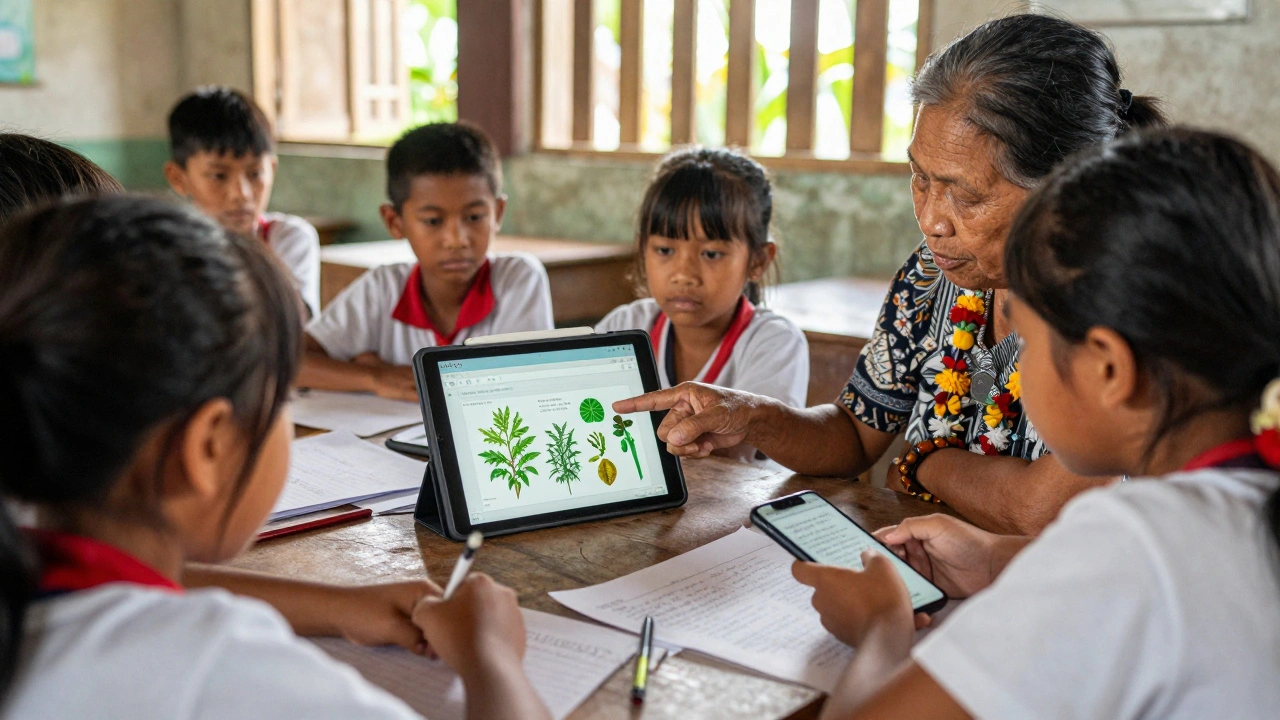
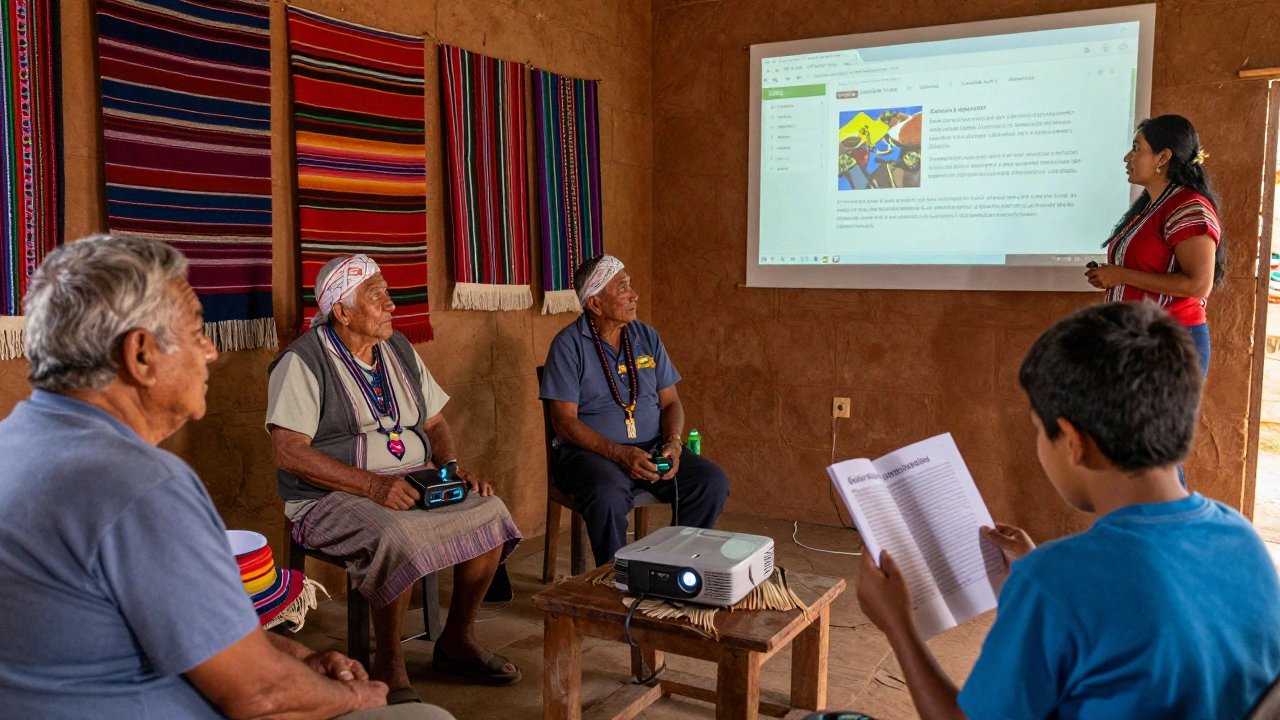
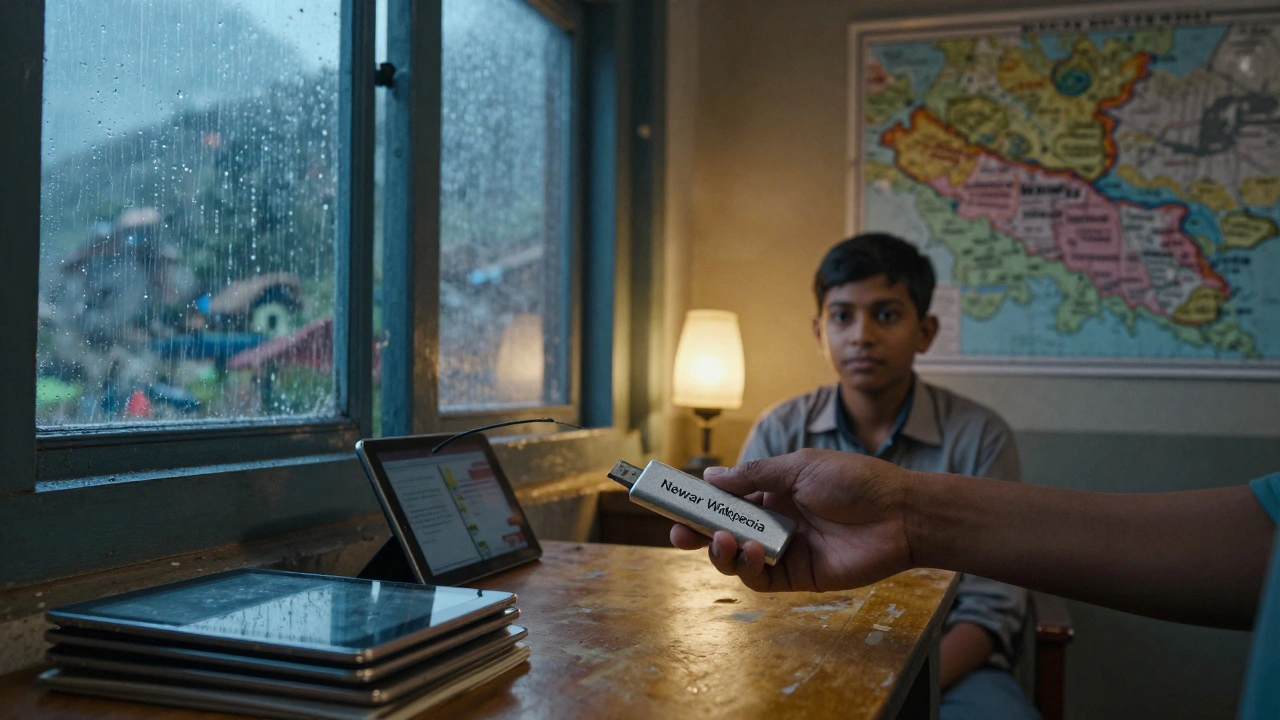
- Offline access: In areas with poor internet, the Foundation partners with local groups to distribute Wikipedia on USB drives and low-cost tablets. In rural Nepal, Newar Wikipedia is now used in 150 schools.
- Language-specific partnerships: The Foundation works with universities, cultural centers, and libraries to help communities digitize local knowledge. In Mali, they helped translate historical oral traditions into Bambara Wikipedia articles.
It’s not about big numbers. It’s about making sure that someone in a village in Papua New Guinea can look up how to treat a fever using local herbs - in their own language.
Real Challenges, Real Solutions
Supporting small languages isn’t easy. Many have no standardized spelling. Others have no digital fonts. Some are spoken but not written. The Foundation doesn’t wait for perfect conditions.
For Cherokee, the team worked with native speakers to create a keyboard layout that works on Android. Now, people can type Wikipedia entries using the Cherokee syllabary. For Yucatec Maya, they built a voice-to-text tool that lets elders dictate entries - no typing needed.
Another problem? Lack of editors. Many small-language communities have only 5 to 20 active contributors. The Foundation doesn’t push for growth at all costs. Instead, they focus on sustainability. They train one teacher who trains 10 students. One librarian who trains 5 community members. That’s how Sesotho Wikipedia grew from 10,000 to 120,000 articles in five years - without any paid staff.
What Doesn’t Work
Not every effort succeeds. Some languages get flooded with machine translations that sound robotic. Others get filled with copied content from English Wikipedia - which defeats the purpose.
The Foundation learned the hard way. In 2019, they launched a tool to auto-translate articles into 100 languages. It was a disaster. The translations were full of errors. In Quechua, a medical article said “the heart is a stone.” People stopped using it.
Now, they avoid automation. Instead, they fund human translation projects. For example, in 2023, they paid 30 native speakers of Maori to translate 500 high-priority articles about health and education. The result? A 70% increase in daily readers.
The Bigger Picture
Wikipedia isn’t just a website. For many small-language communities, it’s the only digital space where their language is treated as equal to English, Mandarin, or Spanish. When a child in Bolivia reads about dinosaurs in Aymara, they’re not just learning science - they’re seeing their language as powerful, modern, and worthy of knowledge.
The Foundation doesn’t claim to fix language loss. But it does something more practical: it gives people the tools to keep their language alive - not as a museum piece, but as a living, growing system of thought.
Compare this to tech giants. Google, Meta, and Apple focus on the top 20 languages. The rest? They’re ignored. But Wikipedia has 150+ active Wikipedias in languages with fewer than 100,000 speakers. That’s not a coincidence. It’s a mission.
How You Can Help
You don’t need to be a coder or a linguist. If you speak a minority language, you can help. Start small: fix one typo. Add one fact. Translate one article from a bigger Wikipedia.
If you don’t speak a minority language, you can still help. Donate to the Wikimedia Foundation. Volunteer to proofread translations. Help spread the word. The more people know these Wikipedias exist, the more likely they are to be used - and kept alive.
There’s no grand ceremony. No press releases. Just quiet, persistent work - one article, one speaker, one language at a time.
How many languages does Wikipedia support?
Wikipedia has over 300 active language editions. About 150 of them are considered small-language communities, with fewer than 100,000 articles each. Some have as few as 1,000 articles but are still actively maintained by volunteers.
Does the Wikimedia Foundation pay editors for smaller languages?
No, the Foundation doesn’t pay editors directly. But it does fund community-led projects through grants. These grants can pay for translation work, training events, or tech tools - not individual salaries. Most contributors volunteer their time.
Can I start a Wikipedia in my language?
Yes. You need at least 5 active contributors and a clear plan for content. The Foundation provides tools and guidance. Start by creating a proposal on Meta-Wiki. If approved, you’ll get a sandbox to build your Wikipedia before it goes live.
Why don’t more people use small-language Wikipedias?
Many people don’t know they exist. Others assume they’re incomplete. But in places like rural India or the Andes, these Wikipedias are often the most trusted source of information in local languages. Awareness is growing - especially among teachers and community leaders.
Is machine translation used to build small-language Wikipedias?
No, not anymore. Early attempts using AI translation led to inaccurate or unusable content. Now, the Foundation only supports human translation projects. Accuracy and cultural context matter more than speed.