Ever opened a Wikipedia page and seen a little box at the top saying "This article needs additional citations for verification"? Or maybe you’ve noticed "This statement needs a source" tucked right next to a fact you thought was common knowledge? These aren’t errors. They’re verifiability tags - Wikipedia’s way of keeping its content honest. If you’ve ever wondered what these tags mean, who puts them there, or how to fix them, you’re not alone. Millions of readers see them every day. But few know how to interpret them - or what to do when they appear.
What Are Verifiability Tags?
Verifiability tags are automated or manually placed maintenance templates on Wikipedia articles. They’re not punishments. They’re flags. Their job is simple: tell readers and editors that a claim in the article lacks a reliable source. Wikipedia’s core policy says that "all material in Wikipedia articles must be verifiable". That means if someone reads something, they should be able to find it in a published book, journal, reputable news site, or official document. If they can’t, the tag goes up.
These tags are part of Wikipedia’s broader system of quality control. Unlike traditional encyclopedias, Wikipedia doesn’t rely on experts to approve every fact. Instead, it relies on readers to check sources. The tags help bridge that gap. They’re the first line of defense against misinformation, guesswork, and outdated claims.
Common Verifiability Tags and What They Mean
Not all tags look the same. Here are the five you’ll see most often - and what each one really means:
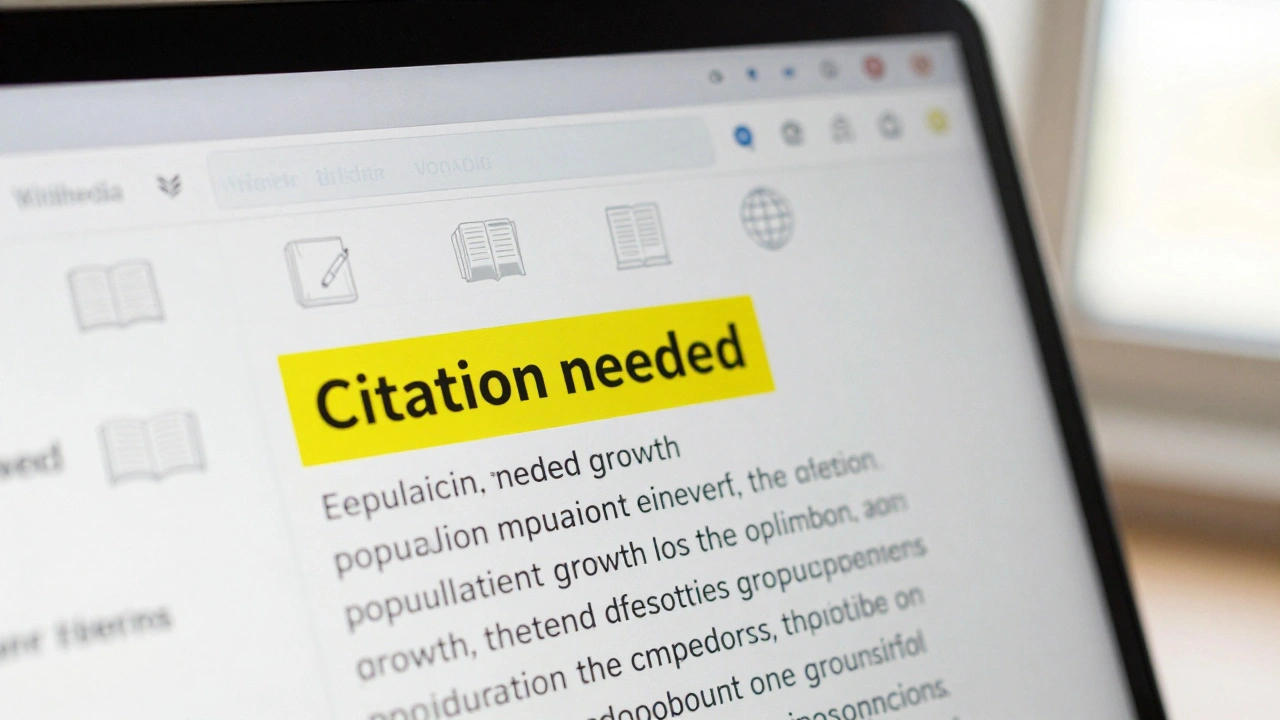
- "Citation needed" - This appears right after a specific sentence or claim. It’s the most common tag. Someone added a fact, but didn’t link it to a source. The tag doesn’t say the fact is wrong. It just says, "Prove it."
- "This article needs additional citations for verification" - A broader flag. Usually placed at the top of the article. It means multiple claims lack sources. This often happens in newer articles or those edited by people unfamiliar with Wikipedia’s rules.
- "Primary sources" - Wikipedia discourages relying on direct quotes from original documents like diaries, interviews, or press releases unless they’re used carefully. This tag warns that too much of the article is built on material that hasn’t been analyzed or verified by third parties.
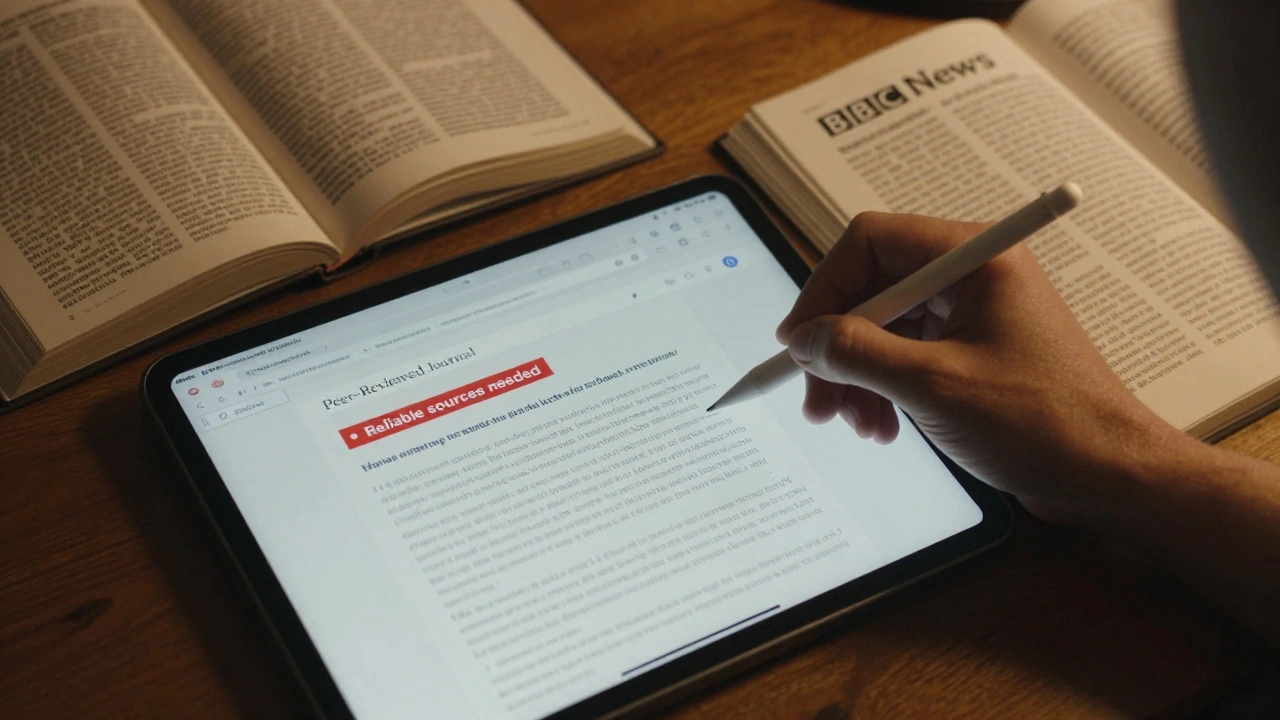
- "Reliable sources needed" - A source exists, but it’s not trustworthy. Think blog posts, personal websites, or self-published material. Wikipedia requires sources with editorial oversight - like peer-reviewed journals, major newspapers, or academic publishers.
- "Weasel words" - This tag targets vague language like "many believe," "some experts say," or "it is thought." These phrases hide the lack of a specific source. The tag asks: "Who? When? Where?"
Each tag is clickable. Clicking one takes you to the template’s documentation page - which explains exactly what editors need to do to fix it. There’s no mystery. The instructions are public, clear, and free to use.
Why Do These Tags Exist?
Wikipedia isn’t a personal blog. It’s a reference tool used by students, journalists, researchers, and even governments. If a Wikipedia article says a country’s GDP increased by 4.2% in 2023, someone might use that number in a report, a news story, or a policy decision. If that number is wrong - or worse, made up - the consequences can ripple.
These tags exist because Wikipedia has no editorial board. Instead, it has a community. And that community decided long ago that verifiability is more important than truth. You can’t prove something is true - but you can prove someone else said it. That’s the standard. A quote from a peer-reviewed study counts. A tweet from an anonymous user doesn’t.
The tags also protect Wikipedia from legal risk. If a false claim about a person or company spreads, the site could face lawsuits. By requiring sources, Wikipedia creates a paper trail. If a claim is challenged, editors can point to the source. If no source exists, the claim gets removed.
Who Adds These Tags?
You might think only experienced editors use these templates. But that’s not true. Anyone can. New users, casual readers, students - even people who just noticed a fact that didn’t seem right. There’s no test. No approval needed. If you see a claim without a source, you can add the tag yourself.
Most tags come from automated bots. For example, the Citation bot scans articles and flags sentences that look like they should have a reference. Other bots detect repetitive phrases or outdated citations. But humans still make the final call. A bot might flag a sentence. A human decides whether it’s a real issue or a false alarm.
Some editors specialize in cleanup. They’re called verifiability editors. These people don’t write new articles. They fix old ones. They hunt down missing citations, replace unreliable sources, and remove unsupported claims. Their work is invisible to most readers - but essential to Wikipedia’s credibility.
How to Fix a Verifiability Tag
If you’re the one who added the tag - great. But what if you’re the one who sees it and wants to fix it? Here’s how:
- Find a reliable source. Use academic databases, news archives (like Google News Archive), or official government websites. Avoid blogs, forums, or social media.
- Match the source to the claim. Don’t just paste a link. The source must directly support the exact sentence tagged. If the article says "The population rose by 12%," your source must say that - not just "population increased."
- Format the citation properly. Use Wikipedia’s citation templates:
{{cite journal}},{{cite news}}, etc. These auto-generate the right format. - Remove the tag. Once the source is added and the citation is correct, delete the tag. Don’t leave it there. It’s not decorative.
There are tools to help. The Citation Hunt website shows you articles with "citation needed" tags and lets you pick one to fix. It’s like a game - and it’s used by thousands of volunteers.
What Happens If You Ignore the Tags?
Nothing - at first. But over time, articles with unresolved tags lose trust. They get buried in search results. Wikipedia’s algorithm downranks them. Editors stop citing them. Students avoid them. And eventually, the article might be flagged for deletion.
Wikipedia has a process called articles for deletion. If an article has too many unresolved verifiability issues, someone can nominate it for removal. It doesn’t happen overnight. But if a page has five or more active tags for over six months, it’s likely to be reviewed.
That’s why fixing these tags isn’t just about quality. It’s about survival.

Why This Matters Beyond Wikipedia
Wikipedia is the fifth most visited website in the world. Over 1.5 billion people use it every month. When you Google a fact, Wikipedia often appears as the first result. That means these little tags are shaping what the world believes.
Think about it: if a student writes a paper using a Wikipedia article with unverified claims, they’re not just learning bad facts - they’re learning bad habits. They’re learning that it’s okay to accept claims without proof.
Verifiability tags are a quiet form of media literacy. They teach readers: "Don’t just believe what you read. Find the source. Check it. Question it." And that’s a skill that matters everywhere - in school, in work, in democracy.
Common Misconceptions
People often misunderstand these tags. Here are three myths - and the truth behind them:
- Myth: "The tag means the fact is false."
Truth: It means there’s no source. The fact could still be true. But without proof, it doesn’t belong on Wikipedia. - Myth: "Only experts can fix these."
Truth: Anyone with internet access and a reliable source can fix them. You don’t need a degree. Just a good citation. - Myth: "These tags slow down Wikipedia."
Truth: They make Wikipedia faster to trust. Articles with clean sourcing get cited more, linked to more, and used more. They’re the reason Wikipedia remains credible.
Final Thought: Verifiability Is a Habit
Wikipedia’s verifiability system isn’t perfect. It’s messy. It’s inconsistent. Sometimes, tags get removed too fast. Sometimes, they stay too long. But it’s the best system we have. And it works because it’s simple: if you say it, prove it.
The next time you see one of these tags - whether you’re reading, editing, or just curious - don’t ignore it. Click it. Read it. Think about it. Because every time someone fixes a citation, they’re not just improving a Wikipedia page. They’re helping the world learn how to think critically.
What should I do if I see a "Citation needed" tag on Wikipedia?
If you see a "Citation needed" tag, you can either add a reliable source to support the claim or leave it as is. To fix it, find a trustworthy source - like a peer-reviewed journal, reputable news outlet, or official publication - that directly supports the exact statement. Then, insert a properly formatted citation using Wikipedia’s citation templates. Once the source is added, you can remove the tag. If you’re unsure about the source’s reliability, don’t add it. It’s better to leave the tag than to use a weak source.
Are all sources equally acceptable on Wikipedia?
No. Wikipedia has strict rules about what counts as a reliable source. Peer-reviewed academic journals, major newspapers (like The New York Times or BBC), books from established publishers, and government or university websites are preferred. Blogs, personal websites, social media posts, and self-published content are not acceptable unless they meet very narrow exceptions. The key is editorial oversight - sources that have editors, fact-checkers, or peer review processes. If a source doesn’t have those, it’s unlikely to be accepted.
Can I add a citation from a YouTube video or podcast?
Generally, no. YouTube videos and podcasts are not considered reliable sources unless they’re from an official channel of a major news organization, university, or government body - and even then, only if the content is transcribed and verifiable. Most videos and podcasts lack editorial oversight, so they don’t meet Wikipedia’s standards. If you want to use information from one, look for a written summary or transcript published by a reputable outlet and cite that instead.
Why does Wikipedia care so much about sources?
Wikipedia doesn’t claim to be an original source of truth - it’s a summary of what’s been published elsewhere. Its credibility depends entirely on being able to trace every claim back to a published, reliable source. Without this, anyone could insert false information, and there’d be no way to correct it. Sources act as a check. They allow readers to verify claims, editors to resolve disputes, and the public to trust the platform. That’s why verifiability is one of Wikipedia’s three core content policies - along with neutrality and no original research.
Do verifiability tags affect a Wikipedia article’s search ranking?
Yes. Articles with unresolved verifiability issues are less likely to rank highly in search results. Google and other search engines favor content that is well-sourced and trustworthy. Wikipedia’s own internal algorithms also prioritize articles with clean citation records. Articles with multiple active tags may be flagged as low-quality and deprioritized in recommendations. Fixing these tags not only improves the article’s accuracy - it increases its visibility and usefulness to readers.