
When a high-profile trial breaks, news feeds explode with opinions, rumors, and half-truths. You see the headlines on Twitter, you hear the hot takes on podcasts, and you read the sensationalized leads on cable news. But if you want to know what actually happened in the courtroom, where do you go? For millions of people, the answer is Wikipedia, a free online encyclopedia that relies on community editing and strict sourcing rules. But how does a platform built by volunteers manage to document complex legal proceedings without getting sued or spreading misinformation? It’s not magic. It’s a rigid set of policies designed to strip away the noise and leave only what can be proven. If you’ve ever wondered why your favorite celebrity’s divorce article reads like a dry textbook rather than a gossip column, this is the mechanism behind it.
The Core Rule: Verifiability Over Truth
The biggest misconception about Wikipedia is that editors try to determine what is objectively true. They don’t. Instead, they follow the policy of Verifiability, the requirement that information must be attributable to a published, reliable source. In legal contexts, this distinction is life-or-death for an article’s survival. Imagine a defendant claims self-defense. The police report says otherwise. A tabloid runs a story titled “He Was Pushed!” based on an anonymous tip. Wikipedia ignores all three. It looks for the court transcript, the judge’s ruling, or a reputable news outlet’s summary of those documents. If no reliable source has published the fact, it cannot appear on Wikipedia, regardless of whether the editor believes it is true. This creates a safety buffer. Wikipedia doesn’t take responsibility for the facts; it takes responsibility for citing who said them.
This approach forces writers to dig deeper than headlines. You can’t just copy-paste a CNN banner. You have to find the underlying evidence that the journalist used. For court cases, this usually means relying on primary sources like Court transcripts, official written records of spoken testimony and proceedings or secondary sources like analysis from major newspapers such as The New York Times or The Guardian.
NPOV: The Shield Against Bias
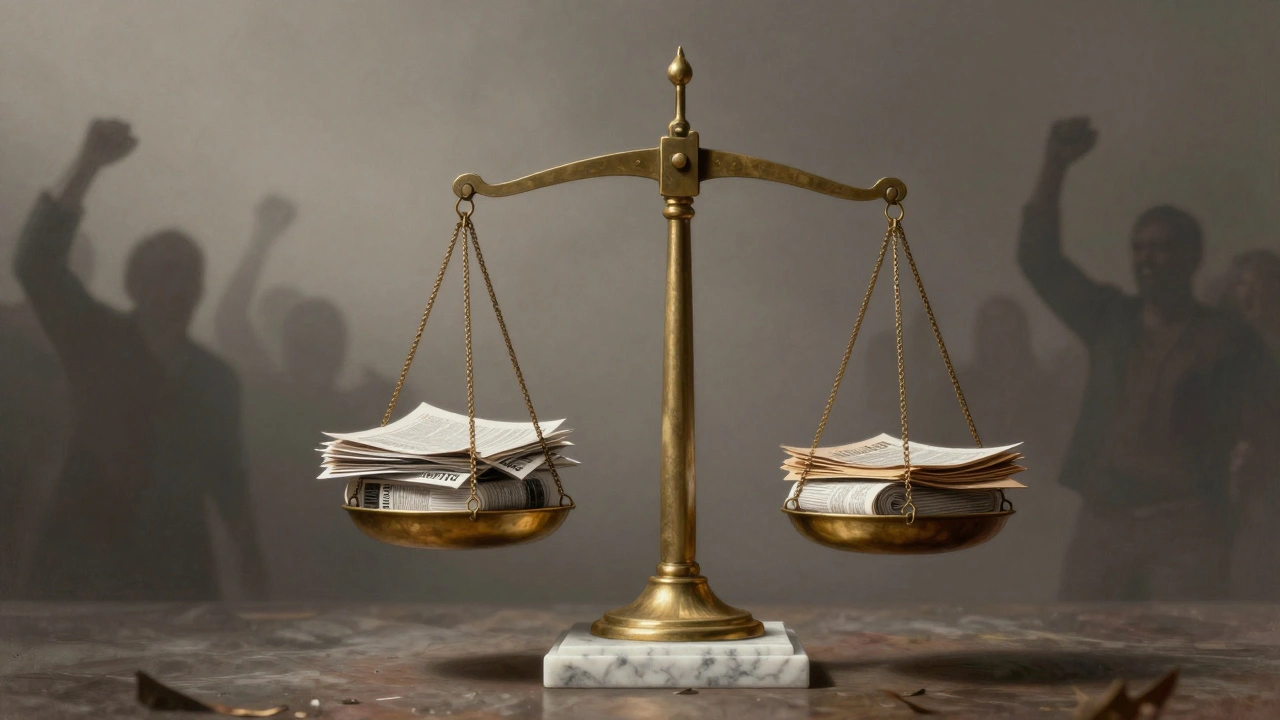
Legal cases are inherently emotional. People hate criminals; they love victims. Or vice versa. This is where the Neutral Point of View (NPOV), Wikipedia's core content policy requiring articles to represent significant views fairly and proportionately becomes critical. NPOV isn’t about finding a middle ground between two extremes. It’s about reflecting the weight of coverage in reliable sources. If 90% of credible legal analysts believe a certain interpretation of the law applies, the article should reflect that consensus. However, if there is a significant minority view-say, 10% of experts disagree-that view must also be mentioned, but clearly attributed. You never write, “The judge was wrong.” You write, “Critics argued the judge’s decision overlooked precedent X, though supporters maintained it aligned with statute Y.” This neutrality prevents Wikipedia from becoming a platform for activism. During controversial trials, users often rush to edit articles to sway public opinion. These edits are quickly reverted by experienced contributors who enforce NPOV. The goal is not to tell you how to feel about the case, but to show you how the world reacted to it through verified channels.
Reliable Sources: Who Gets to Speak?
Not all news outlets are created equal in the eyes of Wikipedia editors. The project maintains lists of Reliable sources, publications deemed trustworthy for use in articles due to their editorial standards and fact-checking processes. For legal matters, this hierarchy is strict. Primary sources include government publications, court filings, and official statements from parties involved. Secondary sources include major wire services (Associated Press, Reuters) and established broadsheet newspapers. Tertiary sources, like other encyclopedias, are generally discouraged because they add another layer of potential error. You won’t see citations from blogs, social media posts, or partisan websites unless they are being discussed as part of the topic itself (e.g., “The defendant’s blog post sparked controversy”). Even then, the reliability of the source is questioned. If a case is covered only by low-tier tabloids, Wikipedia may deem it insufficiently notable to warrant an article at all. This filter ensures that only cases with substantial, credible public interest make it into the encyclopedia.
| Source Type | Examples | Usage in Legal Articles |
|---|---|---|
| Primary | Court transcripts, verdicts, statutes | Used for factual details of proceedings; interpreted cautiously |
| Secondary (High Reliability) | Reuters, AP, BBC, NYT | Preferred for narrative structure and context |
| Secondary (Lower Reliability) | Tabloids, partisan blogs | Avoided unless discussing the source itself |
| Tertiary | Other encyclopedias, textbooks | Generally not allowed | d>
Handling Ongoing Trials: The Speed Bump
Writing about a trial that hasn’t ended is dangerous. Facts change. Witnesses recant. Charges get dropped. To prevent premature conclusions, Wikipedia enforces a policy against Original research, analysis or synthesis of published material that has not been published elsewhere and speculative content. Editors are instructed to avoid language that implies guilt or innocence before a verdict. Phrases like “allegedly” or “according to prosecutors” are mandatory. The article must remain static in its description of outcomes until a final judgment is rendered and reported by reliable sources. Often, articles about ongoing cases are protected from editing by all but administrators to prevent vandalism or bias during peak media attention. Once the case concludes, the article undergoes a cleanup. Speculative sections are removed, and the final outcome is added with citations to the official court order. This delay ensures accuracy over speed, prioritizing long-term reference value over breaking news immediacy.
Notability: Why Some Cases Don’t Get Pages
Just because a case is in the news doesn’t mean it gets a Wikipedia page. The project uses a Notability guideline, a set of criteria determining if a topic has received significant coverage in independent, reliable sources. For legal cases, this usually means sustained coverage over time, not just a viral moment. A local theft might trend on TikTok for a day, but if it lacks deep analysis from multiple reputable news organizations, it fails the notability test. Conversely, a lesser-known civil rights lawsuit that sets a legal precedent will likely get a detailed article because legal scholars and journals have analyzed its impact. The focus is on significance to the broader understanding of law and society, not just entertainment value.
The Role of Community Enforcement
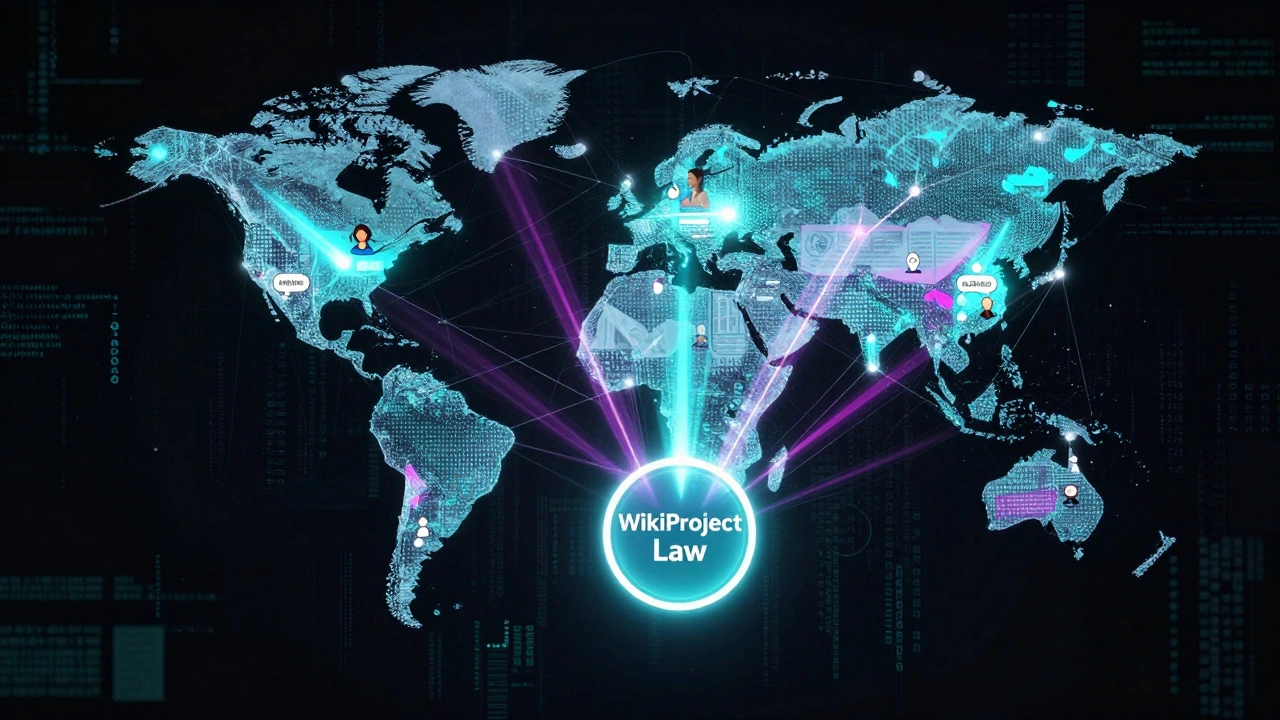
There is no central editor-in-chief for Wikipedia. Instead, enforcement comes from the community. Experienced editors monitor recent changes using tools like WikiProject Law, a collaborative group dedicated to improving legal-related articles on Wikipedia. When someone adds unsourced claims or biased language, these editors revert the changes and explain the policy violation. Disputes are resolved through discussion pages, where editors debate the reliability of sources and the neutrality of phrasing. If consensus cannot be reached, neutral third parties or administrators step in. This decentralized model can seem chaotic, but it creates a robust system of checks and balances. Bad actors are eventually blocked, and good practices are reinforced through repetition and peer review.
Challenges in the Digital Age
In 2026, the landscape of legal documentation is shifting. Live-streamed trials and real-time social media commentary create pressure to update articles instantly. However, Wikipedia resists this urge. The reliance on traditional journalism acts as a brake on misinformation. While platforms like X (formerly Twitter) allow anyone to broadcast unverified claims, Wikipedia requires a paper trail. This creates a tension between relevance and accuracy. Younger audiences may perceive Wikipedia as slow or outdated compared to real-time feeds. Yet, when the dust settles, Wikipedia often serves as the most comprehensive, cited record of the event. It captures not just the verdict, but the cultural and legal context surrounding it, provided that context is backed by reliable sources.
Can I add my own experience to a court case article?
No. Wikipedia prohibits original research. Your personal experience, even if you were present in the courtroom, cannot be used as a source. Only published, reliable sources are acceptable.
Why does Wikipedia use so many citations?
Citations prove verifiability. Every claim must be traceable to a reliable source. This protects the article from accusations of bias and ensures readers can check the facts themselves.
What happens if a news outlet publishes false information?
If a reliable source publishes an error, Wikipedia may temporarily include it with proper attribution (e.g., "The newspaper claimed X..."), but once corrected by other reliable sources, the error is removed. Wikipedia tracks corrections through subsequent reporting.
Are all court cases eligible for a Wikipedia page?
No. Only cases that meet notability guidelines-typically those with significant, sustained coverage in independent, reliable sources-are eligible. Local or minor cases usually do not qualify.
How does Wikipedia handle sealed court records?
Wikipedia cannot use sealed records. Information must be publicly available in reliable sources. If details are sealed, they simply cannot be included in the article, regardless of their importance.