
When you ask an AI assistant to explain quantum physics or summarize the history of Rome, it often relies on information that started its life as a volunteer-written encyclopedia entry. Wikipedia is a free online encyclopedia written by volunteers worldwide, serving as one of the most structured and comprehensive sources of human knowledge available today. For years, researchers have treated this massive repository not just as a reference tool for humans, but as a foundational dataset for teaching machines how to understand language, facts, and relationships between concepts.
The connection between Wikipedia and artificial intelligence isn't new, but its role has evolved dramatically. In the early days of natural language processing, models struggled with basic grammar and context. Today's large language models (LLMs) can generate coherent essays, code software, and answer complex questions. A significant part of this leap forward comes from training on high-quality text corpora, where Wikipedia plays a starring role due to its size, consistency, and factual density.
Why Wikipedia is the Gold Standard for AI Training Data
You might wonder why developers don't just scrape random websites for training data. The internet is full of noise-ads, comments, spam, and unverified claims. Machine learning is a subset of artificial intelligence focused on building systems that learn from data. These systems need clean, reliable input to produce accurate output. This is where Wikipedia shines.
Wikipedia offers several unique advantages for AI development:
- Structured Format: Articles follow consistent headings, citations, and infoboxes, making it easier for algorithms to parse and categorize information.
- Factual Density: Unlike social media posts or blogs, Wikipedia entries aim for neutrality and verifiability, reducing the risk of teaching AI biased or false information.
- Multilingual Coverage: With over 300 language editions, Wikipedia provides diverse linguistic data, helping models understand cross-lingual patterns and translate more effectively.
- Interconnected Knowledge: Hyperlinks between articles create a web of related topics, which mirrors how humans associate ideas.
For example, when training a model like BERT (Bidirectional Encoder Representations from Transformers), engineers used Wikipedia alongside BookCorpus to teach the system contextual word meanings. The result was a breakthrough in understanding nuance-like knowing that "bank" means something different in "river bank" versus "bank account."
From Raw Text to Structured Knowledge: Processing Wikipedia Data
Raw Wikipedia dumps are enormous. The English edition alone contains billions of words across millions of pages. Before feeding this data into an AI model, it must be cleaned and transformed. This process involves removing non-article content (talk pages, templates, references), normalizing text, and extracting meaningful structures.
One critical step is converting unstructured text into Knowledge graphs are networks of entities connected by relationships, allowing machines to reason about connections between people, places, events, and concepts. By analyzing Wikipedia’s internal links and categories, researchers build these graphs to represent real-world relationships. For instance, a node labeled "Albert Einstein" connects to nodes like "Theory of Relativity," "Nobel Prize," and "Germany," forming a semantic map that helps AI navigate complex queries.
Tools like Wikidata, the underlying database behind Wikipedia, provide machine-readable versions of this data. Wikidata uses identifiers (Q-numbers) to uniquely label every entity, enabling precise alignment across languages and datasets. This structure allows AI systems to resolve ambiguities-for example, distinguishing between Apple the company and apple the fruit based on context clues embedded in linked entities.

Training Large Language Models with Wikipedia Content
Large language models such as GPT-4, Claude, and Llama rely heavily on pre-training phases where they ingest vast amounts of text. During this phase, the model learns statistical patterns in language-how words co-occur, sentence structures, and logical flow. Wikipedia contributes significantly to this corpus because of its breadth and depth.
Consider how a model learns to write historically accurate narratives. If trained only on news articles, it might miss older historical details covered extensively in Wikipedia. Conversely, if trained solely on academic papers, it could lack accessibility and clarity. Wikipedia strikes a balance, offering detailed yet readable explanations suitable for general audiences-and thus ideal for training versatile AI assistants.
A notable case study is the development of ELMo (Embeddings from Language Models). Researchers at Allen Institute for AI demonstrated that incorporating Wikipedia improved performance on tasks requiring deep semantic understanding, such as reading comprehension and question answering. Similarly, later iterations of BERT and RoBERTa leveraged Wikipedia-enhanced datasets to achieve state-of-the-art results on benchmarks like SQuAD (Stanford Question Answering Dataset).
| Dataset | Size (Approx.) | Type | Strengths | Limitations |
|---|---|---|---|---|
| Wikipedia | ~6 billion tokens (English) | Encyclopedic text | Factual, structured, multilingual | Limited coverage of niche topics |
| Common Crawl | ~1 trillion tokens | Web crawl | Diverse, up-to-date | Noisy, requires heavy filtering |
| BookCorpus | ~8,000 books | Literature | Narrative style, rich vocabulary | Copyright restrictions, limited scope |
| ArXiv Papers | ~1 million documents | Scientific literature | Technical precision, domain-specific | Jargon-heavy, less accessible |
Ethical Considerations and Copyright Issues
While Wikipedia data is widely used in AI research, ethical concerns persist. Although individual articles fall under Creative Commons licenses, aggregating them raises questions about attribution and commercial use. Some critics argue that tech companies profit from publicly contributed knowledge without adequately compensating contributors.
In response, organizations like the Wikimedia Foundation advocate for transparent usage policies and fair compensation mechanisms. Additionally, there's growing emphasis on ensuring AI models trained on Wikipedia do not propagate misinformation or bias present in certain articles. Regular audits and debiasing techniques help mitigate these risks.
Another concern revolves around privacy. While Wikipedia avoids publishing personal information, some entries contain sensitive data about living individuals. Careful curation ensures that AI systems learn appropriate boundaries regarding what constitutes acceptable public record versus private matter.
Real-World Applications Beyond Chatbots
The impact of Wikipedia-trained AI extends far beyond conversational agents. Here are three practical applications:
- Search Engine Optimization: Search engines utilize knowledge graphs derived partly from Wikipedia to deliver featured snippets and direct answers, improving user experience by providing concise responses upfront.
- Automated Fact-Checking: Tools designed to verify claims against established facts often cross-reference statements with Wikipedia-derived databases, enhancing reliability in journalism and education sectors.
- Language Translation Services: Multilingual Wikipedia editions serve as parallel corpora for translating between languages, particularly useful for low-resource pairs lacking sufficient training material elsewhere.
Take medical diagnosis support systems, for example. They leverage symptom-description mappings found in health-related Wikipedia articles to suggest possible conditions while flagging discrepancies needing professional review. Such integrations demonstrate how encyclopedic knowledge translates into actionable insights within specialized domains.
Future Trends: Enhancing AI Through Better Data Integration
As AI continues advancing, so too will methods for integrating external knowledge sources. Emerging approaches include dynamic updating pipelines where fresh Wikipedia edits feed directly into ongoing model refinements. This reduces lag times between new discoveries becoming known globally and being incorporated into AI capabilities.
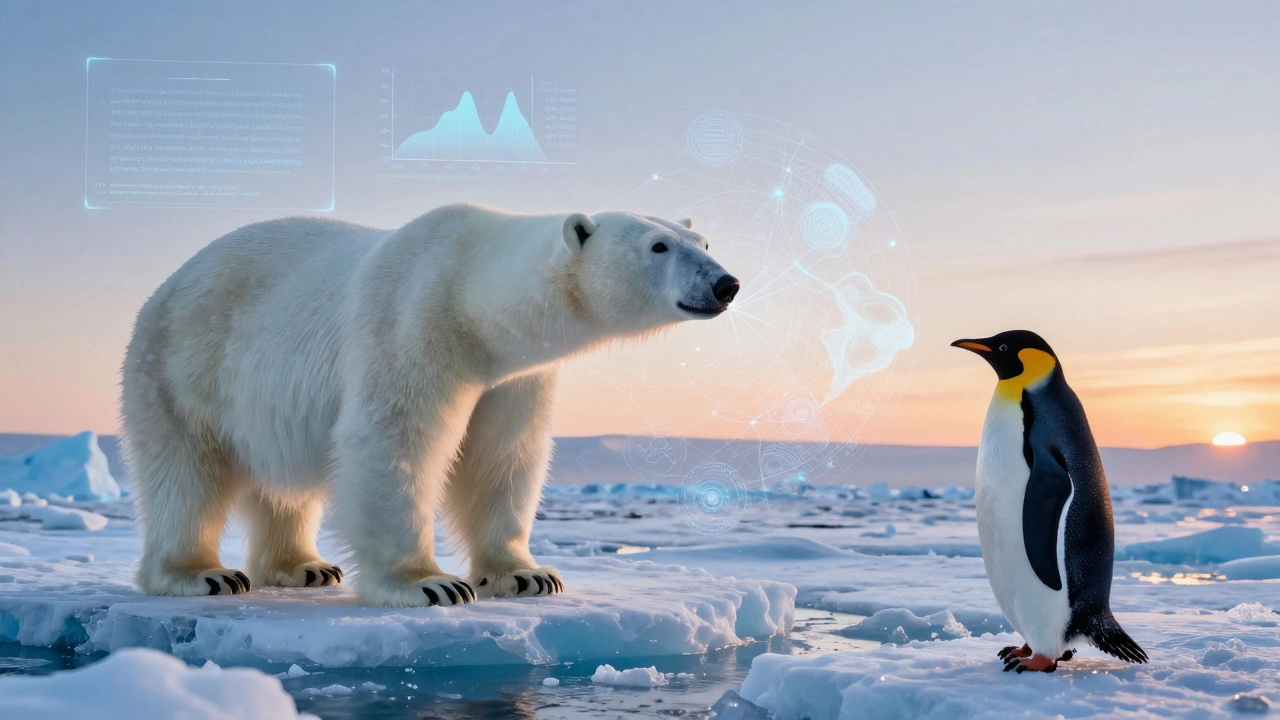
Furthermore, hybrid architectures combining neural networks with symbolic reasoning modules promise greater accuracy in handling nuanced queries involving multiple interrelated facts. Imagine asking your virtual assistant whether climate change affects polar bear habitats differently than penguin colonies-it would draw upon interconnected environmental science principles stored efficiently thanks to prior Wikipedia-based learning experiences.
Researchers also explore ways to enhance inclusivity by prioritizing contributions from underrepresented regions during data collection stages. Ensuring balanced representation prevents skewed perspectives influencing automated decision-making processes downstream.
Is all Wikipedia content safe for training AI models?
Not necessarily. While Wikipedia aims for neutrality and accuracy, vandalism and temporary inaccuracies occur. Developers typically filter out recent revisions and apply quality checks before inclusion in training sets to minimize exposure to unreliable data.
Can I legally use Wikipedia data for my own AI project?
Yes, provided you comply with Creative Commons Attribution-ShareAlike license terms. You must attribute sources appropriately and share any derivative works under similar licensing conditions.
How does Wikipedia compare to other datasets for NLP tasks?
Wikipedia excels in factual consistency and structural organization compared to web crawls or literary collections. However, it lacks conversational tone and may omit very recent developments unless promptly updated.
Do modern AI models still depend heavily on Wikipedia?
Yes, though their reliance varies depending on specific applications. General-purpose models benefit greatly from Wikipedia's broad coverage, whereas domain-specialized ones might prioritize industry journals or proprietary datasets instead.
What challenges arise when using multilingual Wikipedia data?
Challenges include uneven article quality across languages, translation inconsistencies, and varying cultural viewpoints affecting objectivity. Addressing these requires careful preprocessing and localized validation strategies.