When a major tragedy strikes-whether it’s a terrorist attack, a natural disaster, or an industrial accident-the immediate reaction is often to name it. We hear phrases like 'The Great Flood' or 'The [City] Massacre' in news headlines within hours. But if you try to use those dramatic titles for a Wikipedia article, you’ll likely hit a wall of red links and talk page debates. Why? Because Wikipedia has strict naming conventions for attacks and disasters that prioritize neutrality over emotion. These rules aren't just bureaucratic hurdles; they are essential tools for keeping the encyclopedia usable, neutral, and focused on facts rather than fear.
If you’ve ever tried editing articles about recent tragedies, you know how contentious this can be. One editor wants to honor the victims with a solemn title; another argues that the proposed name is too sensationalized. This tension creates a specific set of guidelines that editors must follow. Understanding these conventions helps you contribute effectively without getting caught in endless edit wars.
The Core Principle: Descriptive Over Dramatic
The foundation of Wikipedia's Naming Conventions for these topics is simple: the title should describe what happened, not how it felt. This principle falls under the broader umbrella of Neutral Point of View (NPOV), one of Wikipedia’s four core content policies. NPOV requires that articles represent fairly, proportionally, and, as far as possible, without bias, all the significant views that have been published about the subject.
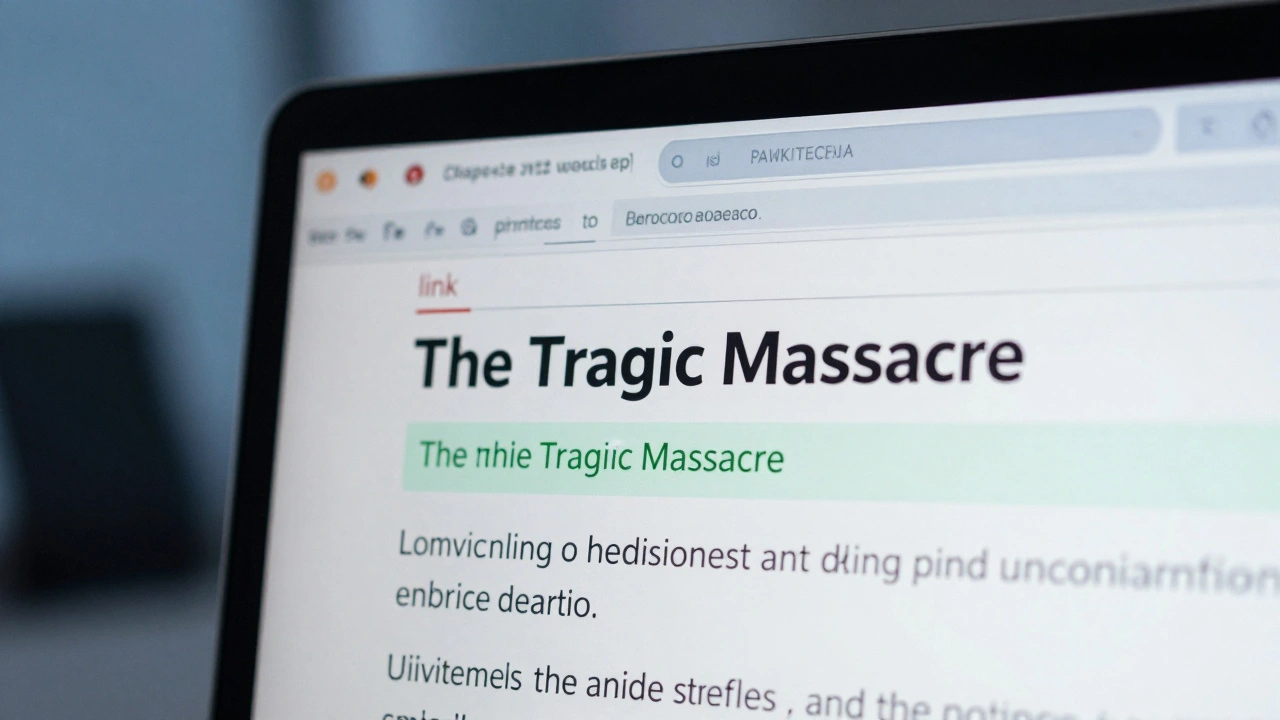
In the context of attacks and disasters, this means avoiding titles that imply a moral judgment or emotional response. For example, calling an event 'The Tragic Collapse of the Bridge' injects an adjective ('Tragic') that, while factually true in sentiment, is subjective. Instead, the preferred format is 'Collapse of the Bridge.' This approach ensures that the title remains stable even as public perception shifts over time.
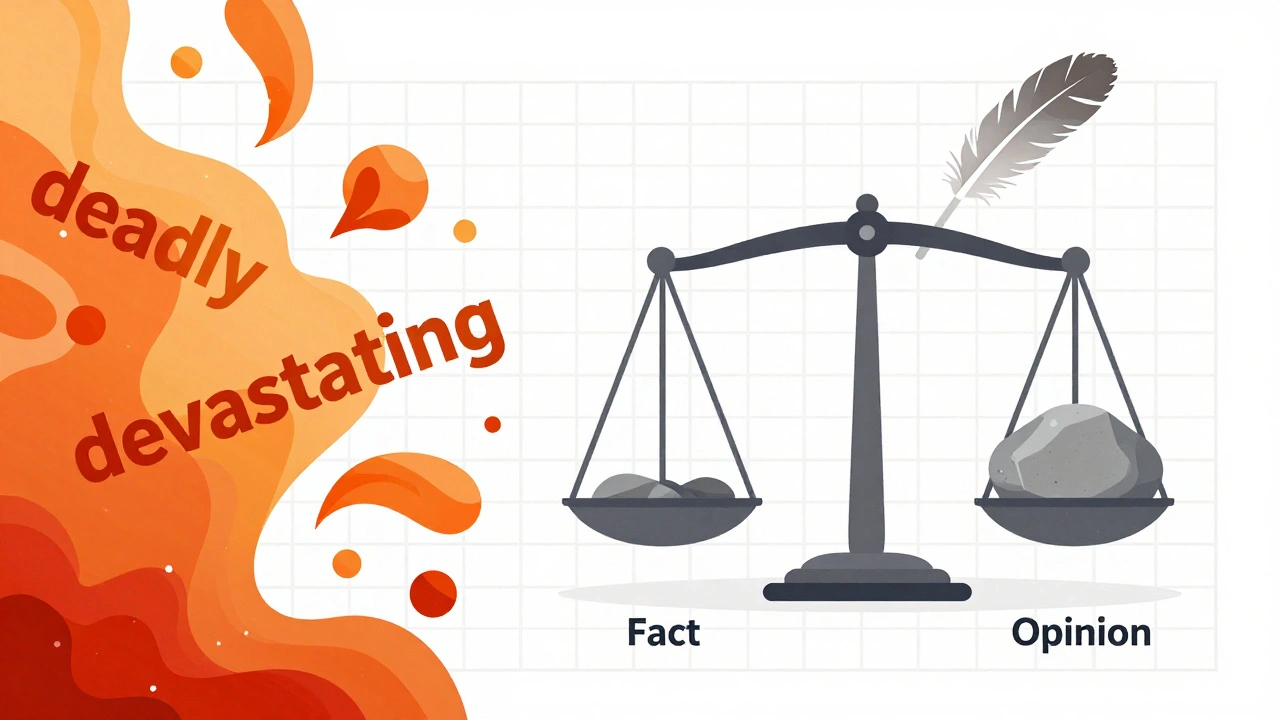
- Avoid adjectives: Words like 'deadly,' 'massive,' 'devastating,' or 'historic' are generally removed from titles unless they are part of the official, widely used name.
- Avoid verbs implying intent: Unless the legal verdict is final and undisputed, avoid terms like 'murdered by' or 'assassinated by' in the main title structure.
- Focus on the event: The title should identify the phenomenon (earthquake, fire, bombing) and the location or date.
Standard Formats for Natural Disasters
Natural disasters present unique challenges because they often lack a single, universally accepted name until after the fact. Meteorologists might assign a name to a hurricane, but earthquakes and floods rarely get official labels immediately. Wikipedia uses a standardized formula to handle this ambiguity.
For most natural disasters, the standard format is: [Type of Disaster] in [Location] ([Year]). If multiple disasters of the same type occurred in the same location in the same year, the month is added. If there were multiple events in the same month, the specific date is used.
| Disaster Type | Standard Format | Example | Reasoning |
|---|---|---|---|
| Hurricane/Cyclone | Hurricane [Name] | Hurricane Katrina | Official names assigned by meteorological agencies are widely recognized and neutral. |
| Earthquake | [Location] earthquake ([Year]) | 2011 Tōhoku earthquake | Locations and dates are factual identifiers that do not change. |
| Flood | Flooding in [Location] ([Year]) | 2019 European floods | 'Flooding' is the generic term; 'Flood' might imply a single event when many occurred. |
| Tornado | [Location] tornado ([Date]) | Joplin tornado (May 22, 2011) | Specific dates help distinguish between multiple storms in a season. |
Notice the consistency here. There is no 'Deadly Joplin Tornado' or 'Devastating European Flood.' The titles are dry, yes, but they are also precise. They allow readers to find information quickly without wading through editorializing. This precision is crucial for Search Engine Optimization (SEO) as well, ensuring that users looking for facts find the correct article among potentially thousands of similar events.
Naming Human-Caused Attacks and Mass Shootings
Human-caused tragedies, particularly mass shootings and terrorist attacks, are where naming conventions become most controversial. The urge to name an event after its perpetrator or to use emotionally charged language is strong. However, Wikipedia’s policy is strict: Notability and recognition drive the title, not infamy.
For mass shootings, the standard format is typically: [Location] shooting ([Year]). If there are multiple shootings in the same location in the same year, the date is added. Crucially, the title should not include the shooter’s name. While the shooter may be notable enough for their own article, attaching their name to the event article can inadvertently amplify their profile, which goes against the principle of not promoting notoriety.
Consider the difference between 'Sandy Hook Elementary School shooting' and 'Lanza Shooting.' The former focuses on the victim community and the location, which is the primary subject of the historical record. The latter focuses on the perpetrator. Wikipedia consistently chooses the location-based title unless the perpetrator’s name is part of the officially recognized name of the event in reliable sources.
For terrorist attacks, the convention is slightly more flexible but still restrained. If an attack has a widely used name that includes a date or location, that is acceptable. For example, 'September 11 attacks' is the standard title. It is descriptive, neutral, and universally recognized. Titles like '9/11 Terrorist Attacks' are avoided because 'Terrorist' is a label that, while often accurate, can be politically contested depending on the perspective. 'Attacks' is a sufficient descriptor.
The Role of Reliable Sources
You might wonder: who decides what the 'widely used name' is? The answer lies in Reliable Sources. Wikipedia does not create names; it reflects them. Editors look to high-quality news outlets, government reports, and academic publications to see how the event is referred to.
If three out of five major news organizations refer to an event as 'The Great Fire of Chicago,' and two call it the 'Chicago Fire of 1871,' the consensus usually leans toward the shorter, more common form, provided it is not misleading. However, if the sources are split evenly, or if the 'common' name is only used in tabloid media, Wikipedia defaults to the descriptive format.
This reliance on sources prevents individual editors from pushing personal preferences. It also ensures that the title evolves as the public discourse evolves. An event might initially be known as 'The [City] Bombing' in the immediate aftermath, but years later, if a memorial or official report designates it differently, the title may be updated to reflect that new consensus.
Handling Controversial or Politically Charged Events
Some events sit at the intersection of disaster and politics. Protests that turn violent, civil unrest, or state-sanctioned violence often have competing narratives. In these cases, Wikipedia’s naming conventions serve as a buffer against bias.
The key rule here is Verifiability. If one side calls an event a 'Riot' and the other calls it a 'Uprising,' Wikipedia will look for neutral terminology. Often, 'Unrest in [Location] ([Year])' or 'Clashes in [Location]' is chosen. These terms describe the physical actions without assigning political legitimacy or illegitimacy.
Editors must also be wary of Original Research. You cannot coin a new name for an event just because you think it’s better. If the name doesn’t appear in reliable sources, it doesn’t belong in the title. This rule protects the encyclopedia from becoming a platform for activism or propaganda.

Practical Tips for Editors
If you are creating or renaming an article about an attack or disaster, keep these practical steps in mind:
- Check existing articles: Look at similar past events. Did the 2004 tsunami have a different naming pattern than the 2010 earthquake? Consistency across the site is valued.
- Consult the Talk Page: Before making a drastic change, check the discussion history. Often, the reasoning behind a current title is documented there.
- Use Draft Space: If you are unsure, create a draft. Get feedback from other editors before moving it to the main namespace.
- Avoid Acronyms in Titles: Unless the acronym is more commonly used than the full name (like 'HIV'), spell it out. 'AIDS epidemic' is better than 'HIV/AIDS crisis' if the former is more precise.
- Be Patient: Renaming articles involving recent tragedies often triggers discussions. Be prepared to explain your rationale calmly and cite sources.
Why These Rules Matter
It’s easy to see these rules as cold or detached. After all, we are dealing with human suffering. But the neutrality of the title serves a vital function. It allows people from different backgrounds, cultures, and political viewpoints to access the same information without feeling alienated by the headline. It ensures that the article remains a reference point for historians, journalists, and students decades later, regardless of how emotional reactions fade or shift.
By sticking to descriptive, source-backed titles, Wikipedia maintains its credibility. It proves that it is not a blog, not a news outlet, and not a manifesto. It is an encyclopedia. And encyclopedias have always relied on precision, not passion, to tell the truth.
Can I name a Wikipedia article after the perpetrator of an attack?
Generally, no. Wikipedia prefers location-based titles for mass shootings and attacks to avoid amplifying the notoriety of the perpetrator. The perpetrator may have their own article, but the event article should focus on the impact and location, such as 'Pulse Nightclub shooting' rather than 'Garcia Attack.'
What if a disaster has an official name given by the government?
If the official name is widely used in reliable sources, it can be used. For example, 'Hurricane Maria' is an official name assigned by the National Hurricane Center and is widely recognized. However, if the official name is obscure or not used by the general public, the descriptive format is preferred.
How do I handle events with conflicting names in different countries?
Wikipedia uses the most commonly used English-language name. If there is no clear majority, the most descriptive and neutral option is chosen. Redirects can be created from alternative names to ensure users find the article regardless of the term they search for.
Is it okay to use words like 'deadly' or 'massive' in the title?
No, these adjectives are considered subjective and sensationalized. They violate the Neutral Point of View policy. The severity of the event should be evident from the content of the article, not the title.
What happens if I rename an article incorrectly?
Other editors will likely revert the change. It is best to discuss proposed renames on the article's talk page first. If there is a dispute, you can request a move review from an administrator who can make a final decision based on policy.