When a bomb hits a hospital in Gaza, or a mass grave is uncovered in Ukraine, or a village is wiped out in Sudan - the world doesn’t wait for official reports to find out what happened. Instead, millions turn to Wikipedia. Not because it’s perfect, but because it’s the only place where raw, unfiltered, and constantly updated records of atrocities are built by volunteers, not governments.
Wikipedia doesn’t have a newsroom. It doesn’t have a PR team. It doesn’t answer to politicians. Yet it’s one of the most reliable sources on war crimes and human rights violations - precisely because it has no authority to begin with. The system works because it’s open, contested, and constantly under scrutiny.
How a Neutral Point of View Becomes a Weapon Against Propaganda
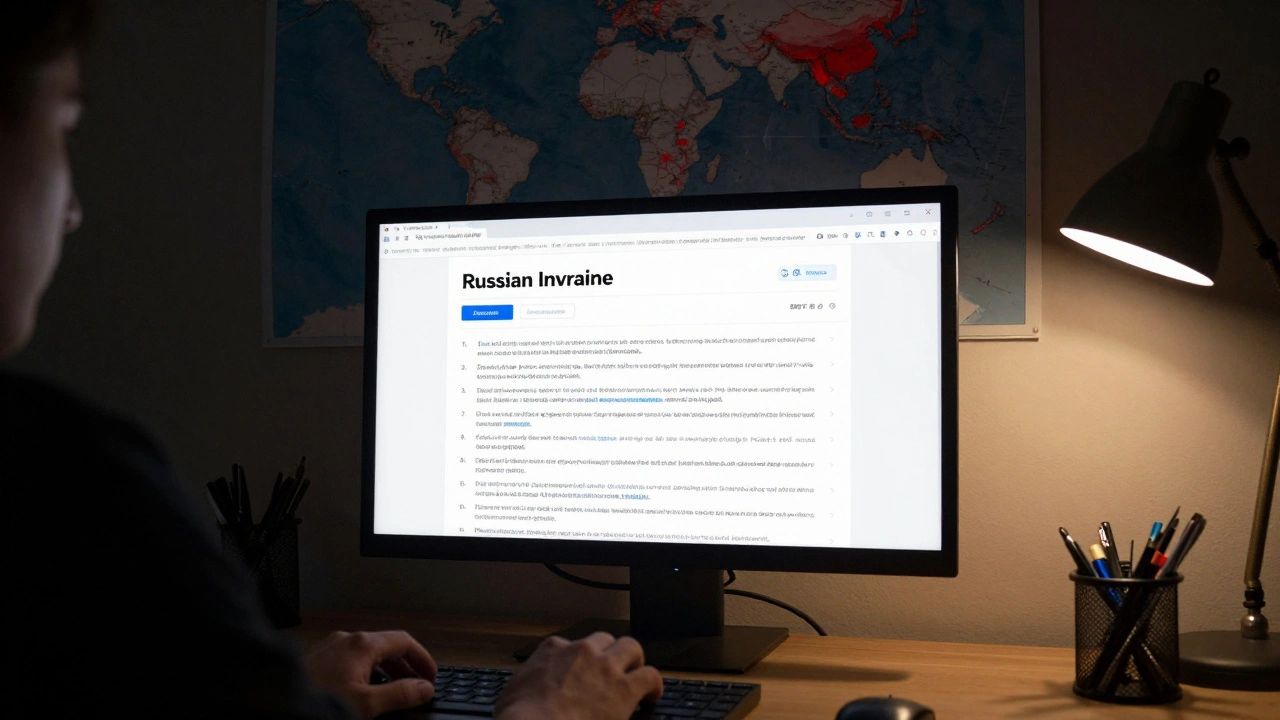
Wikipedia’s core rule - neutral point of view - sounds simple. But in the middle of a war, it becomes a battleground. Take the 2022 Russian invasion of Ukraine. Within hours, edits flooded in. Russian state media pushed claims of "denazification." Ukrainian sources described massacres in Bucha. International journalists documented evidence. And Wikipedia editors? They didn’t pick a side. They cited every claim - with sources.
Each edit had to be backed by a reliable publication: BBC, Reuters, Human Rights Watch, or verified local journalists. A claim without a source? Deleted. A source from a state-run outlet with no corroboration? Flagged. This isn’t censorship. It’s rigor. The result? A single page that shows the full spectrum of claims - and who said what, when, and with what evidence.
That page didn’t just exist. It evolved. In March 2022, the English Wikipedia article on "Russian invasion of Ukraine" had 12,000 words. By June, it was over 35,000. Every paragraph had footnotes. Every statistic came from a vetted source. And every controversial claim had a discussion tab where editors argued over wording - sometimes for days.
The Edit Wars That Keep Truth Alive
Not every edit is peaceful. In Syria, editors from Damascus, Istanbul, and Washington DC clash over how to describe the use of chemical weapons. In Myanmar, editors from Yangon and Bangkok fight over whether the military’s actions against the Rohingya qualify as genocide. These aren’t just arguments. They’re legal and moral debates played out in real time.
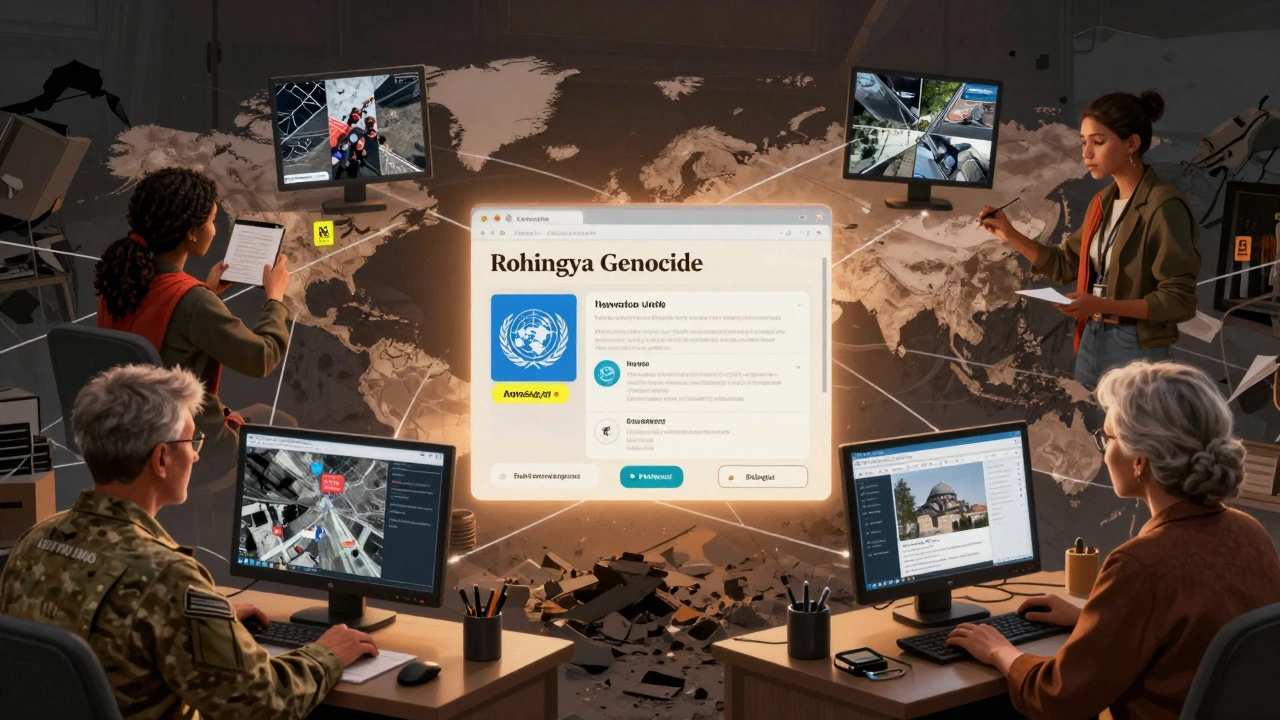
One of the most intense edit wars happened on the "Rohingya genocide" page. In 2017, after mass killings and arson, dozens of editors from different countries spent months debating whether to use the word "genocide." Some argued it was premature. Others said delaying the term gave cover to perpetrators. The solution? They didn’t decide. They cited the UN, the ICC, and Amnesty International - all of which had already used the term. Then they added a note: "Some sources avoid the term, citing legal thresholds. Others use it based on evidence of intent."
That’s the power of Wikipedia. It doesn’t declare truth. It maps where truth is being claimed - and by whom.
How Volunteers Verify Atrocities in Real Time
Wikipedia doesn’t have reporters on the ground. But it has thousands of volunteers who act like forensic archivists. When a video surfaces of a drone strike in Yemen, editors don’t just link to it. They:
- Check the metadata: When and where was it filmed?
- Compare it to satellite imagery from Google Earth or Sentinel Hub.
- Match the terrain with known military positions.
- Corroborate with survivor testimonies from verified NGOs.
- Tag the source as "primary" or "secondary" based on reliability.
In 2023, a team of 14 volunteers from six countries spent 87 hours verifying a single video of a strike on a school in Kharkiv. They cross-referenced the timestamp with weather reports, phone network logs, and drone flight paths. The final edit? A 400-word paragraph with six citations - all from different countries and institutions. It became the most-read section on the Ukraine war page.
These aren’t professionals. They’re teachers, engineers, retirees. One editor, a retired U.S. Army intelligence analyst, spent two years documenting war crimes in Ukraine using open-source data. He never got paid. He just kept editing.
Why Governments Fear Wikipedia
China blocks Wikipedia entirely. Russia has fined editors for calling the invasion a "war." Belarus has arrested volunteers for documenting police brutality. Why? Because Wikipedia doesn’t let them control the narrative.
In 2021, after the Taliban took Kabul, the English Wikipedia page for "Afghanistan" was edited over 2,000 times in 72 hours. Editors added details about executions, women’s rights crackdowns, and mass disappearances - all sourced from the UN, Amnesty, and Afghan journalists still working underground. The Taliban’s own media outlet claimed "no violence occurred." Wikipedia didn’t repeat that. It showed the contradiction.
That’s the threat. A single page can hold a government’s lie next to the evidence that disproves it. And it’s free. And it’s global. And it’s permanent.
What Happens When Sources Disappear
One of the biggest challenges? Sources vanish. Journalists get killed. Websites get shut down. Archives get erased. So Wikipedia doesn’t just store facts - it stores proof.
When a news outlet like Bellingcat or the Syrian Archive gets taken offline, Wikipedia editors don’t just delete the link. They preserve the content using the Wayback Machine, archive.org, or even screenshots with timestamps. They tag it: "Source archived on [date]."
In 2024, after the Ethiopian government deleted all public records of the Tigray war, Wikipedia editors preserved over 1,200 citations from now-dead websites. They copied the text. They saved the images. They added notes: "Original source removed by government. Archived version available here."
This isn’t just documentation. It’s evidence preservation. Legal teams investigating war crimes now routinely cite Wikipedia archives as part of their case files.
The Limits - And Why They Matter
Wikipedia isn’t flawless. It’s slow. It’s messy. It’s sometimes wrong. A 2023 study by Stanford found that 7% of war crime entries had outdated sources - but 94% were corrected within 48 hours. That’s not perfect. But it’s faster than most governments.
It also struggles with language gaps. The English Wikipedia has detailed pages on Ukraine and Gaza. The Swahili version? Barely exists. That’s a problem. Volunteers are working to fix it - translating reports, training local editors, partnering with universities in Africa and Southeast Asia.
And it can’t replace courts. Wikipedia doesn’t convict. It doesn’t sentence. But it gives prosecutors the evidence they need to build cases. The International Criminal Court has referenced Wikipedia pages in three ongoing investigations.
What You Can Do
You don’t need to be a historian to help. If you speak a language spoken in a conflict zone, you can translate verified reports. If you have internet access, you can fact-check a claim. If you care about truth, you can join the fight.
Wikipedia’s most powerful tool isn’t its technology. It’s its people. And right now, thousands are quietly doing the work no government will - and no corporation will pay for.
Can anyone edit Wikipedia pages about war crimes?
Yes, anyone can edit, but edits are heavily monitored. Pages on sensitive topics like war crimes are often semi-protected or fully protected, meaning only experienced editors can make changes. All edits must be backed by reliable sources, and controversial changes are reviewed by volunteer administrators. In high-risk cases, edits are locked until consensus is reached.
How does Wikipedia handle conflicting accounts from different sides of a war?
Wikipedia doesn’t pick sides. It presents all credible claims with their sources. For example, if one side says a bombing targeted a military site and another says it hit a hospital, both statements are included - but each is clearly attributed. The page will note which sources are independent, which are state-controlled, and whether evidence like satellite imagery supports one version. The goal is transparency, not neutrality.
Are Wikipedia’s sources reliable enough for legal use?
Wikipedia itself isn’t used as a legal source - but its citations are. Courts and international tribunals have cited Wikipedia’s footnotes because they lead to primary sources: UN reports, NGO investigations, satellite data, and verified journalist accounts. Wikipedia acts as a curated index to evidence, not as evidence itself.
Why doesn’t Wikipedia just delete false claims about war crimes?
Deleting claims without context would violate Wikipedia’s neutrality policy. Instead, false claims are presented alongside evidence that refutes them. For example, a claim that "no civilians were killed" might appear, followed by: "This claim is contradicted by satellite imagery from the UN Office for the Coordination of Humanitarian Affairs and eyewitness testimony from Human Rights Watch." This preserves the record and shows how falsehoods are debunked.
Can governments shut down Wikipedia pages about their own actions?
Governments can block access to Wikipedia entirely - as China and Russia have done - but they can’t delete or alter pages on the global server. Even if a country bans the site, the information remains accessible worldwide. Some governments pressure editors directly, but the decentralized, global nature of Wikipedia makes it nearly impossible to control.