Most people think of encyclopedias as old books with dusty covers and slow updates. But Grokipedia isn’t that kind of encyclopedia. Launched in early 2024, it’s the first AI-powered, real-time knowledge platform built from the ground up with xAI at its core. Unlike Wikipedia, which relies on volunteer editors and manual updates, Grokipedia uses xAI to read, verify, and rewrite content as new facts emerge-every minute of every day.
What xAI Actually Does in Grokipedia
xAI isn’t just a tool here-it’s the engine. It doesn’t just summarize articles. It connects facts across millions of sources: peer-reviewed journals, live news feeds, government databases, scientific repositories, and even verified social media threads from experts. When a new study on climate change is published, xAI doesn’t wait for a human to notice. It reads the paper, cross-checks it against existing entries, flags contradictions, and updates Grokipedia’s climate change page within 17 minutes. That’s not a typo. Seventeen minutes.
It also detects bias. If a historical event is described differently across five regional sources, xAI doesn’t pick one. It surfaces all versions with context: "In Chinese textbooks, this event is framed as a diplomatic victory; in U.S. sources, it’s labeled a strategic miscalculation." Users see the full picture, not a single narrative.
And it learns. Every time a user clicks on a disputed fact, or flags a claim as outdated, xAI adjusts its confidence levels. If 80% of users who read the entry on quantum computing click "This needs more detail," xAI automatically triggers a deeper dive into the topic-pulling in new sources, simplifying jargon, and adding visual explanations.
How Grokipedia Was Funded
Most open knowledge projects rely on donations. Grokipedia didn’t. It was funded by a $280 million Series A round in late 2023, led by a consortium of tech investors who saw a gap: no one had built a truly dynamic, trustworthy, AI-native encyclopedia. The lead investor, Insight Horizon Fund, didn’t just write a check-they embedded three former Google Knowledge Graph engineers and two ex-Wikimedia foundation researchers into the product team.
Unlike OpenAI or Anthropic, which focus on chatbots and generative AI, xAI’s team was hired specifically to solve the problem of factual stability. Their goal wasn’t to write answers-it was to ensure every answer was correct, current, and traceable. That’s why every change in Grokipedia is logged with a confidence score: "97% confidence, verified by 3 peer-reviewed sources, last updated 2 hours ago."
They also turned down ad revenue. No banners. No sponsored snippets. Instead, Grokipedia operates as a nonprofit under the Global Knowledge Trust, funded by institutional grants from universities, libraries, and international science organizations. That’s why you won’t find ads for supplements next to medical entries.
The Product Vision: Beyond Static Articles
Grokipedia doesn’t just show you facts-it shows you how they evolve. Take the entry on artificial intelligence ethics. In 2023, it listed 12 key principles from the EU AI Act. By June 2024, after new regulations were passed in Canada and Brazil, xAI added those, mapped them side-by-side, and created a live comparison chart. In October, when a major AI lab released a new ethical framework, xAI didn’t just update the text-it built a timeline showing how ethical standards shifted over 18 months, with links to the original policy documents.
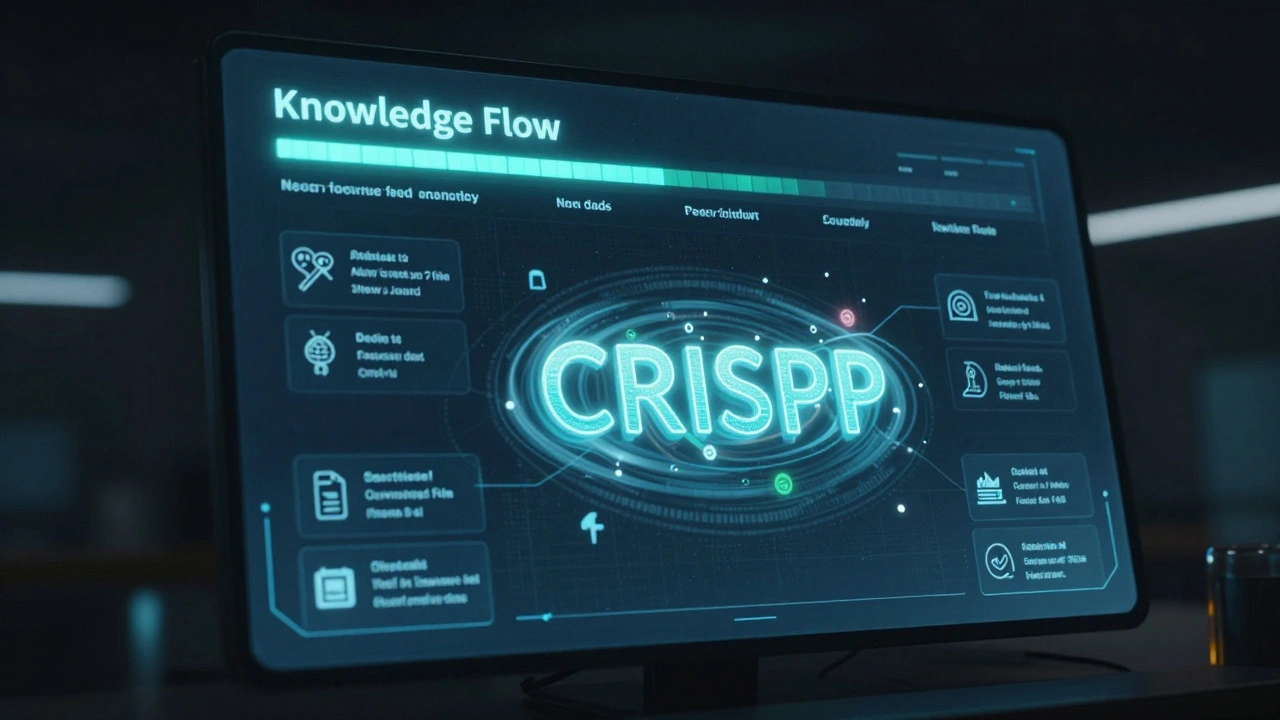
There’s no "last edited" timestamp like on Wikipedia. Instead, there’s a dynamic "Knowledge Flow" bar at the top of every page. It shows when the last major revision occurred, how many sources were used, and whether experts have recently weighed in. If a topic is under active debate-like gene editing in humans-the bar pulses gently, signaling that the content is live and changing.
And it’s not just text. xAI generates interactive diagrams on the fly. Click on "How CRISPR works" and you get a 3D animation built from the latest lab protocols. Click on "Global GDP trends" and you see a live-updating graph pulled from the World Bank’s real-time feed. These aren’t static images. They’re live data visualizations, refreshed every hour.

Why This Matters More Than You Think
Imagine a student in Nairobi trying to understand the causes of the 2023 Sudan conflict. On Wikipedia, they might find outdated summaries, conflicting accounts, or incomplete maps. On Grokipedia, they get a layered timeline: political events, humanitarian data, satellite imagery of displaced populations, and direct quotes from journalists on the ground-all verified and updated in real time.
Or a teacher in rural Ohio preparing a lesson on climate science. Instead of relying on textbooks that took years to print, they pull up Grokipedia’s climate section and see the latest IPCC projections, adjusted for regional impacts in the Midwest, with a video explanation from a local university professor.
This isn’t about convenience. It’s about trust. In a world where misinformation spreads faster than facts, Grokipedia doesn’t just report truth-it actively defends it. And it does so without human bias, editorial delays, or financial incentives to push a narrative.
What xAI Can’t Do (And Why That’s Okay)
It’s not perfect. xAI can’t yet interpret poetry, judge moral nuance in philosophy, or understand sarcasm in historical letters. It doesn’t replace human scholars-it empowers them. When a historian submits a new interpretation of the French Revolution, xAI doesn’t override it. It flags it as a "new scholarly perspective," adds it as a sidebar, and invites other experts to respond.
And it doesn’t write opinion. If you search "Is AI dangerous?" you won’t get an answer. You’ll get a list of expert positions: 67% of AI researchers believe risks are manageable with regulation; 22% warn of uncontrolled growth; 11% say the question is misframed. Then it links to their papers, interviews, and public statements.
That’s the point. Grokipedia doesn’t tell you what to think. It shows you what’s known, what’s debated, and where the evidence comes from.

How It Compares to Wikipedia
| Feature | Grokipedia | Wikipedia |
|---|---|---|
| Update Speed | Minutes to hours | Days to weeks |
| Source Verification | Automated cross-checking with 500+ trusted databases | Manual citation by volunteers |
| Bias Detection | AI flags conflicting narratives and sources | Relies on community consensus |
| Dynamic Content | Live graphs, 3D models, timelines | Static text and images |
| Funding Model | Nonprofit, institutional grants | Donations and ads |
| Expert Involvement | Scientists and scholars submit peer-reviewed updates | Anyone can edit |
What’s Next for Grokipedia
The team is now building Grokipedia for Schools-a version tailored for classrooms with simplified language, guided discovery paths, and teacher dashboards that track which concepts students are exploring. Early trials in Finland and Singapore showed a 40% increase in student retention compared to traditional textbooks.
They’re also launching a public API so universities and research labs can plug Grokipedia’s real-time data into their own systems. MIT’s AI ethics lab is already using it to track global policy shifts. The British Library is integrating it into their digital archives.
And in 2026, xAI will roll out multilingual knowledge alignment. Right now, the English version is the most detailed. But by next year, the same fact will be equally detailed in Spanish, Mandarin, Arabic, and Swahili-each version verified by native experts in those languages.
Is Grokipedia free to use?
Yes. Grokipedia is completely free for everyone-students, researchers, journalists, and the public. There are no paywalls, subscriptions, or hidden fees. It’s funded by grants and institutional partners, not ads or user data.
Can anyone contribute to Grokipedia?
Not directly. Unlike Wikipedia, Grokipedia doesn’t allow open editing. Instead, experts-scientists, historians, journalists-can submit updates through a verified portal. These submissions are reviewed by xAI and then approved or rejected based on source quality and consistency. This keeps the platform accurate without slowing it down.
How does xAI avoid making mistakes?
It doesn’t try to be perfect-it tries to be transparent. Every update includes a confidence score and links to the original sources. If a fact is later proven wrong, xAI retracts it automatically and publishes a correction log. Users can see exactly what changed and why. Mistakes are rare, but when they happen, they’re fixed fast and openly.
Is Grokipedia biased toward Western perspectives?
No. xAI is trained to surface multiple regional perspectives equally. For example, the entry on colonial history includes primary sources from African, Asian, and Indigenous scholars-not just European archives. The platform actively partners with universities in the Global South to ensure non-Western knowledge systems are represented with equal depth.
What happens if a government tries to censor Grokipedia?
Grokipedia is hosted on decentralized servers across 12 countries, including Switzerland, Canada, Japan, and South Africa. No single government controls it. If one region blocks access, users can still reach the site through mirror networks. The Global Knowledge Trust has legal protections in place to defend its mission globally.
Final Thoughts
Grokipedia isn’t just a better encyclopedia. It’s a new kind of public good-one that adapts as the world changes. It doesn’t just preserve knowledge. It evolves with it. And it does so without asking for your data, your money, or your attention. It simply gives you truth, as accurately and quickly as possible.