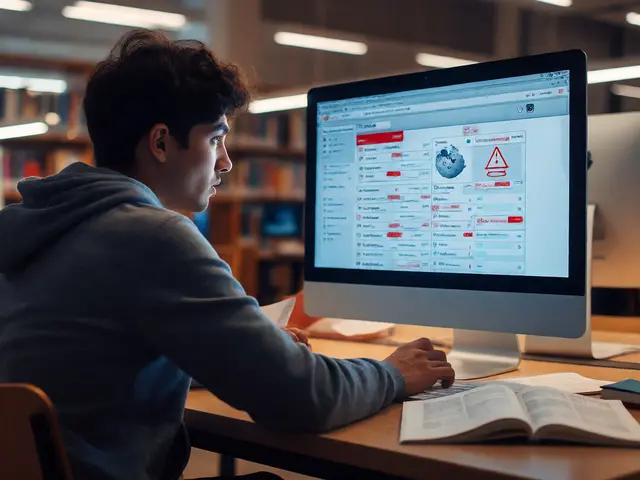
The core of this challenge lies in the fact that Wikipedia isn't one giant encyclopedia; it's a collection of independent projects. Each language edition has its own community, its own set of administrators, and its own cultural baggage. While the overarching goal is a Neutral Point of View (NPOV), what feels 'neutral' to an editor in London might feel biased to someone in Tokyo or Cairo. To bridge this gap, we need more than just translation tools; we need a strategy for cross-lingual synchronization.
The NPOV Standard and the Language Gap
At the heart of every page is the Neutral Point of View (or NPOV), which is the fundamental policy requiring editors to represent all significant views fairly, proportionately, and without bias. In a single language, this is already hard. When you scale this across 300+ languages, it becomes a logistical nightmare.
The problem usually starts with "source bias." An English editor might rely heavily on Western academic journals. Meanwhile, an editor on the French Wikipedia might prioritize domestic archives. If these sources disagree, the articles diverge. This creates "knowledge silos" where the version of an event depends entirely on which language you speak. For example, the framing of colonial history varies wildly between the English and Hindi versions of the site, not because of a lack of facts, but because of the narrative lenses used to interpret those facts.
Strategies for Cross-Wiki Coordination
So, how do we actually stop these linguistic drifts? The most effective method isn't just copying and pasting text, but coordinating the consensus. If the English community spends six months debating the phrasing of a sensitive political event, that consensus should be shared with other language communities.
One practical way to handle this is through the use of Interlanguage Links, which connect the same topic across different language versions of Wikipedia. But the real work happens in the talk pages. When editors from different language projects communicate, they can align on which sources are truly "neutral" and which are merely "locally accepted." This prevents a situation where one language version becomes a mouthpiece for a specific government or cultural group.
| Approach | Mechanism | Pros | Cons |
|---|---|---|---|
| Direct Translation | Copying text from a dominant wiki | Fast, consistent facts | Imports the bias of the original language |
| Consensus Sharing | Cross-wiki talk page discussion | High neutrality, cultural nuance | Slow, requires multilingual editors |
| Source Diversification | Mandating non-local citations | Reduces regional bias | Difficult to verify niche local sources |
Identifying and Fixing Cultural Bias
Bias isn't always about lying; often, it's about what is omitted. This is known as systemic bias. For instance, if a biography of a female scientist is detailed in the German version but only a stub in the English version, that is a neutrality failure regarding the importance of the subject. To fix this, editors should look for "citation gaps" across languages.
A good rule of thumb for an editor is to ask: "Would a person from the opposing viewpoint find this phrasing fair?" If you are writing about a disputed border in the Wikimedia Foundation ecosystem, you should check how the neighboring country's Wikipedia handles the same map. If the versions are polar opposites, the goal isn't to pick a winner, but to describe the dispute itself. Instead of saying "The region is part of Country A," a neutral approach is "Country A claims the region, while Country B asserts its own sovereignty over it."
The Role of Technology in Maintaining Balance
We can't expect every editor to be a polyglot. That's where Machine Translation comes in. Tools like Google Translate or specialized AI are used to spot drastic differences in content. However, technology can actually increase bias if not used carefully. If an AI translates a biased English article into Swahili, it effectively "exports" English-centric bias into the Swahili community, which might not have the resources to vet the claims immediately.
To combat this, some communities use "content drift" scripts. These are tools that alert administrators when a page in one language is updated significantly while its sister pages in other languages remain stagnant. This triggers a review process to ensure that new, neutral evidence found in one language is propagated across the others.
Practical Checklist for Multilingual Editors
If you're trying to ensure a topic remains neutral across several languages, follow these steps:
- Check the Talk Pages of the most active language versions to see what the main points of contention are.
- Identify the primary sources used in different languages. Are they all from the same region? If so, seek out a source from a different geographic area.
- Use descriptive language for disputes. Avoid adjectives like "rightfully" or "alleged" unless you are quoting a specific source.
- Coordinate with the Wikimedia Commons team to ensure images and maps are neutral and not favoring one national perspective.
- Verify that the lead section of the article summarizes the various viewpoints rather than picking one as the "truth."
Dealing with "Edit Wars" Across Borders
Sometimes, the battle for neutrality turns into a war. You might see a page being reverted every hour because editors from two different countries are fighting over a single sentence. In these cases, the solution is rarely more editing, but rather a "lock" or a move to a community arbitration process.
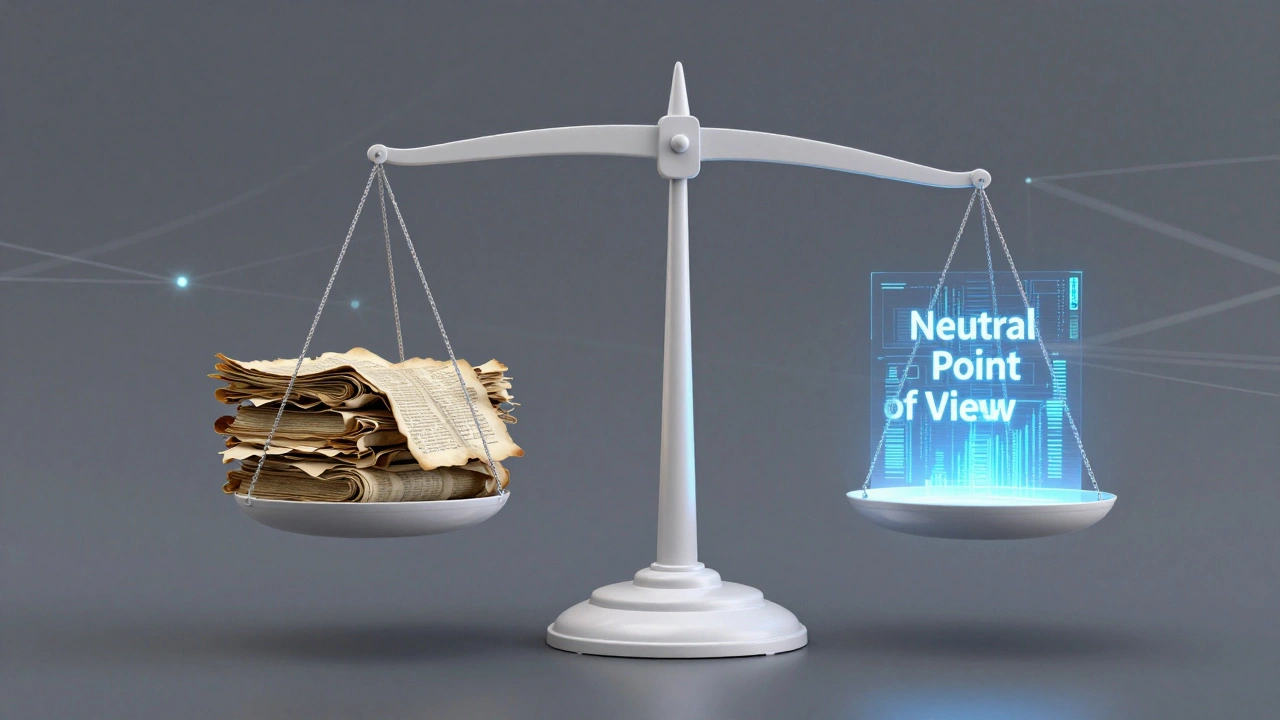
The most successful resolutions happen when editors move the conversation away from the article itself and into a shared space. By creating a temporary cross-wiki coordination group, editors can agree on a "compromise phrasing." This involves acknowledging the existence of multiple interpretations without validating one over the other. It's the difference between saying "This is the history" and "This is how this event is viewed in these three different regions."
Does neutrality mean every language version must be identical?
No. Cultural context matters. For example, a Japanese article might include more detail on local Shinto traditions that would be irrelevant to a Swahili reader. Neutrality means the facts and the weight of different perspectives should be consistent, but the level of detail can vary based on the audience's needs.
What happens if one language version is completely biased?
If a specific language version is consistently ignoring primary sources or presenting a one-sided view, editors can flag it in the global community. While each wiki is autonomous, the broader community can provide "suggested edits" and a list of neutral sources to help the local admins correct the bias.
How can I tell if a source is biased?
Look for "loaded language." If a source uses words like "obviously," "fortunately," or "tragically" to describe a political event, it's an opinion piece, not a neutral source. A neutral source describes the action and lets the reader decide the emotional weight.
Can AI help in making Wikipedia more neutral?
AI can help by detecting patterns of bias or identifying where a page lacks diverse sourcing. However, AI cannot determine "truth" or "fairness" on its own. It is a tool for detection, but human editors must make the final judgment on what constitutes a neutral perspective.
What is the best way to suggest a change to a foreign language wiki?
The best way is to leave a polite note on the article's Talk page. Mention that you are an editor from another language project and provide the neutral sources you found. Avoid direct editing if you don't speak the language fluently, as this can be seen as "vandalism" or "interference." Instead, guide the local editors toward the evidence.
Next Steps for New Editors
If you've noticed a discrepancy between two language versions of a page, don't panic and start deleting text. Start by documenting the differences. Create a list of what is present in the English version that is missing in the Spanish version, and vice versa. Then, take that list to the Talk page of the wiki you wish to improve.
For those who are multilingual, your biggest value isn't in translating words, but in translating context. Help other editors understand why a certain phrase might be offensive or biased in another culture. By acting as a cultural bridge, you help the entire ecosystem move closer to a truly global and neutral encyclopedia.