Imagine editing an article about a local festival in your hometown. You write it in English, but you want readers in Tokyo, Berlin, and Buenos Aires to read it too. In the past, this required finding volunteers who spoke four languages perfectly. Today, AI-assisted translation is technology that uses artificial intelligence to translate text between languages while preserving context and style is changing how we build global knowledge bases. For platforms like Wikipedia, where content exists in over 300 languages, these tools are not just convenient-they are essential for closing the gap between information-rich and information-poor communities.
The dream of a fully translated Wikipedia has existed since its inception. Yet, as of early 2026, less than 15% of articles have been translated into more than one language. The bottleneck isn’t lack of interest; it’s the sheer volume of work. Human translators can only handle so much. This is where modern neural machine translation (NMT) steps in, offering speed at scale. But raw AI output is often clunky, inaccurate, or culturally tone-deaf. The real breakthrough lies in assisted workflows-where humans guide the AI, rather than replacing it entirely.
How Machine Translation Works on Wikipedia
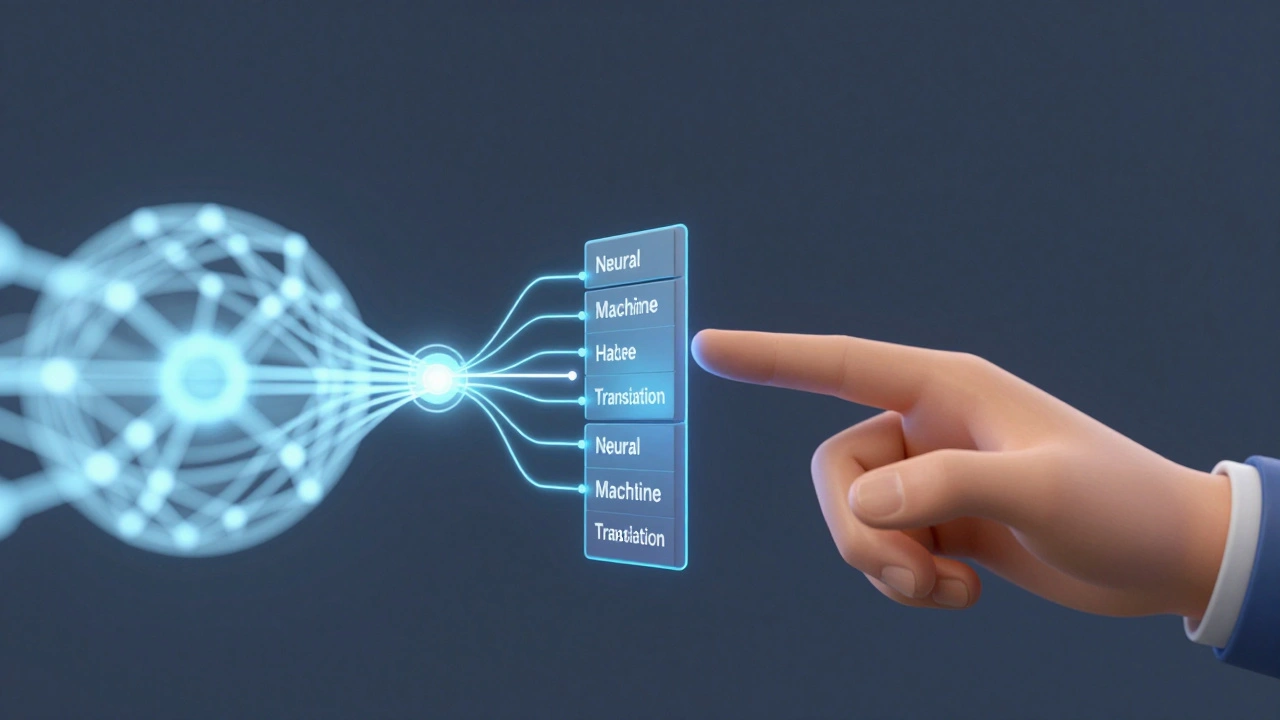
To understand why AI-assisted translation matters, you need to look under the hood. Most current systems rely on Neural Machine Translation (NMT), which uses deep learning models to predict translations based on patterns in massive datasets. Unlike older rule-based systems that swapped words according to grammar rules, NMT understands context. If you type “bank,” it knows whether you mean a financial institution or a river edge, depending on surrounding sentences.
On Wikipedia, this technology powers features like Translate Extension, a browser-based tool that allows editors to translate pages directly within the MediaWiki interface. When you start translating an article, the system fetches the source text, runs it through an engine (often powered by services like Microsoft Azure Translator or LibreTranslate), and presents the draft. You then edit, refine, and publish. It’s collaborative coding for language.
But here’s the catch: standard NMT engines aren’t trained specifically on encyclopedic prose. They’re optimized for general web content, emails, or customer service chats. That means they might miss technical terms, misinterpret citations, or fail to respect citation styles unique to each language edition. A medical term translated literally could become dangerous misinformation if not checked by a subject-matter expert.
| Approach | Speed | Accuracy | Human Effort Required | Best Use Case |
|---|---|---|---|---|
| Manual Translation | Slow | High | Very High | Complex topics requiring nuance |
| Raw NMT Output | Fast | Low-Medium | Medium-High | Quick drafts for simple facts |
| AI-Assisted Workflow | Medium-Fast | High | Medium | Balanced efficiency and quality control |
The Role of Human-in-the-Loop Systems
You might think AI should do all the work. Why bother with human editors when machines can churn out thousands of articles per day? The answer is trust. Readers don’t care if an article was written by a bot-as long as it’s accurate, neutral, and well-sourced. And right now, bots struggle with neutrality, especially around politically sensitive or culturally specific topics.
This is why Human-in-the-loop (HITL) systems workflows where humans review and correct AI-generated outputs before publication have become the gold standard. Think of it like proofreading: the AI writes the first draft, and you polish it. You fix awkward phrasing, verify names, ensure proper capitalization, and check that references link correctly. Some projects even use gamified interfaces where multiple users vote on the best version of a sentence.
In practice, HITL reduces cognitive load. Instead of staring at a blank page, you’re solving puzzles. Is this phrase idiomatic? Does this name match the original spelling? Are the units consistent? These small decisions add up to high-quality output without burning out volunteer translators.
Challenges Beyond Language Barriers
Language is only part of the problem. Another major hurdle is Cultural Bias, which systematic skewing of content toward dominant cultures, leading to underrepresentation of minority perspectives. Even when AI translates accurately, it may carry implicit biases from its training data. For example, descriptions of historical events might favor Western viewpoints unless explicitly corrected.
Then there’s the issue of low-resource languages. Languages like Quechua, Swahili, or Tamil have fewer digital resources compared to English or Mandarin. As a result, AI models perform poorly on them. Translating an article into such languages requires either custom-tuned models or heavy manual intervention. Without targeted investment, these communities remain locked out of the benefits of automated translation.
Another challenge is copyright compliance. Not everything on Wikipedia is free to reuse. Images, quotes, and certain types of structured data require careful handling. AI doesn’t inherently understand licensing terms-it just moves text around. So someone needs to flag potential violations before publishing.
Tools Powering the Next Generation
If you’re ready to dive into AI-assisted translation yourself, several tools make it easier than ever. Here’s what’s currently shaping the landscape:
- MediaWiki Translate Extension: Built directly into many language editions, this lets you switch between source and target languages seamlessly. It integrates with revision history, so changes stay tracked.
- LibreTranslate API: An open-source alternative to commercial APIs, ideal for privacy-conscious contributors. You can self-host it to avoid sending data to third parties.
- Hugging Face Transformers: Developers use pre-trained models like MarianMT or mBART to fine-tune translations for niche domains. Great for tech-savvy volunteers.
- DeepL Pro: Offers superior fluency for European languages. Many power users prefer DeepL for initial drafts due to its natural-sounding output.
- Wikidata Integration: Links entities across languages automatically. Helps maintain consistency in names, dates, and identifiers.
Each tool serves a different purpose. Your choice depends on your skill level, language pair, and project goals. Beginners might stick with built-in extensions, while advanced users experiment with custom pipelines.
Building Better Workflows Together
None of these tools work miracles alone. What makes them effective is how people organize around them. Successful teams adopt clear processes: define scope, assign roles, set deadlines, and track progress. Some groups create glossaries for recurring terms. Others hold weekly syncs to discuss tricky passages.
One powerful strategy is Crowdsourced Review Networks, which decentralized groups of volunteers who collectively review and improve translated content. Imagine a Slack channel where members post links to their latest translations and ask for feedback. Over time, patterns emerge: common errors get flagged, best practices spread, and confidence grows.
Another key factor is motivation. People contribute because they believe in open knowledge. Highlighting impact helps sustain engagement. Show stats: “You’ve helped translate 50 articles this month.” Celebrate milestones. Make contributions visible. Gamification works-but only when tied to meaningful outcomes.
Looking Ahead: Where Do We Go From Here?
The future looks promising. Newer models show improved handling of code-switching, dialect variation, and informal registers. Multimodal approaches combine text with images and audio cues for richer understanding. Federated learning allows decentralized training without compromising user privacy.
Yet challenges remain. How do we measure quality objectively? Who decides which articles deserve priority? Can we incentivize participation fairly across income levels and regions? These questions won’t be solved by algorithms alone-they require community input, policy design, and ethical foresight.
What’s clear is that AI-assisted translation isn’t about replacing humans. It’s about amplifying our ability to share knowledge globally. With better tools, smarter workflows, and inclusive participation, we can move closer to a truly multilingual internet-one edited by everyone, for everyone.
What is AI-assisted translation?
AI-assisted translation combines artificial intelligence with human oversight to produce accurate, context-aware translations faster than manual methods alone. It typically involves generating a machine draft followed by editorial refinement.
Can I use AI to translate entire Wikipedia articles?
Yes, but caution is advised. While AI can generate full drafts quickly, results vary widely in accuracy and tone. Always review and edit thoroughly before publishing, especially for complex or sensitive topics.
Which AI translation tools work best for Wikipedia?
Popular options include the MediaWiki Translate Extension, LibreTranslate API, Hugging Face models, and DeepL Pro. Choice depends on language pair, technical comfort, and desired balance between speed and quality.
Why isn't AI replacing human translators completely?
Because AI lacks contextual judgment, cultural awareness, and ethical reasoning. Humans detect bias, resolve ambiguities, and ensure factual integrity-critical elements for reliable encyclopedic content.
How do I start contributing to multilingual Wikipedia using AI tools?
Begin by joining active translation projects in your language edition. Learn basic markup syntax, test available tools on short sections, seek mentorship from experienced editors, and gradually increase complexity as you gain confidence.
Are there risks associated with relying heavily on AI translation?
Yes. Risks include propagation of errors, reinforcement of biases, loss of local voice, and unintended copyright issues. Mitigation requires robust review protocols and diverse contributor pools.
What does the future hold for AI in multilingual knowledge sharing?
Expect increasingly sophisticated models capable of handling dialects, multimodal inputs, and federated learning frameworks. Success will depend on equitable access, transparent governance, and sustained community involvement.