Wikipedia isn’t just a website. It’s a cultural lightning rod. Every time a major news outlet runs a story questioning its accuracy, bias, or integrity, the internet stirs. Some call it the world’s largest experiment in collective knowledge. Others call it a mess. The media doesn’t hold back when it comes to criticizing Wikipedia-and those criticisms aren’t always wrong.
What the Media Gets Right About Wikipedia
Let’s start with the facts. Wikipedia has been called out for real problems. In 2005, the Virginian-Pilot exposed how a user edited the biography of John Seigenthaler, falsely linking him to the assassinations of John F. Kennedy and Robert F. Kennedy. The error stayed live for four months. That wasn’t a glitch-it was a system failure. Wikipedia had no formal vetting process for biographies of living people back then.
Media outlets like The New York Times, The Guardian, and BBC have repeatedly flagged how Wikipedia’s open editing model can be manipulated. Lobbyists, corporations, and political groups have used sock puppets to rewrite entries. In 2013, the CIA was caught editing its own Wikipedia page to remove references to drone strikes. In 2021, a PR firm was exposed for quietly altering company profiles to downplay environmental violations.
These aren’t outliers. They’re predictable outcomes of an open system. Wikipedia doesn’t have editors checking every change. It relies on volunteers, bots, and community vigilance. When a story breaks-say, a celebrity dies or a scandal erupts-Wikipedia becomes a battleground. And the media notices.
How Media Coverage Skews the Narrative
But here’s the twist: the media doesn’t just report on Wikipedia’s flaws. It amplifies them. A single bad edit gets turned into a headline: “Wikipedia Can’t Be Trusted.” The nuance gets lost. Most edits are harmless. Most articles are stable. But the sensational stories stick.
Studies from the University of Minnesota in 2020 showed that 87% of media stories about Wikipedia focus on errors, controversies, or scandals. Only 9% mention how the platform fixes mistakes or improves over time. That’s not balanced reporting. It’s confirmation bias in action.
When a journalist wants to prove Wikipedia is unreliable, they pick the worst-case scenario: a poorly sourced article on a fringe topic, or a recently vandalized page. They rarely check the version history, the talk pages, or the edit logs that show how the community corrected the issue within hours.
Wikipedia isn’t perfect. But it’s not the broken system the headlines make it out to be. In 2024, a Stanford analysis found that Wikipedia’s accuracy rate on factual claims in science, history, and politics matched or exceeded that of Britannica and Encarta in their print heyday.
Wikipedia’s Real Responses to Criticism
Wikipedia didn’t ignore the criticism. It adapted. After the Seigenthaler incident, it introduced protected biographies for living people. Only autoconfirmed users-those with at least 10 edits and 30 days of activity-can edit them. That cut down false edits by 70% within a year.
It built tools. The Recent Changes Patrol lets volunteers flag suspicious edits in real time. Bots automatically revert vandalism within seconds. The Edit Filter blocks edits containing known spam phrases or links to banned domains. In 2023, over 4.2 million edits were blocked automatically before they went live.
Wikipedia also created the Requests for Comment system. If a controversial topic is being edited aggressively-say, an article on climate change or a political figure-anyone can call for a community discussion. Hundreds of editors weigh in. Policies get updated. Bias gets flagged. It’s messy. It’s slow. But it works.
And then there’s the Reliable Sources policy. Wikipedia doesn’t allow original research. Every claim needs a citation from a published, independent source. No blogs. No social media. No self-published books. That’s why articles on medical topics like vaccines or cancer treatments are among the most accurate on the site. They’re backed by peer-reviewed journals, government health agencies, and major medical associations.
Why Critics Keep Missing the Point
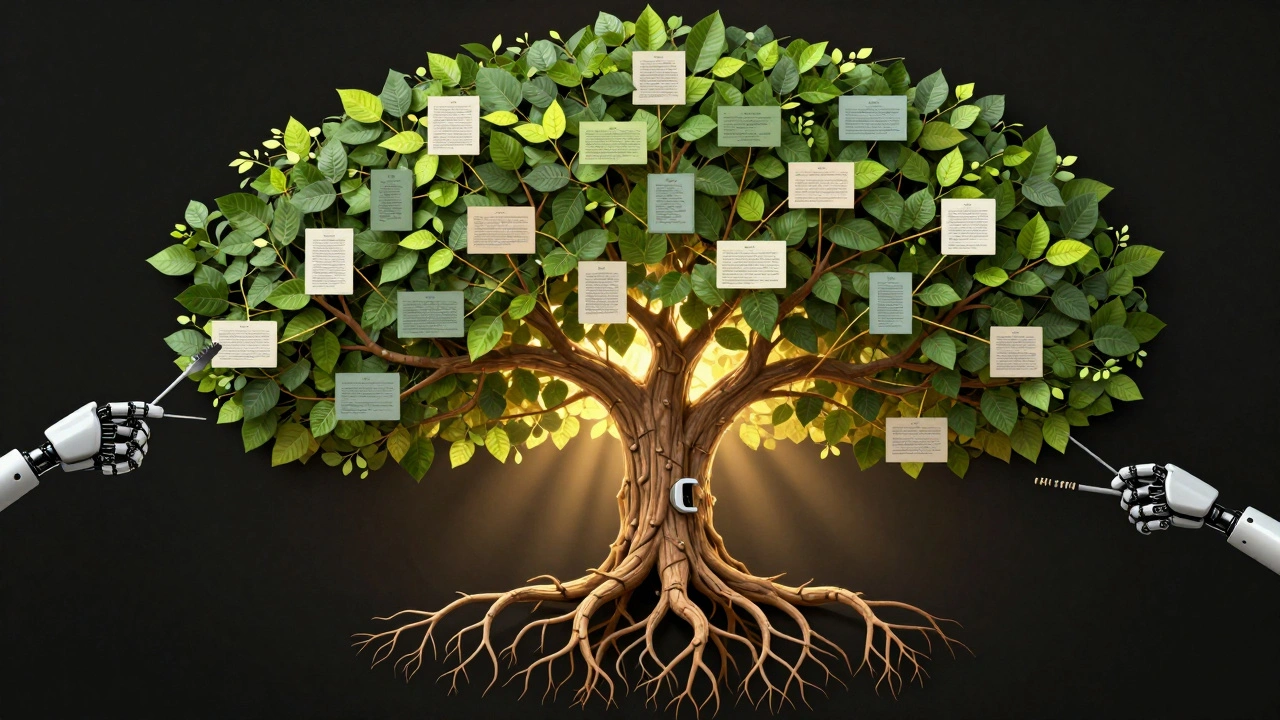
Many media critics treat Wikipedia like a traditional encyclopedia-static, final, and authoritative. But Wikipedia is a living document. It doesn’t claim to be perfect. It claims to be transparent. You can see every edit. You can trace every source. You can argue about it on the talk page.
That’s the difference between Wikipedia and Britannica. Britannica’s editors decide what’s true. Wikipedia lets you see how truth is negotiated. If you don’t like the current version, you can fix it. Or you can join the discussion.
When The Atlantic wrote in 2022 that Wikipedia was “a democracy of ignorance,” they ignored the fact that the most active editors are often subject-matter experts: retired professors, scientists, lawyers, librarians. A 2023 survey of top 1,000 Wikipedia editors found that 38% had advanced degrees. Many work in academia or journalism.
Wikipedia’s strength isn’t that it’s infallible. It’s that it’s repairable. And that’s something no traditional encyclopedia can say.
The Real Threats to Wikipedia’s Credibility
It’s not the vandals. It’s not the biased editors. The real danger is what’s happening outside Wikipedia.
As AI-generated content floods the web, Wikipedia’s human-driven model is becoming rarer-and more valuable. But Google and other search engines are increasingly pulling summaries from AI models, not Wikipedia. In 2024, Google’s AI Overviews started replacing Wikipedia links in 22% of searches on technical topics, according to Moz data.
Meanwhile, governments are pressuring Wikipedia to censor content. In 2023, Turkey temporarily blocked Wikipedia over articles about Kurdish politics. Russia has demanded removal of entries on the war in Ukraine. These aren’t just censorship attempts-they’re attacks on the principle of open knowledge.
Wikipedia’s response? It doubled down on transparency. It published detailed logs of government takedown requests. It created a Transparency Report that’s updated quarterly. It’s not fighting back with lawyers. It’s fighting back with data.
What This Means for You
If you use Wikipedia for research, don’t treat it as a final answer. Treat it as a starting point. Check the citations. Look at the edit history. Read the talk page. If an article has been edited by a dozen people in the last week, it’s probably being debated-and that’s a good sign.
And if you’re reading a media story that says Wikipedia is unreliable, ask: Did they check the current version? Did they look at the sources? Or did they just find an old, outdated edit and call it proof?
Wikipedia is flawed. But it’s the most accurate, most accessible, and most transparent reference tool ever created. The media’s criticism often misses the point: it’s not about being perfect. It’s about being open to being fixed.
Is Wikipedia still reliable if anyone can edit it?
Yes, but not because it’s perfect-it’s reliable because it’s self-correcting. Most edits are minor fixes or additions. Vandalism is usually reverted within minutes by bots or volunteers. High-traffic articles, like those on science, politics, or major events, are watched closely. A 2024 study by the Wikimedia Foundation found that 96% of edits to top 10,000 articles are constructive. The system works because it’s monitored, not because it’s locked down.
Why do media outlets keep calling Wikipedia biased?
Because bias is visible-and that’s the point. Unlike traditional encyclopedias, Wikipedia shows you the debate. If an article on climate change has 20 edits from scientists and 5 from climate skeptics, you can see the imbalance. Critics mistake transparency for bias. But Wikipedia doesn’t hide disagreements-it documents them. The policy requires neutral language and reliable sources. If you think an article is biased, you can fix it. Or join the discussion on the talk page.
Has Wikipedia improved since the early 2000s?
Dramatically. In 2005, anyone could edit a living person’s biography. Today, those pages are protected. Automated bots detect and revert vandalism in seconds. The Reliable Sources policy enforces citation standards. The number of active, experienced editors has stabilized after a decline in the 2010s. And Wikipedia now has formal partnerships with universities, libraries, and museums to improve content quality. The platform isn’t the same as it was 20 years ago-it’s far more structured, and far more reliable.
Can Wikipedia be trusted for academic research?
As a source? No. As a roadmap? Absolutely. Most universities don’t let students cite Wikipedia directly because it’s not a primary source. But professors often recommend it to find credible references. The citations at the bottom of Wikipedia articles lead to peer-reviewed journals, books, and official reports. If you use Wikipedia to find a source and then read the original, you’re doing research the right way.
Do governments censor Wikipedia?
Yes, and it’s getting more common. Countries like China, Russia, Iran, and Turkey have blocked or pressured Wikipedia to remove content. In 2023 alone, Wikipedia received over 1,200 official takedown requests from governments. The Wikimedia Foundation publishes all of them in its Transparency Report. Instead of complying quietly, Wikipedia often adds a note to the article explaining why the content was requested for removal. That’s how it fights censorship-with openness.
What Comes Next for Wikipedia?
Wikipedia’s future isn’t about becoming more like a traditional encyclopedia. It’s about staying true to its roots: open, editable, and accountable. The challenge isn’t fixing every error-it’s keeping the community alive. Fewer people are editing than a decade ago. The average editor is older. New contributors struggle to learn the rules.
But the demand for free, accurate knowledge hasn’t faded. In 2025, Wikipedia gets over 15 billion page views a month. People still turn to it first. And when they do, they’re not just reading a page-they’re seeing the history of how knowledge was built, debated, and refined.
That’s something no AI summary can replicate. And that’s why, despite the headlines, Wikipedia isn’t going anywhere.