
Quick Takeaways
- Use Wikipedia for a high-level overview, historical context, and finding primary sources.
- Use newspapers for breaking news, investigative depth, and real-time accountability.
- Wikipedia is a map; journalism is the actual ground-level reporting.
- Always cross-reference breaking events across multiple journalistic outlets.
The Power of the Crowdsourced Summary
When you land on a page in Wikipedia, you aren't reading a single person's opinion. You're looking at a consensus-based summary. Because it is an Online Encyclopedia, its primary goal is stability and breadth. It's fantastic for when you need to know "What is a semiconductor?" or "Who was the 14th President of the United States?" Wikipedia works best as a jumping-off point. If you're researching the history of the Industrial Revolution, the site gives you a chronological framework and a massive list of citations at the bottom. The real value isn't in the text itself, but in the "References" section. That's where the gold is hidden. By following those links, you move from a summarized version of the truth to the actual documents and academic papers that prove it. However, the consensus model has a weakness: it's slow to capture nuance in a fast-moving crisis. If a building collapses today, Wikipedia's entry on that city won't be updated with the specific, tragic details of the event until the dust has literally settled and multiple sources have confirmed the facts. It's a library, not a newsroom.Where Journalism Steps In
Now, consider the role of Journalism. A newspaper doesn't aim for a static consensus; it aims for the most current, verified truth. When a reporter from a major outlet like The New York Times or The Wall Street Journal covers a story, they are providing a service that Wikipedia cannot: original reporting. Journalists go to the scene. They interview witnesses. They leak documents. They hold politicians' feet to the fire. This is called primary source reporting. If you want to know *why* a specific law was passed-who lobbied for it, who lost the vote, and what the tension in the room felt like-you need a newspaper. Real-world journalism provides the "who, what, where, when, and why" in real-time. While Wikipedia tells you that a war is happening, a newspaper tells you about the specific family displaced by a bomb in a specific village. That human element is the core of media literacy; knowing that some truths are systemic (encyclopedic) and some are experiential (journalistic).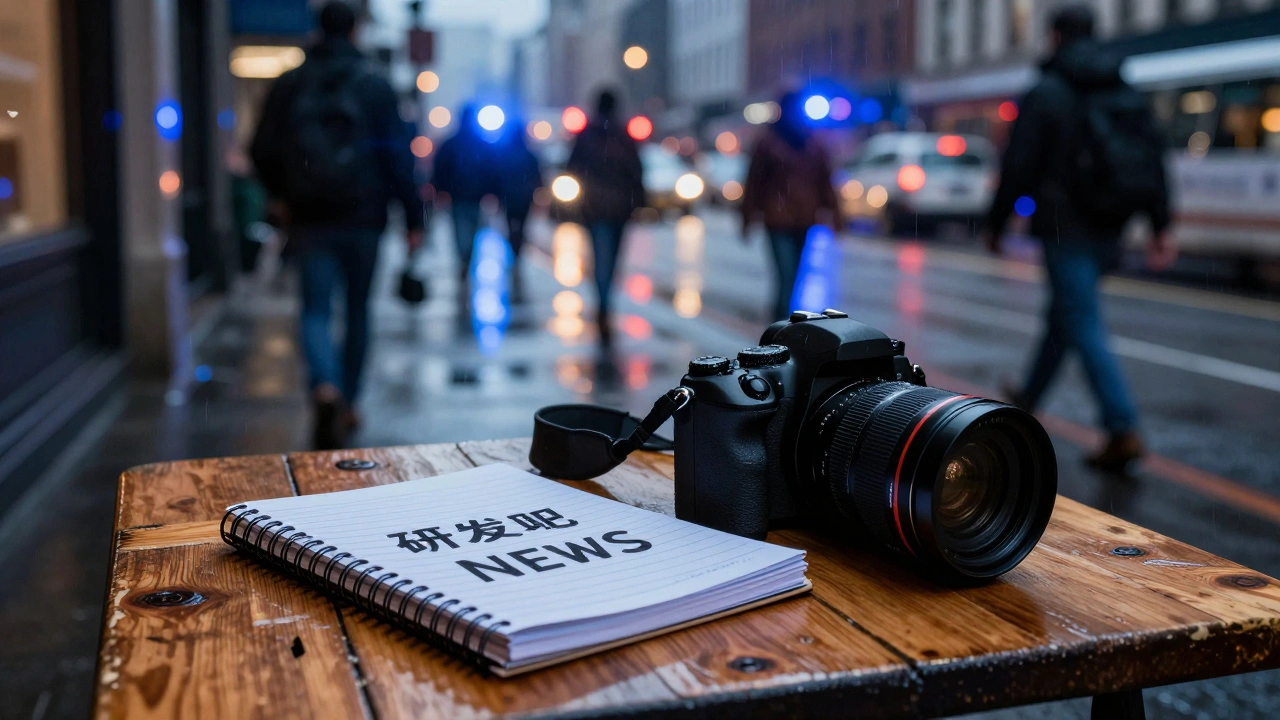
Comparing the Two: When to Use Which
Choosing between these two isn't about which one is "better," but which one fits your current need. If you're studying for a test, you want the encyclopedia. If you're deciding how to vote tomorrow, you want the newspaper.| Feature | Wikipedia | Newspapers/News Sites |
|---|---|---|
| Purpose | General knowledge & context | Current events & investigation |
| Speed | Slow (requires consensus) | Fast (breaking news) |
| Depth | Broad overview | Deep dive into specific events |
| Verification | Citations to other works | Interviews & first-hand evidence |
| Perspective | Neutral point of view (NPOV) | Analytical or Editorial |
The Danger of the 'Single Source' Trap
One of the biggest mistakes people make is treating a single news article as an absolute truth. Even the best journalists can get a detail wrong in the first hour of a breaking story. This is where the two tools can work together. Here is a professional workflow for verifying a story: start with the breaking news report to get the immediate facts. Then, head to Wikipedia to see the historical context of the players involved. If the newspaper says a company is under investigation for fraud, Wikipedia can tell you if that company has a history of legal battles over the last decade. This cross-referencing prevents you from being manipulated by a single narrative. If a newspaper is pushing a specific angle, the broad, cited nature of an encyclopedia can act as a sanity check. Conversely, if a Wikipedia page feels too sanitized or misses a recent scandal, the latest journalistic investigations will fill those gaps.Navigating Bias and Editorial Slant
Let's be honest: neither of these is perfectly neutral. Wikipedia claims a "Neutral Point of View," but the people editing the pages have their own biases. Some topics are "edit warred," where two groups constantly change the text to fit their own narrative. If you see a page with a massive "Talk" tab full of arguments, you know you're looking at a contested truth. Newspapers are more open about their slant. An editorial page is designed to have an opinion. The key is to distinguish between a news report (which should be factual) and an op-ed (which is an argument). A common pitfall is reading a commentary piece and assuming it's a hard news report. When you see words like "should," "must," or "disastrous," you've moved from the realm of reporting into the realm of opinion. To combat this, try the "triangulation method." Read a report from a centrist outlet, one from a left-leaning source, and one from a right-leaning source. The facts that appear in all three are likely the truth. The parts that differ are where the bias lives.
Practical Steps for Better Information Consumption
If you want to upgrade how you consume information, stop treating the internet as a giant search box and start treating it as a curated archive.- Check the timestamps: A Wikipedia article on "The Economy" might be updated daily, but a newspaper article from 2022 is now a historical document, not a current guide.
- Audit the citations: In Wikipedia, don't trust the summary; click the little superscript numbers. If the source is another blog, be skeptical. If the source is a peer-reviewed journal or a government archive, it's more reliable.
- Identify the reporter: In journalism, look for the byline. Does this person specialize in this beat? A sports reporter writing about quantum physics is less reliable than a science correspondent.
- Search for the 'Opposite' view: Actively search for articles that contradict your current belief. This breaks the filter bubble and forces you to use your analytical skills.
The Role of AI in the Mix
With the rise of Large Language Models, we now have a third player. AI can summarize both Wikipedia and newspapers in seconds. But here's the catch: AI doesn't "know" things; it predicts the next word in a sentence based on patterns. It can hallucinate a fact that sounds perfectly plausible. This makes the distinction between reference and news even more critical. An AI summary is a convenience, not a source. If an AI tells you that a certain law was passed, your next step should be to find the actual news report of the vote or the legal entry in a reference database. Using AI as a starting point is fine, but using it as the final word is a failure of media literacy.Can I trust Wikipedia for academic research?
You should never cite Wikipedia as a primary source in an academic paper. However, it is an incredible tool for finding those sources. Use the "References" and "External Links" sections at the bottom of the page to find the original studies, books, and official documents that you can actually cite.
Why are some news articles behind a paywall?
High-quality investigative journalism is expensive. It requires paying professional reporters to spend months researching a story and legal teams to ensure the reporting doesn't result in a libel lawsuit. Paywalls fund this labor-intensive process, which is why deep-dive reporting is often not free, unlike the volunteer-run Wikipedia.
What is a 'citogenesis' in Wikipedia?
Citogenesis happens when a journalist cites Wikipedia for a fact, and then a Wikipedia editor adds that news article as a source for the same fact. This creates a circular loop where a mistake is amplified because it appears to be backed by a "reliable source," even though the source just copied it from the encyclopedia.
How do I tell if a newspaper is biased?
Look at the adjectives. If a story describes a politician's plan as "ambitious" or "reckless" instead of just stating what the plan is, that's a sign of bias. Also, check who owns the publication; parent companies often have political or economic interests that influence the editorial direction.
Is a blog post the same as a newspaper article?
Generally, no. Professional newspapers have an editorial process where an editor checks facts and ensures the story meets ethical standards before publication. Most blogs are self-published without any third-party verification, making them much riskier sources for factual information.