Imagine you are writing a breaking news profile about a local politician who just made headlines. You need their birth date, education history, and previous jobs. Your instinct says: go to Wikipedia is a free online encyclopedia that anyone can edit.. It’s fast, it’s familiar, and it usually has the answer. But here is the hard truth: if you copy that information directly into your article without checking it, you could be publishing a lie. Wikipedia is a great starting point, but it is not a primary source. Using it as one violates basic journalistic ethics are rules that guide reporters in seeking truth and minimizing harm..
The problem isn’t that Wikipedia is always wrong. The problem is that it changes. A bio can be accurate today and vandalized tomorrow. Or worse, it might have been subtly incorrect for months because no one bothered to check the citation. For a journalist, especially when writing news profiles are articles that focus on a person's background and character., accuracy is non-negotiable. One wrong detail can destroy your credibility and the subject’s reputation.
Why Wikipedia Is Not Enough
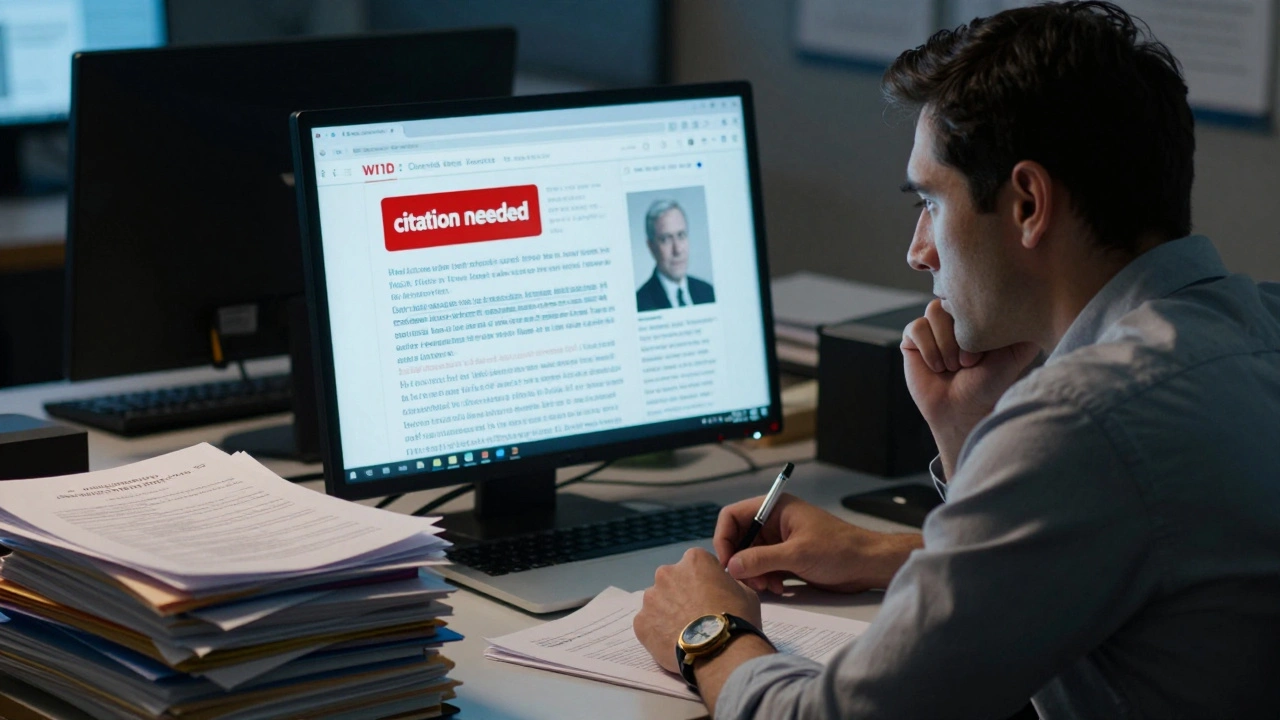
You might think, "But there is a reference at the end of the sentence." That reference is your lifeline, but only if you actually click it. Many Wikipedia editors paste links that are broken, outdated, or don’t actually support the claim. This is called a "citation needed" gap, even if the tag isn’t visible.
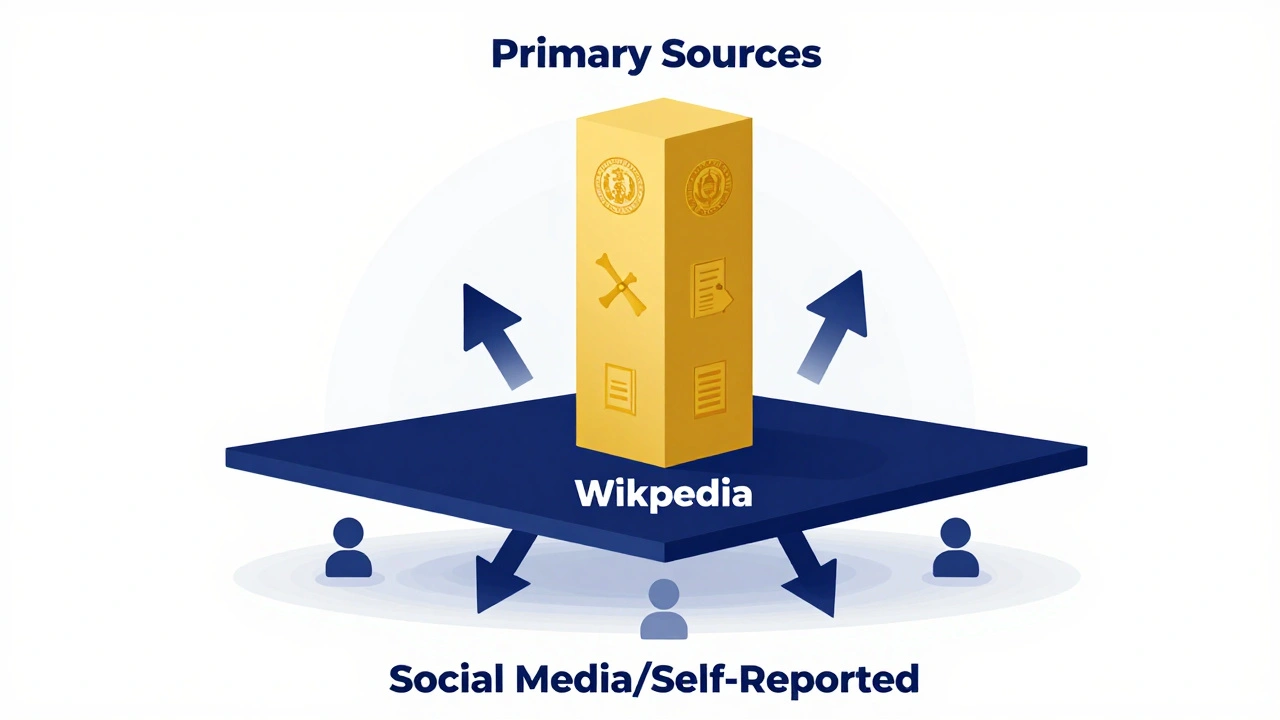
Consider this scenario: You read that a CEO graduated from Harvard Business School in 2015. The Wikipedia page cites a LinkedIn profile. LinkedIn profiles are self-reported. They are not verified documents. If you use that data, you are relying on what the person *said* about themselves, not what an institution *confirmed*. In professional journalism, we call this secondary sourcing. It’s risky. Always look for the primary source-the university transcript, the official press release, or the alumni directory.
Furthermore, Wikipedia operates on consensus, not authority. If two reliable sources disagree, Wikipedia might list both, or it might pick the one with more citations. Neither approach guarantees truth. Your job as a reporter is to find the truth, not the consensus.
The Primary Source Rule
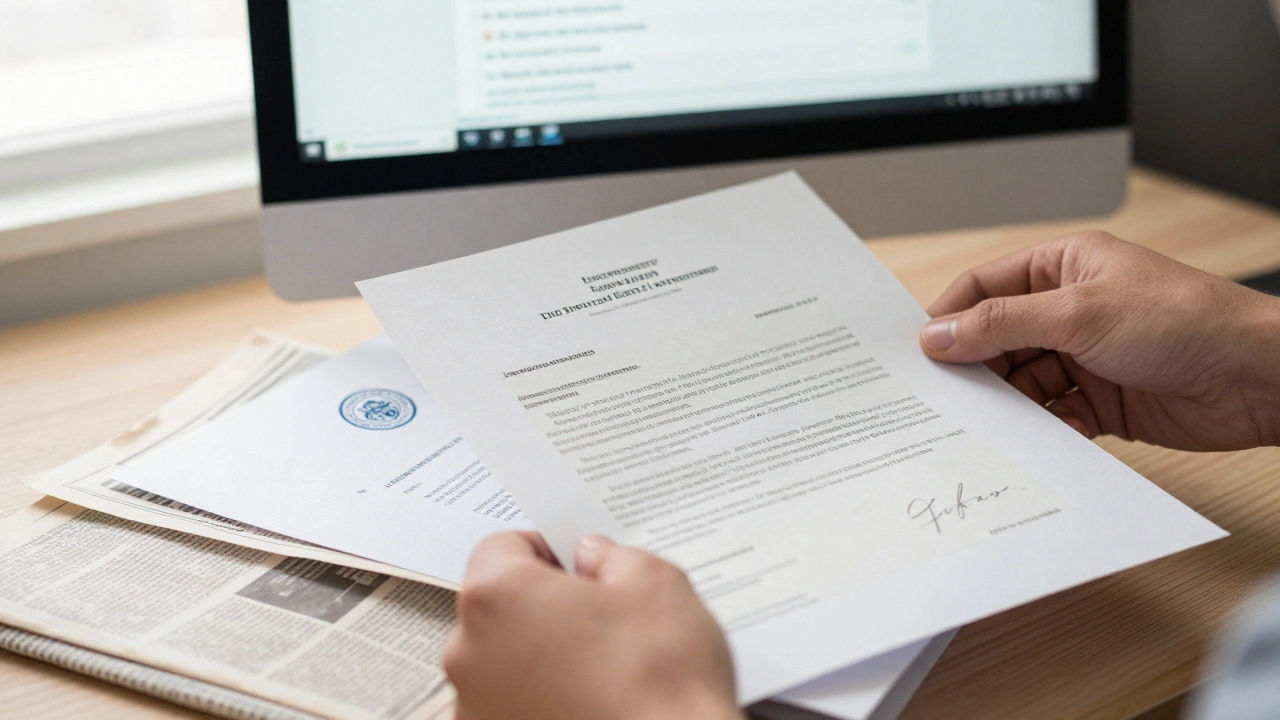
To verify any biographical detail, you must trace it back to its origin. This is known as primary source verification is the process of confirming facts using original documents or direct evidence.. Here is how to do it step-by-step:
- Identify the Claim: What exactly are you verifying? Birth date? Job title? Education?
- Find the Citation: Look at the footnote on the Wikipedia page. Click the link.
- Assess the Source Type: Is it a government record? A newspaper archive? A corporate filing? Or is it a blog post? A social media update? A self-published book?
- Verify the Content: Does the source actually say what Wikipedia claims it says? Sometimes editors misinterpret quotes.
- Check the Date: Is the source current? A 2018 article saying someone was "currently" employed doesn’t mean they still are in 2026.
If the citation leads to a dead end, do not guess. Do not assume the info is true because it’s on Wikipedia. Instead, treat that detail as unverified. Contact the subject’s public relations team, check their official company website, or search public records databases like county clerk sites or federal election commission filings.
Red Flags in Biographical Data
Not all errors are obvious typos. Some are subtle distortions that can skew a narrative. Watch out for these common issues:
- Promotion Inflation: Listing a person as "CEO" when they were actually "Interim CEO" or "VP of Operations." Titles matter. They imply authority and scope.
- Date Drift: Graduation years shifting by one or two years. This might seem minor, but it affects age calculations and timeline accuracy.
- Affiliation Ambiguity: Saying someone "worked at" Google when they were actually a contractor for a third-party agency that serviced Google. The distinction changes the nature of their experience.
- Omitted Context: Mentioning a legal settlement without noting whether it was contested or admitted. Wikipedia often neutralizes language, stripping away crucial nuance.
These red flags require deeper digging. Use tools like Internet Archive is a digital library offering access to historical snapshots of websites. (archive.org) to see if a company’s "About Us" page listed them differently in the past. Check SEC Filings are legal documents submitted by public companies to the Securities and Exchange Commission. for executive compensation reports, which list exact titles and start dates.
Using Secondary Sources Wisely
Sometimes, a primary source doesn’t exist. Maybe the person attended a small private school that doesn’t publish alumni lists online. In these cases, you can use secondary sources, but you must cross-reference them. If three reputable newspapers reported the same graduation year, and those newspapers cited the university’s commencement program, you have a strong case.
However, avoid circular reporting. This happens when Newspaper A copies from Newspaper B, which copied from Wikipedia, which copied from Newspaper A. To break the cycle, look for independent confirmation. Try reaching out to the subject directly. A simple email asking, "Can you confirm your graduation year from XYZ University?" often yields a quick, verifiable response. This also builds trust with your source.
| Source Type | Reliability Level | Best Used For | Risks |
|---|---|---|---|
| Government Records | High | Birth dates, legal names, criminal history | Privacy restrictions may limit access |
| University Alumni Directories | High | Education history, degrees earned | May not include dropouts or transfers |
| Corporate Press Releases | Medium-High | Job appointments, promotions | Often promotional; may omit end dates |
| LinkedIn Profiles | Low | Initial leads, contact info | Self-reported, easily edited, no verification |
| Personal Blogs | Very Low | Anecdotal context only | Unverified, biased, prone to error |
Handling Discrepancies
What happens when you find conflicting information? Say Wikipedia says a senator served in the Navy, but their official congressional biography says Air Force. Do not average them out. Investigate further. Check military service records if available, or look for veteran organization memberships. If you cannot resolve it, state the discrepancy clearly in your article: "While some sources cite Navy service, official congressional records list Air Force." Transparency protects you.
Never hide uncertainty. Readers respect honesty more than false precision. If a detail is unverifiable after thorough research, consider omitting it rather than guessing. A missing birth date is better than a wrong one.
Tools to Speed Up Verification
You don’t have to do everything manually. Several tools can help streamline the process:
- Wayback Machine: Use this to view archived versions of websites. If a company removed a former employee from their site, the Wayback Machine might show they were there last year.
- Public Record Databases: Sites like Zillow (for property ownership) or PACER (for federal court records) provide concrete data points.
- News Archives: ProQuest, LexisNexis, or even Google News advanced search can find old interviews where subjects discussed their backgrounds.
- Fact-Checking Organizations: Snopes, PolitiFact, and FactCheck.org sometimes debunk viral biographical claims.
Combine these tools with good judgment. Automation helps, but human scrutiny is essential. An AI tool might flag a date mismatch, but only you can decide if it matters to the story.
Ethical Considerations in Profiling
Verifying facts is not just about accuracy; it’s about fairness. Including unverified negative details-like a past arrest that was expunged or a failed business venture that Wikipedia mentions but official records don’t-can cause undue harm. Always ask: Is this detail relevant to the current news story? If not, leave it out. Even if it’s true, relevance determines inclusion.
Also, be mindful of privacy. While public figures have less expectation of privacy, their family members do not. Verifying a politician’s spouse’s career is fine; digging up their child’s medical history is not. Stick to publicly available, relevant information.
Building a Verification Checklist
Create a standard checklist for every profile you write. This ensures consistency and reduces oversight:
- Did I verify the subject’s full legal name against a government ID or official document?
- Are all dates (birth, graduation, employment) confirmed by primary sources?
- Have I checked for recent updates to their role or status?
- Is there any conflicting information between sources? If so, did I investigate further?
- Did I avoid using self-reported data (social media, personal websites) as the sole source?
- Have I considered the ethical implications of including each detail?
Keep this checklist handy. Over time, it becomes second nature, saving you from costly corrections and reputational damage.
Final Thoughts on Trust
In an era of misinformation, your credibility is your most valuable asset. Readers come to you for truth, not convenience. By treating Wikipedia as a lead rather than a source, you uphold the highest standards of journalism. It takes extra time, yes, but that time is an investment in trust. And in news profiles, trust is everything.
Can I use Wikipedia as a source in my news article?
No, you should not cite Wikipedia directly. It is a tertiary source. Always find the primary or secondary sources referenced in the Wikipedia article and cite those instead. Wikipedia is useful for discovering leads, not for confirming facts.
What if Wikipedia has no citations for a biographical detail?
Treat that detail as unverified. Do not include it in your article unless you can independently confirm it through primary sources like official records, interviews, or reputable news archives.
How do I handle conflicting information between sources?
Investigate further to find a definitive primary source. If you cannot resolve the conflict, disclose the discrepancy in your article, explaining what different sources say. Never guess or choose the most convenient version.
Is LinkedIn a reliable source for employment history?
LinkedIn is not a reliable primary source because it is self-reported and unverified. Use it only as a lead to find official company announcements, press releases, or SEC filings that confirm employment details.
What are the best primary sources for verifying education?
The best primary sources are official university transcripts, alumni directories, commencement programs, or direct confirmation from the educational institution’s registrar office. Newspaper clippings from graduation ceremonies are also strong secondary sources.