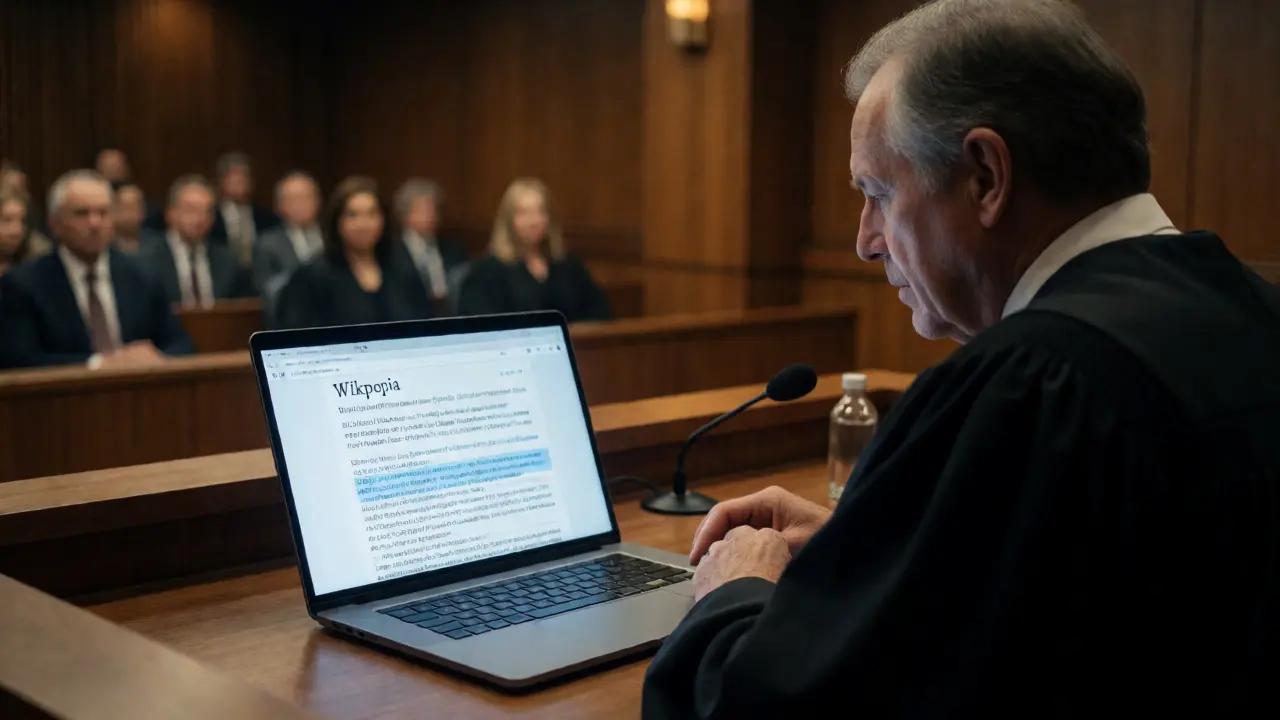
You might think a judge would never cite a website anyone can edit. But in the last decade, Wikipedia has quietly become one of the most cited sources in US federal courts. It is not just for students writing essays anymore. Lawyers are using it to find case law, judges are checking facts against it, and reporters covering trials often rely on its summaries to understand complex legal histories. This shift raises a big question: Can an open-source encyclopedia really hold up in a courtroom?
The relationship between Legal Journalism and digital encyclopedias is messy, fascinating, and increasingly important. If you follow high-profile lawsuits or read deep-dive articles about constitutional law, you are likely interacting with content that started as a wiki entry. Let’s look at how this works, why it matters, and where the cracks are showing.
Why Judges Are Citing Wikipedia
For years, citing Wikipedia was considered amateur hour in legal circles. The idea that a random editor could change the text of a Supreme Court opinion summary seemed absurd. But things changed around 2010. A study by the Harvard Law School Library found that federal judges cited Wikipedia over 450 times in published opinions. Why? Because it is fast, accessible, and surprisingly accurate for basic facts.
Judges often use Wikipedia for "judicial notice." This is a legal concept where a court accepts certain facts as true without requiring formal proof because they are widely known or easily verifiable. If a judge needs to know the population of a city or the date a treaty was signed, checking a well-sourced Wikipedia article is faster than pulling out a physical atlas or searching through government archives. It does not mean the judge trusts the entire article blindly. They usually check the references listed at the bottom. But the initial jump-off point is often the wiki.
| Use Case | Frequency | Risk Level |
|---|---|---|
| Factual Background (Dates, Names) | High | Low |
| Legal Definitions | Medium | Medium |
| Cited Precedent Summaries | Low | High |
| Party Biographies | Medium | Medium |
The Reporter’s Dilemma: Speed vs. Accuracy
Legal journalists face a unique pressure. Court cases move slowly, but news cycles move instantly. When a major verdict drops, reporters have minutes to explain what happened. They cannot wait for a peer-reviewed law journal to publish an analysis. This is where Online Encyclopedias fill the gap. They provide immediate context on parties involved, previous rulings, and statutory frameworks.
However, relying on Wikipedia introduces a risk called "citation laundering." Imagine a reporter reads a claim on Wikipedia about a company’s past lawsuit. That claim cites a blog post from 2012. The blog post cites a newspaper article that got the name wrong. The reporter then writes a story based on the Wikipedia summary, which now looks authoritative because it has citations. But those citations lead back to shaky ground. Good legal journalism requires digging past the summary to the primary source-the actual court docket or the original ruling PDF.
How Litigation Shapes Wikipedia Content
It is not a one-way street. Lawsuits also shape what appears on Wikipedia. When a high-profile case ends, editors rush to update the relevant articles. This creates a feedback loop. A new ruling changes the interpretation of a law. Wikipedia editors update the "Interpretation" section of that law’s article. Then, a journalist reads that updated section and uses it to frame their next story. The public’s understanding of the law shifts because the encyclopedia shifted first.
This dynamic is powerful but fragile. Who decides how a controversial ruling is summarized? Often, it is a handful of dedicated editors. In politically charged cases, like voting rights or gun control, edits can be reverted dozens of times in a single day. This "edit war" reflects real-world legal battles. The final version of the article might represent a compromise that doesn’t fully capture the nuance of the dissenting opinion. For readers, this means the "truth" they see online is sometimes a negotiated settlement rather than a definitive fact.
Key Differences Between Legal Sources
To navigate this landscape, you need to know what each source offers. Here is a breakdown of how different entities function in the legal information ecosystem.
| Source Type | Authority Level | Update Speed | Best For |
|---|---|---|---|
| Court Opinions | Binding | Slow (Publication delays) | Precedent & Ruling Details |
| Westlaw/LexisNexis | High (Curated) | Fast | Professional Research |
| Wikipedia | Variable (Community) | Instant | General Context & Overview |
| News Reports | Low (Unverified) | Real-time | Breaking Events |
Pitfalls to Avoid When Using Wiki Data
If you are writing about law or reading about it, watch out for these common traps. First, ignore the talk pages at your peril. Every Wikipedia article has a "Talk" tab where editors debate changes. Reading this reveals conflicts of interest. Maybe one editor works for the company mentioned in the article. Maybe another is pushing a specific political view. These debates often contain more valuable insights than the article itself.
Second, beware of recency bias. Wikipedia tends to focus on the latest developments. Older, foundational cases might get less attention if they aren’t currently in the news. This skews public perception toward recent trends while ignoring long-standing legal principles. Third, check the history tab. If an article was heavily edited right after a major event, verify the claims independently. Hasty updates during breaking news often contain errors that take weeks to correct.
The Future of Open Source Legal Knowledge
We are moving toward a hybrid model. Professional databases like Westlaw remain essential for lawyers who need bulletproof citations. But for the general public and even many journalists, open-source knowledge bases are becoming the default starting point. This democratizes access to legal information. You no longer need a law degree to understand the basics of a Supreme Court case. You just need internet access.
But this accessibility comes with responsibility. Readers must learn to treat Wikipedia as a map, not the territory. Use it to find the direction, but walk the path yourself by checking the primary sources. As AI tools begin summarizing legal texts, the role of human-curated encyclopedias may shrink further. Yet, the need for transparent, community-vetted explanations of complex laws remains higher than ever.
Is Wikipedia admissible as evidence in court?
Generally, no. Wikipedia is rarely admitted as substantive evidence to prove a fact in dispute. However, judges may use it for "judicial notice" of indisputable facts, such as geographic locations or historical dates, provided the information is corroborated by other reliable sources.
Can I cite Wikipedia in a legal brief?
Most courts discourage or prohibit citing Wikipedia directly in formal legal briefs. It is considered a tertiary source. Instead, use Wikipedia to find the primary source (like a statute or case law) and cite that original document. Some local rules explicitly ban it.
Who verifies the accuracy of legal articles on Wikipedia?
There is no central verification body. Verification relies on community norms, including the requirement for reliable secondary sources. Experienced editors, often with backgrounds in law or academia, monitor high-traffic legal pages. Disputed content is flagged and discussed on the Talk page until consensus is reached.
How do lawyers use Wikipedia in practice?
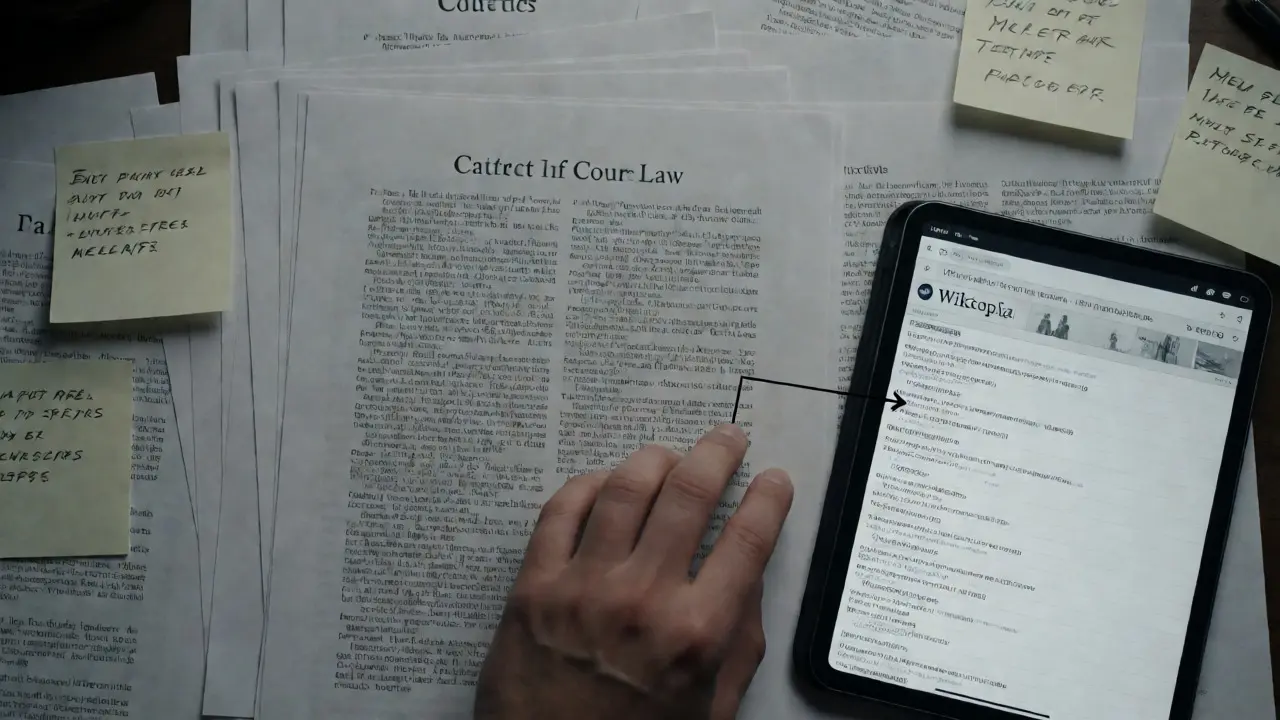
Lawyers often use it for preliminary research to get a quick overview of unfamiliar areas of law. It helps them identify key terms, relevant statutes, and landmark cases. Once they have this roadmap, they switch to professional databases like Westlaw or LexisNexis for detailed analysis and citation.
Does Wikipedia reflect current law accurately?
Not always immediately. While popular articles are updated quickly, niche legal topics may lag behind recent legislative changes or court rulings. Always check the date of the last edit and compare the content with official government websites or legal news outlets for the most current status.