Imagine you're writing a paper due tomorrow. You need a quick fact about the history of the internet or the chemical composition of water. Your thumb hovers over the search bar, then lands on that familiar blue 'W'. But here's the catch: do you actually trust what you read? For years, academics dismissed Wikipedia as a student's last resort, a place where accuracy went to die. Yet, data tells a different story. When researchers analyze citation patterns and source reliability on Wikipedia, they find a complex ecosystem that mirrors real-world journalism more than a chaotic forum.
The truth is, not all citations are created equal. Some articles cite peer-reviewed journals with rigorous standards, while others lean heavily on press releases or even other Wikipedia pages-a circular logic trap known as "citing itself." If you want to use this massive open encyclopedia for serious work, you need to know how to spot the difference between a solid reference and a shaky one. This guide breaks down how citation networks function, which sources hold up under scrutiny, and how you can evaluate reliability in seconds.
Key Takeaways
- Citation density matters: Articles with higher citation counts generally exhibit better accuracy, but the type of source matters more than the quantity.
- Self-referencing loops: A significant portion of citations point to other Wikipedia articles, creating echo chambers that can amplify errors if the original source was flawed.
- Source hierarchy: Academic papers and major news outlets (like The New York Times or BBC) carry significantly more weight than blogs or self-published content.
- Temporal decay: Older citations often become "dead links," requiring active maintenance by editors to ensure long-term reliability.
- Community moderation: The speed at which a page is edited after vandalism or error insertion directly correlates with its current reliability score.
The Anatomy of a Wikipedia Citation
When you see a small superscript number like [1] next to a sentence, it’s not just decoration. It’s a digital trail leading back to a specific claim. In the world of Open Knowledge, these footnotes are the currency of credibility. However, understanding the anatomy of these citations reveals why some are stronger than others.
A typical citation includes the author, title, publisher, date, and URL. But the critical variable is the provenance of the source. Is it a primary source, like an original government report? Or is it a secondary source, like a journalist summarizing that report? Wikipedia’s guidelines prioritize verifiability, meaning any reader should be able to check the source themselves. Yet, in practice, many citations link to paywalled academic papers. While technically valid, these can be less useful for casual readers who can’t access the full text.
Consider the article on "Climate Change." It contains thousands of references. A deep dive into these links shows a mix of IPCC reports, Nature journal articles, and mainstream media coverage. The presence of high-impact scientific journals acts as a quality signal. Conversely, an article on a niche local event might rely solely on a single local blog post. That single point of failure makes the entire section vulnerable to bias or inaccuracy.
Mapping the Citation Network
Researchers have spent years mapping the connections between Wikipedia articles and external websites. This field, often called Citation Network Analysis, treats every link as an edge in a massive graph. What emerges is a picture of intellectual flow. Certain domains act as hubs, feeding information into hundreds of Wikipedia pages simultaneously.
For instance, domains like .gov and .edu tend to have high authority scores. They are frequently cited across diverse topics, from health statistics to historical records. On the flip side, commercial sites or promotional pages appear frequently in biographies of living people, often inserted by publicists rather than neutral editors. These insertions don’t always improve accuracy; sometimes, they dilute it with marketing fluff.
| Source Type | Typical Use Case | Reliability Indicator | Risk Factor |
|---|---|---|---|
| Academic Journals | Scientific claims, historical analysis | High (Peer-reviewed) | Paywalls limit verification |
| Major News Outlets | Current events, breaking news | Medium-High (Editorial standards) | Bias, rapid obsolescence |
| Government Reports | Statistics, laws, official records | Very High (Official status) | Complex language, outdated data |
| Press Releases | Corporate announcements, product launches | Low-Medium (Promotional) | Lack of independent verification |
| Other Wikipedia Pages | Cross-referencing concepts | Variable (Circular risk) | Amplification of initial errors |
This table highlights a crucial heuristic: look at the domain extension and the nature of the publisher. A .org site isn’t automatically trustworthy-it could be a think tank with a strong political agenda. Similarly, a .com site isn’t inherently bad; reputable tech blogs often provide excellent context for software developments. The key is cross-checking. If a controversial claim appears only once, sourced to a single obscure blog, treat it with skepticism. If it appears five times, sourced to three different major newspapers and a university study, your confidence level should rise.
The Problem of Self-Referencing Loops
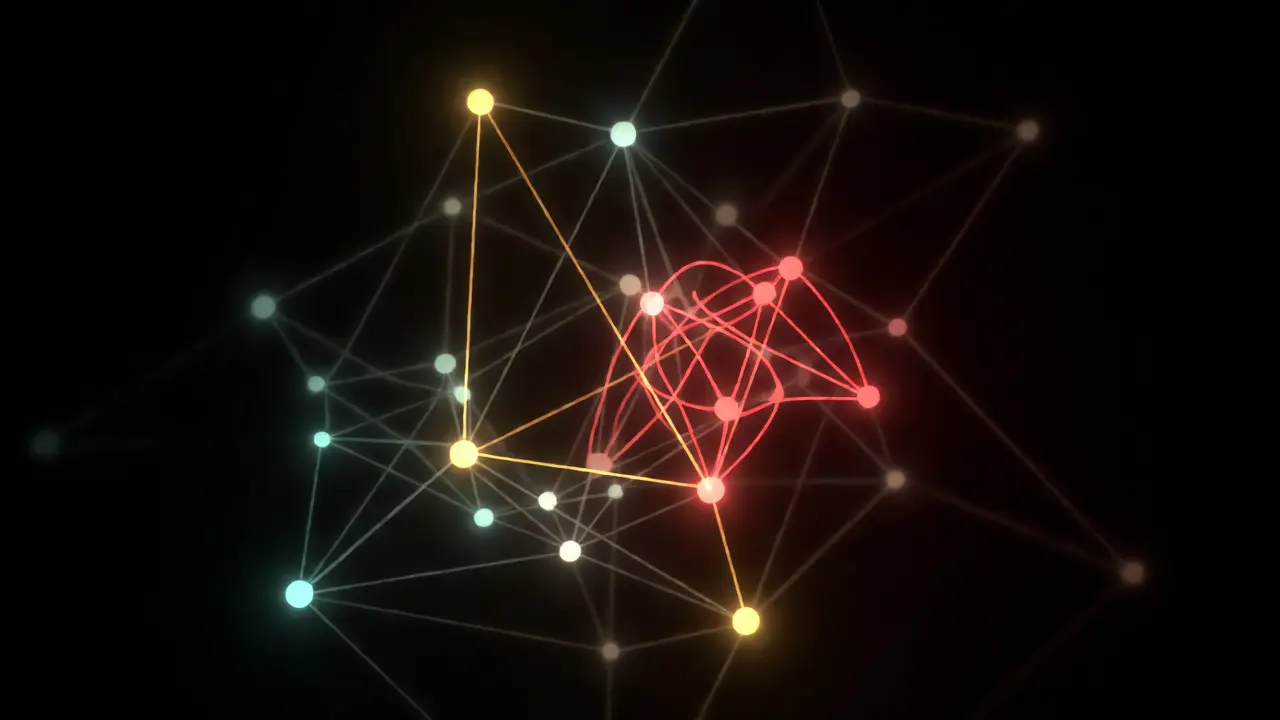
One of the most fascinating-and problematic-patterns in Wikipedia’s citation structure is self-referencing. This happens when Article A cites Article B, and Article B cites Article A. Or worse, when a new article cites an existing Wikipedia page instead of finding an original source. Why does this happen? Usually, it’s convenience. An editor wants to support a statement quickly and sees that another page already has a citation there. So, they copy the format but link internally.
This creates an echo chamber. If the original source behind Article B was incorrect, that error propagates to Article A, then to C, D, and E. By the time someone notices the mistake, it’s buried under layers of internal links. Researchers call this "citation laundering." The error looks vetted because it’s supported by multiple citations, but those citations are all tracing back to the same weak origin.
You can spot this pattern easily. Click on the footnote. Does it lead to an external website, or does it stay within Wikipedia? If it stays within, click again. Keep going until you hit an external source. If you can’t find one, the claim lacks independent verification. This is particularly common in pop culture entries or niche hobbyist topics where formal academic literature is scarce.
Evaluating Source Reliability: A Practical Framework
So, how do you assess reliability without becoming a forensic accountant of footnotes? Start with the "Three-Click Test." Can you verify the claim within three clicks from the Wikipedia page? If yes, good sign. Next, check the date. Information changes fast. A medical guideline cited from 2010 might be obsolete by 2026. Look for recent updates in the citation metadata.
Then, consider the consensus. Wikipedia relies on community agreement. If an article has been flagged with "{{citation needed}}" tags for months, it means editors couldn’t find reliable sources to back up those statements. Conversely, if an article has been featured as a "Good Article" or "Featured Article," it has undergone rigorous review. These badges aren’t guarantees of perfection, but they indicate a higher baseline of quality control.
Don’t ignore the talk page. Every Wikipedia article has a discussion tab. Here, editors debate edits, resolve conflicts, and question sources. If you see heated arguments about a specific statistic, it suggests ambiguity or controversy. Reading the talk page gives you context that the main article text hides. It reveals *why* a certain source was chosen and whether alternatives were rejected.
How Algorithms Influence Citation Visibility
It’s worth noting that human behavior drives citation patterns, but algorithms shape them too. Search engines index Wikipedia heavily. When a term trends in news, traffic to the corresponding Wikipedia page spikes. Editors rush to update facts, often pulling from the latest news articles. This creates a temporal lag. The citation reflects the immediate news cycle, which might later be corrected by deeper investigative reporting.
Furthermore, bots play a role. Automated scripts fix broken links, add categories, and standardize citation formats. While helpful, they can sometimes misinterpret context. A bot might archive a live link that still works perfectly fine, replacing it with a snapshot that lacks interactive elements. Understanding the mix of human and machine editing helps you gauge the freshness and stability of the information.
Recent studies using natural language processing have shown that articles citing more diverse sources-mixing news, academia, and government-tend to be more neutral in tone. Single-source articles often inherit the bias of that one source. Diversity in citation types is a proxy for neutrality. If you’re researching a politically charged topic, look for this diversity. If all citations come from partisan media, the article likely reflects a specific viewpoint rather than a balanced overview.
Moving Beyond Wikipedia: Using It as a Springboard
Should you cite Wikipedia in your own academic work? Generally, no. It’s a tertiary source, meaning it summarizes secondary sources. But it’s an incredible starting point. Use Wikipedia to map the landscape of a topic. Identify key terms, find the names of experts, and locate the primary sources hidden in the footnotes. Then, go to those primary sources. Read the original study. Check the methodology. That’s where the real research begins.
Think of Wikipedia as the index to a vast library, not the book itself. The citation patterns tell you where the books are shelved. Sometimes the index is slightly off, pointing to the wrong shelf. But usually, it gets you close enough to find what you need. By analyzing source reliability, you learn to navigate this index efficiently, saving hours of dead-end searching.
Frequently Asked Questions
Why does Wikipedia cite other Wikipedia pages?
Editors often cite other Wikipedia pages for convenience or when a direct external source is hard to find. This creates "self-referencing loops" or "citation laundering," where an error can propagate through multiple articles without being traced back to an original, independent source. It is best to follow these internal links until you reach an external source.
Are all Wikipedia citations verified by experts?
No. Wikipedia is crowdsourced. While many editors are knowledgeable volunteers, they are not necessarily subject matter experts. Verification relies on community consensus and the availability of reliable sources. Featured Articles undergo stricter review, but regular articles may contain unverified or poorly sourced claims.
How can I tell if a source is biased?
Check the domain and the publisher. Sources with strong editorial oversight (major newspapers, academic journals) are less likely to be blatantly biased than personal blogs or press releases. Additionally, look at the variety of sources cited. An article relying on only one type of outlet may reflect that outlet's perspective.
What are "dead links" and why do they matter?
A dead link is a URL that no longer leads to the intended content, often due to website redesigns or closure. Dead links reduce verifiability, making it impossible for readers to check the original source. Wikipedia uses bots to archive these links, but gaps remain, potentially hiding outdated or incorrect information.
Is Wikipedia reliable for medical information?
Wikipedia is generally accurate for general medical concepts but should not replace professional advice. Medical articles typically cite reputable organizations like the WHO or CDC. However, nuances in treatment or emerging research might be oversimplified. Always consult a healthcare provider for personal medical decisions.