
Imagine an AI that knows everything in the world, but only what a specific group of people decided to write down. That is the reality for many open-source AI models trained on the vast collection of user-generated content from Wikipedia and its sister projects. As these models become the backbone of search engines, customer service bots, and creative tools, understanding their source material is no longer just a technical detail-it's a critical issue for how we consume information.
The relationship between Wikimedia Foundation and the AI industry is complex. On one hand, Wikimedia provides free, high-quality text that helps build smarter machines. On the other, there are growing concerns about who owns this knowledge, whether the sources are biased, and if the "free" license really means free for commercial giants. Let’s break down what this actually means for you, the user, and the future of digital knowledge.
The Data Goldmine: Why AI Loves Wikimedia
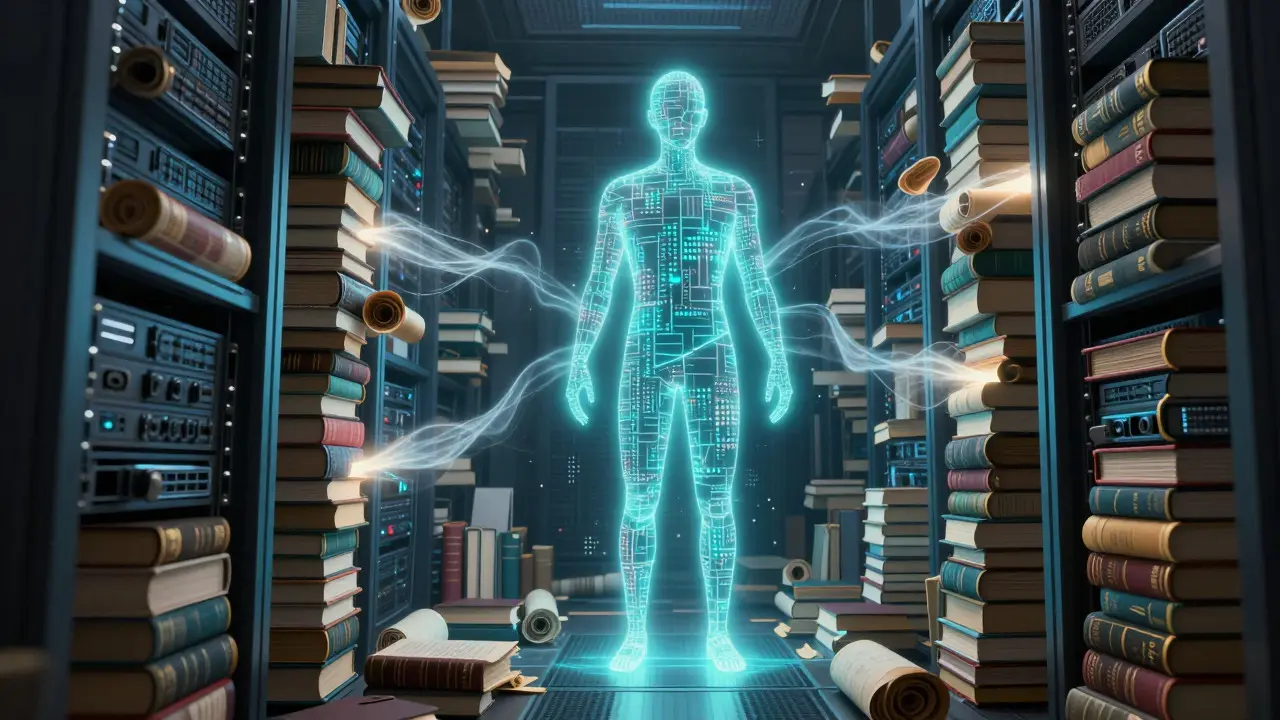
Why do developers flock to Wikimedia data? It’s simple: quality and volume. Unlike social media feeds full of noise, slang, and short-form content, Wikipedia offers structured, long-form articles with citations. For training Large Language Models (LLMs), this is like feeding a student textbooks instead of random tweets.
The dataset includes not just English Wikipedia, but also Wikidata, which is a massive, structured database of facts. This allows AI to understand relationships between entities-like knowing that "Paris" is the capital of "France"-without guessing. The benefit here is efficiency. Developers don’t have to scrape messy websites or pay for expensive proprietary datasets. They can download terabytes of clean, public-domain-adjacent text and start building immediately.
- Clean Structure: Articles follow a consistent format, making it easier for algorithms to parse facts.
- Breadth of Topics: From quantum physics to local history, the coverage is unmatched by any single private database.
- Historical Depth: Revision history provides context on how knowledge has changed over time.
Licensing Confusion: Is It Really Free?
This is where things get tricky. Most people assume that because Wikipedia is "open," anyone can use it for anything. But the licenses matter. Wikipedia text is typically under the Creative Commons Attribution-ShareAlike (CC BY-SA) license. This means if you create a derivative work-like an AI model-you must share it under the same terms. If your AI outputs something based on Wikipedia, technically, that output should be freely available too.
However, images and media files often fall under different rules, such as GNU Free Documentation License (GFDL) or strict copyright. Many AI companies operate in a gray area. They argue that since the AI doesn't memorize the exact text but learns patterns, it isn't creating a "derivative work." Legal experts are still debating this. For now, most major tech firms play it safe by ensuring their models are robust enough to pass plagiarism checks, but the legal landscape remains fluid.
| Source Type | Data Quality | Licensing Risk | Cost |
|---|---|---|---|
| Wikimedia Projects | High (Structured, Cited) | Moderate (CC BY-SA interpretation) | Low (Free download) |
| Social Media Scrapes | Low (Noisy, Unstructured) | High (Privacy & Copyright) | Medium (Scraping costs) |
| Proprietary Datasets | Variable (Curated) | Low (Contractual) | High (License fees) |
The Bias Problem: Whose Knowledge Counts?
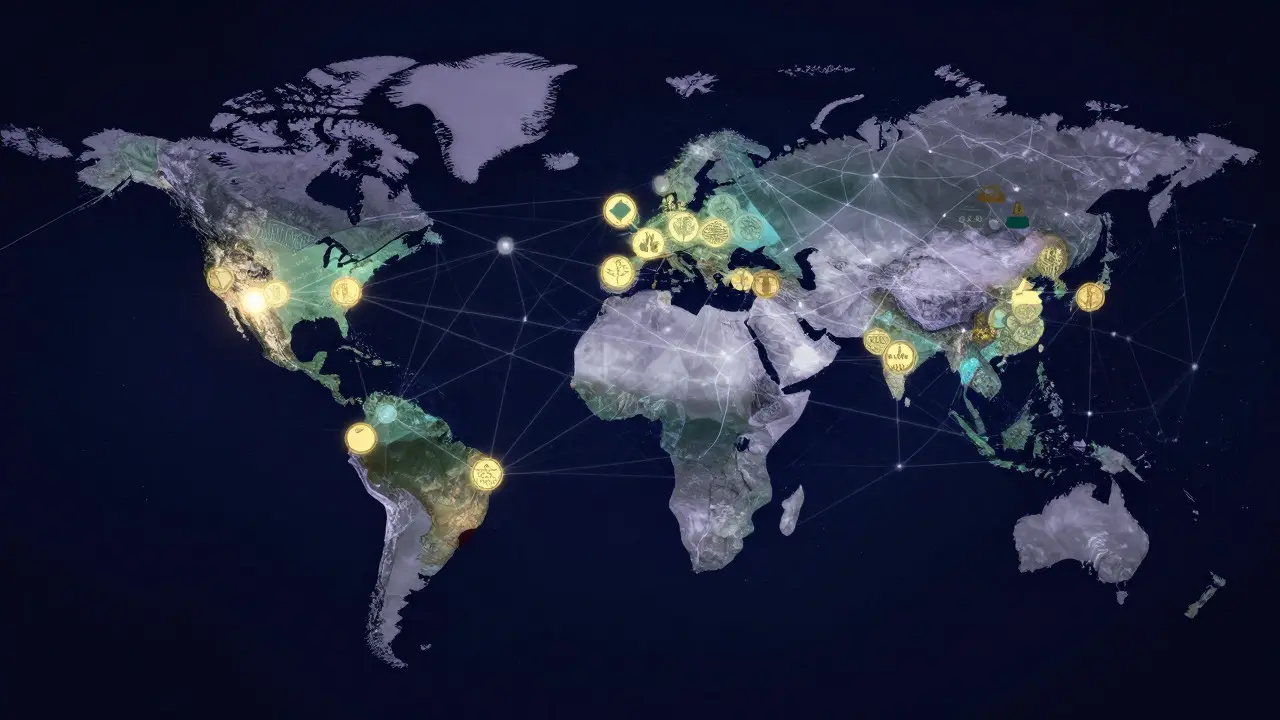
Here is the uncomfortable truth: Wikipedia reflects the biases of its editors. Historically, these have been predominantly male, Western, and technologically literate. When you train an AI on this data, you inherit those biases. An AI might struggle with topics from non-Western cultures or recent events in regions with less internet access. This is known as representation bias.
For example, studies have shown that Wikipedia articles about women scientists are often shorter and less detailed than those about men. If an AI uses this as ground truth, it may subtly undervalue female contributions in science. The risk isn't just factual errors; it's systemic skew. Since open-source AI models are used globally, these biases can spread into education systems, hiring tools, and news aggregators, amplifying existing inequalities.
To mitigate this, some developers now use data augmentation techniques. They mix Wikimedia data with other sources, such as academic journals or local news archives, to balance the perspective. It’s not a perfect fix, but it’s a step toward more inclusive knowledge representation.
Benefits: Democratizing Intelligence
Despite the risks, the benefits of using Wikimedia data are significant. First, it lowers the barrier to entry for AI development. Small startups and researchers in developing countries can build sophisticated language models without needing millions of dollars in data acquisition budgets. This democratization fosters innovation. You see this in projects like Mistral AI or Llama, which have leveraged public datasets to compete with tech giants.
Second, it promotes transparency. Because the source data is public, users can verify where an AI got its information. If a chatbot gives a wrong answer about the French Revolution, you can check the Wikipedia article and see if the AI misinterpreted the citation. This level of auditability is rare in closed-source models that rely on secret, proprietary data mixes.
Third, it supports multilingual capabilities. With over 300 languages represented on Wikipedia, developers can train models that understand diverse linguistic structures. This is crucial for global applications, from translation tools to international customer support.
Risks: Hallucinations and Staleness
One of the biggest risks is hallucination. AI models don't "know" facts; they predict the next word. If the training data contains outdated or contested information, the AI will repeat it confidently. Wikipedia is updated constantly, but AI models are static once trained. A model trained in 2024 might still think a certain person is alive if they passed away in 2025, unless the model is fine-tuned with newer data.
There is also the risk of knowledge staleness. Fast-moving fields like technology or medicine change rapidly. Relying solely on encyclopedia-style content can lead to lagging answers. Users need to be aware that an AI’s confidence does not equal accuracy. Always cross-check critical information with primary sources.
How to Use AI Models Wisely
If you’re using an AI tool built on Wikimedia data, here are practical tips to get the best results:
- Verify Citations: Ask the AI to provide sources. If it cites Wikipedia, check the article directly for context and recent edits.
- Ask for Nuance: Instead of asking "What is X?", ask "What are the differing perspectives on X?" This prompts the AI to look beyond the consensus view.
- Check Dates: Always specify the timeframe. "What was the population of Tokyo in 2020?" is safer than "What is the population of Tokyo?"
- Use Multiple Tools: Don’t rely on a single AI. Cross-reference answers from different models to identify discrepancies.
For developers, consider adding a retrieval-augmented generation (RAG) layer. This connects the AI to live databases, ensuring it pulls the most current information rather than relying on static training weights.
The Future of Open Knowledge
The partnership between open-source AI and Wikimedia is evolving. We are moving toward a model where AI doesn't just consume knowledge but contributes back. Imagine an AI that flags potential errors in Wikipedia articles or suggests new topics based on emerging trends. This feedback loop could make both the encyclopedia and the AI smarter over time.
However, governance will be key. The Wikimedia community is watching closely to ensure that AI usage doesn't drain resources or distort the editorial process. Balancing innovation with stewardship will determine whether this era marks a golden age of accessible knowledge or a period of fragmented, biased information.
As you navigate the digital landscape, remember that behind every AI answer is a human story. The data isn't neutral; it's a reflection of our collective efforts to document the world. Understanding this helps you use these powerful tools with both confidence and caution.
Is it legal to use Wikipedia data for commercial AI models?
Generally, yes, but with conditions. Most Wikipedia text is under CC BY-SA, which requires attribution and sharing derivatives under the same license. Commercial use is allowed, but you must comply with the license terms. Images may have stricter copyright rules, so always check individual file licenses.
Why do AI models sometimes give outdated information?
AI models are static once trained. If the training data is from 2023, the model won't know about events in 2024 or 2025 unless it is updated or connected to a live data source via Retrieval-Augmented Generation (RAG).
What is the main bias in Wikipedia-trained AI?
The primary bias is demographic and geographic. Since Wikipedia editors are largely Western and male, topics related to these groups are often more detailed and prominent, while others may be underrepresented or viewed through a Western lens.
How can I check if an AI answer is accurate?
Always ask for sources. If the AI cites a Wikipedia article, read the original text to see if the AI captured the nuance correctly. Cross-reference with at least one other independent source for critical facts.
Does using open-source AI mean the data is free forever?
Not necessarily. While the initial data is free, maintenance costs, server infrastructure, and potential licensing changes can affect availability. Additionally, "free" refers to cost, not effort; cleaning and structuring data for AI requires significant technical work.