Most people think of Wikipedia as a chaotic mess of random edits. You click on an article, see a citation that looks shaky, and wonder who actually checks if this information is true. The reality is far more organized. Behind every reliable entry lies a robust system known as the peer review process, which serves as the backbone of community-driven quality control in open-source encyclopedias. It’s not a single editor making decisions; it’s a networked defense against bias, error, and misinformation.
This guide breaks down how that system works, why it matters for your trust in digital information, and what you can do to participate or verify articles yourself. We’ll move beyond the basic idea of “editing” to look at the specific mechanisms-like Article Assessment, Requests for Comment, and the role of experienced editors-that keep the encyclopedia accurate.
How Peer Review Actually Works on Wikipedia
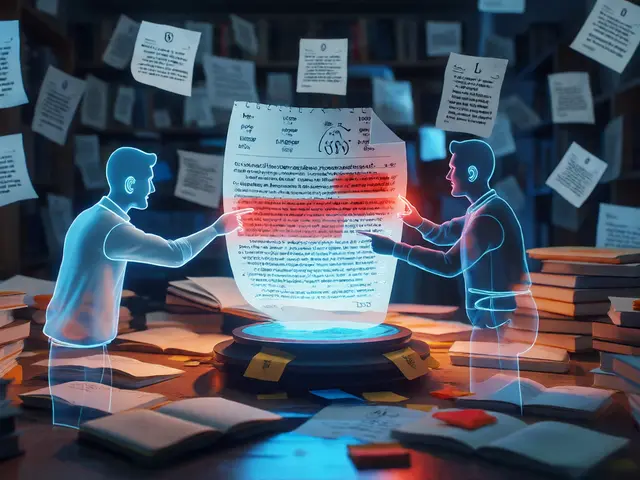
Unlike academic journals where anonymous experts review manuscripts before publication, Wikipedia operates on a continuous, public model. There is no final gatekeeper. Instead, quality emerges from constant scrutiny by volunteers with varying levels of expertise. This is often called "post-publication peer review."
The process relies on three main pillars:
- Community Consensus: Editors discuss changes on talk pages. If a change is controversial, it stays until consensus is reached or reverted.
- Verifiability: Every claim must be backed by a reliable source. If you can’t cite it, it doesn’t belong.
- Neutral Point of View (NPOV):strong>: Articles must represent all significant viewpoints fairly, without editorializing.
When you read an article, you are seeing the current state of this ongoing negotiation. The "peer" in peer review isn’t necessarily a subject-matter expert in the traditional sense, but rather an experienced editor who understands Wikipedia’s strict sourcing and neutrality rules. This distinction is crucial. A physicist might write about quantum mechanics, but it’s the veteran Wikipedian who ensures the prose meets the platform’s style guidelines and citation standards.
The Role of Article Assessment and Quality Ratings
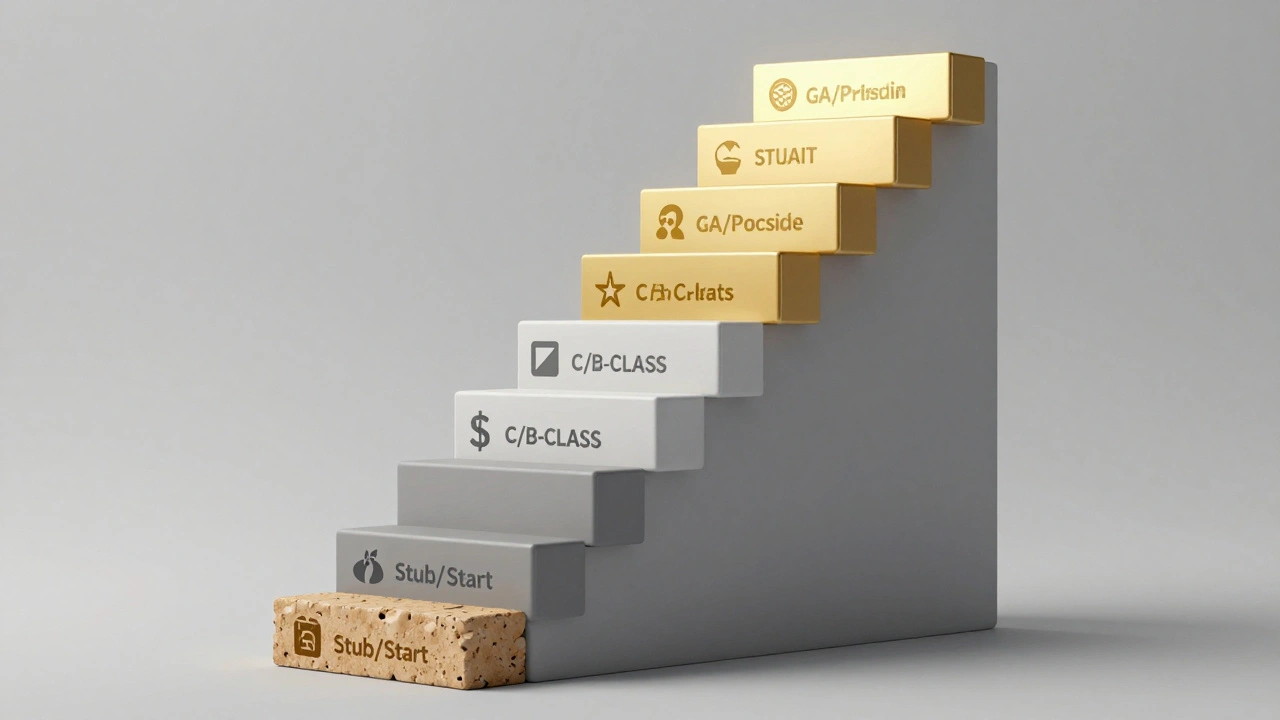
To manage millions of articles, Wikipedia uses a tagging system to track quality. This is the first line of formalized peer review. Experienced editors assign ratings based on predefined criteria. These ratings help identify gaps and prioritize work.
| Rating Level | Definition | Typical Characteristics |
|---|---|---|
| Stub | Incomplete but verifiable | Very short, lacks depth, needs expansion |
| Start | Basic structure present | Covers main points, sparse citations, rough prose |
| C-Class | Decent coverage | Good structure, reliable sources, minor gaps |
| B-Class | Comprehensive and well-written | Detailed, neutral, extensive citations, good images |
| GA (Good Article) | High quality standard | Passed formal review, no major issues, stable |
| FA (Featured Article) | Top-tier excellence | Exemplary writing, comprehensive, perfect sourcing |
These tags aren’t just labels; they signal to readers how much vetting has occurred. A Featured Article has undergone rigorous scrutiny, often involving dozens of comments and revisions over months. A Stub might have been created five minutes ago. Understanding this hierarchy helps you gauge the reliability of the information you’re consuming.
Formal Review Mechanisms: GA and FA Candidates
For articles aiming for high-quality status, Wikipedia offers formal review paths. These are the closest equivalents to traditional peer review.
Good Article (GA) Review: Editors nominate their work for GA status. Other experienced editors then critique the article against specific criteria: completeness, accuracy, neutrality, and readability. Comments are public, and the nominator must address each point. If the consensus is positive, the article earns the GA badge. This process typically takes a few weeks.
Featured Article (FA) Review: This is even stricter. FAs must be comprehensive, engaging, and perfectly sourced. The review panel is larger, and the bar for perfection is higher. An FA might remain under review for months or even years if editors find subtle biases or missing context. This mechanism ensures that the most-read articles meet the highest possible standards.
These processes create a feedback loop. New editors learn by participating in reviews, while veteran editors refine their skills by critiquing others. It’s a self-correcting ecosystem.
Handling Controversy: Requests for Comment and Dispute Resolution
Not all edits are straightforward. When topics become heated-politics, religion, current events-the peer review process shifts toward conflict resolution. Here, specialized tools come into play.
Requests for Comment (RFC): If two editors disagree on a specific point, they can post an RFC. This invites broader community input. The goal isn’t to win an argument but to find a solution that aligns with Wikipedia policies. The discussion remains on the article’s talk page, creating a transparent record of why certain decisions were made.
Mediation and Arbitration: For persistent disputes, Wikipedia has formal mediation services. In extreme cases, the Arbitration Committee steps in. This body acts as the court of last resort, enforcing rules when consensus fails. While rare, these interventions protect the integrity of sensitive articles.
This layer of governance ensures that popular opinion doesn’t override factual accuracy. Even if 90% of editors support a biased view, it will be rejected if it violates NPOV or verifiability standards.
The Importance of Source Reliability
At the heart of Wikipedia’s peer review is the concept of source reliability. Not all sources are equal. The community maintains detailed guidelines on what counts as credible.
- Primary Sources: Original documents, interviews, or raw data. Generally discouraged for analysis but acceptable for facts.
- Secondary Sources: Books, journal articles, and news reports that analyze primary material. Preferred for claims and interpretations.
- Tertiary Sources: Encyclopedias and textbooks. Useful for background but less ideal for cutting-edge topics.
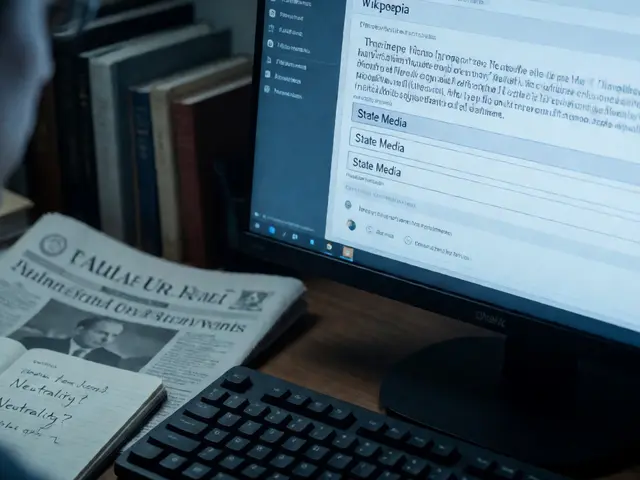
Editors constantly debate the reliability of specific outlets. Is a particular blog trustworthy? Does a self-published book carry weight? These discussions happen in real-time on talk pages. This dynamic assessment means that the definition of "reliable" evolves with the media landscape. A source deemed credible in 2010 might be flagged as partisan today.
This vigilance protects against manipulation. Bad actors often try to insert biased information using seemingly authoritative but flawed sources. Experienced reviewers spot these patterns quickly.
Participating in the Process: How You Can Help
You don’t need to be an expert to contribute to peer review. Even small actions strengthen the system.
- Check Citations: Click through links. Do they support the claim? Are they broken?
- Improve Structure: Add headings, fix grammar, and clarify confusing sentences.
- Add Context: If an article seems one-sided, add balanced perspectives from reliable sources.
- Leave Constructive Feedback: On talk pages, explain why a change might violate policy. Be polite and specific.
New editors often fear making mistakes. Remember, vandalism is usually reverted within seconds. The community values effort over perfection. By engaging, you help maintain the encyclopedia’s accuracy and neutrality.
Limitations and Challenges of Open Peer Review
No system is flawless. Wikipedia’s model faces unique challenges.
Editor Burnout: Many experienced editors leave due to stress or conflict. This loss of institutional knowledge weakens review capacity. Projects like WikiProject Mentorship aim to retain talent by supporting newcomers.
Topic Bias: Some subjects have many experts; others have none. Technical fields like astrophysics may lack sufficient reviewers compared to pop culture topics. This imbalance affects quality distribution.
Coordination Attacks: Organized groups sometimes try to manipulate articles. Vigilant monitoring and rapid response are essential to counter these efforts.
Awareness of these limitations helps users approach Wikipedia critically. It’s a powerful tool, but understanding its constraints leads to better usage.
Best Practices for Evaluating Wikipedia Content
To get the most out of Wikipedia, adopt a skeptical yet informed mindset.
- Look at the History Tab: See how frequently the article changes. Rapid fluctuations might indicate controversy.
- Read the Talk Page: Discussions reveal unresolved debates and editorial concerns.
- Check References: Verify that key claims link to reputable sources.
- Note Quality Tags: Use the rating scale to gauge maturity.
By treating Wikipedia as a starting point rather than a final authority, you leverage its strengths while mitigating risks. The peer review process ensures that, over time, errors are corrected and biases are minimized. Your active participation keeps this engine running.
Is Wikipedia peer-reviewed like academic journals?
No. Academic journals use pre-publication review by anonymous experts. Wikipedia uses post-publication review by visible, volunteer editors. Changes are immediate, and quality improves over time through community scrutiny rather than initial approval.
Who decides if a Wikipedia article is accurate?
The community of editors collectively determines accuracy through discussion, citation checking, and adherence to policies like Verifiability and Neutral Point of View. No single person has ultimate authority.
What does a "Good Article" tag mean?
A Good Article (GA) has passed a formal review process. It meets high standards for completeness, neutrality, and sourcing. It is considered reliable and stable, though still open to improvement.
Can anyone edit a Wikipedia article?
Yes, almost anyone can edit. However, edits must follow strict guidelines. Vandalism or unsourced claims are quickly reverted by other editors. Experience and adherence to policy matter more than registration status.
How do I report a problem with an article?
Use the article's Talk page to discuss issues politely and specifically. For urgent problems like libel or copyright violations, use the designated noticeboards linked from the sidebar. Always provide evidence and refer to relevant policies.