Imagine a world where every article on Wikipedia is available in 300 languages instantly. It sounds like a utopia for knowledge sharing, but it hides a massive trap. If you just run text through a standard translator, you don't get accurate information; you get plausible-sounding nonsense that breaks the trust readers place in the platform. The challenge isn't just moving words from one language to another. It's preserving the specific tone, citation style, and factual precision that defines an encyclopedia entry while scaling production by thousands of times.
The Gap Between Raw Translation and Encyclopedic Standard
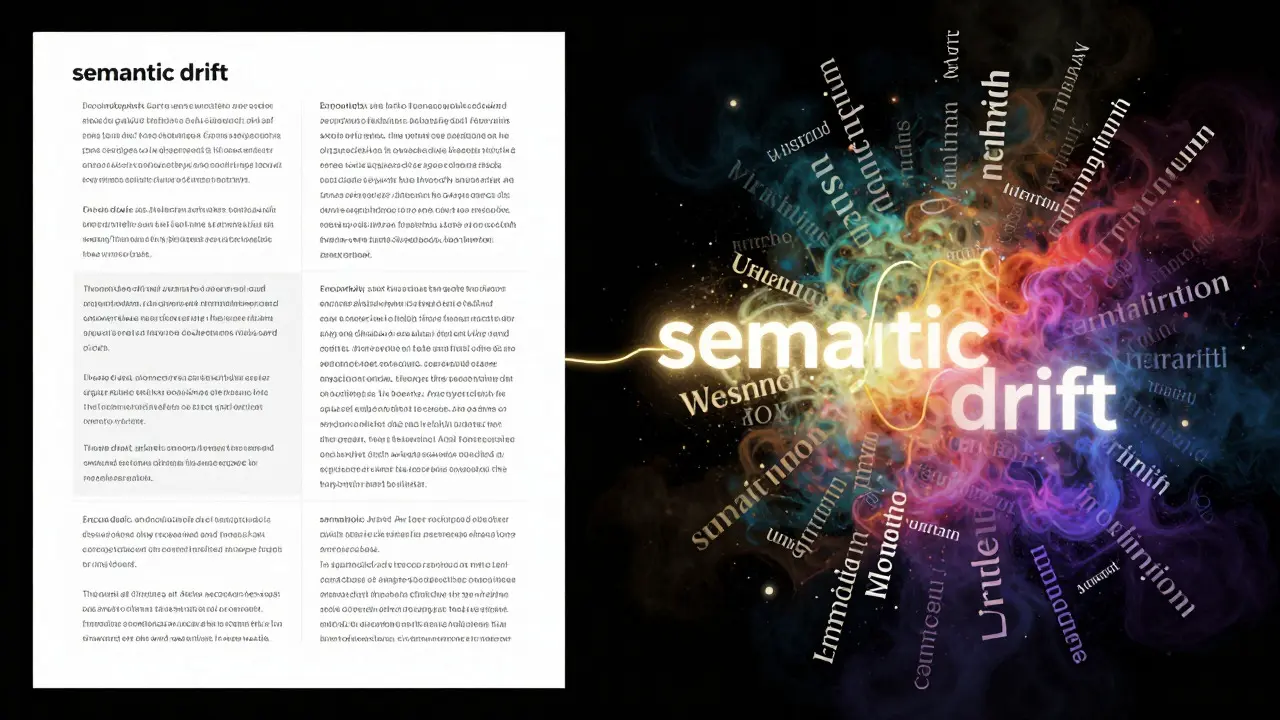
Most people assume that if a sentence makes sense, it's good enough. But encyclopedic writing relies on neutral point of view, verifiability, and strict adherence to cited sources. When Artificial Intelligence translates a complex historical event, it often smooths over ambiguities or adds interpretive flavor that wasn't in the original. This is known as semantic drift. For example, a technical term in engineering might have a direct lexical equivalent in German, but the context in which it is used changes its meaning entirely. A human editor notices this. A basic algorithm usually does not.
To scale without breaking quality, we need to treat translation not as a one-way street, but as a collaborative loop. The AI handles the heavy lifting of structure and vocabulary, while specialized models handle the nuances of tone and fact-checking. This hybrid approach allows us to process hundreds of articles per day instead of the few dozen a volunteer team might manage manually.
How Modern Machine Learning Handles Nuance
Old-school translation tools relied on phrase tables-literal swaps of words. Today, we use neural machine translation (NMT) systems that understand context. These models look at the whole sentence, paragraph, and even the surrounding article to predict the best output. But for Wikipedia, we go further. We fine-tune these models using pairs of high-quality translated articles that have already been reviewed by native speakers.
This process creates a dataset specifically optimized for encyclopedic style. The model learns that "said" is better than "stated" in dialogue, or that passive voice is acceptable in scientific descriptions but awkward in biographical narratives. By training on curated data, the AI starts to mimic the subtle stylistic choices that make an article feel professional rather than robotic.
- Contextual Embeddings: Words are mapped to vectors that change based on surrounding text, allowing the AI to distinguish between different meanings of polysemous words.
- Style Transfer Modules: Separate layers adjust the register of the text to match the target language's cultural norms for formal writing.
- Citation Preservation: Special tags ensure that footnotes and references stay attached to the correct sentences during reordering.
The Role of Human-in-the-Loop Verification
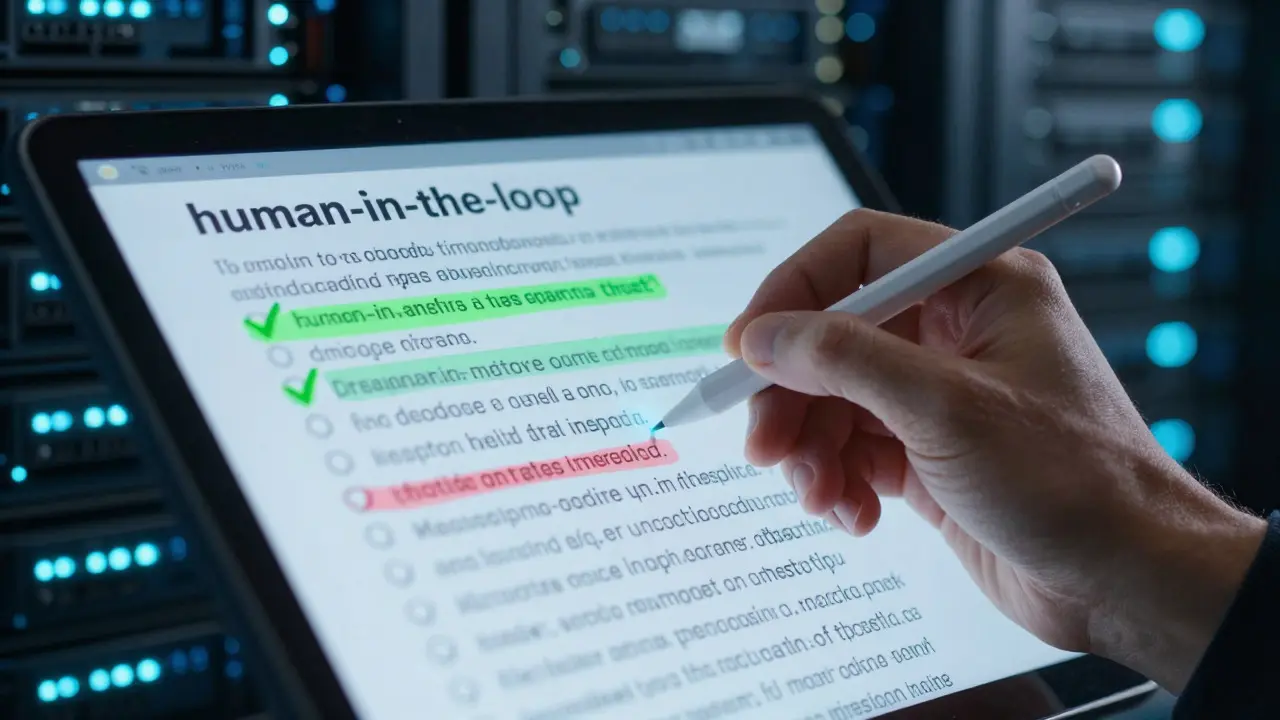
Even with advanced algorithms, no AI should publish to a main namespace without a check. This is where the human-in-the-loop strategy comes in. Instead of having volunteers translate entire articles from scratch, they review AI-generated drafts. This shifts their role from creators to editors. They spend less time typing and more time fixing logic errors, verifying facts against primary sources, and smoothing out awkward phrasing.
This method dramatically increases throughput. A reviewer can check a 5,000-word draft in half the time it takes to write it. Moreover, because the AI provides a consistent baseline, reviewers can focus on high-value corrections rather than struggling with grammar basics. The result is a faster pipeline that still maintains the rigorous standards expected of a reliable reference source.
| Feature | Traditional Manual Translation | AI-Assisted Workflow |
|---|---|---|
| Time per Article | 10-20 hours | 2-4 hours (review only) |
| Consistency | Varies by translator | High (model-enforced) |
| Error Type | Typo/Grammar | Semantic Drift/Tone |
| Scalability | Linear (depends on staff) | Exponential (compute-based) |
Preserving Factual Integrity Across Languages
One of the biggest risks in automated translation is losing the link between a claim and its evidence. In English Wikipedia, a statement must be backed by a reliable source. When text is translated, the source citations must remain valid. If the AI restructures a sentence for flow, it might accidentally detach a quote from its attribution tag. This creates a verification gap.
To solve this, modern pipelines use structured markup. Instead of translating raw text, the system processes the underlying data structure. It identifies entities, claims, and references separately. The AI translates the claim text, keeps the reference ID intact, and then reassembles the document. This ensures that every fact remains tied to its proof, regardless of how the sentence structure changes in the target language.
Additionally, cross-language consistency checks are performed. If an article in French says a building was built in 1920, and the AI translates the English version which says 1925, the system flags a discrepancy. This automated conflict detection helps maintain global accuracy across the network of language editions.
Challenges in Low-Resource Languages
Not all languages benefit equally from current AI models. High-resource languages like Spanish or German have vast corpora of parallel texts, making training easy. But for low-resource languages, such as Swahili or Bengali, the data is scarce. Here, the risk of poor quality is higher. The AI might hallucinate terms or produce grammatically broken sentences because it hasn't seen enough examples.
The solution involves transfer learning. Models pre-trained on high-resource languages are adapted for low-resource ones using smaller, targeted datasets. Community involvement is crucial here. Native speakers contribute small batches of high-quality translations to fine-tune the models. This collaborative effort ensures that the AI doesn't just guess, but learns the specific idioms and structures of the target community.
Building Trust Through Transparency
Readers are skeptical of anything labeled "AI-generated." To preserve trust, transparency is key. Articles processed through AI pipelines should carry a clear badge indicating their origin. This doesn't mean they are lower quality; it means they went through a different workflow. Over time, as the error rates drop and the human review process matures, this badge becomes a mark of efficiency rather than suspicion.
Open-sourcing the translation models also helps. When researchers and enthusiasts can inspect how the AI works, they can identify biases and suggest improvements. This open ecosystem mirrors the spirit of Wikipedia itself: collective intelligence applied to technology. By keeping the process visible, we invite scrutiny, which ultimately strengthens the final product.
Frequently Asked Questions
Does AI translation reduce the need for human volunteers?
Not exactly. It changes their role. Volunteers shift from doing initial translation to performing critical reviews. This allows them to cover more topics with less fatigue, potentially attracting new contributors who prefer editing over writing from scratch.
How does the system handle technical jargon correctly?
The system uses domain-specific glossaries. Before translation begins, it loads a list of approved terms for the specific topic (e.g., medical or legal). The AI is constrained to use these exact terms, preventing creative but incorrect substitutions.
What happens if the AI makes a factual error?
Errors are caught during the human review phase. Additionally, automated fact-checking tools compare the translated text against the original source data. If a number or date changes unexpectedly, the system flags it for immediate correction before publication.
Is AI translation suitable for all types of Wikipedia articles?
It works best for factual, encyclopedic content like history, science, and geography. It is less effective for highly opinionated or literary pieces where tone and nuance are subjective. Most projects focus on stable, well-referenced articles first.
How long does it take to train a model for a new language pair?
For high-resource pairs, fine-tuning can take days. For low-resource pairs, it may take weeks or months to gather sufficient high-quality parallel data. The initial setup is longer, but once established, the ongoing cost is minimal.