You’ve probably heard the old joke: "Don't cite Wikipedia in your college paper." It’s a rule of thumb that has stuck around for two decades. But if you’re a researcher, a journalist, or just someone who cares about how information travels online, ignoring Wikipedia is like ignoring the town square because it’s noisy. The platform processes over 15 billion page views monthly. If a claim appears there, it has likely already shaped public perception. The real question isn’t whether to look at Wikipedia, but how to decode its citation patterns to separate solid facts from digital folklore.
This article breaks down how citations work on Wikipedia, why some sources are more reliable than others, and how you can use these signals to assess credibility quickly. We aren’t just talking about checking if a link works. We’re looking at the sociology of knowledge sharing and the technical infrastructure that supports it.
The Anatomy of a Wikipedia Citation
Every fact on Wikipedia needs a backup. This is the core principle of Verifiability, one of Wikipedia's three core content policies alongside Neutral Point of View and No Original Research. When you see a superscript number next to a sentence, that’s a footnote pointing to a reference section at the bottom of the page. But not all footnotes are created equal.
Citations generally fall into three tiers of reliability, determined by the community consensus rather than an algorithm:
- Tier 1: Academic and Institutional Sources. Peer-reviewed journals, major university presses, and reports from established institutions like the NASA or the World Health Organization. These carry the highest weight.
- Tier 2: Mainstream News Media. Outlets like The New York Times, BBC, or Reuters. These are good for current events and general consensus but can be biased or superficial on complex topics.
- Tier 3: Self-Published or Primary Sources. Blogs, press releases, or personal websites. These are often flagged for improvement or removed unless they are primary sources for a specific person’s life (like an autobiography).
Understanding this hierarchy helps you spot weak arguments instantly. If a controversial scientific claim relies solely on a blog post from 2014, treat it with skepticism. If it cites a 2023 meta-analysis in The Lancet, you’re on firmer ground.
Decoding Citation Patterns
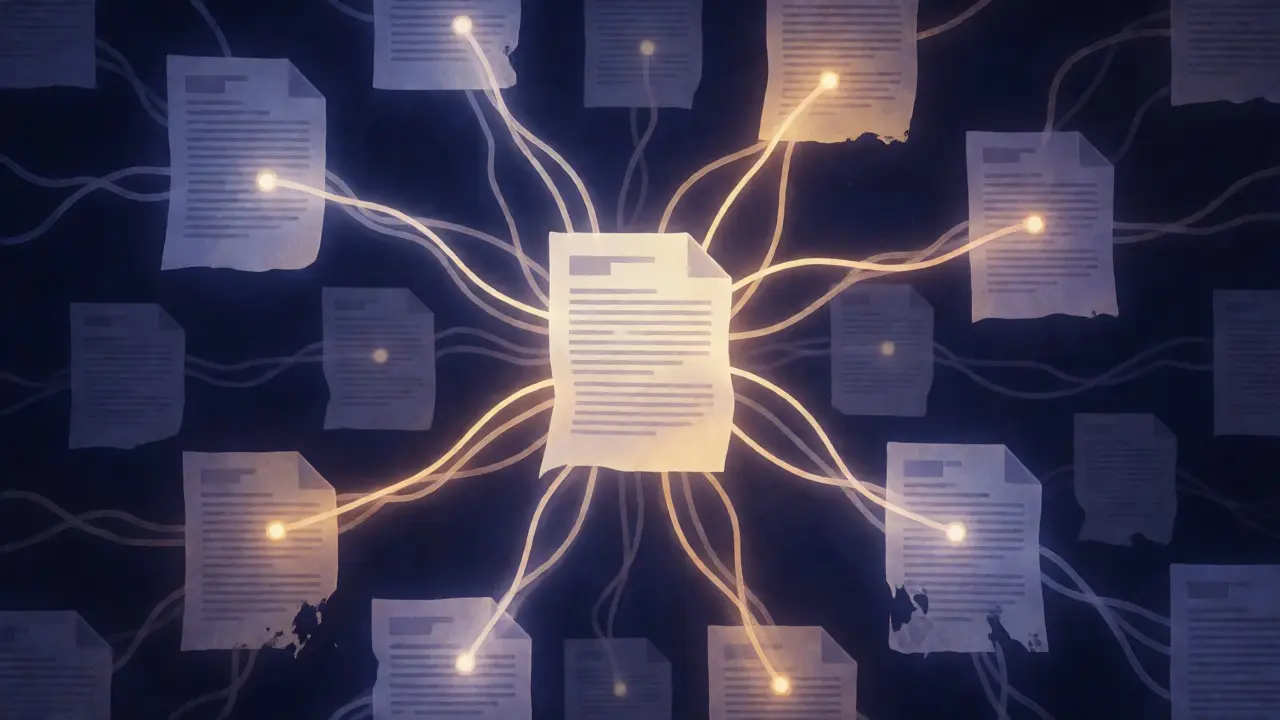
Researchers have studied Wikipedia’s citation networks extensively. One fascinating pattern is the "citation cascade." This happens when multiple articles cite the same secondary source, which in turn cites a primary source. If the secondary source misinterprets the primary one, the error propagates across dozens of pages. You might see five different articles citing a single news report that got the details wrong. Spotting this requires tracing the chain back to the original document.
Another common pattern is "link rot." Links break. Servers move. Domains expire. Studies suggest that up to 20% of external links on Wikipedia may be dead within a few years. However, Wikipedia uses an Internet Archive bot to save snapshots of cited pages. When you click a citation, check if there’s an archived version linked. If the live link is broken but the archive works, the data is still verifiable. If both are gone, the claim becomes unverifiable and technically invalid under policy.
Look for the density of citations. A paragraph with no citations is often considered "unsourced" and may be tagged with {{citation needed}}. Conversely, excessive citation spam-where every clause has a footnote-can indicate a lack of synthesis. Good writing synthesizes multiple sources into a coherent narrative. Poor writing just lists facts with tags attached.
Evaluating Source Reliability
How do you judge a source before clicking? Start with the domain. Is it .edu, .gov, or .org? These aren’t guarantees of quality, but they signal institutional backing. Next, look at the date. In fast-moving fields like technology or medicine, a source from ten years ago might be obsolete. For historical events, older sources are often preferred as they were closer to the event.
Consider the concept of Source Neutrality, the idea that while sources themselves may have biases, the aggregation of diverse sources should provide a balanced view. Wikipedia editors strive for this balance. If an article only cites sources from one side of a political debate, it’s likely violating neutrality. You can test this by searching the talk page of the article. Editors often discuss the bias of specific sources there. If you see heated debates about a particular newspaper’s reliability, that’s a red flag worth investigating.
Here is a quick heuristic table for evaluating sources on the fly:
| Signal | High Reliability Indicator | Low Reliability Indicator |
|---|---|---|
| Domain Type | .edu, .gov, reputable journal (.org) | .com blog, unknown publisher, self-published |
| Publication Date | Recent (for tech/news) or Historical (for history) | Undated, or outdated for the topic |
| Author Credibility | Named expert, institution, or staff writer | Anonymous, pseudonym, or unclear affiliation |
| Link Status | Live link + Internet Archive snapshot available | Broken link, no archive, paywall without summary |
| Citation Context | Supports widely accepted fact | Supports controversial claim with single source |
The Role of Open Access and Preprints
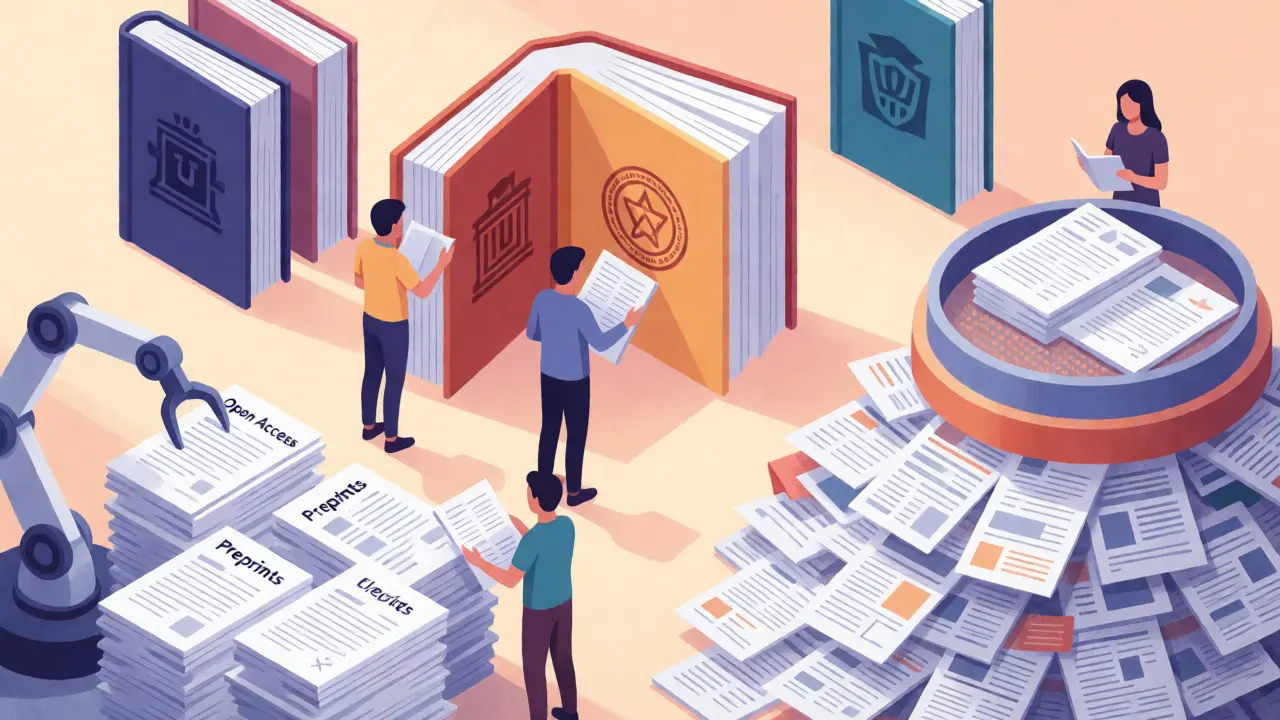
In recent years, the landscape of scholarly communication has shifted. The rise of Open Access publishing has made many peer-reviewed studies freely available to Wikipedia editors. This has improved source diversity. Previously, editors relied heavily on abstracts or secondary reporting because full texts were behind paywalls. Now, they can read the actual methodology.
However, this has also introduced challenges with preprints. Platforms like arXiv or bioRxiv allow researchers to share findings before peer review. While useful for cutting-edge science, preprints haven’t been vetted by other experts yet. Wikipedia’s guidelines generally prefer peer-reviewed sources. If you see a citation to a preprint, check if a later peer-reviewed version exists. If the preprint makes bold claims about health or physics, wait for confirmation from the broader scientific community.
Tools like Zotero help editors manage these citations efficiently. Zotero integrates with Wikipedia’s editing interface, allowing users to import metadata directly from browsers. This reduces manual errors in formatting references, ensuring consistency across millions of articles.
Community Governance and Vandalism
Wikipedia isn’t maintained by robots; it’s maintained by humans. And humans make mistakes. Vandalism-deliberate destruction or addition of false information-is rare on high-profile pages due to automated filters and active watchers. But it’s more common on niche topics with fewer editors.
Citation patterns reveal governance issues. Look at the "View History" tab. If you see frequent edits removing or adding specific sources, there might be an editorial dispute. Check the Talk Page. Are editors arguing about the reliability of a source? This transparency is a feature, not a bug. It shows you where the uncertainty lies. On a well-maintained page, disputes are resolved quickly, and sources are replaced with better ones. On a neglected page, bad sources might linger for years.
Automated bots play a huge role here. Bots like ClueBot NG revert obvious vandalism within seconds. Other bots update citation templates and fix broken links. This hybrid model of human judgment and machine efficiency keeps the encyclopedia functional despite its massive scale.
Practical Steps for Researchers
If you’re using Wikipedia for research, don’t stop at the first glance. Use it as a starting point, not the finish line. Here’s a workflow to maximize value:
- Scan the References Section First. Before reading the body text, look at the sources. Do they look credible? Are they diverse?
- Check the Edit History. Is the page actively maintained? Recent edits suggest attention. Edits from years ago suggest neglect.
- Read the Talk Page. This is where the sausage is made. You’ll find discussions about biases, missing info, and source disagreements.
- Trace Primary Sources. Click through to the original documents. Verify that the Wikipedia summary accurately reflects the source material.
- Cross-Reference. Compare the Wikipedia entry with another independent source. If they agree, confidence increases.
Remember, Wikipedia is a tertiary source. It summarizes secondary sources, which summarize primary sources. Your job is to validate that chain. If the chain breaks, discard the claim.
Future Trends in Citation Analysis
As we move further into 2026, AI tools are changing how we interact with citations. Large Language Models (LLMs) are being trained on Wikipedia data, which means citation quality affects AI outputs. If Wikipedia contains hallucinated citations, those errors propagate into AI-generated answers.
New initiatives aim to improve semantic linking. Instead of just linking to a URL, future systems might link to specific paragraphs or data points within a source. This granularity would make verification easier. Imagine clicking a citation and landing directly on the relevant chart in a PDF, rather than the homepage of a journal.
Furthermore, the push for global equity in knowledge is influencing citation patterns. Historically, Wikipedia was dominated by English-language sources. Efforts to include non-Western perspectives are introducing new types of sources, such as oral histories translated into text or regional newspapers. Understanding these diverse citation styles is crucial for a truly global understanding of any topic.
Why does Wikipedia sometimes cite unreliable sources?
Wikipedia is edited by volunteers with varying levels of expertise. Sometimes, a well-intentioned editor adds a source they believe is reliable, but the community hasn't yet flagged it as weak. Additionally, for very recent events, mainstream news might be the only available source, even if it lacks deep analysis. These sources are often marked with maintenance templates until better ones become available.
Can I trust a Wikipedia article if it has many citations?
Not necessarily. Quantity doesn't equal quality. An article might have fifty citations, but if they all come from the same biased outlet or are broken links, the reliability is low. Always evaluate the type and recency of the sources, not just the count. Look for diversity in perspective and authority.
What is the difference between a primary and secondary source on Wikipedia?
A primary source is an original document or firsthand account, like a diary, interview, or raw data set. A secondary source analyzes or interprets primary sources, like a news article summarizing a study or a textbook chapter. Wikipedia prefers secondary sources for general facts because they provide context and interpretation. Primary sources are used sparingly, usually for direct quotes or specific factual details.
How do I know if a Wikipedia page is vandalized?
Check the "View History" tab. Look for recent edits by anonymous IP addresses or new accounts. If the edit added strange phrasing, removed citations, or inserted unrelated images, it might be vandalism. Also, check the Talk Page for warnings left by other editors. Automated bots often revert obvious vandalism within minutes, so persistent issues usually require human intervention.
Are preprints reliable enough for Wikipedia citations?
Preprints are acceptable in specific contexts, especially for rapidly evolving fields like epidemiology during a pandemic. However, they must be clearly labeled as preprints. Editors prefer them when no peer-reviewed equivalent exists yet. Once a peer-reviewed version is published, the citation should ideally be updated to reflect the higher standard of verification.