Imagine you are a Wikipedia administrator at 2 AM. You just reverted a page three times in ten minutes. The edits are identical: someone added fake facts about the President of France using a completely different username each time. If you block just that one user, they’ll create another account in thirty seconds and keep going. This is where range blocks come in. They are not just a tool for stopping one person; they are a mechanism for stopping an entire network or a specific type of internet connection.
Most people think of Wikipedia as a place where anyone can edit. That’s true, but it comes with a cost. When bad actors use automated tools or shared connections to spam articles, individual bans don’t cut it. You need to block the source. But how do you block a source without accidentally silencing thousands of legitimate readers? That’s the tricky part. Let’s break down exactly when these blocks happen, how they work technically, and why they matter for keeping the encyclopedia reliable.
What Exactly Is a Range Block?
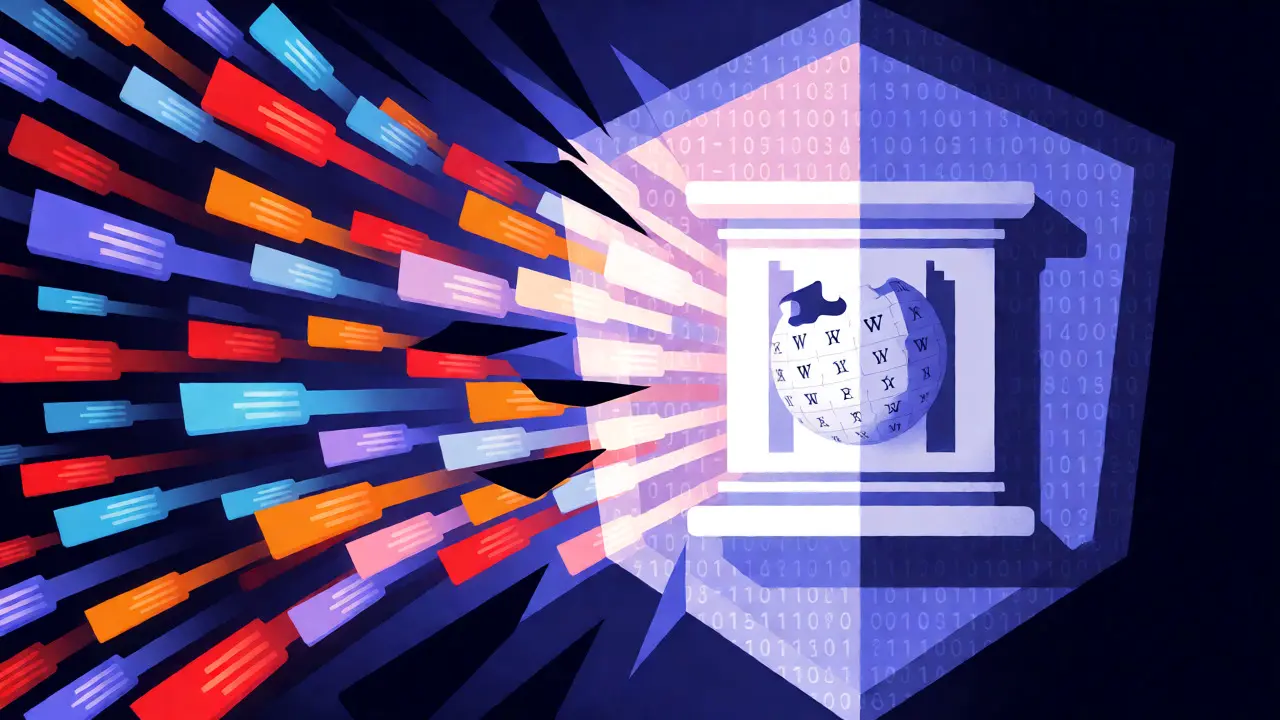
A range block is a restriction placed on a specific set of IP addresses. Unlike a standard user block, which targets a single registered account, a range block prevents any device connecting from that specific numerical address or group of addresses from editing. Think of it like banning a whole apartment building instead of just one noisy tenant because everyone in the building keeps throwing trash out the window.
The technical foundation here relies on the Internet Protocol (IP). Every device connected to the internet has an IP address. On Wikipedia, these are often IPv4 addresses, though IPv6 is becoming more common. An IP address looks like this: 192.0.2.1. It’s divided into four parts, separated by dots. Each part can be a number between 0 and 255.
When admins apply a range block, they aren’t guessing. They use specific notation called CIDR (Classless Inter-Domain Routing) or simple wildcard formats. For example, blocking 192.0.2.* means every address starting with those first three numbers gets blocked. This covers 256 potential devices. If the vandalism is coming from a university campus where hundreds of students share the same public IP, a range block stops them all at once.
Why Individual Bans Often Fail
You might ask, "Why not just ban the usernames?" In theory, that works. In practice, creating a new Wikipedia account takes less than a minute. If a vandal is determined, they will cycle through accounts faster than you can click "block." This is especially true for organized campaigns or bots.
Consider the case of persistent sockpuppetry. A sockpuppet is a fake account used to evade a previous ban. If Admin A blocks User X, User X creates User Y, then User Z. Admin A spends hours chasing ghosts. By identifying the common IP address behind these accounts, the admin applies a range block. Suddenly, User X, Y, and Z-and any future account created from that same computer-are silenced. It saves massive amounts of community time.
There’s also the issue of dynamic IPs. Some internet service providers (ISPs) change your IP address every time you restart your router. If a vandal uses a dynamic IP, blocking the specific number might only last a few hours before they get a new one. However, if their ISP assigns IPs from a known small pool, a broader range block can catch them even after they reconnect.
The Role of Open Proxies and Tor
One of the biggest headaches for Wikipedia moderators is anonymous editing via proxies. An open proxy is a server that forwards your traffic, hiding your real IP address. To Wikipedia, the edit appears to come from the proxy’s IP, not yours.
This anonymity is great for privacy but terrible for accountability. Vandals love open proxies because they can hide their tracks. Worse, many free web-based editors use proxies to let users edit without logging in. These services often have poor quality control, leading to accidental errors or deliberate spam.
Tor (The Onion Router) is a special case. Tor routes traffic through multiple servers to maximize anonymity. While many Tor users are legitimate researchers or journalists in countries with strict censorship, others use it specifically to bypass blocks. Because Tor exit nodes are well-known and constantly changing, Wikipedia maintains a list of active Tor exit nodes. Many of these are subject to permanent range blocks unless the user requests an exception. This isn’t about punishing privacy; it’s about ensuring that contributors are accountable for their edits.
| Method | Target | Duration | Best Use Case |
|---|---|---|---|
| User Block | Single Account Name | Variable (hours to infinite) | First-time offender, clear identity |
| Range Block | Group of IP Addresses | Short-term (days to weeks) | Shared networks, dynamic IPs |
| Proxy Block | Known Proxy Servers | Often Permanent | Tor nodes, commercial anonymizers |
How Admins Decide Who Gets Blocked
Admins don’t just block ranges willy-nilly. There’s a process. First, they look for patterns. Are the edits happening rapidly? Are they nonsensical? Do they involve adding links to shady websites? If yes, the admin checks the IP history.
They use tools like the CheckUser extension. This allows trusted administrators to see the underlying IP addresses behind edited accounts, even if the users are logged in. CheckUser data reveals if five different accounts are actually being controlled by the same person or the same computer. Once confirmed, the admin applies the block.
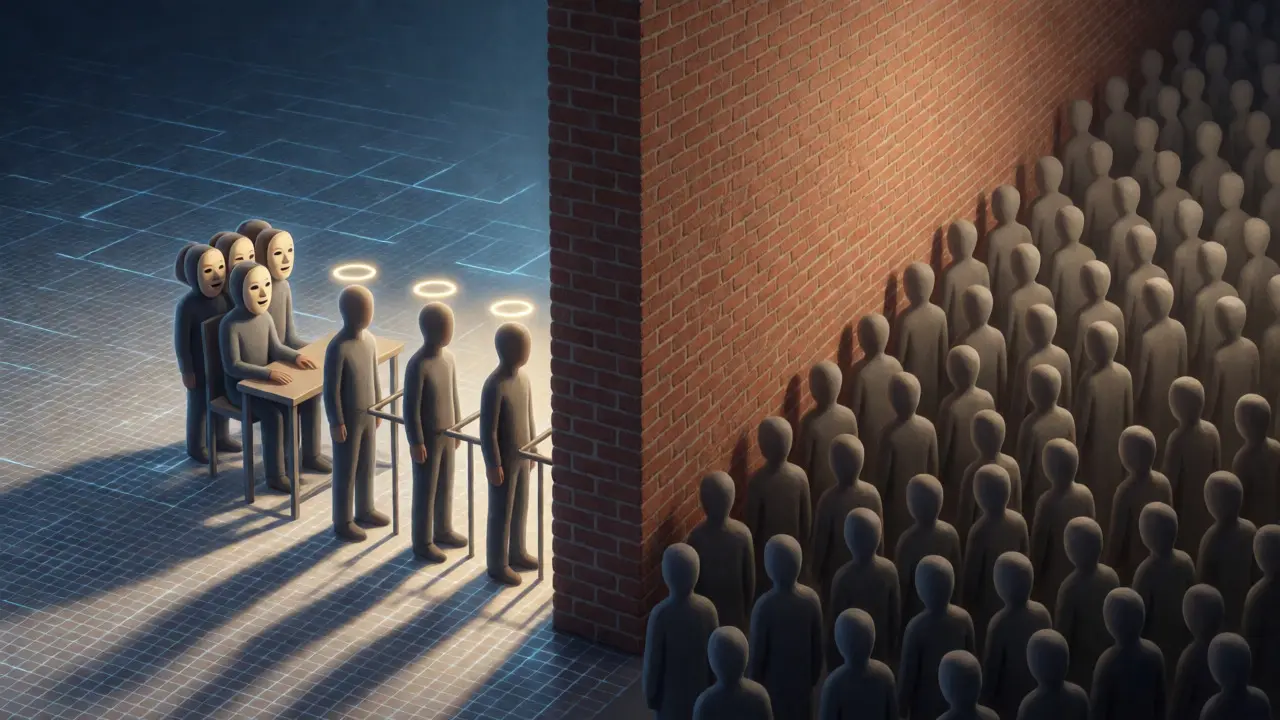
However, there’s a risk. What if you block a range that includes a library, a school, or a major corporation? All those users lose editing rights. To mitigate this, Wikipedia offers the IP Block Exemption (IBE) system. Trusted users, such as experienced editors who frequently contribute from restricted networks, can request exemption. If approved, their account remains editable even if their IP falls within a blocked range.
It’s a balancing act. Too few blocks, and the site fills with garbage. Too many, and you alienate genuine contributors. Most range blocks are temporary. They last long enough to stop the immediate wave of vandalism but expire quickly so legitimate users aren’t punished forever.
Common Pitfalls and Misconceptions
A common mistake new admins make is over-blocking. Just because two edits came from the same IP doesn’t mean they were done by the same person. In large cities, ISPs often assign the same public IP to hundreds of customers via Network Address Translation (NAT). If you block that IP, you might silence a dozen innocent readers trying to fix a typo.
Another misconception is that range blocks prevent viewing. They don’t. Blocked users can still read Wikipedia. They just can’t edit. This is crucial for maintaining access to information while preserving editorial integrity. You don’t want to turn the encyclopedia into a members-only club.
Also, remember that IP addresses change. An IPv4 address is finite-there are only about 4 billion of them. As devices multiply, we run out. This scarcity forces ISPs to reuse addresses aggressively. A block applied today might hit a completely different person next month. That’s why short-duration blocks are preferred for dynamic residential IPs.
The Future: IPv6 and Beyond
We are slowly moving toward IPv6. Unlike IPv4, which has limited addresses, IPv6 provides a practically infinite number of unique identifiers. This changes the game for range blocks.
With IPv6, a single home network might have millions of available addresses. Blocking a "small" range in IPv6 terms could still cover thousands of devices. Admins have to be much more precise. Instead of blocking a /24 subnet (256 addresses), they might need to block a /64 or even a /48 to catch a problematic user without collateral damage.
Furthermore, as mobile data becomes the primary way people access the internet, IP volatility increases. Cell towers assign temporary IPs to phones. A vandal might appear from a different city every hour. Relying solely on IP ranges becomes harder. This pushes Wikipedia toward more robust identity verification methods, like requiring phone confirmation for new accounts in high-risk categories.
Practical Tips for Users Affected by Blocks
If you find yourself unable to edit and suspect a range block, check the message you receive. It usually lists the specific IP range and the reason. Don’t panic. It likely doesn’t mean *you* did something wrong personally.
- Create an Account: Registered users are often exempt from IP blocks. Create an account and log in. If your account is trusted, you can edit despite your IP being blocked.
- Request Unblock: If you believe the block was erroneous, go to the unblock request page. Explain your situation clearly. Mention if you are on a university network or corporate firewall.
- Check Your Connection: Try switching from Wi-Fi to cellular data. If you can edit on one but not the other, the issue is definitely with the IP range assigned to your Wi-Fi provider.
For admins, always document your reasoning. Why did you choose this specific range? Did you check for exemptions? Good documentation helps other admins understand the context and prevents conflicting actions.
Can I edit Wikipedia if my IP is range-blocked?
Yes, if you create a registered user account. Most range blocks allow logged-in users to edit, provided their account isn't blocked separately. This is designed to protect anonymous editors who share IP addresses with vandals.
How long do range blocks last?
Typically, they are short-term, ranging from a few days to a few weeks. Since IP addresses are often dynamic, long blocks can punish innocent users who acquire the IP later. Permanent blocks are reserved for known static proxies or persistent abuse sources.
What is the difference between a range block and a site block?
A site block prevents all edits from a specific IP range across the entire Wikimedia project. A user block targets a specific username. Range blocks are broader and affect anyone using those IP addresses, regardless of whether they are logged in or not, unless they have an exemption.
Why are Tor users often blocked?
Tor hides the user's real location and makes it difficult to track repeated offenders. Because Tor exit nodes are frequently used for vandalism, many are permanently blocked. However, legitimate users can request exceptions if they demonstrate good faith contributions.
Does a range block prevent me from reading articles?
No. Range blocks only restrict editing capabilities. You can still view, search, and download content from Wikipedia. The goal is to maintain the accuracy of the text, not to restrict access to knowledge.
Final Thoughts on Community Health
Range blocks are a blunt instrument, but sometimes you need a hammer to crack a nut. They protect the integrity of the encyclopedia against coordinated attacks and lazy automation. Without them, the signal-to-noise ratio would drop dramatically, making Wikipedia harder to trust.
As technology evolves, so will these tools. We’ll see better integration of machine learning to detect anomalous editing patterns before a human admin even notices. But for now, understanding how range blocks work empowers both editors and admins. It turns a mysterious lockout into a manageable part of the collaborative process. Keep your edits constructive, stay aware of your network environment, and you’ll rarely run into trouble.