The Silent Threat to Open Knowledge
Imagine opening a trusted reference page only to find that three different "independent" editors have all made the same subtle change within an hour. They use different usernames, different writing styles, but the goal is identical: to nudge the narrative in a specific direction. This is not a conspiracy theory; it is the reality of Sockpuppet rings networks of multiple accounts controlled by a single person or group to manipulate consensus-based platforms like Wikipedia. These coordinated efforts undermine the core promise of open-source knowledge: that diverse, independent voices create a balanced truth.
For years, the community assumed that if you just watched closely enough, you could spot these manipulators. But as digital forensics has evolved, so have the tactics. Today’s investigations into coordinated editing abuse systematic manipulation of content through synchronized actions by linked accounts reveal a sophisticated ecosystem of bad faith actors who treat the encyclopedia as a battleground for influence rather than a library for facts.
How Sockpuppet Rings Operate
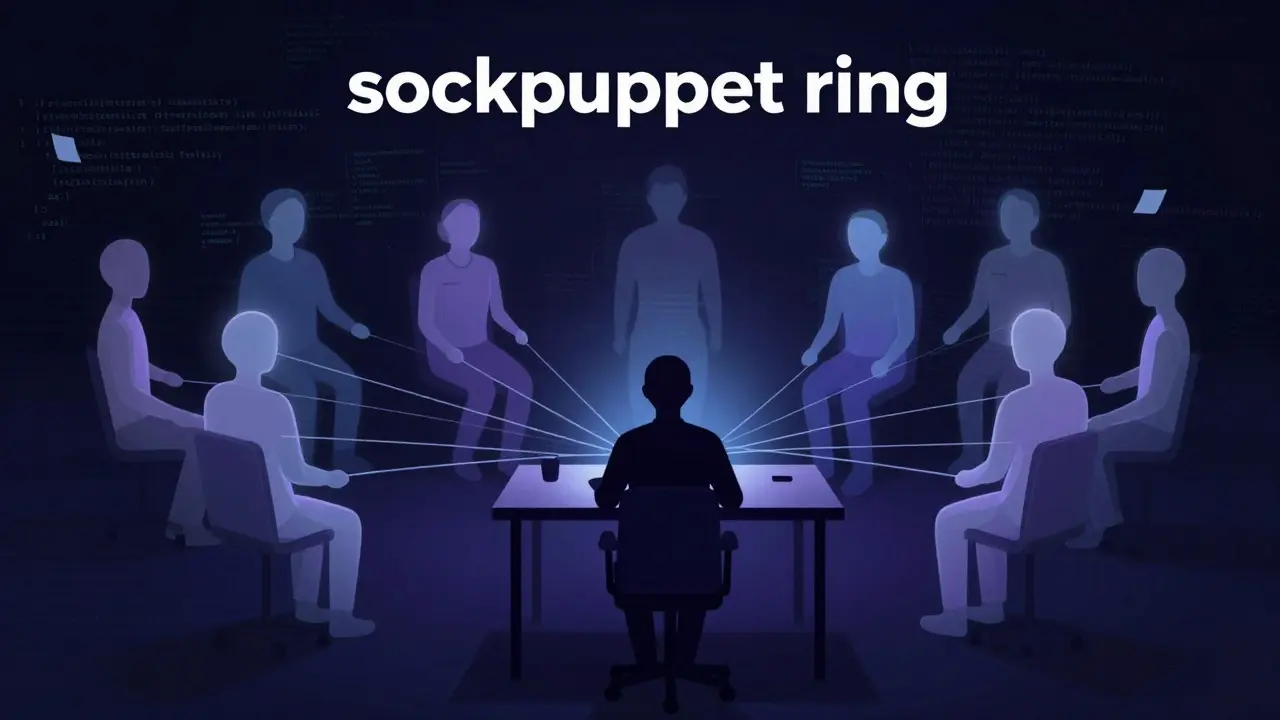
A sockpuppet is simply a second account used by someone who already has a primary account. On its own, this isn't always malicious. Sometimes people make a second account to avoid conflicts of interest or to test edits. The problem arises when these accounts work together to deceive the community about their independence. This deception is what turns a simple alt-account into a sockpuppet ring a cluster of accounts acting in concert to bypass standard checks and balances.
These rings typically operate in two distinct modes. The first is consensus hacking. In a discussion forum, if five out of ten voters support a proposal, it passes. If one person controls three of those votes, they artificially inflate support. The second mode is edit warring. By using multiple accounts to revert changes quickly, a ring can overwhelm genuine editors who are trying to fix errors. It creates a sense of urgency and confusion, often leading legitimate contributors to give up in frustration.
The tools of the trade have become surprisingly accessible. While early sockpuppets relied on manual IP address rotation, modern rings use virtual private networks (VPNs), proxy servers, and even mobile data hotspots to mask their digital fingerprints. However, humans are harder to hide than computers. Writing style, timing patterns, and specific vocabulary choices often leave traces that automated bots can detect but casual readers miss.
The Role of Community Investigators
Who actually catches these bad actors? It is rarely a paid staff member from Wikimedia Foundation the non-profit organization that hosts Wikipedia and manages its infrastructure. Instead, the heavy lifting is done by volunteer administrators and specialized investigators known as CheckUsers. These individuals have semi-private access to technical logs that link user accounts to IP addresses and hardware IDs.
The process is rigorous because false accusations can be damaging. An investigator must build a case based on circumstantial evidence that points to a single human operator. They look for:
- Simultaneous edits: Two accounts making changes to the same article at the exact same second.
- Stylistic overlap: Unique phrasing, punctuation habits, or typos that appear across different accounts.
- Behavioral patterns: One account consistently supporting the other in disputes, even when their stated interests differ.
- Technical links: Shared browser signatures, cookie trails, or IP address overlaps during login.
Once a pattern emerges, the findings are presented to the community for review. This transparency is crucial. Unlike corporate moderation, which can be opaque, Wikipedia’s investigations are public record. Anyone can read the evidence, question the logic, and see how the decision was reached. This openness builds trust, but it also means that investigators must be meticulous. A single weak link in the chain of evidence can unravel an entire case.

Case Studies in Coordinated Manipulation
To understand the scale of the issue, consider the recurring battles over biographical articles. Biographies are prime targets because they affect real people’s reputations. A common tactic involves creating a positive biography for a minor celebrity or local politician, then using a sockpuppet ring to defend it against criticism. When neutral sources point out inaccuracies, the ring members vote to keep the biased version, claiming that the critics are "trolling."
Another frequent scenario involves corporate PR. Companies sometimes hire writers to improve their Wikipedia pages. If the company realizes the editor is being challenged by skeptics, they may deploy additional accounts to support the initial edit. This isn’t always obvious at first glance. The new accounts might have clean histories, having been created months ago specifically for this purpose. They wait in the wings until the right moment to strike, adding weight to the argument without revealing their connection to the original editor.
In more extreme cases, sockpuppet rings have been used to block policy changes that threaten their interests. For example, when the community voted to tighten rules on sourcing for controversial topics, a coordinated effort emerged to delay the implementation. By flooding discussion threads with repetitive arguments from dozens of seemingly unrelated users, they slowed down the administrative process. This type of procedural abuse is harder to detect than direct edit wars because it happens in the talk spaces, not the article text itself.
Technological Solutions and Limitations
Can technology solve this problem? To some extent, yes. Tools like WikiTrak software designed to track and visualize editing patterns across multiple accounts help investigators see connections that are invisible to the naked eye. Machine learning algorithms now analyze writing styles, identifying unique linguistic fingerprints that persist even when a user tries to change their tone. These tools have significantly reduced the time needed to identify obvious rings.
However, technology has limits. It excels at finding hard links-like shared IP addresses-but struggles with soft links, such as two people who simply agree on a political viewpoint. Distinguishing between genuine consensus and coordinated manipulation remains a challenge. If five people genuinely believe something is true, their edits will look similar. If one person controls five accounts, their edits will also look similar. The difference lies in intent, which is hard to prove technically.
This is why human judgment remains essential. Algorithms flag potential issues, but humans decide if the evidence is strong enough to act. This hybrid approach balances efficiency with fairness. It prevents automated systems from banning innocent users who happen to share a writing style or an IP address with a bad actor.
| Method | Strengths | Weaknesses | Typical Use Case |
|---|---|---|---|
| IP Address Analysis | High accuracy for direct links | Easy to bypass with VPNs | Initial screening of suspicious edits |
| Stylometric Analysis | Catches hidden connections | Requires large sample size | Long-term behavioral monitoring |
| Community Reporting | Contextual awareness | Subjective bias risk | Identifying intent behind edits |
| Automated Bots | Speed and consistency | Lacks nuance | Real-time alerting for obvious duplicates |

Impact on Editorial Integrity
Why should we care about these hidden networks? Because they erode confidence in the platform. When readers suspect that an article is being manipulated, they stop trusting it. This skepticism doesn’t just hurt Wikipedia; it spills over to other open knowledge projects. If the gold standard of free information is compromised, what does that say about the rest of the web?
The impact is also felt by the volunteers themselves. Good editors spend countless hours fact-checking and refining articles. When they discover that their work is being undone by a coordinated ring, it feels personal. Many experienced contributors have left the project entirely after feeling overwhelmed by bad faith activity. This brain drain weakens the very community that keeps the encyclopedia running. It creates a vicious cycle: fewer good editors mean less oversight, which encourages more bad actors.
Furthermore, coordinated abuse distorts the historical record. Wikipedia is often cited in academic papers, court cases, and news reports. If the underlying data is skewed by a small group of manipulators, the ripple effects can be significant. A biased biography can influence hiring decisions. A distorted history can shape public opinion. The stakes are higher than just online arguments; they touch real-world outcomes.
Future Directions for Governance
As Wikipedia matures, so do the threats. Future investigations will likely focus more on algorithmic collusion, where artificial intelligence helps generate plausible-sounding but incorrect content. Imagine a ring using AI to write hundreds of variations of a biased paragraph, each slightly different to evade detection. This would require new forensic techniques to identify the common source code behind the text.
Governance structures may also evolve. Some proposals suggest stricter registration requirements for high-impact edits, though this risks slowing down participation. Others advocate for greater funding of professional mediators to handle complex disputes faster. The balance between openness and control remains delicate. Too much restriction drives away contributors; too little allows chaos.
Ultimately, the fight against sockpuppet rings is a test of democratic values in the digital age. Can a global community of strangers maintain order without a central authority? The answer so far is yes, but it requires constant vigilance. Every investigation strengthens the system. Every ban sends a message that integrity matters. And every reader who questions a source contributes to the health of the commons.
Frequently Asked Questions
What is the difference between a sockpuppet and a sockpuppet ring?
A sockpuppet is a single secondary account controlled by a user. A sockpuppet ring is a network of multiple sockpuppets working together to coordinate actions, such as voting or editing, to manipulate consensus.
Are all sockpuppets considered bad faith?
No. Using a second account is not inherently wrong. It becomes a violation when the user fails to disclose the connection or uses the account to gain an unfair advantage in discussions or votes.
How long does a typical sockpuppet investigation take?
Simple cases with clear IP matches can be resolved in days. Complex rings involving stylistic analysis and long-term behavioral tracking can take weeks or even months to build a solid case.
Can regular users report suspected sockpuppets?
Yes. Regular users can file reports on the appropriate noticeboards. However, final decisions are usually made by administrators or CheckUsers who have access to private technical data.
Do sockpuppet rings exist on other wikis besides Wikipedia?
Yes. Any platform that relies on community consensus and anonymous or pseudonymous editing is vulnerable. MediaWiki-based sites, forums, and even some social media groups face similar challenges with coordinated inauthentic behavior.