Every week, a small team of volunteers publishes a newsletter that no major media outlet covers-but millions of people read. It’s not on Twitter, Facebook, or even Google News. It’s The Signpost, Wikipedia’s official community newspaper. And unlike traditional news sources, it doesn’t just report on events-it shows how a global, volunteer-run encyclopedia stays alive through collaboration, conflict, and constant change.
Launched in 2005, The Signpost started as a simple mailing list update. Today, it’s a multilingual news hub with active editions in English, German, French, Spanish, Russian, and Japanese. Each version is written by volunteers who are also Wikipedia editors. They cover everything from policy debates over article deletion to the rise of AI-generated content on the site, from regional edit-a-thons in Nairobi to legal threats against editors in Russia.
What makes The Signpost unique isn’t just its volunteer staff. It’s that every article is tied directly to real actions happening on Wikipedia. When editors in Ukraine blocked a bot that auto-created fake biographies, The Signpost didn’t just report it-they linked to the discussion page, the diff, and the community vote. Readers could click through and see the raw data. That’s not journalism as usual. It’s journalism built into the editing process.
How Cross-Language Editions Work
Wikipedia exists in over 300 languages. But most news about Wikipedia comes from English-speaking editors. The Signpost’s non-English editions fix that. The German version, for example, often highlights disputes in German-language Wikipedia that the English edition never mentions-like debates over how to cover East German history or the use of gender-neutral pronouns in biographies.
Translation isn’t automatic. Each language edition has its own editors, its own deadlines, and its own cultural blind spots. The Spanish edition might focus on censorship in Latin American countries. The Japanese edition often covers how traditional media outlets misrepresent Wikipedia’s reliability. These aren’t translations of the English article. They’re original reports, shaped by local context.
Some editions are tiny. The Arabic version, for instance, has only three regular contributors. But their stories about censorship in Egypt or Syria get shared in WhatsApp groups and academic circles across the Middle East. The Signpost isn’t just reporting news-it’s giving voice to communities that rarely appear in Western media.
The People Behind the Articles
There are no paid journalists at The Signpost. Everyone who writes for it is also an active Wikipedia editor. Some have been editing since 2003. Others are students in Indonesia or retirees in Poland. They use their real names or pseudonyms, but they all follow the same rule: no anonymous sourcing. If you say an editor made a mistake, you link to their talk page. If you report a policy change, you cite the community vote.
This creates a level of transparency you won’t find in any newsroom. When a controversy broke out in 2024 over a bot that auto-generated thousands of short articles on Chinese history, The Signpost didn’t wait for an official statement. They interviewed three editors involved, published their emails (with permission), and linked to the bot’s code repository. Within days, the bot was paused and the community drafted new guidelines.
That’s the power of community journalism. No corporate pressure. No ad revenue goals. Just editors holding other editors accountable.
Why It Matters Beyond Wikipedia
Wikipedia isn’t just a reference site. It’s one of the most edited documents on Earth. Over 1.5 billion people visit it every month. And behind every article, there’s a story-about who gets to write it, who gets to edit it, and who gets left out.
The Signpost shows how these stories unfold. It documents how Wikipedia handles misinformation during elections, how it responds to government censorship, and how it tries to include underrepresented voices. In 2023, when India’s government pressured Wikipedia to remove articles on religious figures, The Signpost published a timeline of the pressure campaign, complete with screenshots of official letters and editor responses.
It’s not just a news source for Wikipedia editors. It’s a case study in how decentralized communities can build trust without central authority. When mainstream media struggles with bias and misinformation, Wikipedia’s news hub offers a different model-one built on public records, verifiable edits, and open discussion.
Challenges in a Multilingual World
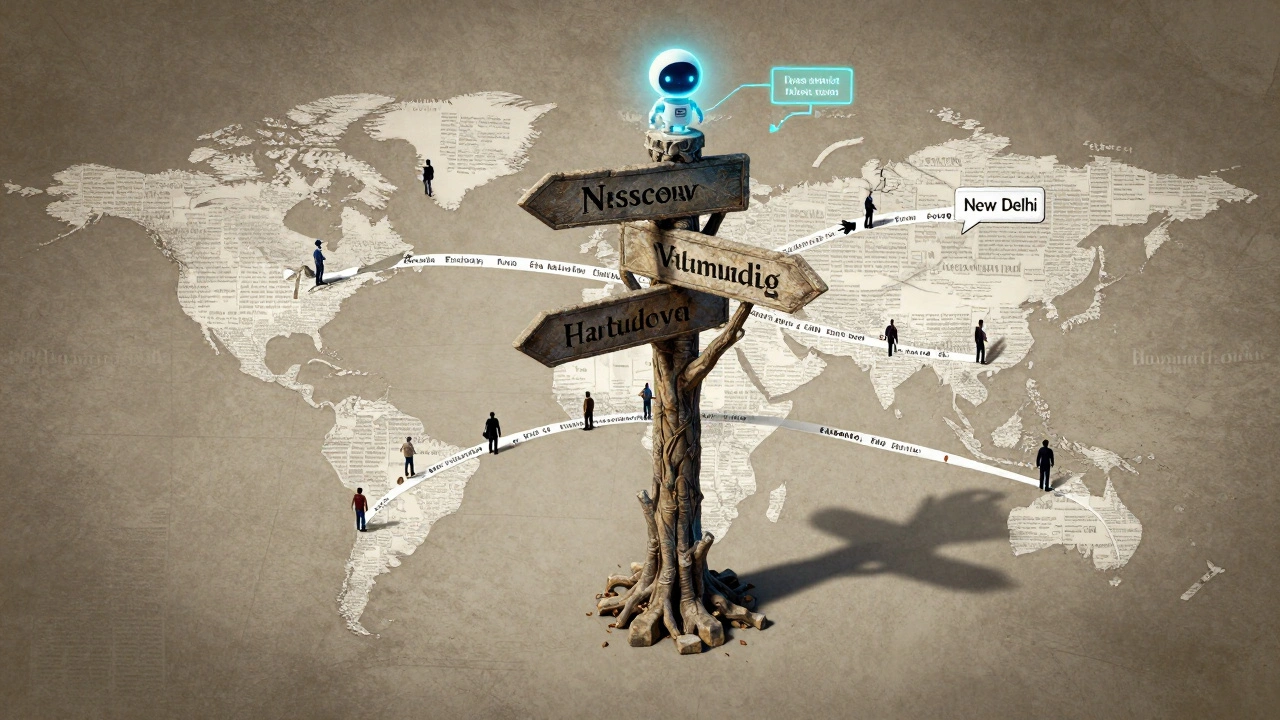
But it’s not easy. Language barriers create real gaps. The French edition has more readers than the Hindi edition, but the Hindi edition covers more people. Translation tools help, but they miss nuance. A term like "vandalism" in English doesn’t map cleanly to "破坏行为" in Chinese or "sabotaje" in Spanish when used in a cultural context.
There’s also a power imbalance. Most of the traffic goes to the English edition. Contributors in non-English languages often feel their stories get ignored. Some have started parallel projects-like the Bengali-language "Wikipedia Weekly"-to fill the gap.
And then there’s the question of sustainability. Most Signpost editors are volunteers with day jobs. One editor in Brazil told me they spend 10 hours a week on The Signpost, on top of 20 hours of regular editing. Many burn out. The German edition lost half its team in 2024. The English edition now relies on a rotating team of eight editors, all of whom have been active on Wikipedia for over a decade.
What’s Next for Community News on Wikipedia
The future of The Signpost isn’t about growing bigger. It’s about growing deeper. New tools are emerging: AI that helps flag inconsistencies across language editions, bots that auto-translate summaries (with human review), and community forums where editors from different languages can collaborate on joint stories.
One pilot project in 2025 paired editors from Nigeria and the Philippines to co-write a story about colonial history on Wikipedia. They used a shared editing space, translated drafts back and forth, and ended up with an article that was published in both English and Tagalog. It was the first time two non-European language editions collaborated on a Signpost feature.
Wikipedia’s strength has always been its global network of volunteers. The Signpost is just the public face of that network. It doesn’t just report on Wikipedia-it keeps it honest, transparent, and alive.
If you want to understand how knowledge is built in the digital age, don’t look at headlines. Look at the edit history. And if you really want to see how it works, read The Signpost.
Is The Signpost officially connected to the Wikimedia Foundation?
Yes, but only in a loose, non-operational way. The Wikimedia Foundation does not edit, fund, or manage The Signpost. It’s entirely run by volunteers. However, the Foundation does provide basic infrastructure-like the wiki platform and email hosting-and occasionally shares official announcements through The Signpost. The content, however, is always independent.
Can anyone write for The Signpost?
Yes, but with conditions. You need to be an active Wikipedia editor with at least 500 edits and a clean record. You also need to propose a story idea to the editorial team, which reviews submissions for relevance, neutrality, and sourcing. Most contributors start by writing short news briefs before moving into longer features.
Why doesn’t The Signpost have a mobile app?
Because it doesn’t need one. The Signpost is hosted on Wikipedia’s wiki platform, which works on any browser. Most readers access it through their regular Wikipedia login. The team believes a separate app would fragment the community and create a barrier for editors who aren’t tech-savvy. Instead, they focus on making the site mobile-friendly and integrating links into Wikipedia’s main interface.
How often is The Signpost published?
The English edition comes out weekly, every Thursday. Other language editions vary: German is biweekly, Spanish is monthly, and Japanese publishes irregularly depending on volunteer availability. Some editions, like the Russian one, have paused publication due to political pressure.
Does The Signpost have a fact-checking process?
Yes, and it’s stricter than most newsrooms. Every claim must be backed by a public edit history, a discussion page, or an official statement. Editors can’t use anonymous sources. If a story involves a conflict, both sides must be given space to respond. The editorial team reviews every article before publication, and readers can flag errors directly on the article’s talk page.