Key Takeaways for Editors
- Neutrality means representing the weight of evidence, not giving every side equal word count.
- Avoid "bothsidesism" when one perspective is overwhelmingly supported by reliable sources.
- Focus on the quality and consensus of sources rather than the number of opposing viewpoints.
- Use a "proportional representation" approach to maintain factual accuracy.
Understanding the False Equivalence Trap
To fix this problem, we first need to define it. False Equivalence is a logical fallacy where two opposing arguments are presented as being equal in weight, validity, or importance, despite one being significantly better supported than the other. In the world of editing, this often manifests as "bothsidesism." It happens when an editor feels that for every "pro" argument, there must be a "con" argument, regardless of whether that "con" is based on a peer-reviewed study or a random social media thread.
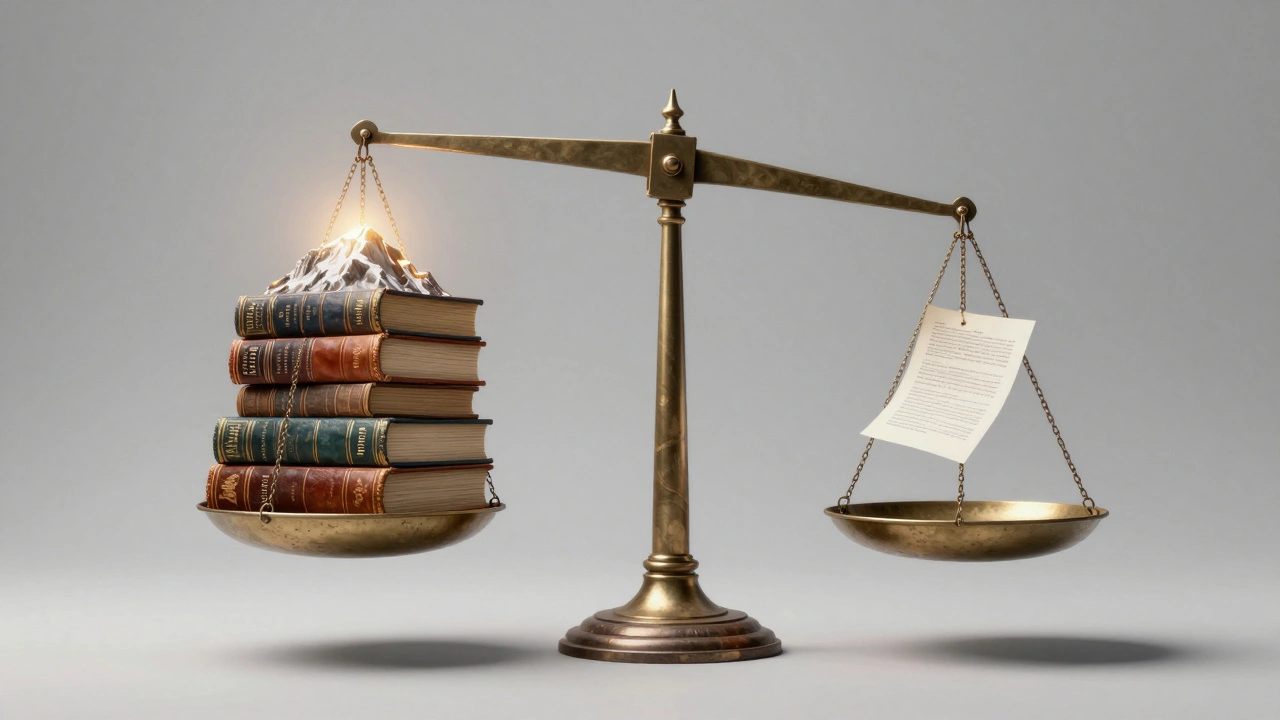
On Wikipedia, this is a direct violation of the core principle of Neutral Point of View (NPOV). Many new editors mistake NPOV for "giving everyone a microphone." But neutrality isn't about a 50/50 split of text; it's about accurately reflecting how the world views the topic. If 99% of doctors agree that a treatment works and 1% disagree, a neutral article should reflect that 99% consensus, not split the section right down the middle.
The Weight of Evidence Principle
The secret to avoiding this bias is mastering the concept of Weight of Evidence. This is the practice of assigning importance to a viewpoint based on the quality and quantity of supporting reliable sources. When you are drafting a section, don't ask "Is there another side?" Instead, ask "How much weight does this other side actually carry in the real world?"
For example, consider a page on Climate Change. You'll find a vast array of data from the Intergovernmental Panel on Climate Change (IPCC) and NASA. While there are individuals who deny these findings, giving their claims equal space would be a failure of editing. The "weight" of the scientific consensus is a mountain, while the opposing view is a pebble. A a helpful editor describes the pebble without pretending it's another mountain.
| Feature | False Equivalence (Bothsidesism) | True Neutrality (Weighted) |
|---|---|---|
| Goal | Equal space for all views | Accurate reflection of consensus |
| Source Handling | Treats all cited sources as equal | Prioritizes high-quality, peer-reviewed sources |
| Reader Outcome | Confused about the actual truth | Understands the prevailing expert view |
| Logic | Symmetry = Fairness | Proportionality = Fairness |

How to Spot Bias in Your Own Edits
It is easy to fall into this habit because it feels "safe." If you give both sides equal space, you feel you can't be accused of bias. But that's a paradox: by trying to avoid bias, you create a new kind of bias toward the minority view. To spot this, look for "balance markers" in your writing. Phrases like "On the other hand," "Critics argue," or "Conversely" are great, but only if the content following them is proportional to its actual importance.
Check your word counts. If you have 300 words explaining a widely accepted theory and 300 words explaining a fringe theory, you have a false equivalence problem. A better structure would be 300 words for the main theory and a 50-word mention of the fringe view, noting why it is not widely accepted. This maintains the weight of evidence without erasing the existence of a debate.
Dealing with "Balanced" Arguments in Edit Wars
When you're in a discussion on a talk page, you'll often meet users who insist on "balance." They might say, "We can't just ignore the other side!" The response should always be: "We aren't ignoring it; we are weighting it." Use the Wikipedia Manual of Style as your shield. Remind other editors that NPOV does not mean "equal time."
When dealing with controversial topics, focus on the Reliable Sources guidelines. If the opposing view is only supported by a few biased blogs or a single outlier study, it doesn't deserve a full section. Use a "marginalia" approach: mention the outlier view briefly and provide a source, but don't allow it to dictate the structure of the article. This prevents the page from becoming a debate forum and keeps it an encyclopedia.

Practical Steps for Weighting Content
- Audit the Sources: List every source used for the opposing view. Are they from academic journals, established news organizations, or self-published blogs?
- Map the Consensus: Determine if there is a broad agreement among experts. If yes, that agreement is your primary focus.
- Adjust the Volume: Shrink sections that provide "balance" for the sake of balance. If a viewpoint is a footnote in the real world, make it a footnote (or a short paragraph) in the article.
- Use Explicit Language: Instead of saying "Some believe X, while others believe Y," try "The consensus among experts is X, though a small minority argues Y." This clarifies the relationship between the two ideas.
Moving Beyond Binary Thinking
The biggest hurdle to avoiding false equivalence is the tendency to see topics as binary (Yes vs. No). Most complex subjects exist on a spectrum. Instead of choosing between two poles, describe the landscape. Mention the primary view, the secondary view, and the fringe views in descending order of their influence.
This approach transforms a Wikipedia page from a tennis match of arguments into a map of knowledge. When readers can see exactly where the consensus lies and where the fringes begin, they are empowered to think critically. You aren't telling them what to believe; you are showing them what the evidence suggests. That is the highest form of neutrality.
Does neutrality mean I have to give every viewpoint equal space?
No. Neutrality on Wikipedia is about representing the weight of evidence. If one view is supported by 95% of experts and another by 5%, giving them equal space (50/50) is actually a bias toward the minority view and is considered a false equivalence.
What is the difference between a balanced view and a false equivalence?
A balanced view accurately reflects the proportion of support for different ideas. False equivalence happens when you treat two ideas as equal regardless of the evidence. Balance is about accuracy; false equivalence is about symmetry.
How do I handle a topic where there is no clear consensus?
In cases where experts are genuinely split, you should present the major competing schools of thought. However, you should still distinguish between well-supported academic theories and unsupported anecdotal claims.
Can mentioning a fringe theory be considered bias?
Mentioning it isn't bias, but the way you mention it can be. If you present a fringe theory as a viable alternative to a proven fact, you are introducing bias through false equivalence. If you mention it as a known but rejected theory, you are being descriptive and neutral.
What should I do if another editor insists on "bothsidesism"?
Point them toward the Wikipedia NPOV guidelines and the concept of "Weight of Evidence." Explain that providing equal space to an unsupported view misleads the reader and violates the encyclopedia's mission to provide accurate information.
Next Steps and Troubleshooting
If you've realized a page you've worked on suffers from false equivalence, don't delete the opposing views entirely. That often triggers an edit war. Instead, try re-weighting. Move the fringe views to a "Criticism" or "Reception" section and expand the "Main Theory" section with more data from high-quality sources.
For those managing high-conflict pages, consider creating a source table in the talk page. List the sources for each side and categorize them by reliability (e.g., "Peer-Reviewed," "Journalistic," "Self-Published"). When the disparity in source quality becomes visible in a list, most editors are more willing to accept a weighted approach over a symmetrical one.