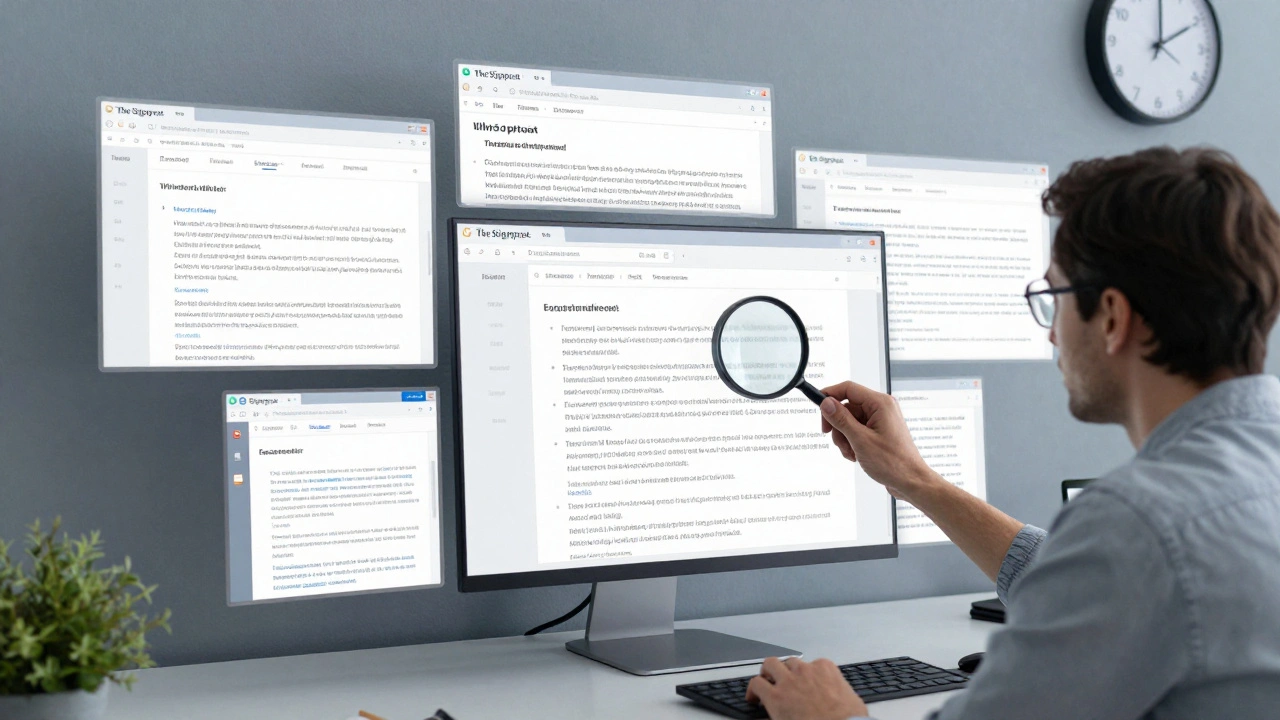
The Signpost isn’t just another Wikipedia newsletter. It’s the only independent, community-run newspaper covering the inner workings of Wikipedia itself. Founded in 2005, it reports on edit wars, policy changes, administrator elections, and controversies that shape how knowledge is built on the world’s largest encyclopedia. But it doesn’t just report-it follows strict rules. Every article you read in The Signpost has been shaped by a set of editorial guidelines that keep it credible, fair, and grounded in Wikipedia’s own values.
What Makes The Signpost Different from Regular News
Most news sites chase clicks. The Signpost doesn’t. Its job isn’t to break viral stories-it’s to document the quiet, messy, often overlooked labor behind Wikipedia’s reliability. You won’t find celebrity gossip or trending memes here. Instead, you’ll read about how a new policy on reliable sources changed how medical articles are written, or why a controversial administrator was blocked after a community vote.
That’s because The Signpost operates under a core principle: Wikipedia is its subject. Every story must relate directly to Wikipedia’s community, policies, or technical infrastructure. If it doesn’t affect how Wikipedia works, it doesn’t belong. That means even big events outside Wikipedia-like a major tech company changing its data policy-only get covered if they impact how editors source information or how content is moderated.
Core Editorial Guidelines
The Signpost’s editorial guidelines are simple but strict. They’re not written in legal jargon-they’re written by editors, for editors. Here’s what they actually mean in practice:
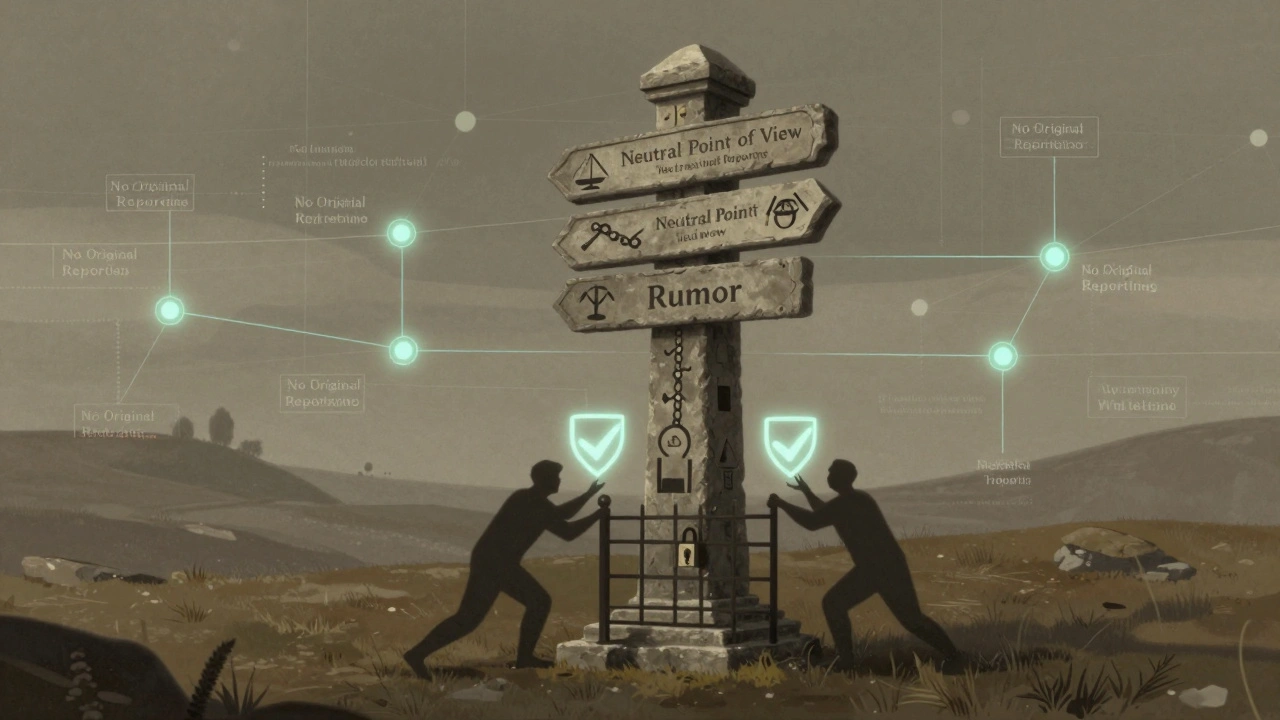
- Neutral point of view is non-negotiable. If an article says “the community is divided,” it must show evidence of both sides. No editorializing. No “obviously wrong” or “clearly right.”
- Attribution is mandatory. Every claim about a user, edit, or decision must be linked to a public record-a diff, a discussion page, an archive. Anonymous claims get deleted.
- No original reporting. The Signpost doesn’t investigate. It reports what’s already in the open. If a dispute happened on a talk page, you can write about it. If you heard a rumor in a Discord server, you can’t.
- Transparency over speed. A story gets published only after verification. If a claim is contested, the article waits. Sometimes for weeks. Accuracy matters more than being first.
- No personal attacks. Even if someone broke a rule, you don’t name them in a way that invites harassment. You describe their actions, not their character.
These aren’t suggestions. They’re enforced by a team of volunteer editors who review every draft. One wrong phrase, one unverified claim, and the article gets sent back-or killed.
How Stories Are Selected
Not every conflict on Wikipedia makes it into The Signpost. The editorial board looks for stories that meet three criteria:
- Impact. Did this affect hundreds of editors? Did it change how a policy is applied? Did it trigger a formal arbitration case?
- Pattern. Is this a one-off incident, or part of a larger trend? A single user getting blocked doesn’t qualify. But if five users were blocked for the same behavior in two weeks, that’s worth covering.
- Public record. Can you prove it happened using Wikipedia’s own tools? Talk pages, edit histories, and official notices are the only sources allowed.
For example, in 2023, The Signpost ran a multi-part series on the rise of AI-generated content in Wikipedia articles. It wasn’t about AI itself-it was about how editors were detecting and reverting those edits, how policies were being updated, and how the Wikimedia Foundation responded. Every claim was backed by diffs, discussion logs, and official policy updates.
What Gets Left Out
There’s a long list of things The Signpost doesn’t cover-and that’s by design.
- Individual user disputes that don’t affect policy or broader community norms.
- Speculation about future changes that haven’t been formally proposed.
- Opinion pieces disguised as news.
- Stories about Wikipedia’s traffic, revenue, or user demographics unless tied to editorial decisions.
- Anything that could be seen as promoting a product, service, or political agenda.
Even if something is true, if it doesn’t meet the guidelines, it won’t run. In 2024, a contributor submitted a detailed account of a heated debate over climate change articles. The story was factually accurate-but it named three editors and quoted private messages. It was rejected. Not because it was false, but because it violated anonymity and attribution rules.
The Role of the Editorial Board
The Signpost doesn’t have a paid editor-in-chief. It’s run by a rotating team of volunteer editors, each serving six-month terms. They’re selected by the community through public nominations and votes. Their job isn’t to decide what’s interesting-it’s to enforce the rules.
Each article goes through at least two rounds of review. One editor checks for factual accuracy. Another checks for tone and adherence to guidelines. If there’s disagreement, the draft is opened to the community for feedback on its talk page. That’s right-readers can comment on the article before it’s published.
This system isn’t perfect. Sometimes stories get delayed. Sometimes people feel unfairly excluded. But it’s designed to prevent bias, protect privacy, and keep the focus on Wikipedia-not personalities.

How to Contribute (Without Breaking the Rules)
If you’re a Wikipedia editor and you’ve noticed something important happening, you can submit a tip. But here’s how to do it right:
- Find the public record. Link to the exact edit, discussion, or policy page.
- Write a short summary: what happened, who was involved (using usernames only), and why it matters.
- Don’t add opinions. Don’t speculate. Don’t name people outside of their Wikipedia accounts.
- Submit it to The Signpost’s submission page. No emails. No DMs.
- Wait. Responses can take weeks. If it’s accepted, you’ll be contacted. If not, you’ll get feedback on why.
Most submissions get turned down. That’s normal. The Signpost publishes about 12 articles a month. Out of 100+ submissions, only a handful make the cut.
Why These Guidelines Matter
Wikipedia is only as trustworthy as the people who build it. The Signpost exists to make that process visible. Without its guidelines, it would just be another gossip column about Wikipedia editors. With them, it becomes a public record-a living archive of how a global community tries to build something truthful, even when it’s hard.
These rules aren’t about control. They’re about integrity. They ensure that when you read a story in The Signpost, you’re not getting a rumor. You’re getting a documented fact, verified, cited, and held to the same standard as a Wikipedia article itself.
That’s why millions of Wikipedia editors check The Signpost every week. Not for entertainment. Not for drama. For clarity.
Can anyone write for The Signpost?
Yes, but only if you follow the editorial guidelines. Anyone with a Wikipedia account can submit a tip or draft. However, all content goes through a review process. The final decision rests with the volunteer editorial board. Writing experience isn’t required-but accuracy, neutrality, and adherence to Wikipedia’s policies are.
Is The Signpost affiliated with the Wikimedia Foundation?
No. The Signpost is entirely community-run and independent. It receives no funding from the Wikimedia Foundation and doesn’t speak on its behalf. While it reports on the Foundation’s actions, it maintains editorial separation. This independence is critical to its credibility.
How often is The Signpost published?
The Signpost is published weekly, every Thursday. Each issue includes 4 to 8 articles, covering a mix of recent events, policy updates, and community analysis. Archives go back to 2005 and are fully searchable.
Can I trust The Signpost as a source for Wikipedia articles?
Generally, no. The Signpost is not considered a reliable source for Wikipedia content because it’s a secondary source-it reports on Wikipedia’s own processes. However, it’s often used by editors to understand context behind policy changes or disputes. You can cite it in talk pages to explain why a decision was made, but not in article mainspace.
What happens if someone violates The Signpost’s guidelines?
Violations are handled internally. First-time offenders usually get feedback and a chance to revise. Repeated violations, especially involving harassment or unverified claims, can result in a temporary or permanent ban from submitting content. In extreme cases, the editorial board may publicly explain the decision to maintain transparency.