
Have you ever read a long-form magazine piece that pulled you into a stranger’s life like a novel - then checked Wikipedia for the same topic and felt like you’d stepped into a sterile library? That’s not a coincidence. Feature journalism and Wikipedia backgrounders serve the same goal - to explain something - but they do it in completely different ways. One tells a story. The other delivers facts. And understanding the difference changes how you consume information.
What Feature Journalism Actually Does
Feature journalism isn’t about breaking news. It’s about digging deeper after the headlines fade. Think of a 6,000-word profile in The New Yorker about a nurse working in a rural clinic, or a Washington Post deep dive into how a single policy change reshaped a town’s water supply. These pieces don’t just report facts. They build worlds. They use narrative arcs, character development, sensory detail, and emotional stakes.
A feature journalist might spend weeks shadowing their subject. They record conversations, note the smell of rain on concrete outside a hospital window, or describe how a man’s hands tremble when he talks about losing his job. They don’t just say, "The clinic is understaffed." They show you the nurse working three shifts in a row, the IV bag running low, the patient who didn’t get his meds because the delivery truck broke down.
This is storytelling with purpose. It’s not entertainment for its own sake. It’s meant to make you feel something - outrage, empathy, curiosity - so you care enough to think differently. The goal isn’t neutrality. It’s impact. And that’s why readers remember these pieces for years.
What Wikipedia Backgrounders Are Designed For
Wikipedia backgrounders are the opposite. They’re not meant to move you. They’re meant to orient you. If you want to know when the Affordable Care Act was passed, who authored it, what its main provisions were, and how it’s been amended since - Wikipedia gives you that in minutes. No fluff. No personal voice. No drama.
Every sentence follows a strict formula: subject + verb + fact. No metaphors. No anecdotes. No opinions. The tone is flat, consistent, and deliberately impersonal. That’s not a flaw - it’s the point. Wikipedia’s entire architecture is built around neutrality, verifiability, and editability. Anyone can fix a typo. Anyone can add a source. And every claim must be backed by a published, reliable reference.
Compare that to feature journalism. A New York Times article on healthcare reform might cite a single interview with a policy analyst as its primary source. Wikipedia would demand at least three independent, published sources - and even then, it might still say "some experts argue" instead of "the analyst says."
Depth: Emotional vs. Structural
When people say feature journalism has "more depth," they usually mean emotional depth. You learn not just what happened, but why it matters to real people. A Wikipedia backgrounder on the opioid crisis might list overdose rates by state, funding allocated, and key legislation. A feature might follow a single family across five years - the father’s addiction, the daughter’s struggle to get into rehab, the mother’s job loss, the funeral no one could afford.
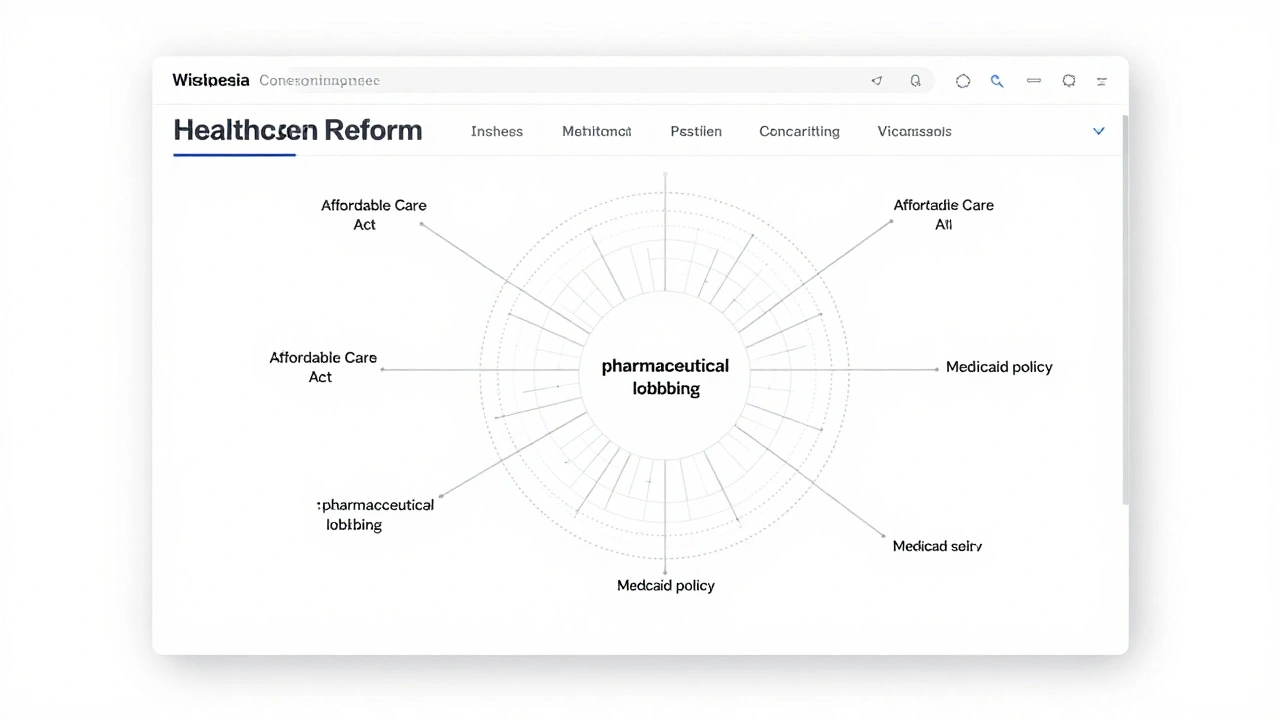
But Wikipedia wins on structural depth. It doesn’t just tell you what happened. It tells you how it connects. You can click from "opioid crisis" to "pharmaceutical lobbying" to "fentanyl synthesis" to "Medicaid policy," and suddenly you’re seeing a web of causes and effects. Feature journalism rarely does that. It zooms in. Wikipedia zooms out - and links everything.
Think of it this way: a feature is a photograph. A Wikipedia backgrounder is a map. One shows you the face. The other shows you the entire country it came from.
Style: Voice vs. Vacuum
Feature journalism thrives on voice. You hear the writer’s rhythm. You sense their tone - sarcastic, urgent, melancholic. You know who’s telling the story. That’s why readers trust it: because they feel a human connection.
Wikipedia has no voice. It’s a collective of thousands of editors, all trained to erase personality. If you try to write "This law was a disaster," you’ll get reverted. You must write: "Critics have described this law as a disaster." Attribution is mandatory. Emotion is filtered out. Even the word "we" is banned unless it’s part of a direct quote.
That’s why Wikipedia feels cold. But it’s also why it’s reliable. You can’t manipulate it with a good story. You can’t twist facts with clever phrasing. The system is designed to resist bias - not because its editors are saints, but because the rules are rigid.
Purpose: Influence vs. Infrastructure
Feature journalism wants to change minds. It wants you to donate, vote, protest, or rethink your assumptions. It’s advocacy wrapped in narrative. A piece on climate migration might make you cry - and then make you call your representative.
Wikipedia doesn’t want to change your mind. It wants to give you the tools to change it yourself. It doesn’t tell you what to think. It tells you what others have said, what evidence exists, and where to find it. It’s not a persuader. It’s a reference library.
This is why journalists use Wikipedia as a starting point - not an endpoint. They check it for names, dates, laws, and basic context. Then they go out and talk to people. They find the holes in the official record. They chase the story behind the facts.
When to Use Which
You don’t need to choose one over the other. You need to know when to use each.
- Use feature journalism when you want to understand human impact, feel urgency, or see how systems affect real lives.
- Use Wikipedia backgrounders when you need quick context, verify facts, or map out how topics connect.
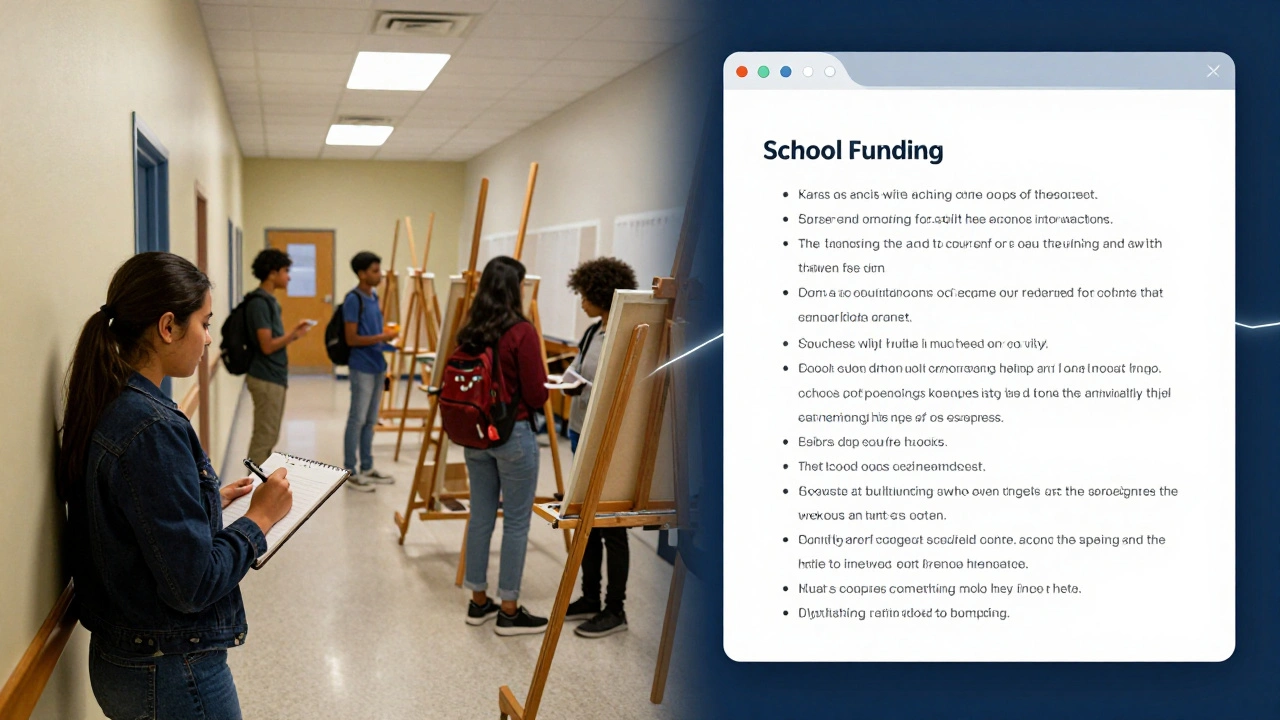
Let’s say you’re researching school funding. Start with Wikipedia: check the history of federal funding laws, key court cases, and state-by-state spending data. Then read a feature piece from The Atlantic about a high school in rural Kansas that lost its art program. The Wikipedia entry gives you the structure. The feature gives you the soul.
One tells you how much money was cut. The other tells you how many kids cried when they saw the easels being packed away.
The Hidden Overlap
Some journalists now write hybrid pieces - long-form narratives that cite Wikipedia-style sources and structure. And some Wikipedia editors are starting to include short narrative hooks in lead sections, especially for complex topics like "algorithmic bias" or "digital redlining." But these are exceptions. The core DNA of each format remains unchanged.
Feature journalism is still about the human experience. Wikipedia is still about the collective truth. One is art. The other is infrastructure. And both are necessary.
If you only read features, you’ll miss the big picture. If you only read Wikipedia, you’ll never feel why any of it matters.
Can Wikipedia replace feature journalism?
No. Wikipedia provides facts, context, and connections - but not emotional truth. Feature journalism captures the human cost, the unspoken tensions, and the lived experience behind data. You can’t feel empathy from a citation. You need a story for that.
Is Wikipedia biased?
Wikipedia isn’t designed to be unbiased - it’s designed to be verifiable. Its rules require claims to be backed by reliable sources. That means if most sources describe an event as controversial, Wikipedia will say so. If one side dominates the coverage, the article will reflect that. It doesn’t hide bias - it surfaces it through citations. That’s why it’s more accurate than many news outlets that claim "neutrality" while silently favoring one narrative.
Why do journalists still use Wikipedia if it’s not "journalistic"?
Because it’s the fastest way to get up to speed. Journalists use Wikipedia the way a mechanic uses a parts catalog. It doesn’t fix the car - but it tells you what parts you need, what they’re called, and where to find them. It saves hours of background research. The real reporting happens after that.
Do feature journalists ever cite Wikipedia?
Rarely, and never as a primary source. A feature writer might use Wikipedia to confirm a date, name, or law - then immediately go to the original source: a government report, academic paper, or interview. Wikipedia is a stepping stone, not a destination. Citing it directly would be like citing a Wikipedia summary of Shakespeare instead of reading "Hamlet."
Can Wikipedia be as compelling as a feature story?
Not in its current form. Its structure is antithetical to storytelling. But the information it holds - if curated into narrative form by skilled writers - can become the foundation for one. The best feature journalism often starts with a Wikipedia backgrounder. The two formats aren’t rivals. They’re partners.