Wikipedia is the go-to source for quick answers. Over two billion people visit it every month. But behind its clean interface and seemingly endless articles lies a messy, heated, and sometimes broken system. People accuse it of bias. Others say it censors important truths. Are these claims just noise-or is there real damage being done to the world’s largest encyclopedia?
How Wikipedia Claims to Stay Neutral
Wikipedia’s core rule is the neutral point of view (NPOV). Editors are supposed to present facts without favoring one side. That sounds simple. In practice, it’s a constant battle. The policy isn’t about avoiding opinion-it’s about representing all significant viewpoints fairly, based on reliable sources. If a topic has strong disagreement, like climate change or gender identity, Wikipedia tries to show what experts say, not what activists or politicians claim.
But here’s the catch: Wikipedia doesn’t create original content. It only reports what’s already published. That means if mainstream media, academic journals, or government reports all say the same thing, Wikipedia reflects that. But what if those sources are biased themselves? Then Wikipedia inherits the bias. It’s not that editors are pushing an agenda-they’re just following what’s documented.
Where Bias Actually Shows Up
Bias isn’t usually about one editor changing a word. It’s systemic. A 2023 study by researchers at the University of Wisconsin found that articles on U.S. political figures had significantly more coverage when the person was from a major coastal city. Articles about politicians from rural states were shorter, less detailed, and more likely to lack citations. Why? Because most active Wikipedia editors live in urban areas-especially in the U.S., Europe, and Australia. Their lived experience shapes what they think matters.
Another pattern: topics tied to Western culture get far more attention. There are over 10,000 articles on American football. There are fewer than 500 on traditional African board games. That’s not because one is more important-it’s because more people with editing access care about the former. This creates a global blind spot. A 2024 analysis by the Wikimedia Foundation showed that 80% of all Wikipedia content comes from just 10 countries. The rest of the world, with over 90% of the global population, contributes less than 10%.
Censorship? It’s Not What You Think
When people say Wikipedia censors content, they usually mean one of two things:
- Something controversial got removed
- Something they believe is true didn’t get added
But Wikipedia doesn’t delete facts because they’re uncomfortable. It deletes them because they’re not backed by reliable sources. Take the case of a 2022 edit war over a claim that a certain vaccine caused long-term neurological damage. Hundreds of edits flew back and forth. Eventually, administrators locked the page. Why? Because no peer-reviewed study supported the claim. Not one. Even though thousands of people believed it, Wikipedia couldn’t include it without violating its own rules.
That’s not censorship. That’s editorial discipline. If Wikipedia let every viral rumor become a fact, it would collapse into a mess of misinformation. The real problem? Sometimes, the opposite happens. Sensitive topics-like war crimes, corruption, or historical atrocities-are left out because no credible source has written about them yet. That’s not censorship either. It’s silence from lack of documentation.
Who Gets to Edit? The Power of the Small Group
Over 30 million people have edited Wikipedia at least once. But 1% of those editors do 90% of the work. And within that 1%, a few hundred people hold most of the power. These are the administrators, the dispute mediators, the page protectors. They decide what stays, what gets deleted, and what gets locked.
Here’s how it breaks down: Most of these top editors are men, aged 25-45, from North America or Western Europe. Many are white, college-educated, and tech-savvy. They’re not elected. They’re chosen by other editors. And they often have strong opinions about what counts as “reliable.” A 2025 survey of 2,000 active editors found that 68% considered academic journals more trustworthy than government reports-even when the government data came from independent agencies.
This creates a feedback loop. If you’re not part of that group, your edits get reverted. Your sources get dismissed. Your perspective gets labeled “original research.” Over time, you stop trying. The result? A system that looks neutral but is shaped by a narrow slice of humanity.
The Real Problem: The Missing Voices
The biggest issue with Wikipedia isn’t bias or censorship. It’s invisibility. Millions of topics have no articles at all. Think of Indigenous languages, local folk medicine, or women’s history in non-Western societies. These aren’t censored. They’re just not written about. Why? Because no one with the skills, time, or access to edit them has bothered.
Wikipedia doesn’t ban these topics. It just ignores them. And that’s worse. It’s not a lie-it’s an erasure. A 2026 audit by the Wikimedia Foundation found that 43% of all Wikipedia articles about people are about men. Only 18% are about women. For non-Western women? The number drops to 3%. That’s not bias. That’s absence.
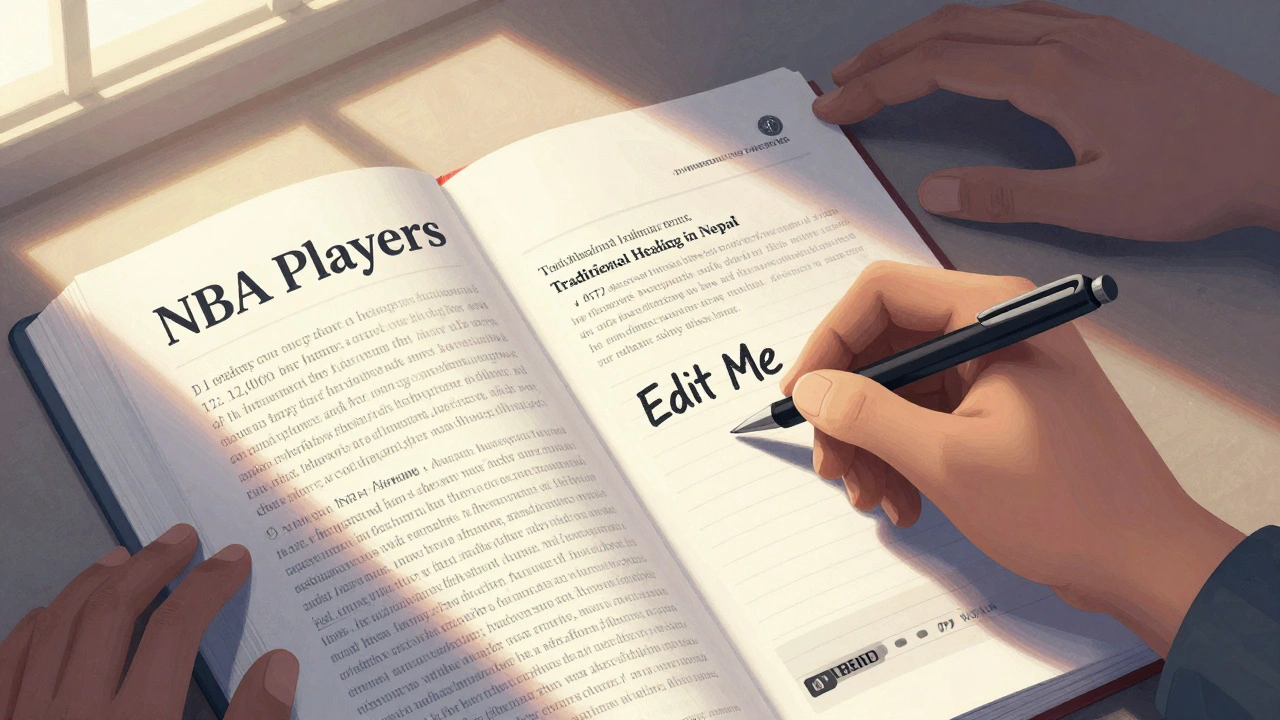
Even when articles exist, they’re often shallow. The article on “Traditional Healing in Nepal” has 472 words. The article on “NBA Players” has over 12,000. That’s not because one is less important. It’s because someone with a laptop in New York City didn’t care enough to write it.
What Can Be Done?
Wikipedia won’t fix itself. It can’t. It’s not a company. It’s a crowd. But change is possible-if people step up.
- Learn to edit. Start with small fixes: add a citation, fix a typo, translate a sentence.
- Support projects like WikiProject Women in Red, which adds articles about women missing from Wikipedia.
- Use Wikipedia as a starting point, not the final word. Check its sources. Follow the references.
- Don’t assume neutrality means truth. Ask: Who wrote this? What sources did they use? What’s missing?
The truth is, Wikipedia is the best free encyclopedia we’ve ever had. But it’s also a mirror. It reflects who we are, who we pay attention to, and who we ignore. If you want it to be fairer, you have to help build it. Otherwise, it will keep reflecting the same narrow world it always has.
Is Wikipedia biased because it’s run by volunteers?
Yes, but not in the way most people think. Wikipedia isn’t biased because volunteers have political agendas. It’s biased because most volunteers come from similar backgrounds-urban, educated, mostly Western. That means topics they care about get covered in depth, while others are ignored. The bias isn’t intentional-it’s structural.
Does Wikipedia censor controversial topics like climate change denial or conspiracy theories?
Wikipedia doesn’t censor ideas-it censors unsupported claims. Climate change denial isn’t banned. But if someone tries to add a claim like “climate change is a hoax,” it gets removed because no peer-reviewed science supports it. Wikipedia allows discussion of controversial views only if they’re backed by credible sources. So, you can read about the arguments made by climate skeptics, but only if those arguments appear in reliable publications.
Why are some countries’ histories underrepresented on Wikipedia?
Because most editors live in a handful of wealthy countries. Over 70% of Wikipedia’s top editors are from the U.S., Germany, Japan, the U.K., and Canada. If no one from Nigeria or Peru is editing, those countries’ histories won’t get written. It’s not a policy-it’s a lack of participation. Projects like WikiProject Africa are trying to fix this, but progress is slow.
Can I trust Wikipedia for academic research?
Use it as a starting point, not a source. Wikipedia’s citations are often excellent. But Wikipedia itself isn’t peer-reviewed. Academic institutions discourage citing it directly because it can change at any time. Instead, find the original sources listed at the bottom of a Wikipedia article and use those. That’s how professionals use it.
Why do some articles get locked or protected?
Articles get locked when they’re caught in edit wars-when people keep changing them back and forth, often over controversial topics. Locking stops vandalism and spam, but it also stops good-faith edits. This can silence minority viewpoints if the majority of editors agree on one version. Protection is meant to preserve stability, but it can also freeze bias in place.