Wikipedia’s featured articles are the gold standard. They’re well-researched, thoroughly cited, and written in clear, neutral language. But here’s the problem: if you speak Spanish, Hindi, or Swahili, you might never see them. That’s where Crosswiki is changing the game.
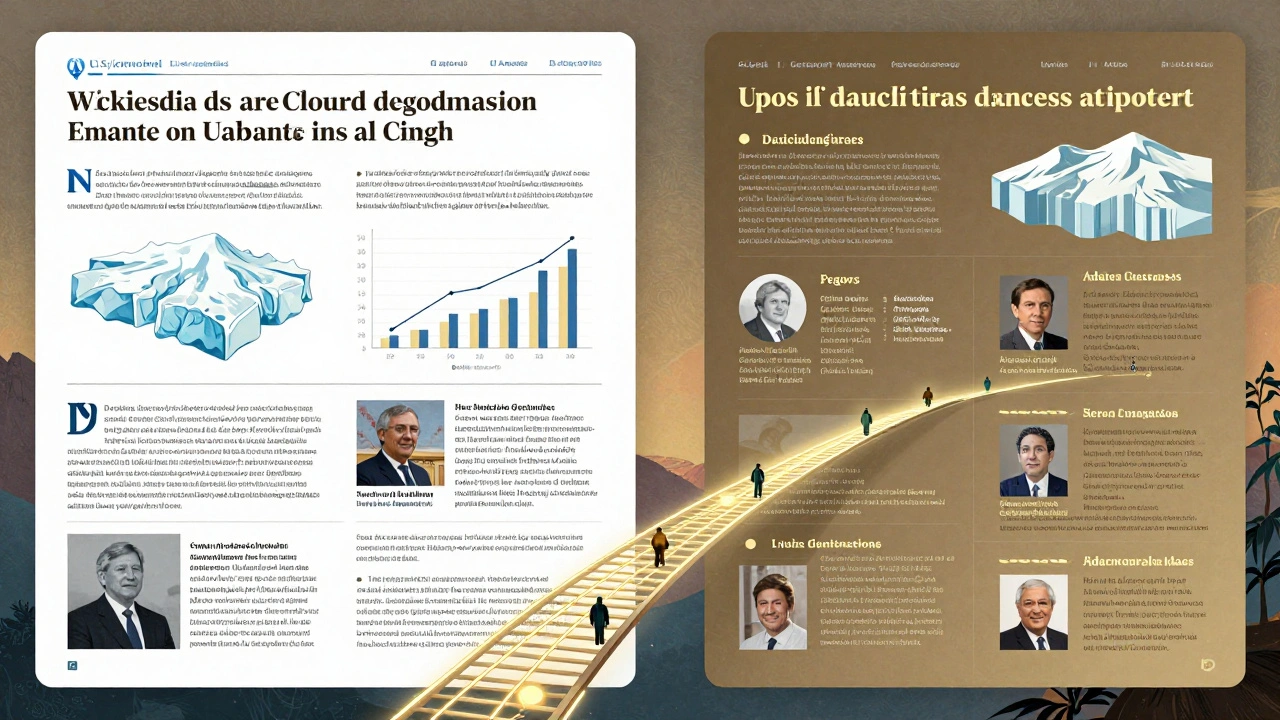
Crosswiki isn’t a new website. It’s not even a tool you download. It’s a quiet, community-driven effort that connects editors across language versions of Wikipedia. Its goal? Take the best articles - the ones already vetted as featured on English Wikipedia - and bring them to other languages. Not just translated. Not just copied. Adapted.
Why Most Translations Fail
Translation alone doesn’t work. A direct word-for-word copy of an English featured article often ends up looking odd, outdated, or even wrong in another language. Why? Because context changes. A 2020 study by the Wikimedia Foundation found that 68% of machine-translated featured articles contained factual errors or cultural mismatches. For example, an article about U.S. healthcare policy translated literally into Brazilian Portuguese didn’t mention Brazil’s public health system - leaving readers confused.
Even human translations often skip updates. If the original article gets revised to include new data, the translated version rarely keeps up. That’s why Crosswiki doesn’t just move text. It moves collaboration.
How Crosswiki Works
Here’s how it actually works:
- A featured article on English Wikipedia gets flagged for translation by a volunteer editor.
- Crosswiki’s system automatically notifies editors in 15+ high-demand languages - Spanish, French, Arabic, Japanese, Russian, Indonesian, and more.
- Instead of translating the whole thing at once, editors work in small chunks: one section at a time.
- Each section gets reviewed by native speakers who also know the subject. They don’t just translate - they adapt. Local examples replace U.S.-centric ones. References shift to local sources. Cultural context is added.
- Once approved, the section is published. The original article is linked so readers can check updates.
It’s not about speed. It’s about quality. A Spanish-language version of the article on Climate Change and Arctic Permafrost took six months. But it included data from the Peruvian Andes and quotes from Indigenous scientists - things the English version never mentioned.
Who’s Doing the Work
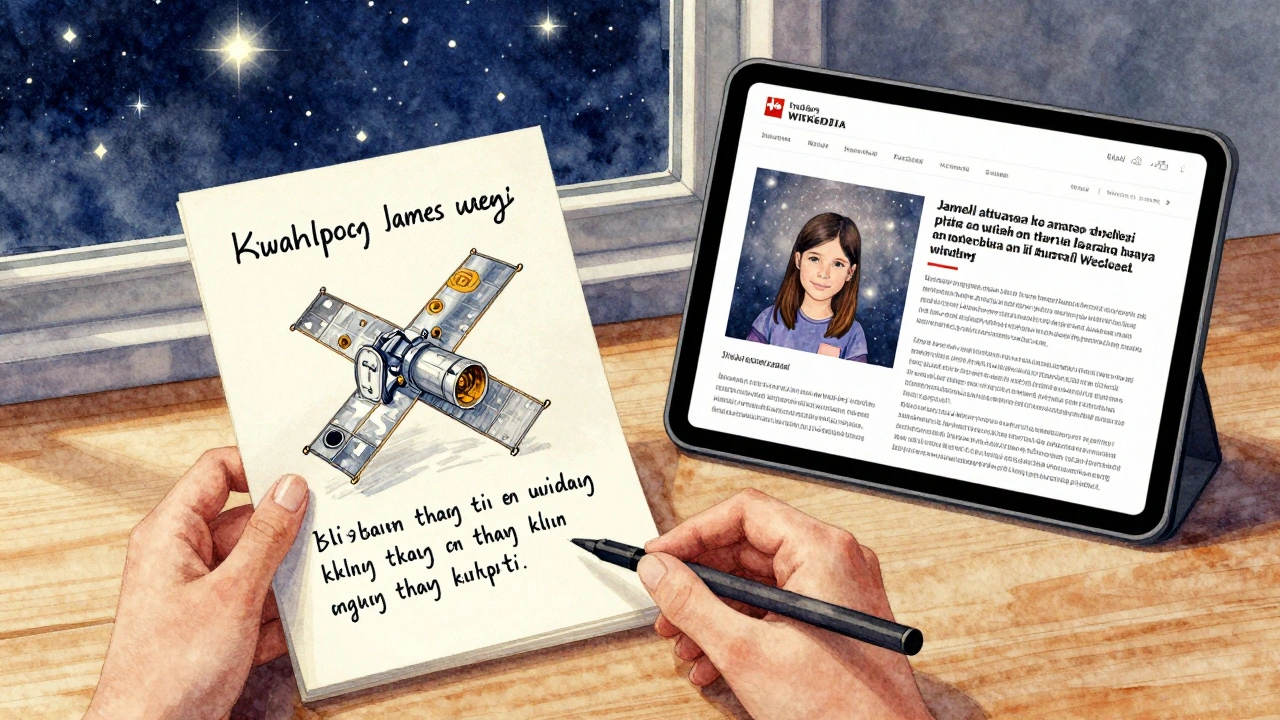
Crosswiki doesn’t pay anyone. It’s all volunteers. And they’re not always the usual suspects. You’ll find high school students in Lagos, retired professors in Buenos Aires, and coders in Manila all working together. One Indonesian editor, Sari, started translating astronomy articles after her niece asked why she couldn’t read about the James Webb Telescope in Bahasa Indonesia.
There are now over 12,000 active Crosswiki contributors across 87 languages. The most active communities? Spanish, Arabic, Japanese, and Portuguese. But growth is fastest in languages with fewer Wikipedia editors - like Swahili, where featured article count jumped from 12 to 89 in just 18 months.
Real Impact, Real Numbers
Let’s look at some numbers:
| Language | Featured Articles in 2023 | Featured Articles in 2026 | Improvement |
|---|---|---|---|
| Spanish | 1,247 | 2,013 | +61% |
| Arabic | 389 | 976 | +151% |
| Japanese | 1,502 | 2,189 | +46% |
| Swahili | 12 | 89 | +642% |
| Hindi | 415 | 788 | +89% |
That’s not just more articles. It’s more trust. In regions where Wikipedia is a primary source of information - like rural India or parts of sub-Saharan Africa - having a featured article in your language means people are more likely to believe what they read.
The Hidden Challenge: Not All Topics Translate
Crosswiki isn’t perfect. Some topics are harder than others. Articles about local U.S. politics? Hard to adapt for a French audience. A detailed history of Canadian federalism? Nearly impossible without deep cultural context.
That’s why Crosswiki has a rule: only translate if there’s a local expert willing to adapt it. If no one in the target language community has the knowledge to rewrite it properly, the article stays in English - for now. This isn’t exclusion. It’s honesty. A poorly adapted article does more harm than none at all.
Take the article on Native American Voting Rights. It was translated into Quechua - but only after a Quechua-speaking historian from Peru spent three months rewriting it to include Indigenous land rights struggles in the Andes. The result? A completely new article that happened to start from an English draft.
What This Means for the Future
Crosswiki is proving something important: knowledge isn’t owned by one language. The best ideas can - and should - cross borders. But they need more than translation. They need recreation.
Wikipedia’s mission has always been to collect and share the sum of human knowledge. But if that knowledge only lives in English, it’s not a sum. It’s a slice.
With Crosswiki, the sum is growing. More languages. More voices. More accurate, culturally grounded information. And it’s all happening because ordinary people - not corporations, not governments - decided to help each other understand the world better.
What’s Next for Crosswiki
The next phase? Integrating with AI tools - but carefully. A pilot project in 2025 used AI to suggest local sources for translated articles. Human editors then reviewed and approved each one. The success rate? 92% of suggestions were accurate. That’s not about replacing people. It’s about giving them superpowers.
There’s also talk of creating “featured article hubs” - centralized pages that show which articles are ready for translation and who’s working on them. Think of it like a GitHub for global knowledge.
And it’s not stopping at Wikipedia. Smaller wikis - for cooking, local history, even folk medicine - are starting to use the same model. A community of Thai herbalists just used Crosswiki to bring a featured English article on medicinal plants into Thai, then added 14 new local remedies.
This isn’t just about Wikipedia anymore. It’s about how knowledge moves in a connected world.
What is Crosswiki?
Crosswiki is a community-driven initiative that helps translate and adapt Wikipedia’s featured articles into other languages. Unlike simple translation, it involves native speakers who rewrite content to fit local context, culture, and sources - ensuring accuracy and relevance.
How is Crosswiki different from regular Wikipedia translation?
Regular translation often copies text word-for-word, which can lead to cultural misunderstandings or outdated information. Crosswiki requires editors to adapt the article - replacing U.S.-centric examples with local ones, updating references to regional sources, and ensuring the tone fits the audience. It’s not translation. It’s cultural adaptation.
Which languages benefit most from Crosswiki?
Spanish, Arabic, Japanese, and Portuguese have the highest volume of translated featured articles. But the biggest growth is in languages with fewer editors, like Swahili, Hindi, and Quechua - where the number of featured articles has tripled or quadrupled since 2023.
Do volunteers get paid to work on Crosswiki?
No. Crosswiki is entirely volunteer-run. Contributors include students, retirees, professionals, and hobbyists who believe in equitable access to knowledge. The only reward is seeing their language’s Wikipedia grow with high-quality, reliable content.
Can anyone start a Crosswiki project for their language?
Yes. Any Wikipedia editor can propose a language for Crosswiki support by creating a project page and recruiting at least five active editors in that language. The Wikimedia Foundation provides technical tools and moderation support, but the work is led entirely by the community.
Crosswiki shows us that knowledge doesn’t need borders - but it does need care. It’s not enough to just move words from one language to another. You have to move understanding. And that takes time. It takes trust. It takes people - real people - willing to listen, learn, and rewrite the world together.