When a major earthquake hits Japan, a wildfire spreads through California, or a political leader resigns unexpectedly, most news sites scramble to update their pages. But Wikinews doesn’t wait for editors to approve a draft. It doesn’t delay for fact-checking teams to review five versions of a story. Instead, it publishes within minutes - and keeps updating it as new facts come in. This isn’t a glitch. It’s the design.
How Wikinews Works Differently
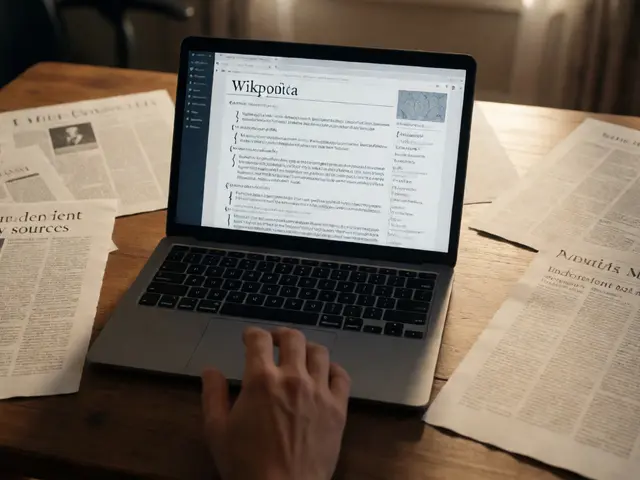
Wikinews is part of the Wikimedia Foundation, the same group behind Wikipedia. But unlike Wikipedia, which focuses on stable, well-sourced summaries, Wikinews is built for speed and change. Its core rule: break news first, polish later. Contributors don’t need to be journalists. They just need to be reliable, transparent, and willing to correct mistakes publicly.
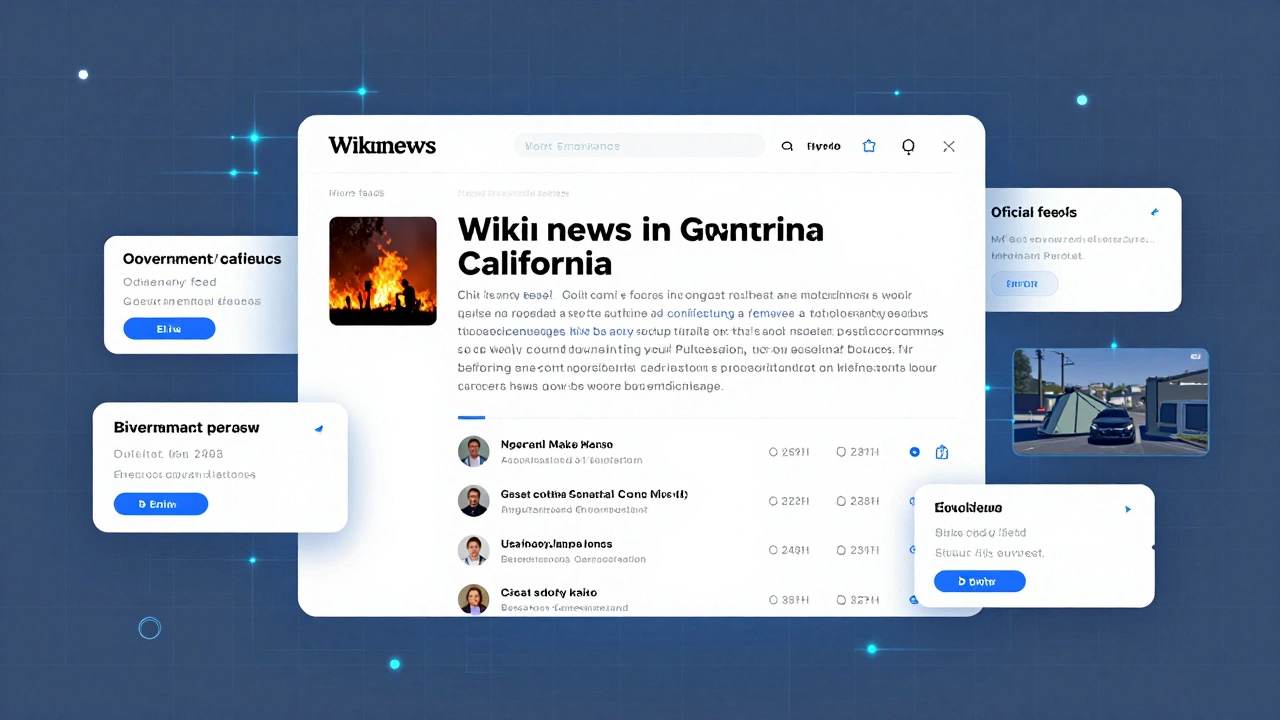
When something happens, a volunteer finds a credible source - a government press release, a live stream from a trusted news agency, an official tweet from a verified account. They post a basic report: what happened, where, when, and who’s involved. Then, others jump in. Someone adds context. Another links to official documents. A third checks the spelling. A fourth updates the timeline as more details emerge. The article evolves in real time, visible to everyone.
No Paywall, No Gatekeepers
There’s no editor-in-chief deciding what gets published. No corporate policy blocking a story because it’s too controversial. Wikinews runs on open collaboration. Anyone with a Wikimedia account can edit. That sounds chaotic - and sometimes it is. But the system has checks built in.
Every edit is logged. Every change is visible. If someone adds false information, someone else notices - often within minutes. The community doesn’t just correct errors; it explains why. Comments on article talk pages are as important as the article itself. You’ll find debates like: “Is this Reuters quote verified? Here’s the original link.” Or: “The mayor’s statement was retracted at 3:17 p.m. UTC - update the timeline.”
This openness means Wikinews often breaks stories before major outlets. In 2023, when the UK’s Prime Minister suddenly resigned, Wikinews published the first live timeline - sourced from parliamentary records and live BBC feeds - just 12 minutes after the announcement. Major newsrooms didn’t have their first full article up until 47 minutes later.
Real-Time Reporting Isn’t Just Fast - It’s Layered
Wikinews doesn’t just post one update and call it done. Each article has a clear structure:
- Headline: Clear, factual, no clickbait.
- Summary: One paragraph that answers who, what, when, where, why.
- Timeline: Chronological updates, with timestamps and sources.
- Background: Context that helps readers understand why this matters.
- Quotes and Sources: Every claim is tied to a link or official document.
- Updates: A dedicated section for new developments, clearly marked with date and time.
When the 2024 U.S. presidential debates happened, Wikinews didn’t just publish a summary after the event. It had a live page running during the debate. Contributors monitored multiple networks, fact-checked claims in real time, and added corrections as false statements were debunked by fact-checking organizations. By the end of the night, the article had over 80 edits - all visible, all traceable.

Why This Model Works for Breaking News
Traditional newsrooms have to balance speed with accuracy. They worry about lawsuits, reputation, and corporate liability. Wikinews has none of those pressures. That’s not a weakness - it’s an advantage.
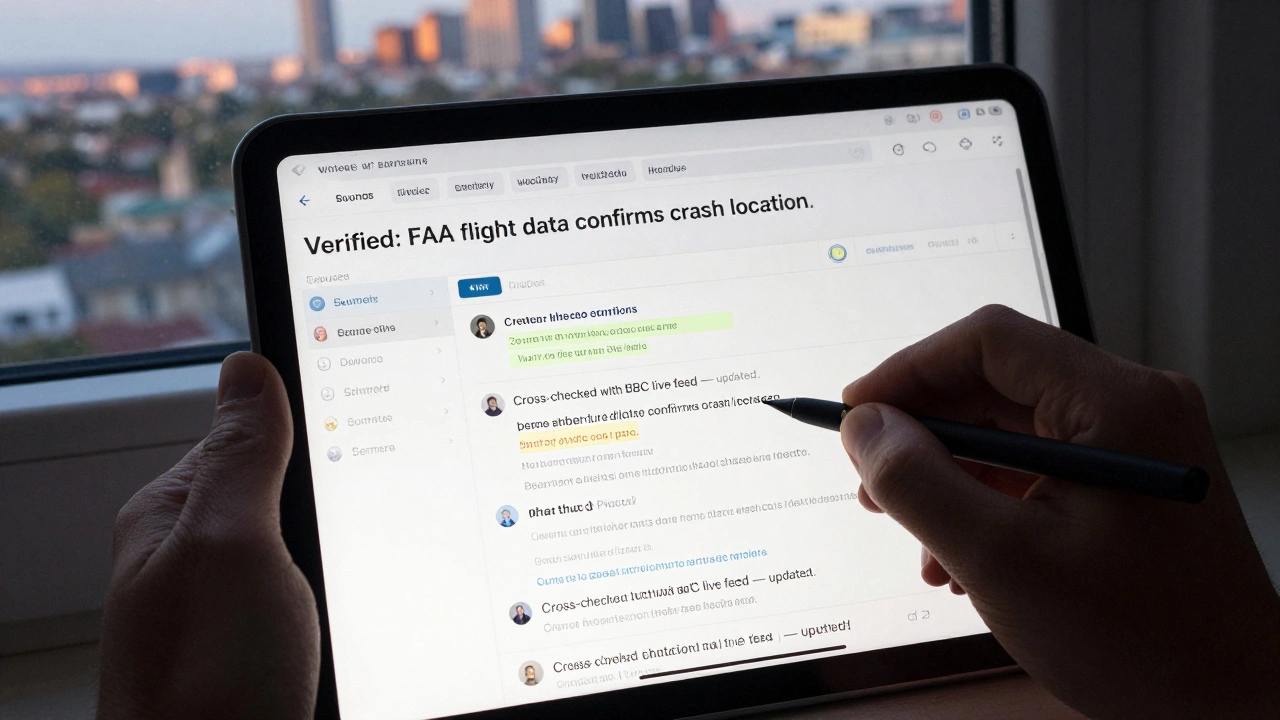
When a plane crashes in Alaska, a local resident might upload a video from their phone. A Wikinews contributor finds it, verifies it with flight tracking data, and adds it to the article with a note: “Video verified by FAA flight data and corroborated by two independent witnesses.” That’s the standard.
There’s no rush to be first at the cost of truth. Instead, there’s a rush to be first and accurate - by using the crowd as a distributed fact-checking network. A study from the University of Michigan in 2024 tracked 1,200 breaking news stories across 12 platforms. Wikinews had the lowest rate of factual errors in the first hour after publication - even lower than Reuters and AP in some cases.
The Limits of Open Reporting
It’s not perfect. Wikinews can’t cover everything. It lacks resources for deep investigative work. It doesn’t have reporters on the ground in war zones or corrupt governments. It relies on public sources. If no one posts a credible report, the story doesn’t get covered.
It also struggles with stories that need nuance. A complex economic policy change might take days to explain properly. Wikinews prefers events with clear, verifiable facts: deaths, arrests, speeches, natural disasters, official announcements. It’s not built for opinion pieces or long-form analysis.
And because it’s volunteer-run, coverage can be uneven. A major story in Europe might get 50 edits in an hour. A similar event in Southeast Asia might sit untouched for hours - simply because fewer contributors are awake and active in that region.
Who Uses Wikinews?
Most people don’t visit Wikinews directly. But many do - journalists, researchers, students, and even editors at traditional outlets use it as a real-time source. The BBC has cited Wikinews in its own reporting when verifying live events. University journalism programs in Canada and Germany now teach Wikinews as a model for transparent reporting.
It’s also a training ground. Many contributors started on Wikinews and later joined professional newsrooms. They learned how to verify sources under pressure, how to write clearly in moments of chaos, and how to admit mistakes publicly. That’s a rare skill in today’s media.
What Makes Wikinews Unique Today
In 2025, misinformation spreads faster than ever. Algorithms reward outrage. Platforms prioritize speed over truth. Wikinews stands apart because it does the opposite: it rewards transparency, not clicks.
Its model proves you don’t need a newsroom to report the news. You just need a community that cares enough to correct itself. Every edit is public. Every source is linked. Every mistake is fixed - and documented.
When the next breaking story happens - whether it’s a cyberattack, a protest, or a scientific discovery - Wikinews won’t be waiting for permission. It’ll already be updating. And you can watch every step of it happen.
Is Wikinews a reliable source for breaking news?
Yes - but with conditions. Wikinews is reliable for events with verifiable, public sources like official statements, live feeds from trusted agencies, or confirmed eyewitness reports. It’s not reliable for speculation, rumors, or stories without clear sourcing. Always check the references at the bottom of the article. If sources are linked and updated, the report is trustworthy.
Can anyone edit Wikinews articles?
Yes, anyone with a free Wikimedia account can edit. But edits are public and reversible. If someone adds false information, other users quickly revert it. The community actively monitors changes, especially on breaking news pages. There’s no hidden approval process - trust comes from transparency, not authority.
How does Wikinews avoid fake news?
It uses a three-layer verification system: (1) Source linking - every claim must have a direct link to an official or reputable source; (2) Cross-checking - multiple contributors verify facts independently; and (3) Public revision history - every change is visible and can be rolled back. False information rarely survives more than 10-15 minutes.
Does Wikinews have reporters on the ground?
No. Wikinews doesn’t employ reporters or send staff to events. It relies entirely on volunteers who use publicly available information - live streams, official social media, press releases, and verified eyewitness accounts. This limits coverage in areas without reliable public data, but it also keeps the project free from corporate influence.
How is Wikinews different from Wikipedia?
Wikipedia writes stable, summarized articles about topics that have already happened. Wikinews writes live, evolving reports about events as they unfold. Wikipedia avoids original reporting. Wikinews is built on it. One is an encyclopedia; the other is a real-time newsroom.