When you type a question into Wikipedia, you expect an answer-not a legal battle. But behind the scenes, the Wikimedia Foundation has been fighting governments in at least seven countries over the past five years. These aren’t about copyright or vandalism. They’re about whether a government can force Wikipedia to delete, block, or alter information that its editors believe is accurate and publicly important.
What Happens When a Government Demands a Wikipedia Edit?
In 2023, Turkey ordered Wikipedia to remove articles about political protests and government corruption. When the Wikimedia Foundation refused, the country blocked access to the entire site for over two years. Millions of Turkish citizens lost access to a free, ad-free source of knowledge. The Foundation didn’t just sit back. It filed legal challenges in Turkish courts, supported local editors in uploading mirrored content through proxy networks, and launched public campaigns under #KeepWikipediaOpen. Eventually, the block was lifted-but only after international pressure and a ruling from the European Court of Human Rights that called the ban a violation of free expression.
It’s not just Turkey. In 2024, India’s Ministry of Electronics and Information Technology demanded Wikipedia remove pages about religious tensions in a northern state, claiming they were "misleading." The Foundation reviewed the content with its volunteer editors. They found no factual errors, only uncomfortable truths. They refused to edit. India responded by threatening to fine every Wikipedia editor in the country. The Foundation responded with a public letter signed by over 300 academics and journalists, and filed an appeal under India’s Right to Information Act.
These aren’t isolated cases. They’re part of a global pattern. Governments that fear scrutiny use censorship as a tool. And Wikipedia, because it’s decentralized and community-run, is uniquely hard to control.
The Legal Strategy Behind the Battles
The Wikimedia Foundation doesn’t sue governments for fun. It has a clear legal framework. First, it relies on the Wikimedia Foundation is a nonprofit organization that operates Wikipedia and other free knowledge projects, funded by donations and governed by a global community of volunteers. Second, it invokes international human rights standards. The Universal Declaration of Human Rights, the International Covenant on Civil and Political Rights, and the European Convention on Human Rights all protect freedom of expression-including the right to access information.
When a government issues a takedown order, the Foundation doesn’t comply unless:
- The request is legally valid under international law
- The content is demonstrably false (not just unpopular)
- The request comes from a court, not an executive branch
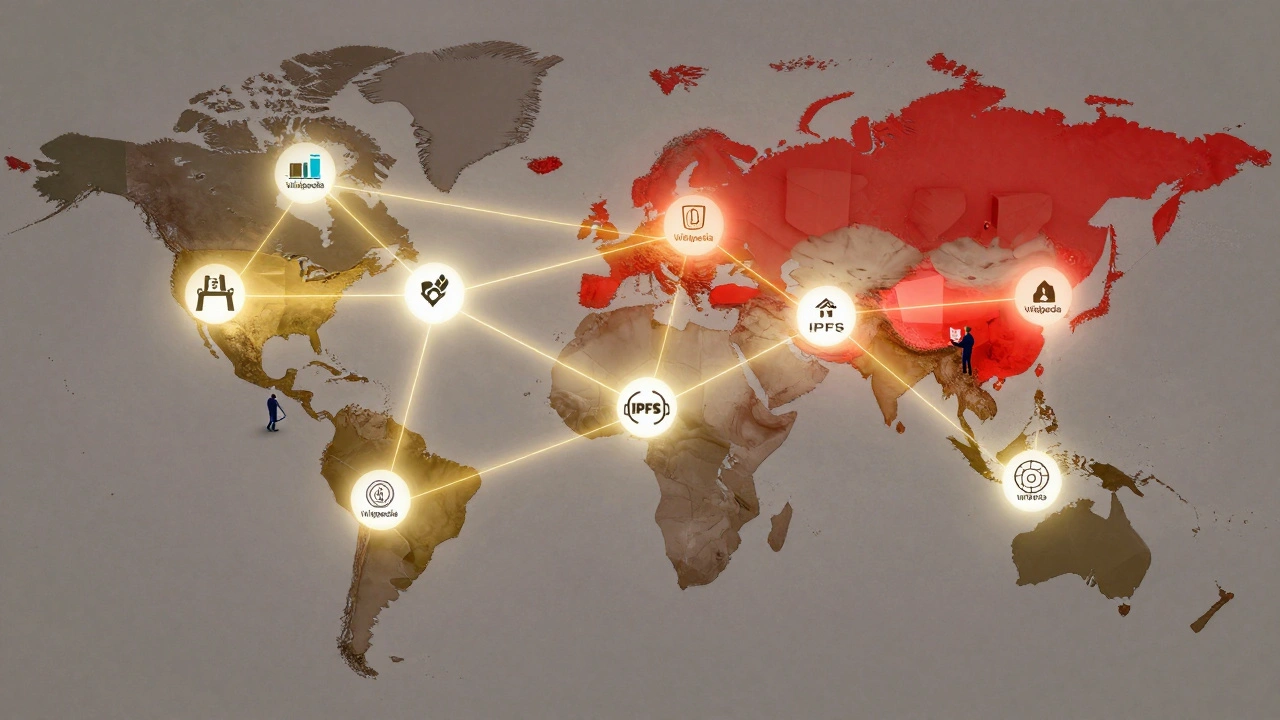
Most demands fail all three tests. In 2022, Russia ordered Wikipedia to delete articles about its military actions in Ukraine. The Foundation checked every claim. Every one was backed by evidence from the UN, BBC, and independent journalists. They refused. Russia responded by blocking access to all language versions of Wikipedia. The Foundation didn’t back down. It partnered with digital rights groups to distribute cached copies via decentralized networks like IPFS and Tor. Today, over 2 million Russian users access Wikipedia through these channels.
Why Wikipedia Can’t Just Comply
Some people ask: "Why not just remove the content? It’s just one article." But Wikipedia isn’t a single website with a central editor. It’s a network of 300+ language editions, each run by local volunteers who make decisions based on consensus, not corporate policy.
Imagine if the U.S. government told Google to delete search results about climate change. Google might comply. But Wikipedia? If one language version removes content, editors from other countries will restore it. If a government blocks the site, users find workarounds. If editors are threatened, others step in. The system is designed to resist control.
That’s why governments find Wikipedia so threatening. It doesn’t have a CEO who can be pressured. It doesn’t have shareholders who care about profits. It has editors-teachers, doctors, students, retirees-who believe knowledge should be free, even when it’s inconvenient.
The Ripple Effects of Censorship
When governments block Wikipedia, the damage isn’t just to access. It’s to trust.
In 2021, Egypt blocked Wikipedia for three weeks after an article about a government official’s offshore accounts was published. During the block, search traffic to state-run propaganda sites surged by 400%. When Wikipedia came back online, traffic dropped by 60% in the same region. People realized they’d been fed misinformation.
Studies from the University of Oxford and the Berkman Klein Center show that countries that censor Wikipedia see a 30% increase in misinformation online. People turn to unverified blogs, social media rumors, or state-controlled news. Without Wikipedia, fact-checking becomes harder. Democracy weakens.
The Foundation’s legal fights aren’t just about Wikipedia. They’re about whether societies can rely on shared facts.
How the Foundation Funds These Battles
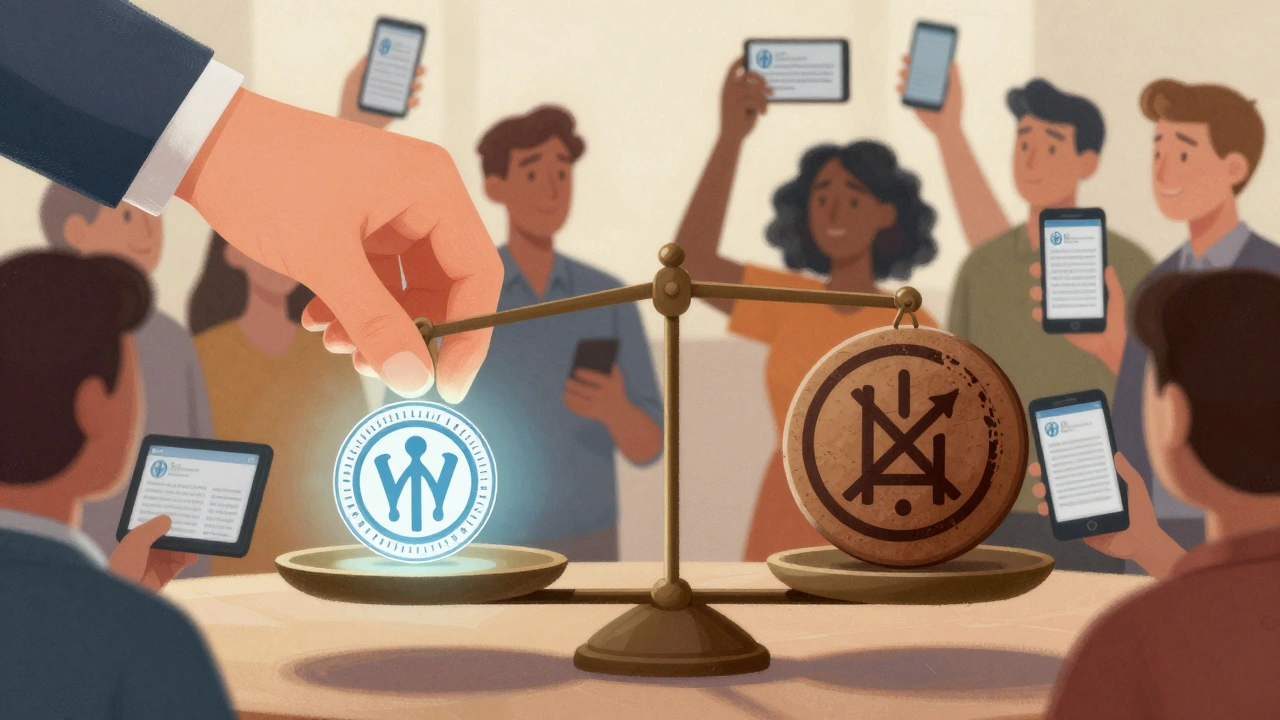
Legal fights cost money. A single court case can run over $500,000. The Foundation doesn’t get government grants. It doesn’t take ads. It survives on donations-mostly from individuals who give $5, $10, or $25 a year.
In 2025, it launched the "Free Knowledge Defense Fund," a campaign that raised $12 million in six months from over 180,000 donors. People from Brazil to Japan to Nigeria gave because they knew: if Wikipedia falls, so does open access to knowledge.
It’s not charity. It’s defense. The Foundation uses those funds to hire lawyers, support local activists, and build technical tools that help users bypass censorship. They’ve developed browser extensions that automatically redirect blocked pages to archived versions. They’ve trained volunteers in 40 countries on how to legally challenge takedown orders.
What’s Next?
More governments are trying. In 2025, Nigeria passed a law requiring all online platforms to remove content flagged by a government agency within 24 hours. Wikipedia is now preparing a legal challenge under the African Charter on Human and Peoples’ Rights.
The Foundation’s approach is simple: stand firm, document everything, and let the public decide. They don’t ask for permission. They don’t negotiate behind closed doors. They publish the demands, explain why they’re wrong, and invite the world to watch.
That’s why Wikipedia still exists in places where other encyclopedias don’t. Not because it’s perfect. But because it’s free. And freedom, even when it’s messy, is worth fighting for.
Can governments legally force Wikipedia to remove content?
Governments can issue orders, but Wikipedia is not legally required to comply unless the request meets strict international standards: it must come from a court, be based on verifiable falsehoods, and not violate freedom of expression. Most demands fail these tests, which is why the Wikimedia Foundation often refuses them.
What happens if Wikipedia refuses a government order?
Governments may block access to the entire site, as happened in Turkey and Russia. But the Wikimedia Foundation responds by helping users access cached or mirrored versions through alternative networks like Tor and IPFS. They also file legal challenges and mobilize public support to pressure governments to reverse the bans.
Does Wikipedia ever remove content?
Yes-but only when content violates its own policies, such as including unverified claims, personal attacks, or copyright violations. It doesn’t remove content just because a government demands it. Editors decide based on evidence, not political pressure.
How does the Wikimedia Foundation pay for legal battles?
The Foundation relies entirely on donations from individuals. In 2025, it raised $12 million through its Free Knowledge Defense Fund, funded by over 180,000 donors worldwide. These funds support legal teams, technical tools to bypass censorship, and education campaigns for editors in censored regions.
Why is Wikipedia more resistant to censorship than other websites?
Unlike companies like Google or Facebook, Wikipedia has no CEO, no shareholders, and no profit motive. It’s run by a global network of volunteers who follow consensus-based rules. This decentralized structure makes it nearly impossible for any single government to control or shut down completely.