Wikipedia is built on collaboration, but collaboration doesn’t mean harmony. Behind every article with hundreds of edits, there’s often a quiet battle over facts, tone, sources, or even who gets to decide what belongs. These aren’t just technical disagreements-they’re conflicts over truth, authority, and representation. When editors can’t agree, Wikipedia has two formal tools to help: mediation and the third opinion process. Used right, they can save articles from edit wars and keep the project moving forward.
Why Wikipedia Needs Conflict Resolution
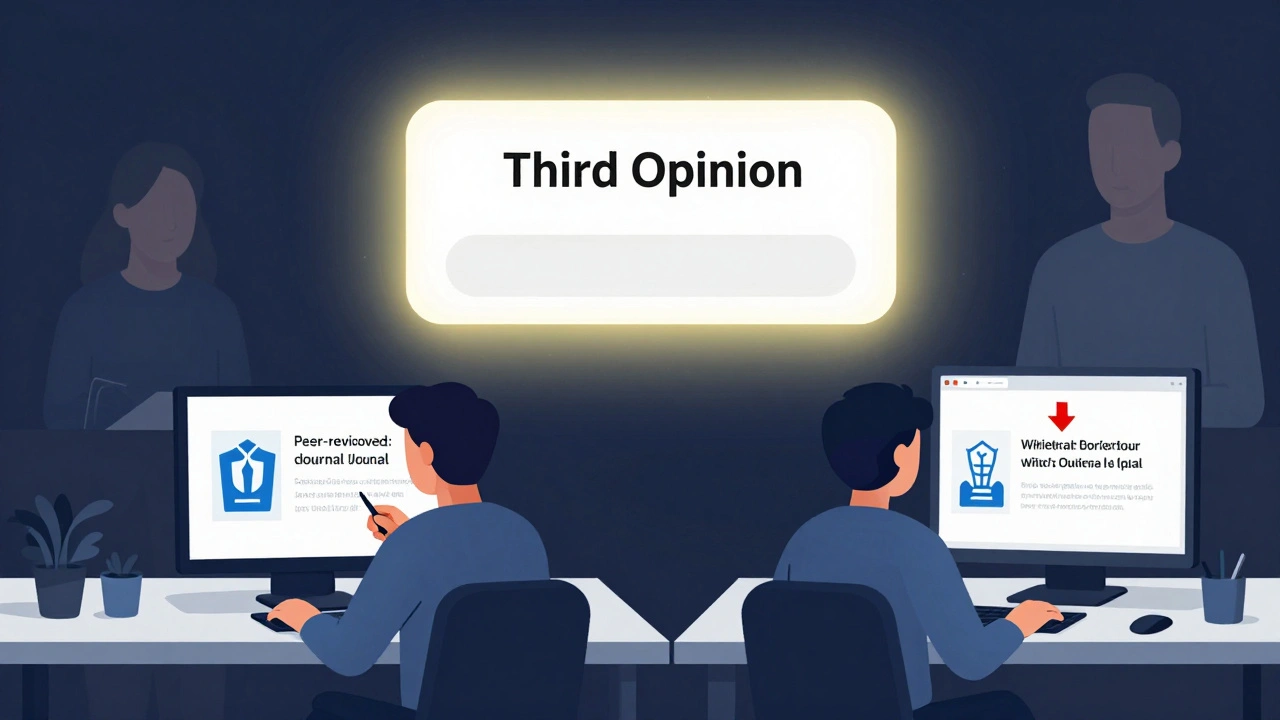
Wikipedia doesn’t have editors with titles or bosses. Anyone can change anything. That’s the power of open collaboration. But it also means there’s no built-in hierarchy to resolve clashes. Two editors might both be well-intentioned-one wants to add a detail from a peer-reviewed journal, another insists it’s "original research" and removes it. A third editor jumps in to support the first. Soon, the article is locked in a cycle of reverts, accusations, and personal frustration.
Left unchecked, these disputes don’t just stall articles-they drive away contributors. Studies from the Wikimedia Foundation show that over 30% of active editors who leave cite unresolved conflicts as a primary reason. That’s not just a loss of manpower. It’s a loss of perspective. Wikipedia thrives on diverse viewpoints. When disputes go cold, the encyclopedia becomes narrower, not broader.
What Is Third Opinion?
Third Opinion (often called 3O) is Wikipedia’s first-aid kit for small-scale disagreements. It’s fast, simple, and designed for cases where two editors are stuck but neither is being hostile.
To use it, you post a request on the Third Opinion page. You summarize the dispute in three sentences: what’s being argued, what each side wants, and why you think it’s unresolved. You don’t pick who you want to win-you just ask for an outside view.
Within hours or days, a neutral editor-someone who hasn’t edited the article-reads your post and gives a clear, concise response. They might say: "This source is reliable and fits the policy," or "Both sides have merit, but the wording is biased," or "This is a policy violation, not a content dispute."
Third Opinion isn’t binding. But it’s often enough to break the deadlock. In 2023, over 4,200 Third Opinion requests were filed. Of those, 82% were resolved within a week, with editors accepting the third party’s feedback and adjusting their edits accordingly.
When to Use Third Opinion
- You’ve tried talking directly and it went nowhere.
- The dispute is about policy interpretation, not personal attacks.
- You’re not asking for a verdict-just clarity.
- The article isn’t under full protection yet.
Don’t use Third Opinion if:
- Someone is being abusive or making personal attacks.
- You’re trying to force a specific outcome.
- The dispute is about a highly controversial topic (like politics or religion)-those usually need mediation.
What Is Mediation?
Mediation is for when Third Opinion isn’t enough. It’s for heated, long-running, or emotionally charged disputes. Maybe the same editors have clashed over the same article for months. Maybe one side feels silenced. Maybe the talk page is full of anger, not analysis.
Mediation is formal, structured, and involves trained volunteers called mediators. These aren’t administrators-they’re experienced editors trained in conflict resolution. They don’t make decisions. They facilitate conversations.
To start mediation, you file a request on the Mediation Committee page. You provide the article, the history of the dispute, and what you hope to achieve. The committee assigns a mediator within a few days.
The mediator then contacts both sides privately. They ask questions: "What’s your main concern?" "What would make you feel heard?" "What’s the smallest change you’d accept?" They then bring the parties together in a structured, timed discussion-usually on a dedicated talk page.
The goal isn’t to make everyone happy. It’s to find a path forward that follows Wikipedia’s policies and keeps the article alive.
How Mediation Works in Practice
One case from 2024 involved an article on a local government official. One editor, a journalist, kept adding quotes from news reports. Another, a community member, argued those reports were biased and wanted to remove them. The article was being reverted every few hours. Neither side trusted the other.
A mediator stepped in. First, they reviewed the sources: all were from reputable local outlets. Then they asked each side: "What’s the real issue?" The journalist said they wanted accuracy. The community member said they wanted fairness. The mediator suggested a compromise: keep the quotes but add context-like noting the outlet’s political leanings in the article’s sources section. Both agreed. The edit war ended. The article improved.
Mediation doesn’t always succeed. About 40% of cases result in a clear resolution. Another 30% end with editors agreeing to disagree and leaving the article alone. The rest either escalate to arbitration or collapse under tension. But even partial success keeps the project running.
When to Choose Mediation Over Third Opinion
- There’s a pattern of repeated conflict over the same topic.
- One or both parties feel attacked or ignored.
- The dispute has lasted more than two weeks.
- There are multiple editors involved, not just two.
- Policy violations are being used as weapons (e.g., "You’re violating NPOV!" as a way to shut down discussion).
Mediation takes longer-sometimes weeks. But it’s designed for situations where trust is broken. Third Opinion is for misunderstandings. Mediation is for broken relationships.
What Happens If Neither Works?
If mediation fails, the next step is arbitration. But that’s a last resort. Arbitration is run by a small group of senior editors who can ban users, restrict edits, or even lock articles for months. It’s not about fixing content-it’s about enforcing rules.
Most disputes never reach arbitration. That’s because mediation and Third Opinion work. They’re not perfect. But they’re the only tools that let editors solve problems without losing control of the content.

How to Use These Tools Effectively
- Stay calm. Emotions don’t help. Facts do.
- Don’t demand a win. Ask for clarity.
- Be specific. Vague complaints like "This is biased" get ignored. Say: "This quote comes from a partisan blog, and it’s presented as fact."
- Don’t ghost. If you request help, respond when someone reaches out. Silence kills progress.
- Accept feedback-even if it’s not what you wanted. Wikipedia isn’t a personal project.
Many editors think these processes are for "other people." But the truth is, every editor will face a dispute. The difference between a thriving article and a frozen one often comes down to who reaches out for help first.
What You Can Do Right Now
If you’re stuck on a Wikipedia edit:
- Go to the article’s talk page. Summarize the issue in three lines.
- Ask if anyone has a neutral perspective.
- If no one responds in 48 hours, post a Third Opinion request.
- If the conflict is emotional or ongoing, skip to mediation.
- Don’t wait until the article is locked. Act early.
Wikipedia doesn’t need more editors. It needs more people who know how to resolve conflict without shouting. That’s the real skill of editing here-not knowing the rules, but knowing when to ask for help.
Can anyone request Third Opinion on a Wikipedia article?
Yes, any registered editor can request a Third Opinion, as long as they’re not involved in a personal attack or violation of conduct policies. You don’t need to be the article’s main editor. You just need to show you’ve tried to resolve the issue directly first.
How long does mediation take on Wikipedia?
Mediation usually takes between one and four weeks. The mediator contacts both sides within a few days, then schedules discussions. The process can move faster if both parties respond quickly. But it’s designed to be deliberate-rushing doesn’t fix deep disagreements.
Is Third Opinion binding on Wikipedia?
No, Third Opinion is not binding. It’s advisory. But because the person giving the opinion is neutral and experienced, most editors accept it. Ignoring a clear Third Opinion without good reason can lead to community backlash or even a formal complaint.
Can I request mediation if I’m not the main editor of the article?
Yes. You don’t have to be the primary editor to ask for mediation. If you’re affected by the dispute-whether you’re contributing regularly, citing the article, or just trying to understand the content-you can file a request. The Mediation Committee looks at the impact, not the edit count.
What if the mediator is biased?
Mediators are selected from a pool of volunteers who have completed training and have a history of neutrality. If you believe a mediator is biased, you can raise concerns with the Mediation Committee. They can reassign the case. This has happened fewer than five times in the past two years, mostly when a mediator had a prior connection to one of the parties.
Next Steps for Editors
If you’re new to Wikipedia editing, don’t wait for a fight to start learning these tools. Visit the Third Opinion and Mediation pages. Read past cases. See how people frame their requests. Notice how mediators rephrase arguments to find common ground.
Wikipedia’s strength isn’t in having the right answer. It’s in having a way to find the right answer-even when people disagree. That’s why mediation and Third Opinion matter. They turn conflict into collaboration. And that’s what keeps the encyclopedia alive.