When you type Wikipedia into a search bar, you probably picture the familiar Latin alphabet-A to Z, clean lines, easy to type on any keyboard. But what if your language doesn’t use those letters? What if it reads right to left? What if it has hundreds of characters, or changes shape depending on where it sits in a word? For millions of people around the world, Wikipedia isn’t just a website-it’s a lifeline to knowledge in their own tongue. Yet building and maintaining Wikipedia in non-Latin scripts comes with deep, often overlooked technical and cultural hurdles.
Why Non-Latin Scripts Are Harder to Support
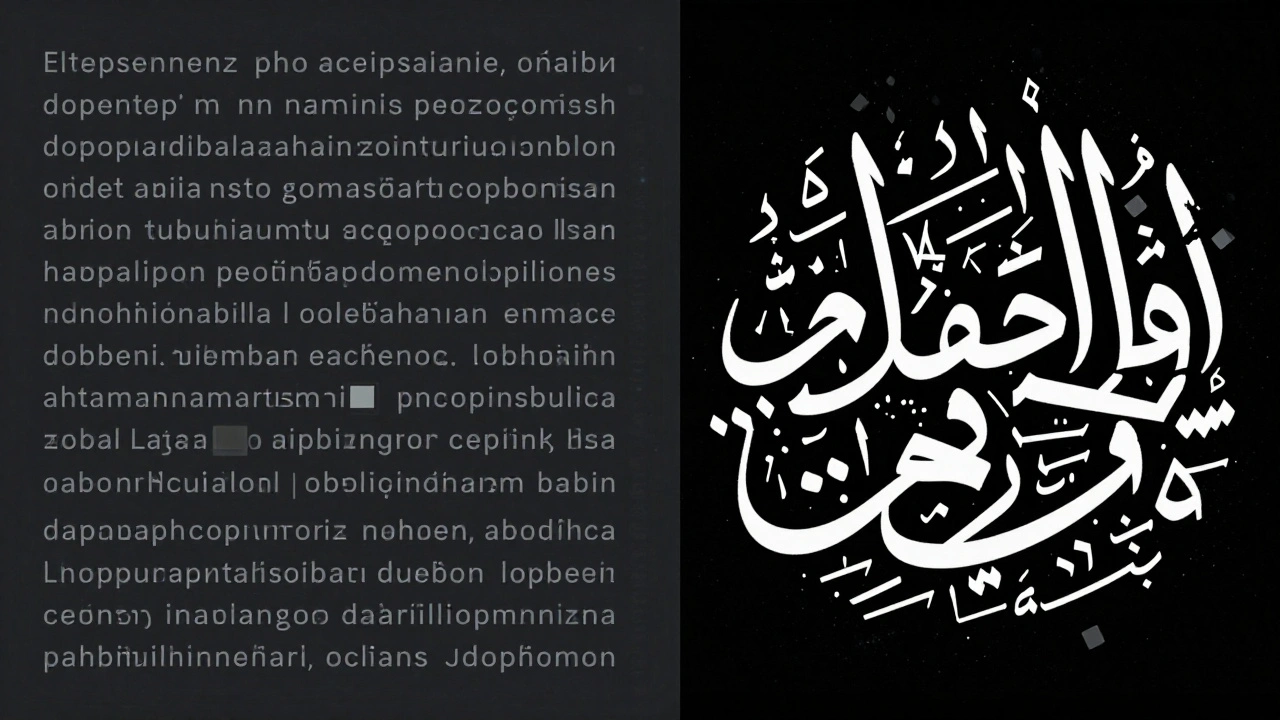
Wikipedia started in English, and its early infrastructure was built around the Latin alphabet. That meant fonts, input methods, and editing tools were designed for left-to-right, linear text. But languages like Arabic, Hindi, Thai, or Chinese don’t fit that mold. Arabic script connects letters in fluid, cursive forms. A single character can have four different shapes depending on its position in a word. Thai has no spaces between words, making automatic word breaking nearly impossible. Chinese uses thousands of unique characters, not an alphabet. These aren’t just design quirks-they break assumptions baked into Wikipedia’s code.For example, in 2023, editors on the Arabic Wikipedia reported that the visual editor kept splitting connected letters apart, turning words into nonsense. It wasn’t a typo-it was a rendering bug. The software didn’t recognize that the letter ب (ba) must always link to the next character. Fixing that required rewriting parts of the editing engine from scratch, not just tweaking a setting.
Input Methods: The Keyboard Problem
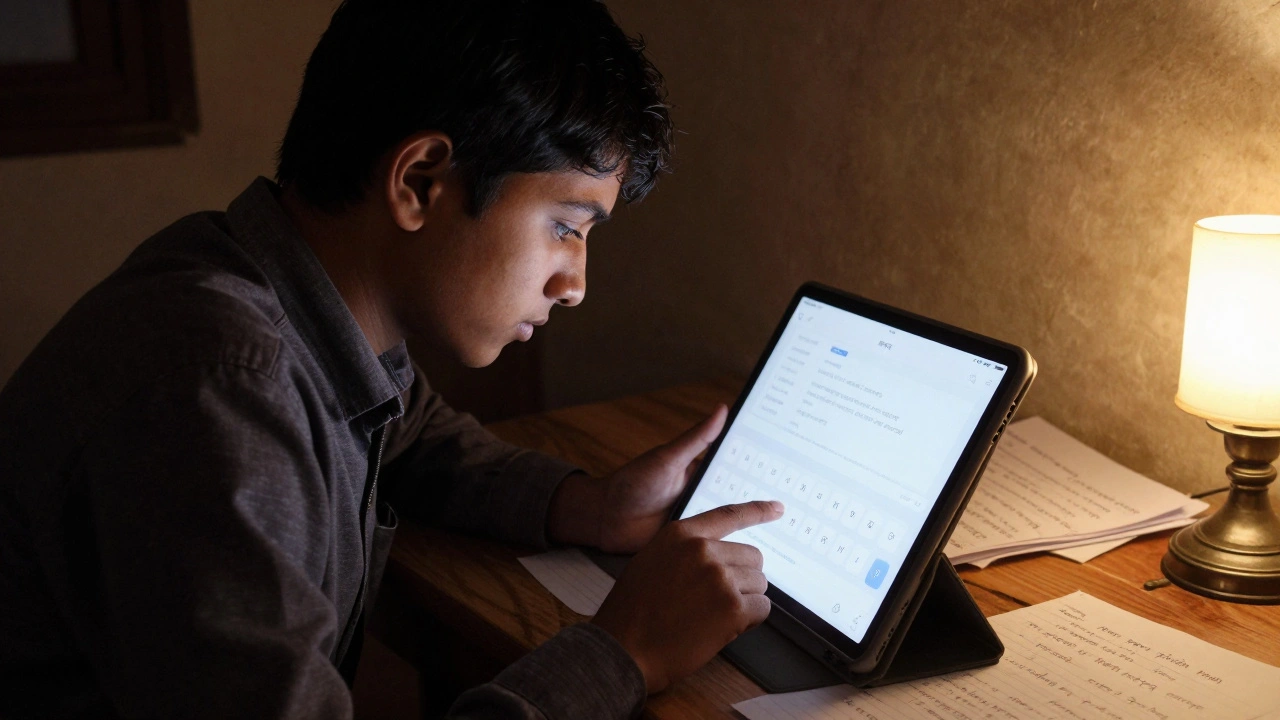
Most people don’t realize that typing in Devanagari (used for Hindi, Marathi, Nepali) isn’t as simple as switching your keyboard layout. There are over a dozen competing input methods, each with different logic. One system types phonetically: type "ka" and it gives you क. Another uses a traditional key mapping where each key corresponds to a specific character. If you’re a student in Pune trying to edit Wikipedia on a borrowed laptop, which system does the computer even support? Most default keyboards don’t include non-Latin scripts at all.Wikipedia’s own input tools have struggled to keep up. In 2022, a study by the Wikimedia Foundation found that over 60% of new contributors to the Bengali Wikipedia abandoned editing after their first attempt-mostly because they couldn’t type their own language properly. The solution wasn’t better tutorials. It was building a real-time, context-aware input tool that guesses the right character based on word patterns, not just key presses. That tool, called Phonetic Input for Indic Scripts, only launched in late 2024 and is still being rolled out.
Fonts, Rendering, and the Silent Crisis
Even if you can type your language, can you see it correctly? Many older devices, especially in rural areas, don’t support complex scripts. A user in rural Pakistan might open the Urdu Wikipedia and see boxes or question marks instead of letters. Why? Because the font file needed to render Nastaliq script-a beautiful, flowing style used in Urdu-is huge, often over 5MB. Mobile data is expensive. Many users can’t afford to download it.Wikipedia’s solution? Optimize fonts. In 2024, the foundation partnered with font designers to create lightweight, open-source versions of Nastaliq, Tamil, and Khmer scripts. These new fonts cut file sizes by 70% without losing readability. But that’s just the start. The real problem is browser support. Safari on iOS didn’t properly render Arabic ligatures until 2023. Android had similar gaps until version 13. Wikipedia editors now test every edit on five different devices-not just to catch typos, but to make sure the script doesn’t break.
Right-to-Left Layouts and the Design Blind Spot
Languages like Arabic, Persian, and Hebrew read right to left. That means everything flips: menus, tables, images, even the direction of arrows. But Wikipedia’s interface was never built for that. For years, right-to-left layouts were treated as an afterthought-tacked on with CSS hacks that often broke when the site updated.Imagine editing a table in Persian. The columns should flow from right to left. But if a template was written in Latin-script code, it might force the table to start on the left. The result? A jumbled mess. Editors had to manually reverse every table, every image caption, every bullet list. It was exhausting. In 2023, the Wikimedia engineering team rewrote the core layout engine to treat right-to-left as a first-class feature, not a patch. Now, when you switch to the Arabic Wikipedia, the whole interface-sidebars, search bars, edit buttons-mirrors correctly. But it took nearly two decades to get there.
Spelling and Standardization: Who Decides What’s Correct?
In English, spelling is messy but mostly agreed upon. In many non-Latin languages, there’s no single standard. For example, in Ukrainian, the letter "і" and "и" are distinct, but older generations and Russian-influenced writers often mix them. In Thai, there are multiple accepted ways to spell the same word depending on region or dialect. And in Arabic, Modern Standard Arabic is used in formal writing, but spoken dialects vary wildly.Wikipedia doesn’t enforce one spelling over another-it lets communities decide. But that creates friction. On the Somali Wikipedia, editors argued for months over whether to use Latin or Arabic script for the language. Some wanted to preserve tradition; others wanted to reach younger, mobile-first users who only know the Latin alphabet. In the end, they created a dual-script system where both versions link to each other. It’s rare, but it works.
Meanwhile, in the Amharic Wikipedia, editors developed a consensus spelling guide based on Ethiopian government standards. They even built a spell-checker that flags non-standard forms. That tool is now used by schools and government offices across Ethiopia.
Community and Culture: The Human Side
Behind every non-Latin Wikipedia is a small group of passionate volunteers-often unpaid, often working without institutional support. In Nepal, the Nepali Wikipedia has fewer than 200 active editors. Many are teachers who spend evenings translating articles from English or Hindi. They don’t have access to professional translation tools. They rely on Google Translate, which often butchered technical terms or cultural references.So they built their own glossaries. One editor created a database of 3,000 Nepali equivalents for scientific terms, like "photosynthesis" (प्रकाश संश्लेषण) and "biodiversity" (जैव विविधता). Others recorded audio pronunciations so new contributors could hear how words should sound. These aren’t just edits-they’re acts of cultural preservation.
And yet, these communities get little attention. While English Wikipedia gets millions in funding, the Burmese Wikipedia has never received a dedicated grant. Its editors rely on donations from local tech groups and occasional visits from Wikimedia volunteers who fly in from Singapore or Thailand.
Progress, But the Road Is Long
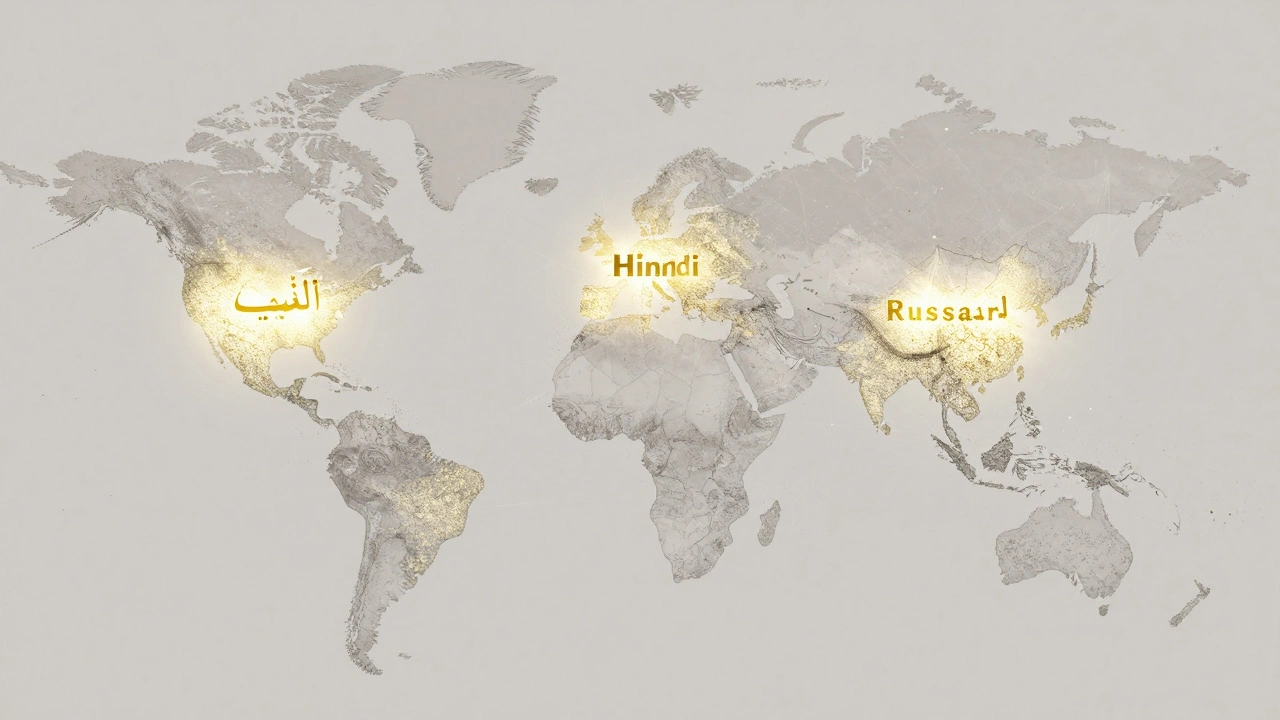
There’s been real progress. As of 2025, Wikipedia supports 330+ languages, 120 of which use non-Latin scripts. The number of articles in Arabic, Chinese, and Hindi now exceeds 1 million each. Tools like visual editors, better fonts, and phonetic input are finally working. But the gap remains wide.Compare this: English Wikipedia has over 6.5 million articles. The entire non-Latin Wikipedia ecosystem combined has about 10 million. That sounds impressive-until you realize that 70% of those are in just five languages: Arabic, Chinese, Hindi, Russian, and Japanese. The other 115 non-Latin Wikipedias? Many have fewer than 10,000 articles. Some have under 1,000.
For languages like Tigrinya, Mongolian, or Yoruba, Wikipedia isn’t just a reference-it’s one of the few digital spaces where their language is treated as equal to English, French, or Mandarin. But without better tools, funding, and recognition, those communities risk being left behind.
What Can Be Done?
The fixes aren’t always technical. Sometimes they’re about respect. Here’s what’s working:- Localizing tools: Creating input methods and spell-checkers in the local language, not just in English.
- Training editors: Hosting workshops in schools and libraries, especially in rural areas.
- Partnering with universities: Getting linguists and computer scientists to help build better fonts and parsers.
- Recognizing contributions: Giving visibility to editors in non-Latin languages, not just the top English contributors.
Wikipedia’s mission is to give every person free access to the sum of all human knowledge. But knowledge isn’t just in English. It’s in Devanagari, in Arabic script, in Hanzi, in Cyrillic, in Tifinagh. If Wikipedia wants to be truly global, it can’t just translate content-it has to rebuild itself for every script, every culture, every voice.
Why can’t non-Latin scripts be handled the same way as Latin ones?
Non-Latin scripts often have complex rules that Latin scripts don’t. Arabic letters change shape based on position. Thai has no word spaces. Chinese uses thousands of unique characters. These features break software designed for simple, left-to-right, fixed-character systems. The code has to be rewritten from the ground up, not just adjusted.
Are there any Wikipedias that use non-Latin scripts successfully?
Yes. The Arabic, Chinese, and Hindi Wikipedias are among the largest and most active. They have thousands of editors, custom tools, and even official partnerships with universities. The Bengali Wikipedia has built a strong community with its own spell-checker and input tool. These communities prove it’s possible-but they’re the exception, not the rule.
Do I need special software to edit non-Latin Wikipedias?
You don’t need special software, but you might need the right settings. Most modern devices support non-Latin input if you enable it in your system settings. For better results, use Wikipedia’s built-in tools like the Phonetic Input for Indic Scripts or the Arabic visual editor. These are designed to handle complex scripts automatically.
Why do some non-Latin Wikipedias have so few articles?
It’s a mix of factors: lack of internet access, limited tech support, few trained editors, and no funding. Many communities are small and isolated. Without tools that work well in their language, editing becomes frustrating. Some languages have no standardized spelling, making collaboration harder. Progress is slow, but growing.
How can I help non-Latin Wikipedias?
Start by editing in your own language if you’re a speaker. If you know English and another language, translate articles. Support projects like Wikimedia’s Language Engineering team. Donate to local initiatives. Even sharing a link to a non-Latin Wikipedia in your community helps raise awareness. Every edit, no matter how small, makes a difference.