When the first cases of a mysterious illness started popping up in early 2020, people didn’t turn to news sites first. They went to Wikipedia. Within hours, the article on "2019 novel coronavirus" became one of the most viewed pages on the entire site. By March, it had over 20 million views in a single day. That wasn’t an anomaly. It was a pattern. And it’s happened again-with monkeypox, avian flu, and even the 2024 election rumors. Wikipedia doesn’t break news. It doesn’t have reporters on the ground. But when something explodes in the real world, people rush to it like a digital emergency room. So what exactly triggers these massive, sudden spikes in interest?
It’s not about the news-it’s about uncertainty
News outlets report facts. Wikipedia answers questions. When a new outbreak hits, people don’t just want to know what happened. They want to know: How do you catch it? Can you survive it? Is it in your city? Should you cancel your trip? These aren’t headline questions. They’re survival questions. And Wikipedia is the only free, centralized place that answers them in plain language, with citations, and without ads.
During the early days of COVID-19, Wikipedia’s page on "Transmission of SARS-CoV-2" was edited over 500 times in 72 hours. Contributors from medical schools in Brazil, public health agencies in Canada, and retired doctors in Japan all jumped in to update the page with the latest findings. The article didn’t just grow-it evolved in real time. That’s the key. People trust Wikipedia not because it’s perfect, but because it’s alive. It changes when the world changes.
Search volume spikes before media coverage
Here’s something counterintuitive: Wikipedia traffic often rises before major news outlets even mention a topic. In January 2020, searches for "coronavirus symptoms" on Wikipedia jumped 400% in two days-before the WHO declared a global emergency. People were typing questions into Google, and Google was sending them to Wikipedia. Why? Because Wikipedia pages rank high for long-tail questions. "Can you get COVID from mail?" isn’t a headline. But it’s a top search. And Wikipedia has an answer.
Researchers at the University of California studied 12 global health events between 2018 and 2024. They found that in 9 out of 12 cases, Wikipedia page views increased by more than 300% within 24 hours of the first local reports-often before any national news story was published. The pattern holds for non-health topics too. When a celebrity dies unexpectedly, Wikipedia traffic for their page spikes within minutes. When a natural disaster hits, pages for the affected region see a surge. The trigger isn’t media. It’s human anxiety.
Local events trigger global interest
It’s not just big global pandemics. In 2022, a small outbreak of monkeypox in a single town in Portugal sent the Wikipedia page for "monkeypox" to the top 10 most-viewed articles worldwide. In 2023, a single case of polio in New York caused a 600% jump in views for the "polio" article-even though no other cases were reported. People weren’t just searching for information. They were checking if their own city was at risk.
Wikipedia’s geographic data shows something surprising: when a rare disease appears in a developed country, global interest spikes more than when it appears in a low-income region. That’s not because the threat is greater-it’s because people in wealthier nations have better internet access, more digital literacy, and higher expectations for reliable information. A single case in the U.S. or U.K. triggers a global information rush. A dozen cases in a rural area often don’t.
The role of social media amplification
Twitter, TikTok, and Facebook don’t drive Wikipedia traffic directly. But they create the conditions for it. A viral tweet saying "I just got tested for bird flu-no one knows what’s going on" doesn’t link to Wikipedia. But it makes people search. And when they search, they land on Wikipedia. The platform doesn’t need to be mentioned. It just needs to be the best answer.
During the 2024 avian flu scare, a TikTok video showing a farmer in Iowa with sick chickens got 12 million views. The video didn’t mention Wikipedia. But within six hours, searches for "avian flu in humans" and "can you eat chicken with bird flu" on Wikipedia surged by 800%. The video created fear. Wikipedia provided clarity. That’s the dynamic. Social media raises the volume. Wikipedia lowers the panic.
Why Wikipedia wins over official health sites
You’d think the CDC or WHO pages would get the traffic. But they don’t. In 2020, the CDC’s coronavirus page had 5 million views in a week. Wikipedia’s had 150 million. Why? Three reasons.
- Speed: Wikipedia updates in minutes. Government sites take days to approve edits.
- Clarity: Wikipedia explains terms like "R0 value" and "asymptomatic transmission" in simple language. Government sites use jargon.
- Accessibility: Wikipedia works on any device, anywhere. Many health portals require login, cookies, or are blocked in certain countries.
During the 2023 mpox outbreak, the WHO’s page was locked behind a paywall in some African countries. Wikipedia’s page was free and accessible on low-bandwidth phones. That’s why, in Nigeria and Kenya, Wikipedia became the primary source-even for doctors.
What happens when misinformation spreads
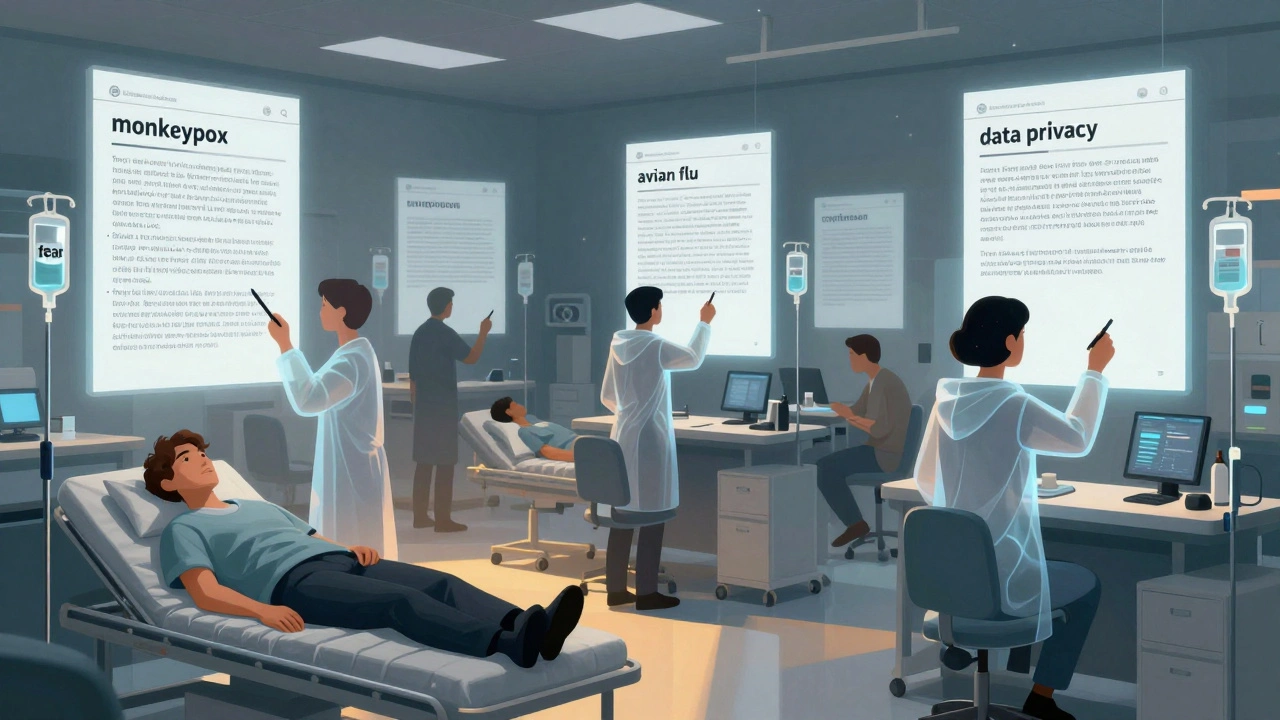
Wikipedia isn’t perfect. During the pandemic, false claims like "5G causes COVID" or "hydroxychloroquine is a cure" flooded the site. But here’s the twist: Wikipedia’s community is better at cleaning up lies than any algorithm. Editors flagged those claims within hours. Sources were added. References to peer-reviewed studies were linked. False claims were tagged with warnings.
Compare that to social media. A false TikTok video about "cinnamon cures COVID" stayed up for months. Wikipedia’s version of the same claim was deleted within 12 hours and replaced with a detailed breakdown of why it was false, backed by three WHO reports. That’s the difference. Wikipedia doesn’t just host information. It enforces standards.
It’s not just pandemics-it’s anything that feels uncontrollable
COVID-19 wasn’t the first, and it won’t be the last. In 2021, when a single nuclear power plant in Ukraine went offline during a blackout, Wikipedia’s page on "nuclear reactor safety" had 2 million views in 48 hours. In 2023, when a major data breach exposed 200 million records, the "data privacy" article spiked. Even when a new AI tool like ChatGPT exploded in popularity, Wikipedia’s "artificial intelligence" page got 30 million views in a week.
The pattern is clear: whenever something feels unpredictable, dangerous, or beyond control, people turn to Wikipedia. It’s the last place on the internet that feels like a neutral ground. No ads. No algorithms pushing outrage. Just facts, cited, updated, and explained.
What this means for the future of information
Wikipedia isn’t replacing news. It’s replacing confusion. As the world gets more complex-climate disasters, AI risks, supply chain collapses-people will keep turning to it. And the people who edit it? They’re not professionals. They’re teachers, nurses, engineers, retirees. They’re volunteers who care enough to fix a typo, add a source, or correct a lie.
The next time a new virus emerges, a bridge collapses, or a political scandal breaks, check Wikipedia. You’ll probably find the most accurate, up-to-date, and calm explanation there. Not because it’s perfect. But because thousands of strangers are working together to make it right.
Why does Wikipedia traffic spike during health crises?
Wikipedia traffic spikes during health crises because people are looking for clear, reliable answers to urgent personal questions-like symptoms, transmission, and prevention. Unlike news sites that report events, Wikipedia provides practical, cited explanations in plain language, making it the go-to source when fear and uncertainty rise.
Does Wikipedia get more traffic than official health websites?
Yes, often by a large margin. During the peak of the COVID-19 pandemic, Wikipedia’s coronavirus pages received over 150 million views in a week, while the CDC’s official page had around 5 million. Wikipedia wins because it updates faster, uses simpler language, works on all devices, and is free and accessible worldwide.
Can misinformation spread quickly on Wikipedia during crises?
Misinformation does appear, but Wikipedia’s community of editors removes it rapidly-often within hours. False claims are flagged, tagged with warnings, and replaced with citations from trusted sources like the WHO or peer-reviewed journals. This makes Wikipedia far more reliable than social media platforms, where false content can stay up for weeks.
Why do local events cause global Wikipedia spikes?
Local events trigger global spikes when they occur in countries with high internet access and media attention. A single case of polio in New York or monkeypox in Portugal draws worldwide interest because people in developed nations use Wikipedia to assess personal risk. The same event in a low-income region often doesn’t trigger the same response due to lower digital access and less global media coverage.
Is Wikipedia the best source for real-time information?
For factual, non-breaking information, yes. Wikipedia doesn’t report breaking news, but it quickly turns news into verified context. When a new virus emerges, Wikipedia becomes the most comprehensive, updated, and cited source within 24-48 hours. It’s not the fastest, but it’s the most reliable after the initial chaos.