Wikipedia doesn’t just want facts-it wants facts you can prove. That’s why most self-published sources, like personal blogs, YouTube channels, or self-published books, get rejected. But there are exceptions. And those exceptions aren’t random. They follow clear, consistent rules that even veteran editors follow without thinking.
What counts as a self-published source?
A self-published source is anything where the author controls the entire publishing process-no independent editor, no fact-checker, no peer review. That includes personal blogs, Medium posts, Substack newsletters, self-published books on Amazon, personal websites, and even some YouTube videos if the creator is the sole producer.
Wikipedia’s policy on this is simple: self-published sources are generally not reliable. The reason? Anyone can say anything online. A person with no credentials can write a 2,000-word post claiming Einstein was a secret time traveler, and it’s still technically a "source." Without gatekeepers, there’s no way to verify accuracy, bias, or expertise.
When does Wikipedia make an exception?
There are three real cases where self-published sources are accepted-and they’re not loopholes. They’re carefully defined exceptions.
- Primary sources from experts in their field: If you’re a Nobel Prize-winning physicist and you write a detailed blog explaining your own research, that blog can be cited. Not because it’s self-published, but because you’re the original source of the information. Wikipedia allows direct quotes from the author’s own published work-even if they published it themselves-because the content isn’t someone else’s interpretation.
- Established public figures with documented expertise: If you’re a well-known scientist, historian, or artist with decades of peer-reviewed work behind you, and you write a personal blog about your field, Wikipedia editors may accept it as a source for your own views or experiences. The key here is not the platform-it’s your established reputation. For example, Neil deGrasse Tyson’s personal blog is treated differently than a random person’s astronomy blog because Tyson has published in peer-reviewed journals, hosted TV shows, and been cited by major institutions.
- Official personal websites of public institutions: A university professor’s official university-hosted webpage, even if they wrote it themselves, is often acceptable because it’s tied to an institution with editorial oversight. The university’s domain adds credibility. Same goes for government scientists posting on .gov sites.
None of these exceptions are about the format. They’re about trust. Wikipedia doesn’t care if something is self-published. It cares if you can prove the person behind it is credible.
Why does Wikipedia hate self-published sources?
It’s not about snobbery. It’s about preventing misinformation from spreading.
Imagine a blogger writes a post claiming that a certain vitamin cures cancer. They link to their own blog as the source. If Wikipedia accepts that, now millions of people see it as "verified" because it’s on Wikipedia. That’s dangerous. Wikipedia’s job isn’t to spread opinions-it’s to summarize what reliable, independent sources agree on.
Independent sources-like peer-reviewed journals, major newspapers, academic publishers, and established magazines-have systems in place to catch errors. They have editors, fact-checkers, and legal teams. They’re accountable. A self-published blog? Not so much.
There’s data to back this up. A 2021 study by the University of Michigan analyzed over 10,000 Wikipedia citations and found that articles using self-published sources were 3.7 times more likely to contain unverified or disputed claims. That’s why editors flag them automatically.
What happens when you try to use a self-published source?
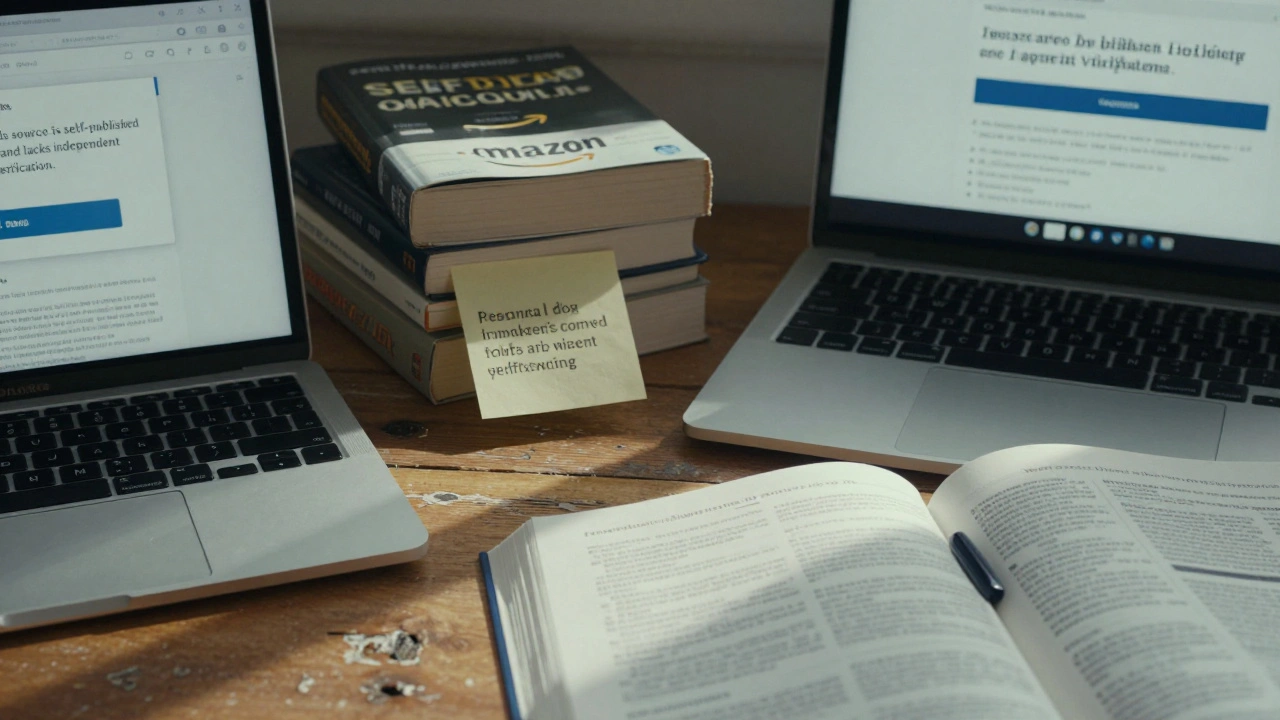
You’ll probably get a warning like this: "This source is self-published and lacks independent verification. Please provide a reliable secondary source."
Editors don’t just delete your edit. They give you a chance to fix it. You can:
- Find a reputable news outlet that reported on the same claim
- Link to a peer-reviewed study that supports it
- If you’re the expert, cite your own peer-reviewed work instead
Many editors will accept a self-published source if it’s the only available source-but only if it’s about the author’s own work, and only if they’re already known in the field. Even then, it’s rare.
What about books you published yourself?
Self-published books are almost never accepted. Even if you spent $10,000 on editing and design, Wikipedia doesn’t care. The problem isn’t quality-it’s lack of independent validation. A book you published on Amazon doesn’t go through peer review. It doesn’t get reviewed by publishers, librarians, or academics.
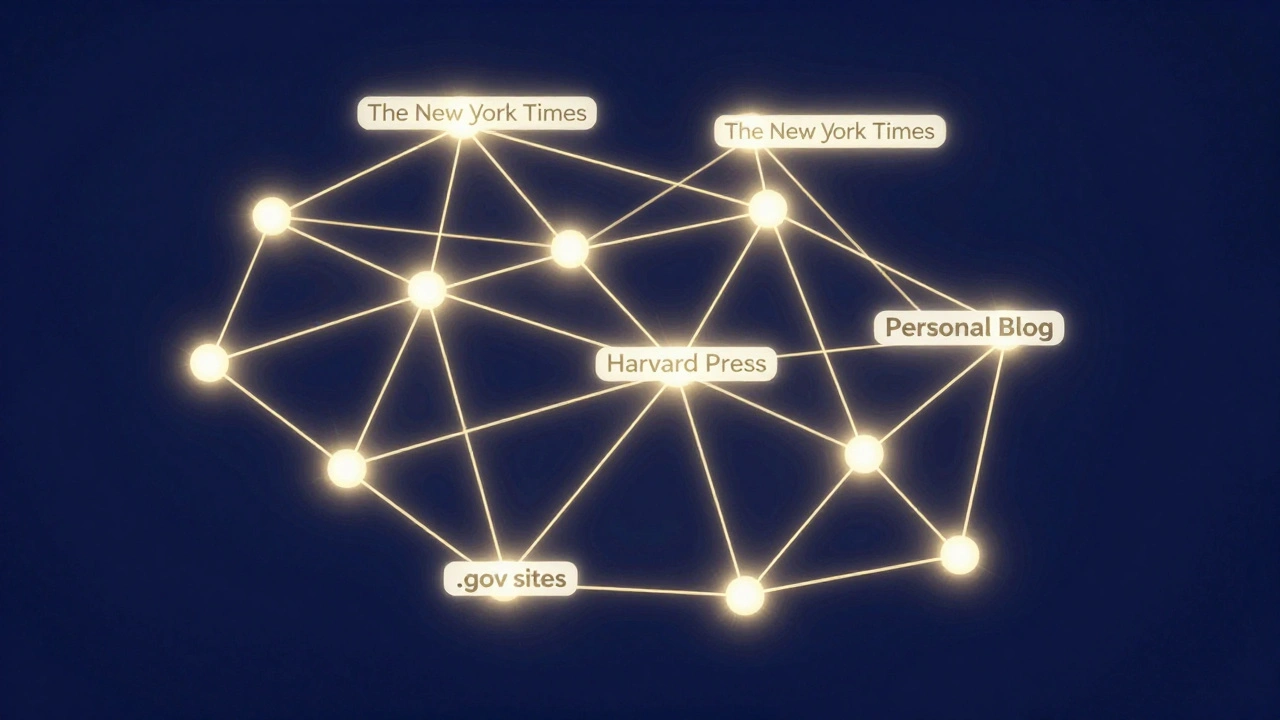
There’s one exception: if your self-published book is cited by multiple reliable sources. For example, if a major newspaper, academic journal, and a university press all reference your book, then Wikipedia will treat it as a reliable source-because now it’s been vetted by others.
That’s the pattern: Wikipedia doesn’t trust the source. It trusts what other trusted sources say about the source.
What counts as "reliable"?
Wikipedia’s definition of reliable is practical, not academic. It’s not about prestige-it’s about consistency.
Here’s what reliably works:
- Peer-reviewed journals (like Nature, The Lancet, JAMA)
- Major newspapers (The New York Times, The Guardian, The Washington Post)
- Books from academic publishers (Oxford University Press, Harvard University Press)
- Government and educational institution websites (.gov, .edu)
- Reputable magazines (Scientific American, The Atlantic, Wired)
What doesn’t work:
- Personal blogs
- Self-published books
- LinkedIn articles
- Reddit threads
- YouTube videos (unless from an established institution like NASA or the BBC)
Wikipedia doesn’t judge the quality of your writing. It judges whether someone else has checked your claims.
Why do people keep trying to use self-published sources?
Because they think, "I know this is true. Why shouldn’t it be on Wikipedia?"
That’s the emotional hook. People want to share their knowledge. They’ve worked hard. They believe in their ideas. But Wikipedia isn’t a platform for personal expression. It’s a summary of what the world already agrees on.
If you’re a researcher who published a paper on your own website, and no one else has written about it yet, Wikipedia can’t use it. Not because it’s wrong-but because no one else has confirmed it. That’s the system protecting you from false claims, too.
Wikipedia’s rules aren’t designed to silence voices. They’re designed to prevent noise from drowning out truth.
What should you do instead?
If you want your work cited on Wikipedia:
- Get it published in a peer-reviewed journal or by a reputable publisher.
- Get media coverage. If a major outlet reports on your research, that becomes the source Wikipedia uses.
- If you’re an expert, write a guest article for a trusted site like The Conversation or Aeon-those are accepted.
- Don’t cite yourself. Cite the coverage of you.
It’s not about who you are. It’s about what others say about you.
Real example: The Wikipedia edit that got rejected
A contributor added a line to the article on "chronic fatigue syndrome" saying, "Dr. Jane Smith believes the condition is caused by a new virus, as explained in her personal blog." The edit was reverted within 12 hours.
Why? Because Dr. Smith had no peer-reviewed publications on the topic. Her blog had no citations, no peer review, and no media coverage. Even though she was a medical doctor, her personal blog didn’t meet Wikipedia’s standard for reliability.
Later, when a major medical journal published her findings, and The New York Times covered it, Wikipedia editors updated the article using the journal and the newspaper as sources-not her blog.
That’s how the system works.
Bottom line
Wikipedia doesn’t ban self-published sources because it’s elitist. It bans them because they’re unreliable by default. The exceptions exist for people who’ve already proven their credibility through other channels. If you want your ideas on Wikipedia, don’t write a blog. Get published. Get cited. Let others validate you.
Wikipedia isn’t a place for your opinions. It’s a place for what the world agrees is true.
Can I cite my own blog on Wikipedia if I’m an expert?
Only if you’re already a well-established expert with a track record of peer-reviewed work. Even then, Wikipedia prefers citations from independent sources that report on your work. Your blog can be used only as a primary source for your own statements-not as evidence for broader claims.
Why are YouTube videos sometimes allowed as sources?
YouTube videos from official institutions like NASA, the BBC, or universities are allowed because they’re produced by organizations with editorial standards. Personal YouTube channels, even if well-made, are considered self-published and are not reliable unless cited by a trusted source.
What if no reliable source exists for a topic?
Wikipedia doesn’t include information without reliable sources. If nothing exists, the topic shouldn’t be included-or it should be marked as needing citation. Wikipedia’s policy is "no original research," which means it won’t publish claims just because they’re true. They must be verifiable by others.
Are self-published academic papers allowed?
No. Even if you publish a paper on your own website or on SSRN without peer review, it’s still considered self-published. Wikipedia requires peer-reviewed publication or citation by a reliable source to accept it.
Can I use a self-published source if I’m the subject of the article?
You can use your own work to confirm biographical details about yourself-like your job title or published works-but you can’t use it to make claims about your impact, influence, or opinions unless those claims are already covered by independent reliable sources.