Imagine you are an expert in astrophysics. You have spent ten years studying black holes and have a new theory that challenges the current consensus. You log into Wikipedia is a free, web-based collaborative project intended to provide a free encyclopedia to the world, and you see an article about black holes that seems outdated. Your instinct says, "Let me fix this with my new data." But if you do, you risk being reverted, blocked, or accused of violating one of the site's core rules: no original research.
This rule confuses many contributors, especially experts. Why would an encyclopedia ban new information? The answer lies in how encyclopedia standards work versus how academic publishing works. Wikipedia is not a place for discovery; it is a place for summarizing established knowledge. Understanding this distinction is key to editing effectively and avoiding conflict with other editors.
The Core Problem: Verification vs. Discovery
To understand why original research is banned, we first need to define what it means in this context. In academia, original research involves gathering new data, forming hypotheses, and testing them. On Wikipedia, original research refers to any new fact, claim, or synthesis that has not been published in a reliable secondary source. It includes:
- New interpretations of existing facts.
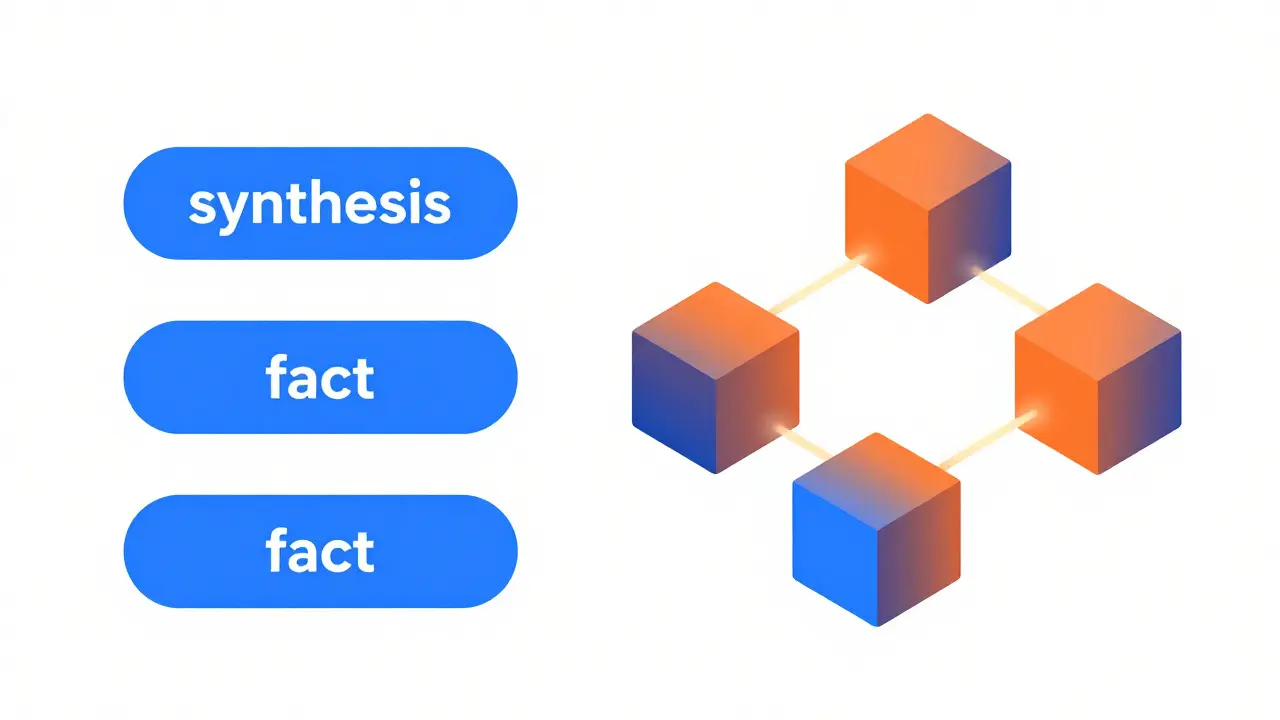
- Combining multiple sources to create a new conclusion (synthesis).
- Using primary sources to derive new insights rather than just quoting them.
- Speculative claims based on personal expertise.
The issue is not that the information is wrong. It might be brilliant. The problem is verifiability. Wikipedia relies on a system where every significant statement must be backed by a citation from a reliable source. If you introduce a new idea that only you know, there is no external way for readers to verify it immediately. This breaks the trust model of the platform. Readers expect Wikipedia to reflect what is already known and accepted by the broader community of experts, not what one editor thinks is true.
Why Synthesis Counts as Original Research
A common trap for good-faith editors is synthesis. Suppose you find three separate articles in reputable journals. One says Company A lost money. Another says Company B gained market share. A third says the industry is shrinking. You look at these three facts and write: "Company A failed because the industry was shrinking while competitors grew." Is this wrong? Not necessarily. But is it in the sources? Probably not. Unless one of those articles explicitly makes that causal link, you have created a new argument. That is original research.
Wikipedia prefers to let readers draw their own conclusions from cited facts. Your job as an editor is to present the bricks, not to build the house. If a reliable source says "X happened" and "Y happened," you list both. If a reliable source says "X caused Y," you cite that specific source for the causality. Mixing and matching sources to form new narratives is where disputes usually start.
The Role of Reliable Sources
The ban on original research is tightly linked to the concept of reliable sources. These are publications that have a reputation for fact-checking and editorial control. Think of peer-reviewed journals, major newspapers like The New York Times or The Guardian, and established books. When you use a reliable source, you are essentially saying, "This group of professionals has already vetted this information."
If you skip that step and use your own brain as the filter, you become the sole authority. This creates a power imbalance. Other editors may not have your background in astrophysics or economics, so they cannot easily challenge your interpretation. To keep the playing field level, Wikipedia requires that all arguments be traceable back to a public, vetted record. This ensures that the encyclopedia remains a mirror of established knowledge, not a window into individual minds.
How This Differs from Academic Publishing
Many contributors come from academic backgrounds, which makes the transition to Wikipedia tricky. In academic writing, novelty is currency. You publish because you have something new to say. In Wikipedia editing, accuracy and neutrality are currency. You edit because the current text is incomplete or inaccurate compared to existing sources.
Academic publishing follows a strict process: hypothesis, experiment, peer review, publication. Once published, the findings enter the public domain. Wikipedia operates differently. It does not wait for peer review to happen elsewhere; it summarizes what has already passed through that process. If your study is still under review, it is not yet ready for Wikipedia. Even if it is published, you should wait until secondary sources (news outlets, other reviews) have discussed it before adding it to the main article. This buffer period allows the scientific community to react, correct errors, or confirm the findings.
Practical Tips for Avoiding Violations
So, how do you contribute without breaking the rules? Here are some practical strategies:
- Cite the exact sentence. If you want to make a claim, find a source that says exactly that. Do not paraphrase loosely in a way that adds nuance not present in the original.
- Use direct quotes for complex ideas. If a source uses specific terminology or phrasing that carries weight, quote it directly. This prevents accidental misinterpretation.
- Check for secondary coverage. Before adding a new discovery, search news archives. Has Nature or Science written about it? Has a major newspaper covered it? If yes, use those articles as your citations.
- Keep it simple. If a statement requires a paragraph of explanation to justify why it is true based on three different sources, it is likely original research. Break it down into simpler, individually citable facts.
Remember, the goal is not to impress other editors with your intelligence. The goal is to ensure that anyone reading the article can follow the trail of evidence back to a trustworthy origin. This transparency is what makes Wikipedia usable for millions of people who do not have access to specialized databases.

What Happens When You Get Caught?
If you add original research, you might face several outcomes. First, another editor might revert your change, leaving a comment like "No OR (Original Research)." Second, you might get a warning on your user talk page. Third, if you persist, you could be temporarily blocked from editing. These actions are rarely malicious; they are procedural. Editors are trained to protect the integrity of the content. However, it can feel discouraging, especially if you believe your addition was accurate.
In such cases, it helps to engage in discussion. Instead of re-adding the content immediately, leave a note on the article's talk page explaining your source and reasoning. Ask for feedback. Often, a colleague will help you find a better way to phrase the point using existing sources, or they might suggest waiting for more coverage. Collaboration is the heart of collaborative editing, and navigating these conflicts is part of the learning curve.
The Balance Between Speed and Accuracy
Critics often argue that banning original research slows down Wikipedia. They say that during fast-moving events, waiting for secondary sources causes delays. This is a valid concern. However, the alternative is worse: an encyclopedia filled with unverified speculation. In the long run, speed matters less than trust. If readers lose confidence that Wikipedia reflects reality, the project fails. By enforcing strict sourcing rules, Wikipedia maintains its status as a go-to reference for quick, reliable facts. The trade-off is that it lags slightly behind the cutting edge of science or news, but that lag is the price of stability.
| Feature | Academic Publishing | Wikipedia Editing |
|---|---|---|
| Primary Goal | Discover and publish new knowledge | Summarize and verify existing knowledge |
| Source Requirement | Primary data and experiments | Reliable secondary sources |
| Novelty Value | High (new ideas are essential) | Low (accuracy and neutrality are essential) |
| Verification Process | Peer review before publication | Community review after publication |
| Role of Author | Creator of new facts | Compiler of verified facts |
FAQ
Can I use my own degree thesis on Wikipedia?
Generally, no. Your thesis is a primary source. You should wait until it is cited in a reliable secondary source, such as a journal article or a book review, before using it to support claims in a Wikipedia article.
Is it okay to combine two sources to make a point?
Only if the combined point is trivially obvious and doesn't require interpretation. If the connection between Source A and Source B requires logical deduction, it is considered original research (synthesis). Cite each fact separately instead.
Why is Wikipedia called an encyclopedia if it doesn't allow new info?
An encyclopedia is defined by its format and purpose: to summarize known facts for general audiences. It is not a repository for raw data or new discoveries. Its value comes from organizing and verifying what is already established.
What counts as a reliable source?
Sources with a reputation for fact-checking and editorial control. Examples include peer-reviewed journals, major newspapers, and authoritative non-fiction books. Blogs, social media posts, and self-published works are generally not considered reliable unless they are widely cited by other reliable sources.
How do I handle a dispute about original research?
Stop editing the article and discuss the issue on the talk page. Present your sources clearly. Ask for consensus. If no agreement is reached, you can seek a neutral opinion from experienced editors or wait for more secondary coverage to emerge.