Imagine you run a mid-sized tech startup. Your product just hit the mainstream news, and your marketing team wants to capitalize on that momentum by editing Wikipedia. It seems harmless, right? Just adding a few facts about your company history or recent funding round. But if you do it without following Wikipedia's Conflict of Interest Guidelines is a set of editorial rules designed to ensure that editors with personal stakes in a topic disclose their connection and rely on independent sources to maintain neutrality., you risk having your edits reverted, getting flagged by patrollers, or even being blocked from the site entirely.
For organizations-whether they are corporations, non-profits, academic institutions, or government bodies-managing this process is not just about avoiding penalties. It’s about protecting your brand’s credibility in one of the world’s most trusted information repositories. The core problem isn’t that organizations *can’t* edit; it’s that they often edit like advertisers rather than encyclopedists. This guide breaks down how to navigate these waters effectively, ensuring your contributions stick around and actually help readers understand your organization’s role in the world.
Why Conflict of Interest Matters More Than Ever
The concept of a Conflict of Interest (COI) is a situation where an editor has a personal, financial, or professional stake in the outcome of an article, potentially biasing their contribution. On Wikipedia, this is strictly regulated because the platform relies on consensus among thousands of volunteers who generally have no skin in the game. When an organization edits its own page, the dynamic shifts. You are no longer just an editor; you are a representative with a goal: to look good, to be accurate, or to suppress negative news.
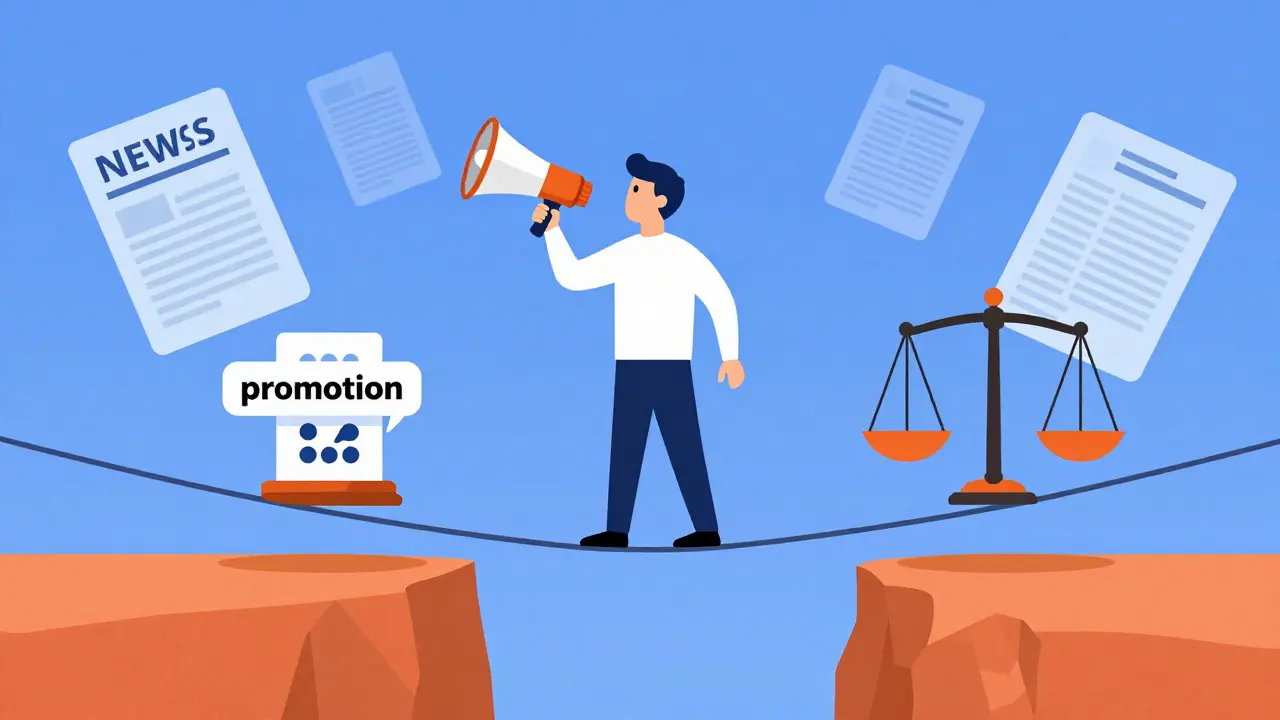
Recent data from Wikimedia Foundation transparency reports indicates that a significant portion of reverts on corporate pages stems from undisclosed COIs. Why does this happen? Because human nature drives us to present ourselves favorably. If you write about your company, you might subtly emphasize achievements over failures. You might use adjectives like "innovative" or "market-leading" which violate the Neutral Point of View (NPOV) is the standard that requires articles to represent all significant viewpoints fairly, proportionately, and with as little bias as possible. rule. The guidelines exist to bridge the gap between your desire to promote and the community’s demand for objectivity.
Core Principles: Disclosure and Independence
To succeed on Wikipedia, you must master two non-negotiable principles: disclosure and reliance on independent sources. These are the pillars of Editorial Policy is the collective set of rules and norms that govern how content is created, reviewed, and maintained on collaborative platforms. compliance.
- Draft Page Transparency: Before touching a live article, create a draft. In the talk page of that draft, clearly state your affiliation. Use phrases like "I am employed by [Company Name]" or "I am a student at [University]." Do not hide behind a pseudonym. Patrollers check user histories, and anonymity breeds suspicion.
- Independent Sources Only: This is the biggest hurdle. An "independent source" is one that has no financial or professional relationship with the subject. If you cite your own press release, blog post, or website, you are citing yourself. That is circular reasoning. You need citations from major news outlets, academic journals, or industry publications that cover you objectively.
- Avoid Promotional Language: Read your draft aloud. Does it sound like a brochure? If yes, rewrite it. Instead of "Our company revolutionized the industry," try "According to TechDaily, the company introduced a feature that changed market standards." Let the source speak, not you.
Step-by-Step Process for Organizational Edits
Here is a practical workflow that organizations can adopt to minimize friction with the Wikipedia community. Treat this as a project management task, not a quick fix.
- Audit Existing Content: Look at the current state of your article. What is missing? What is outdated? Note down specific gaps that need filling based on verifiable facts, not opinions.
- Gather High-Quality Sources: Collect at least three to five reliable, independent sources for each new claim. Prioritize print media, peer-reviewed studies, and reputable digital news sites. Avoid aggregators unless they cite original reporting.
- Create a Draft Account: Register a new account specifically for this task if your main account has a history of contentious edits. Go to the "Drafts" space. Write your proposed changes there. Include full citations in footnote format.
- Disclose Affiliation: On the draft’s talk page, leave a note. Example: "Hello, I am the PR Director for Acme Corp. I have added details about our 2025 sustainability report, cited from Forbes and GreenTech Magazine. Please review."
- Request Feedback: Post on the relevant WikiProject talk page (e.g., WikiProject Business). Ask experienced editors for feedback before moving the text to the live article. This shows respect for the community process.
- Merge Carefully:** Once approved, move the text to the live article. Make small, incremental edits rather than massive overhauls. This reduces the chance of immediate reversion while you build trust.
Common Pitfalls and How to Avoid Them
Even well-intentioned organizations make mistakes that trigger conflict warnings. Here are the most frequent errors we see and how to sidestep them.
- The "Stub" Trap: Creating a tiny article with just one sentence and a link to your website. Fix: Ensure the article meets the Notability Criteria is the threshold requiring sufficient coverage in independent, reliable sources to justify an encyclopedia entry. before creating it. If it’s not notable yet, wait.
- Self-Promotion in Citations: Citing your own LinkedIn profile or internal newsletter. Fix: Stick to third-party verification. If only your own site covers the event, it likely isn’t notable enough for Wikipedia yet.
- Ignoring Talk Page Discussions: Making an edit, then ignoring the conversation when someone questions it. Fix: Stay active. Respond politely to concerns. Show willingness to compromise. Silence is interpreted as arrogance.
- Over-Editing: Changing multiple unrelated sections in one go. Fix: Focus on one topic per edit session. Keep the scope narrow and defensible.
Comparison: Direct Editing vs. Professional Assistance
Should your in-house PR team handle Wikipedia, or should you hire a specialist? Both approaches have merits, but the risks differ significantly. Below is a comparison to help you decide.
| Factor | In-House Team (PR/Marketing) | Professional Wikipedian/Consultant |
|---|---|---|
| Cost | Low (internal labor costs) | High (hourly rates or retainer) |
| Success Rate | Variable (often low due to bias) | High (familiar with community norms) |
| Risk of Block | Medium to High | Low |
| Time Investment | High (learning curve + editing) | Low (for client, high for consultant) |
| Best For | Simplistic updates, large orgs with dedicated staff | Complex controversies, high-stakes visibility |
If your organization has a dedicated digital communications team that understands encyclopedic standards, in-house management works. However, for most companies, hiring a professional who lives and breathes Wikipedia Community Standards is the unwritten social contracts and behavioral expectations that guide interaction among contributors beyond formal rules. is a safer bet. They know which editors to engage with, how to phrase arguments, and when to back off.

Long-Term Strategy: Building Trust
Wikipedia is not a one-time transaction. It is a long-term relationship. The best organizations treat their Wikipedia presence as part of their broader reputation management strategy. This means monitoring changes, responding to criticism constructively, and contributing to other topics where they have expertise but no direct conflict.
Consider joining a WikiProject related to your industry. For example, if you are in healthcare, participate in WikiProject Medicine. By helping improve articles on general medical conditions, you demonstrate good faith. You become known as a helpful contributor, not just a self-promoter. This social capital pays dividends when your own company’s article comes under scrutiny. Experienced editors will remember your positive interactions elsewhere.
Also, keep an eye on the "Watchlist" feature. Add your organization’s page to your watchlist so you can see every change made to it. If a vandal adds false info, or if a biased editor removes valid points, you can address it promptly with evidence. Proactive maintenance is better than reactive fire-fighting.
Frequently Asked Questions
Do I need to disclose my conflict of interest every time I edit?
Yes, ideally. While you don't need to sign your name on every single line, keeping a clear disclosure on the talk page of any draft or major edit helps build trust. If you are making minor typo fixes, disclosure is less critical, but for substantive changes regarding your organization, always disclose.
What counts as a reliable independent source?
Reliable sources are typically established newspapers, magazines, books, and academic journals. The key is independence. A blog written by a competitor is not independent. A press release distributed by your own PR firm is not independent. Look for sources that would cover you critically if the news was bad.
Can I create a Wikipedia page for my new startup?
Only if it meets notability criteria. This usually means having received significant coverage in independent, reliable sources. If your startup is only covered by trade niche blogs or your own website, it is likely not notable yet. Wait until major national or international outlets cover your story.
What happens if I get blocked for COI violations?
A block prevents you from editing for a set period. It is usually temporary. To resolve it, you must contact an administrator via their talk page, explain the situation calmly, and agree to follow guidelines more strictly. Avoid arguing aggressively, as this extends blocks.
How long does it take to get a draft reviewed?
There is no fixed timeline. Some drafts are reviewed within days; others sit for months. Posting a request for review on the appropriate WikiProject talk page can speed up the process. Be patient and polite in follow-ups.