Imagine you’re editing an article about a major pharmaceutical breakthrough. You find the perfect peer-reviewed study in The New England Journal of Medicine. It’s definitive. But then you hit the wall: a $45 subscription fee. Do you skip it? Do you cite it from memory? Or do you look for a free alternative that might be less authoritative? This is the daily reality for thousands of volunteer editors on Wikipedia is a free, collaborative online encyclopedia that relies on verifiable, high-quality sources to maintain accuracy. The platform doesn’t ban paywalled content, but it creates a complex ecosystem where access determines usability.
The core tension here isn’t just about money; it’s about verification. Wikipedia’s central policy requires that all factual claims be backed by Reliable Sources are publications with a history of fact-checking and editorial control, such as academic journals or established news outlets. However, if only a small fraction of the global editor base can actually *read* the source, does it still function as a reliable check for the rest? The answer is nuanced, involving library cards, inter-library loans, and a deep culture of transparency.
The Hierarchy of Source Reliability vs. Accessibility
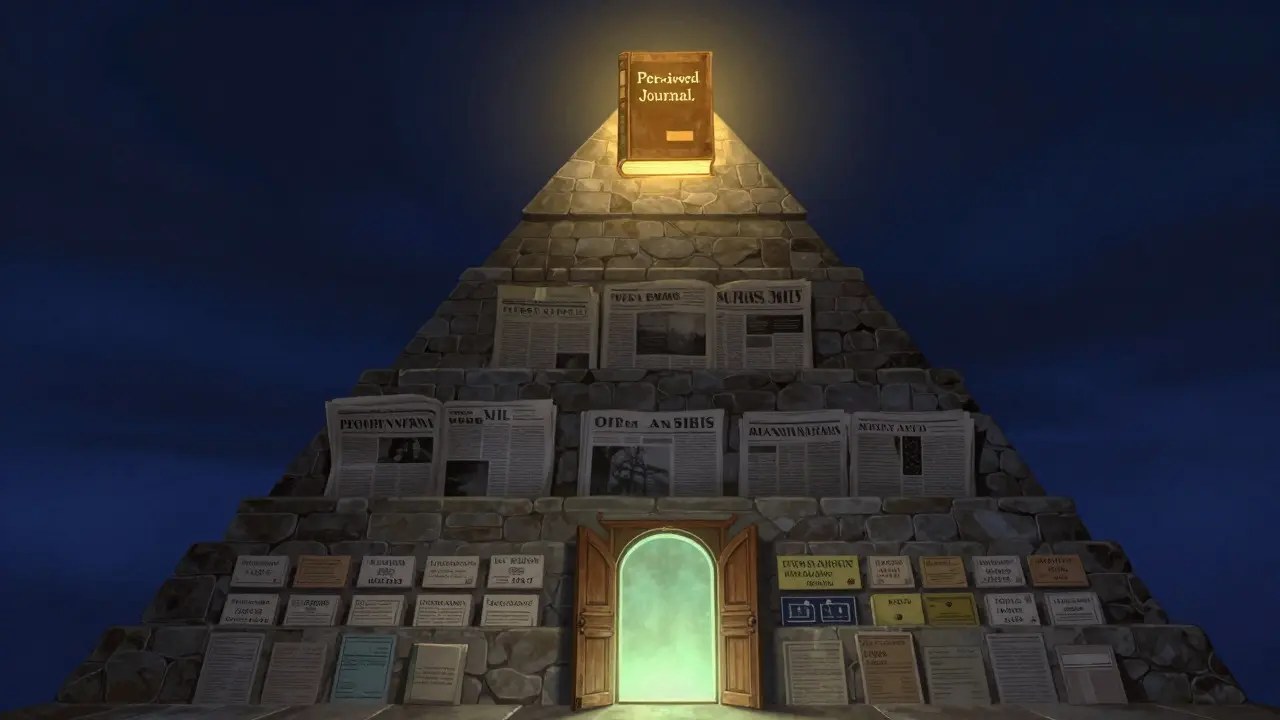
To understand how Wikipedia handles these materials, you have to look at how the community ranks information. In the world of encyclopedic writing, not all sources are created equal. A blog post is generally considered low reliability unless it’s by a recognized expert. A newspaper opinion piece is mid-tier. But a peer-reviewed academic journal sits at the top of the pyramid.
Here is the catch: the most rigorous sources are often the most expensive. Academic publishers like Elsevier is a major international publisher of scientific, technical, and medical literature and Springer Nature is a leading publisher of scholarly books and journals charge significant fees for single-article access. If an editor cites a study from Nature without having read it, they are relying on the abstract. This is risky. Abstracts summarize findings, but they don’t always capture the nuance of the methodology or the limitations of the study.
So, how do editors bridge this gap? They use a tiered approach to verification:
- Full Text Access: The gold standard. The editor has read the entire document.
- Abstract-Only Verification: Acceptable for minor details, but flagged if the claim is controversial.
- Secondary Sourcing: Using a reputable news outlet (like The Guardian or AP News) that has already summarized the paywalled study.
Practical Workarounds for Editors Without Subscriptions
You don’t need a corporate library card to verify a paywalled source. The Wikipedia community has developed several practical methods to bypass the paywall ethically and legally.
- Public Library Cards: Most public libraries in the US and Europe offer free access to digital databases like JSTOR, ProQuest, and EBSCOhost. An editor in Madison, Wisconsin, can log into their local library’s portal and download PDFs of articles from Science or Lancet for free. This is the most common method used by dedicated contributors.
- Inter-Library Loan (ILL): If your local library doesn’t carry a specific journal, they can request it from another institution. While slower than a digital download, it ensures you get the exact version cited.
- Author Copies and Preprints: Many academics upload pre-publication versions of their work to repositories like arXiv or institutional servers. While technically different from the published version, the content is usually identical. Editors must note if they are citing a preprint versus the final published article.
- Open Access Repositories: Platforms like PubMed Central (PMC) host millions of free full-text articles. Before paying for a source, always check if it’s already open-access in PMC.
These methods ensure that the "verifiability" principle remains intact. It doesn’t matter if you paid $0 or $45 for the PDF; what matters is that you checked the facts against the primary document.
When to Use Secondary Sources Instead
Sometimes, fighting the paywall isn’t worth it. If the information is straightforward-such as a company’s revenue figures or a politician’s statement-a secondary source is often sufficient and more accessible. For example, if a paywalled financial report confirms that Company X made $1 billion in profit, a citation to a major business publication like Forbes or Bloomberg is usually accepted because those outlets have their own editorial standards for verifying such data.
However, when the topic is scientific, legal, or highly technical, secondary sources can introduce errors. A journalist might misinterpret a statistical correlation as causation. In these cases, the original paywalled paper is non-negotiable. If you can’t access it, you should either find a free alternative (like a university press release summarizing the key findings) or wait until another editor with access verifies it.
| Method | Cost | Speed | Best For |
|---|---|---|---|
| Public Library Database | Free | Instant | Academic journals, historical archives |
| Inter-Library Loan | Free | Days to Weeks | Rare books, specific journal issues |
| Preprint Servers | Free | Instant | Recent scientific research |
| Secondary News Outlets | Free/Paid | Instant | General knowledge, business stats |
| Purchase Single Article | $15-$45 | Instant | Critical, niche topics with no other options |
The Role of Citation Templates and Transparency
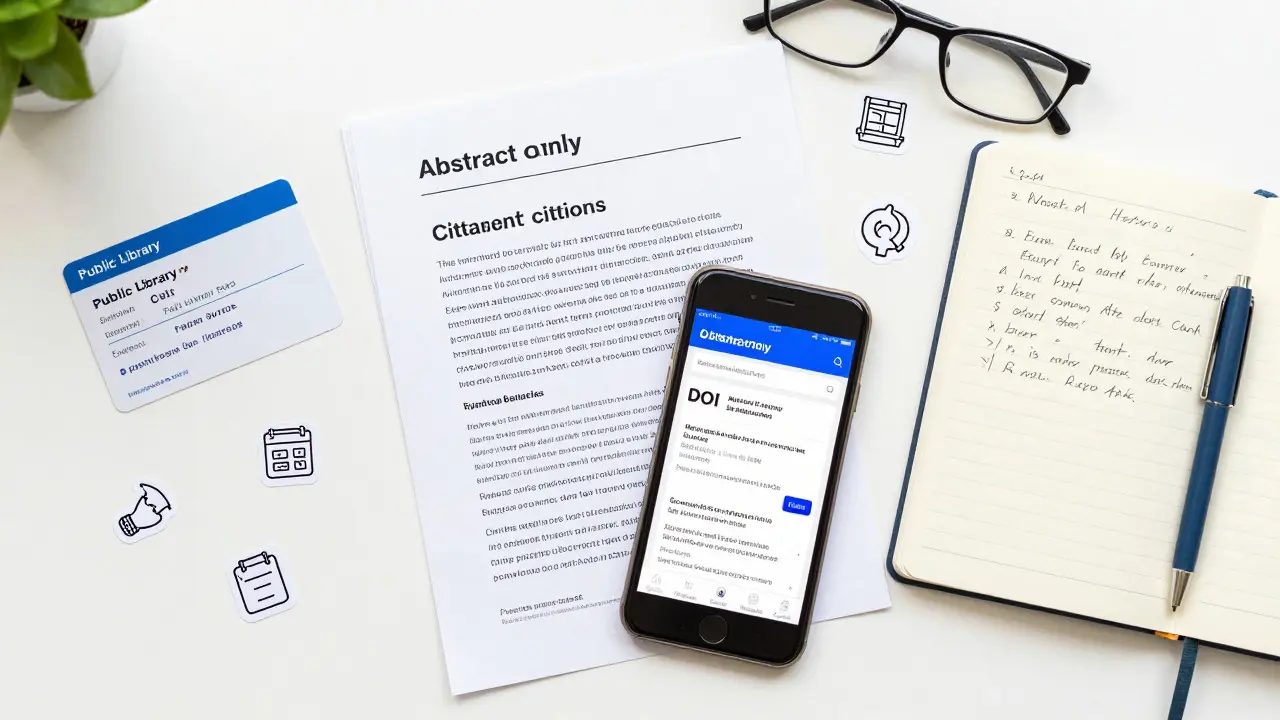
Wikipedia uses structured templates to make citations easy to read and verify. When an editor adds a paywalled source, they often include a link to the DOI (Digital Object Identifier). Even if the reader can’t see the full text, the DOI provides a permanent, unique address for the document. This helps future editors track down the source via library systems.
Furthermore, transparency is key. If an editor cites a source based solely on an abstract, they might leave a note in the edit summary or talk page: "Cited from abstract; full text behind paywall." This invites collaboration. Another editor with a university login might step in to confirm the details. This social verification process is one of Wikipedia’s greatest strengths. It turns individual access limitations into a collective resource.
Common Pitfalls to Avoid
New editors often fall into traps when dealing with restricted content. Here are the mistakes to watch out for:
- Citing from Memory: Never assume you remember the details correctly. Always verify against the text, even if you wrote the paper yourself.
- Ignoring Copyright Status: Just because you have a PDF doesn’t mean you can quote large chunks of it. Keep quotes under 35 words and paraphrase the rest.
- Over-relying on Aggregators: Sites that aggregate news stories without adding original reporting are generally considered lower reliability than the original publisher.
- Skipping the Abstract Check: If you can’t get the full text, at least read the abstract carefully. If the abstract contradicts the claim you’re making, stop. Don’t cite it.
Frequently Asked Questions
Can I cite a paywalled source if I haven't read it?
Technically yes, but it is risky. You should only do this if the abstract clearly supports your claim. Ideally, you should mark the citation as "abstract only" in the edit summary to alert other editors to verify the full text later.
Are Open Access journals better than paywalled ones?
Not necessarily. Open Access refers to the distribution model, not the quality of peer review. Many top-tier journals (like those from PLOS or BMC) are Open Access, while many others are paywalled. The key is whether the journal has a rigorous editorial process, not whether you have to pay to read it.
How do I find a free copy of a paywalled article?
Check PubMed Central first. Then, search for the title on arXiv or institutional repositories. Finally, use your local public library's digital database access. These three methods cover the vast majority of academic literature.
Is it okay to use a news article instead of the original study?
Yes, for general summaries. If you are stating that "Study X found Y," a reputable news outlet covering Study X is acceptable. However, if you are discussing the methodology or statistical significance, you must use the original source.
What is a DOI and why is it important for citations?
A DOI (Digital Object Identifier) is a unique alphanumeric string assigned to a digital object, like a journal article. It provides a permanent link to the source, ensuring that the citation remains valid even if the URL changes. It is the standard for academic referencing on Wikipedia.