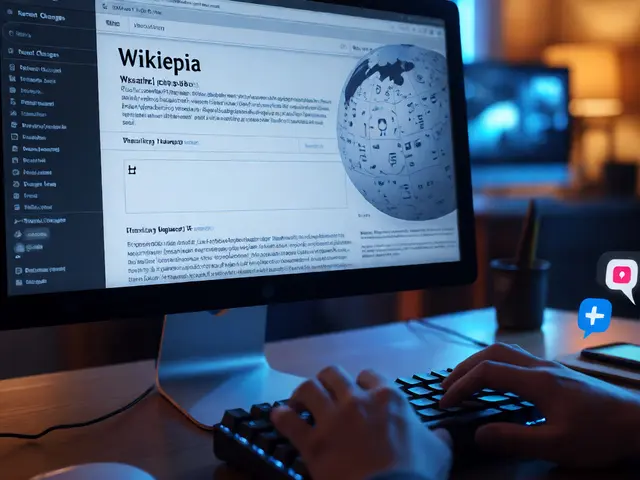
Imagine a world where the primary source for a senator’s legislative brief is not a peer-reviewed journal, but a wiki page edited by volunteers. It sounds chaotic, yet it happens every day. Wikipedia is a free, web-based collaborative project that aims to compile all human knowledge in an encyclopedia format. Since its launch in 2001, it has grown into the most visited reference site on the internet. But does this massive repository of user-generated content actually shape how people think and how governments act? The answer is yes, but the mechanism is subtle and often misunderstood.
The Scale of Digital Reference
To understand the impact, you have to look at the numbers. As of 2026, the English-language version alone contains over 6.8 million articles. Globally, there are more than 350 language editions. The traffic metrics are staggering: billions of monthly page views. This isn't just a niche hobbyist site; it is the default starting point for research for students, journalists, lawyers, and policymakers alike. When a user types a query into a search engine, Wikipedia frequently appears in the top three results. This visibility creates a feedback loop where the platform defines the initial narrative for millions of readers before they encounter any other source.
Shaping Public Perception
How does a website without editors-in-chief influence what the public believes? It relies on accessibility and neutrality. Unlike traditional encyclopedias that take years to update, Wikipedia changes in real-time. During breaking news events, such as natural disasters or political scandals, users flock to Wikipedia for immediate context. Studies on information behavior show that a significant portion of adults cite Wikipedia as their first stop for factual verification. This speed comes with risks, but it also means the public gets updated facts faster than through print media. The "neutral point of view" (NPOV) policy attempts to balance competing perspectives, creating a consensus-driven narrative that often becomes the baseline understanding for non-experts.
From Screen to Senate: Policy Influence
The jump from public opinion to government action is where things get interesting. Policymakers are humans too. They rely on staff for briefings, and those staff members use the same tools as everyone else. In several documented cases, legislators have cited Wikipedia pages during committee hearings or in press releases. While rare to see a bill explicitly written based on a wiki edit, the indirect influence is profound. If a topic gains traction on Wikipedia-gaining a featured article status or high traffic-it signals to political analysts that the issue is relevant to the electorate. This "digital salience" helps prioritize agendas. For example, when complex scientific topics like climate change or vaccine efficacy gained robust, well-cited coverage on the platform, it helped demystify these issues for laypeople, indirectly supporting evidence-based policy debates.

The Role of Citations and Credibility
A common criticism is that Wikipedia lacks authority because anyone can edit it. However, the citation system acts as a quality filter. High-quality articles require reliable sources. This forces contributors to link back to academic journals, official government reports, and major news outlets. Consequently, Wikipedia often serves as a curated index of credible information. For a busy policymaker or student, navigating directly through thousands of academic papers is impractical. Wikipedia provides a synthesized summary with footnotes that lead to the primary sources. This makes it a powerful tool for rapid learning and fact-checking, bridging the gap between raw data and accessible knowledge.
| Feature | Traditional Print/Digital Encyclopedias | Wikipedia |
|---|---|---|
| Update Frequency | Annual or Bi-annual | Real-time (Minutes/Hours) |
| Accessibility Cost | Subscription/Purchase Required | Free (Open Access) |
| Editorial Control | Professional Editors | Community Consensus |
| Source Transparency | Internal Editorial Standards | Visible External Citations |
| Policy Relevance Speed | Slow to reflect current events | Immediate reflection of current events |
Risks and Challenges in Knowledge Governance
It would be naive to say Wikipedia is perfect. Bias exists. Contributors tend to reflect the demographics of the editing community, which historically skewed toward Western, male, and educated populations. This can lead to gaps in coverage of global South issues or minority perspectives. For policymakers, this means relying solely on Wikipedia might miss nuanced local contexts. Additionally, "edit wars" can temporarily distort facts. However, the self-correcting nature of the platform usually resolves these conflicts quickly. The key takeaway for professionals is to treat Wikipedia as a map, not the territory. It points you to the right direction, but you must verify the details using the cited sources.

Practical Implications for Researchers and Leaders
So, how should you use this information? If you are a researcher, use Wikipedia to identify key players and foundational concepts. If you are a policy advisor, use it to gauge public sentiment and check if your proposed legislation aligns with the general public's current understanding. The platform acts as a mirror of collective knowledge. By monitoring changes in popular articles, you can detect shifts in public perception before they appear in formal surveys. This predictive capability gives Wikipedia a unique role in democratic processes, acting as an early warning system for emerging social concerns.
Frequently Asked Questions
Is Wikipedia considered a credible source for academic work?
Generally, no, not as a primary source. However, it is excellent for finding primary sources. Most universities allow citing Wikipedia to locate references, but you should cite the original study or book found in the Wikipedia footnotes rather than the wiki page itself.
How do politicians use Wikipedia in their daily work?
Politicians and their staff use it for quick fact-checking, background checks on opponents or allies, and understanding complex technical topics before drafting legislation. It serves as a rapid orientation tool for new subjects.
Does Wikipedia bias affect policy decisions?
Potentially, yes. If a topic is underrepresented or biased due to contributor demographics, policymakers may form incomplete views. This is why cross-referencing with diverse sources is recommended for critical decision-making.
What is the difference between a Wikipedia edit and a policy change?
An edit is a change to information on the platform. A policy change is a legal or regulatory action. Wikipedia influences policy by shaping the informational environment in which policymakers operate, rather than directly causing legal changes.
Can anyone edit Wikipedia, and does that make it unreliable?
Yes, anyone can edit. However, the community moderation process, along with the requirement for citations on important claims, maintains a high level of accuracy for stable articles. Vandalism is usually reverted within minutes.