Quick Takeaways
- Conflicts often start on Wikipedia (content) and move to Commons (media) or Meta-Wiki (policy).
- Spillovers happen when local governance fails or when the subject of the fight exists in multiple places.
- The "jurisdictional overlap" between projects creates loopholes that prolong disputes.
- Resolving these requires a coordinated effort across different administrator groups, which is rare.
The Three Pillars of the Conflict Triangle
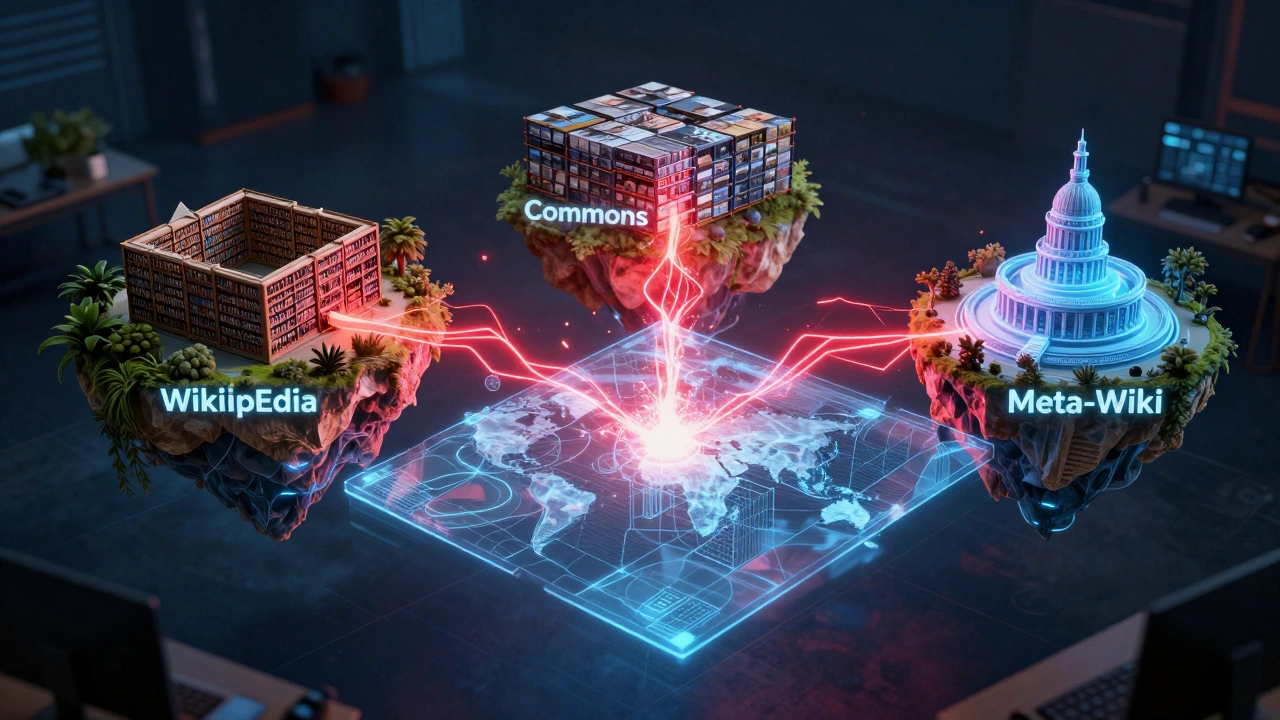
To understand how these fights jump, we need to look at the three main stages where they happen. Each one has a different purpose, different users, and a different way of handling arguments.
Wikipedia is the primary face of the movement. It's where the actual articles live. Most conflicts here are about content accuracy, neutrality, and sourcing. If someone disagrees with a sentence in an article, that's a localized conflict. But if that sentence relies on a specific image, the fight has a bridge to move elsewhere.
Wikimedia Commons is the central warehouse for media. It's a separate project with its own set of rules. A photo might be acceptable on Wikipedia but violate a specific "educational value" rule on Commons. When editors fight over whether a file should be deleted, they are operating under a different legal and policy framework than they were on the main encyclopedia.
Meta-Wiki is the "wiki about wikis." It's the highest level of governance. If editors feel that the rules on Commons are biased or that Wikipedia administrators are abusing their power, they head to Meta. This is where the argument shifts from "Is this photo wrong?" to "Is the system that decides if photos are wrong fundamentally broken?"
| Project | Primary Conflict Type | Governance Focus | Typical Escalation Point |
|---|---|---|---|
| Wikipedia | Editorial/Content | Article Accuracy | Admin Dispute / RFC |
| Commons | Technical/Legal | File Eligibility | Deletion Discussions |
| Meta-Wiki | Political/Structural | Global Policy | Arbitration Committee |
Why Disputes Spill Over: The Mechanics of Escalation
Why doesn't a fight just stay in one place? It usually comes down to three things: jurisdictional gaps, the "fresh start" fallacy, and the desire for a higher authority.
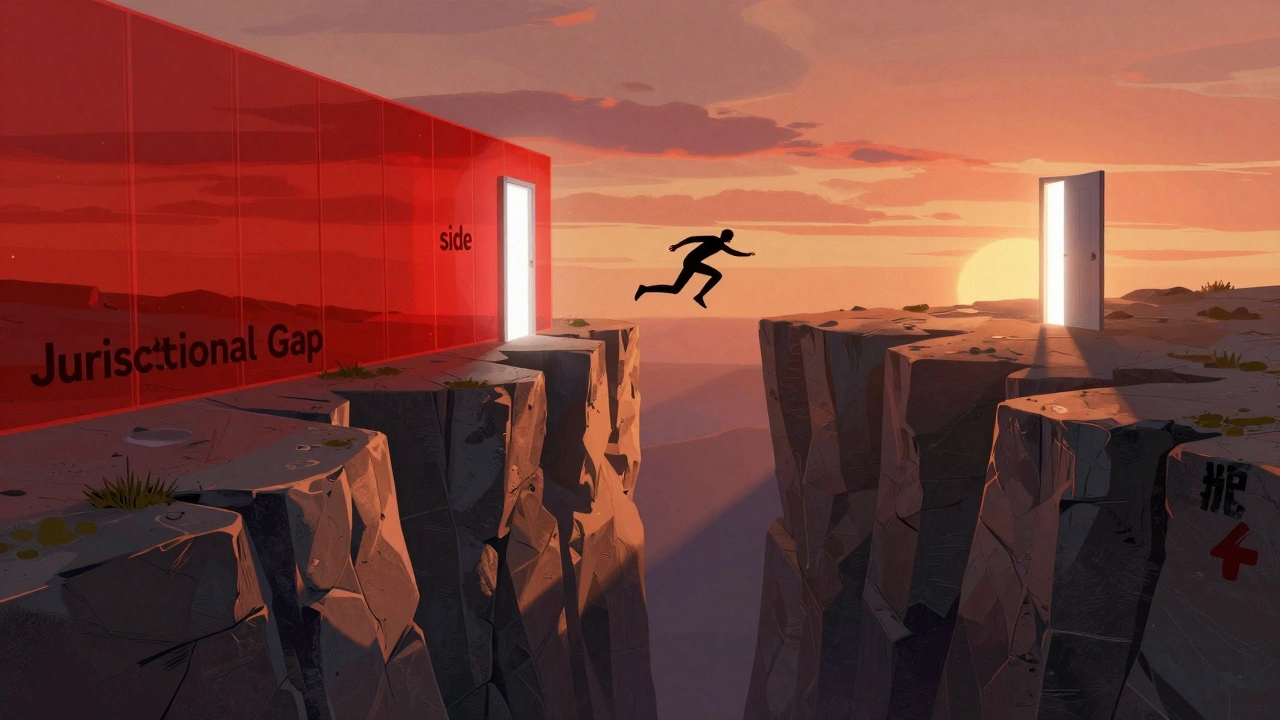
First, there's the jurisdictional gap. Imagine an editor is blocked on Wikipedia for being disruptive during a fight. They can't post on Wikipedia, but they still have an account on Commons. They might start editing the descriptions of the images used in the very articles they were fighting about. They've found a side door. Because Wikimedia accounts are global but blocks are often local, the conflict simply migrates to a place where the "enemy" doesn't have the power to stop them.
Then there's the "fresh start" fallacy. Editors often believe that if they move the conversation to a different project-say, from a talk page to a Meta-Wiki forum-they can reset the tone of the argument. They think a new environment will attract new, unbiased eyes. In reality, the same combatants usually follow the fight, bringing all their baggage with them, but now they are arguing in a venue that isn't designed for content disputes.
Finally, there's the quest for a "Supreme Court." When a local administrator on Wikipedia makes a call that an editor hates, that editor doesn't just stop. They look for a higher power. Since Meta-Wiki is seen as the overarching coordination hub, it becomes the default destination for anyone who feels the local system has failed them. This turns a specific factual dispute into a broader critique of governance.
The Danger of the "Looping" Effect
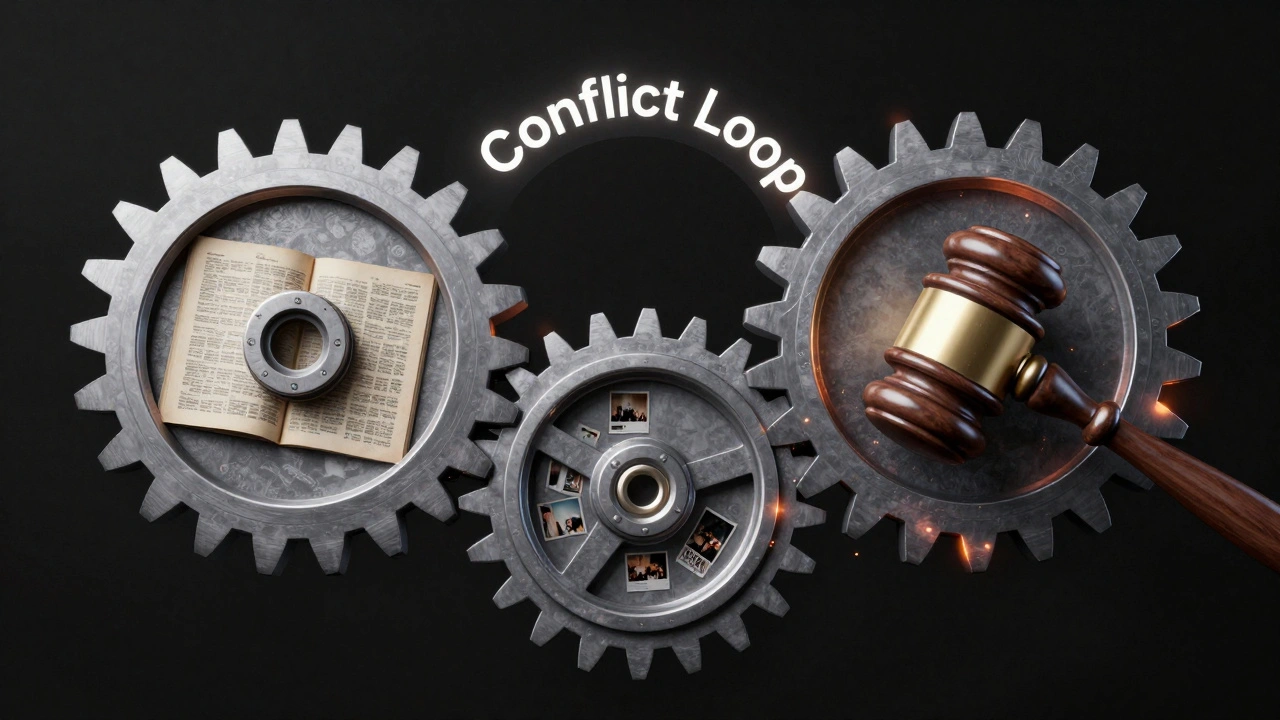
The most toxic version of this is the conflict loop. This happens when a decision is made on Commons (e.g., "This image is deleted"), which leads to a change on Wikipedia (e.g., "The article now lacks an image"), which leads to a complaint on Meta-Wiki (e.g., "Commons admins are censoring history"), which then leads back to Commons as editors try to restore the image based on the Meta-Wiki discussion.
This loop creates a state of permanent instability. Because each project has its own set of Local Policies, there is rarely a single, binding resolution that all three projects honor simultaneously. An editor might win the argument on Meta-Wiki, but the administrator on Commons may still refuse to restore the file, arguing that Meta-Wiki is for "discussion," not "mandates." This creates a paradox where the "higher" authority is ignored by the "lower" authority.
How to Break the Cycle
Stopping a spillover requires moving away from the "whack-a-mole" strategy. Most admins try to stop the fight wherever it currently is, but that just pushes it to the next project. Instead, a coordinated approach is needed.
- Cross-Project Communication: Administrators from Wikipedia and Commons need to sync up. If a user is being blocked for harassment on one, a "global block" should be considered immediately to prevent the side-door migration.
- Unified Dispute Resolution: Instead of having three different sets of rules, there needs to be a clear path for disputes that touch multiple projects. If a fight is about a file's use in an article, the decision should be made in a joint forum, not shuffled between sites.
- Strict Boundary Enforcement: Meta-Wiki needs to be more aggressive about refusing to mediate content-specific fights. When Meta-Wiki allows itself to be used as a courtroom for a single image dispute, it encourages editors to escalate every minor tiff to the global level.
For example, a real-world scenario involves disputes over sensitive political maps. An editor might fight over the border of a country on Wikipedia. When the map is flagged on Commons for "lack of consensus," the fight moves there. If the Commons community deletes it, the Wikipedia editor claims "systemic bias" on Meta-Wiki. To break this, the community could establish a specialized "Map Review Board" that has authority across both Commons and Wikipedia, rather than letting the fight bounce between them.
The Role of Governance in Preventing Spillovers
The root of the problem is that the Wikimedia movement grew organically. It wasn't designed with a corporate hierarchy; it was built as a federation of semi-autonomous projects. While this decentralization is great for growth, it's terrible for conflict management.
The Arbitration Committee (ArbCom) on Wikipedia is one of the few places with real teeth, but its power is largely limited to the English Wikipedia. When a conflict spills over to Commons, ArbCom's rulings often carry no weight. This gap in authority is where the most stubborn conflicts live. They exist in the "gray zones" between projects where no one has the ultimate power to say "Stop."
If we want to reduce these spillovers, the focus shouldn't be on the people fighting, but on the gaps in the map. By closing the jurisdictional loopholes-making blocks more consistent and creating clearer hand-off points between projects-the incentive to "project hop" disappears.
What exactly is a "spillover" in a wiki context?
A spillover occurs when a disagreement that starts on one platform (like a Wikipedia article) moves to another related platform (like Wikimedia Commons or Meta-Wiki) because the parties involved cannot find a resolution on the first site or because the subject of the fight exists on multiple sites.
Why does Meta-Wiki often become the center of these conflicts?
Meta-Wiki acts as the global coordination hub. When editors feel that local administrators are biased or that the rules on a specific project are unfair, they go to Meta-Wiki to seek a broader, more "objective" ruling or to launch a systemic critique of the governance process.
Can a block on Wikipedia stop someone from fighting on Commons?
Not necessarily. Most blocks are local to the specific project. Unless the administrator applies a "global block," a user who is banned from editing Wikipedia articles can still upload images, edit file descriptions, or participate in discussions on Wikimedia Commons.
How do you tell if a conflict is becoming a cross-wiki issue?
Look for "link-hopping." If you see the same group of users arguing about the same topic across different project talk pages, or if a Wikipedia dispute suddenly generates a flurry of activity on a Commons file page, you are likely witnessing a spillover.
Is there a way to permanently resolve these disputes?
The most effective way is through cross-project synchronization. This means administrators from the affected projects meet to agree on a single outcome that is enforced across all platforms, rather than letting each project handle the issue in isolation.
Next Steps for Community Managers
If you're an admin dealing with a spillover, stop focusing on the content and start focusing on the users. If a user is migrating their conflict, they are demonstrating a pattern of behavior, not just a disagreement over a fact. Treat it as a behavioral issue across the whole ecosystem.
For those caught in a loop, the best move is to stop. Escalating to Meta-Wiki often validates the conflict and gives it a larger stage, which rarely leads to a faster resolution. Instead, try to find a neutral mediator who has a presence on both the content site and the media site to bridge the gap.